

Illustrative consultation about an existing metal filling
Restorative Dentistry

Metal Filling Replacement

An older filling deserves an informed decision. Discuss metal filling replacement in Milton with an assessment of the repair, the surrounding tooth, and what you hope to change.

A closer look at metal filling replacement

Understand the old repair before choosing a new one.

A silver filling may have been part of your smile for many years. Perhaps you have noticed a rough edge, perhaps the tooth has started catching food, or perhaps you would prefer a less visible restoration. These are different reasons for a conversation, and they do not all lead to the same recommendation.

Metal filling replacement involves removing an existing restoration and rebuilding the tooth with an appropriate material. Before considering that step, the dentist needs to understand whether the filling is functioning, whether decay or a fracture is present, and how much sound tooth remains. Replacing a filling is a treatment decision with benefits and trade-offs.

At Milton Dental Clinic, you can begin by telling us what prompted your interest. Bring previous records if they are available and mention any symptoms, relevant medical concerns, or earlier advice. You do not need to decide on a material before your visit; the examination provides the context for that choice.

Discuss an existing metal filling
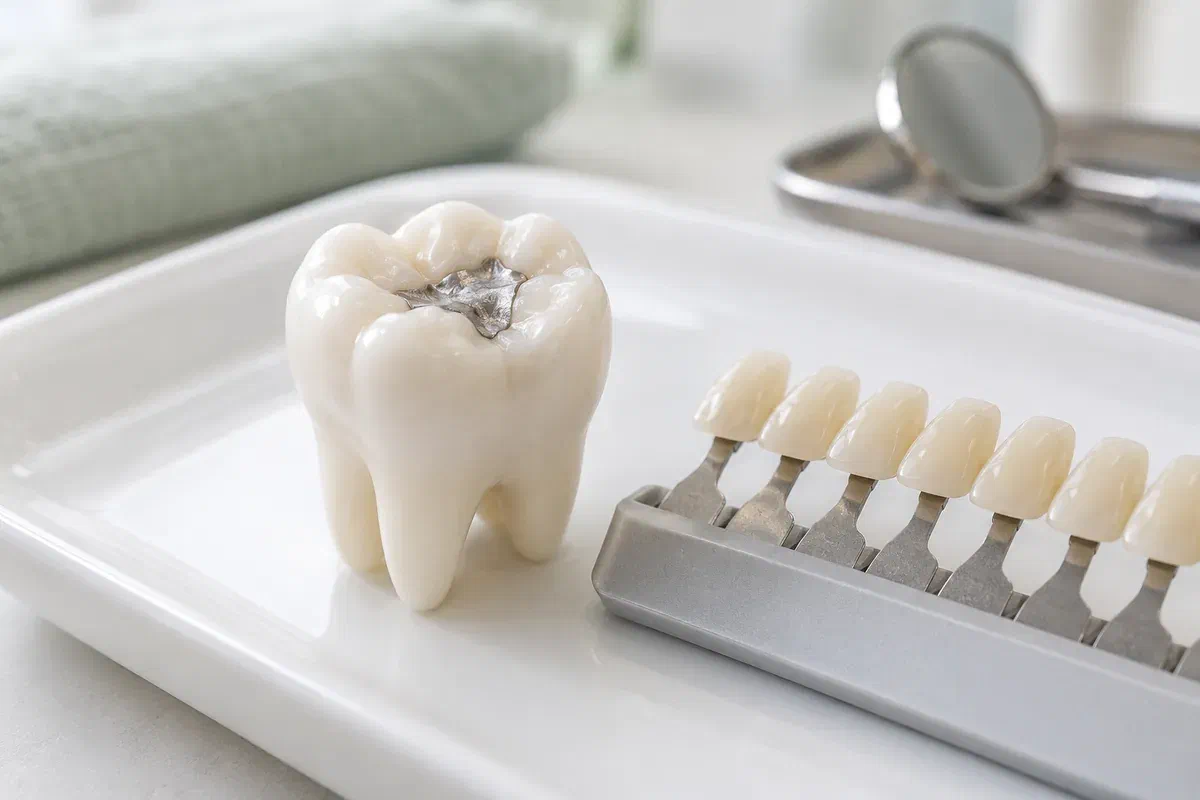
Teaching model of an intact silver filling beside a tooth shade guide
Reasons to have it checked

Separate a change in appearance from a change in health.

A filling can look dark and still function well. An assessment helps distinguish a cosmetic preference from a problem that needs repair, so the plan addresses the tooth rather than its colour alone.

A broken or rough edge

A new sharp area may involve the filling, the neighbouring enamel, or both. Describe when you first noticed it and whether food or floss catches there. The size and position of the defect help determine whether a limited repair is reasonable.

A symptom around the tooth

Tenderness when biting or lingering sensitivity needs a diagnosis. The metal filling may be part of the story, but the cause could also involve a crack, the pulp, the gums, or another tooth. Replacing the surface material is not an automatic solution.

A wish for a different appearance

Tell us which area you see when speaking or smiling and what bothers you about it. We can discuss the likely appearance of an alternative alongside the amount of treatment involved. A cosmetic goal deserves a clear explanation of the clinical trade-offs.

If the filling is sound and there is no decay beneath it, its age or silver colour alone does not establish a need for removal. Ask what finding supports the recommendation.

A reason for every change

Choose the repair around the tooth you want to keep.

When replacement is justified, the aim is to restore a useful shape, address the identified defect, and leave a surface that can be maintained. The discussion should include the condition of the surrounding enamel and the practical demands placed on that tooth.

Appearance can be part of the decision without becoming the only consideration. A tooth-coloured material may suit a particular cavity, while a larger or heavily loaded tooth may need a different restoration. Ask how the recommendation balances preservation, function, appearance, and future maintenance.

Patient information: CDA — tooth-coloured filling materials

A defined treatment purpose

You should understand whether the plan addresses decay, a damaged restoration, a weakened cusp, or a cosmetic concern. That explanation makes it easier to compare the recommendation with monitoring or a smaller intervention.

A material discussion you can follow

Ask to see examples or a shade guide if appearance matters to you. The dentist can explain which choices suit the cavity and why a material used successfully on another tooth may not suit this one.

A plan beyond the appointment

Discuss cleaning access, biting habits, and review visits before proceeding. A new restoration is one part of caring for the tooth; understanding those everyday needs helps you make a practical decision.

Your replacement visit

Make the decision before making the change.

There is room to ask questions before treatment starts. Tell us if your main concern is discomfort, appearance, cost, or uncertainty about advice you have received.

  1. Review the existing restoration

    The assessment considers the filling, the surrounding tooth, your bite, and relevant symptoms. Imaging may be recommended where it would help. Ask the dentist to explain the finding in everyday language and show you the affected area when possible.

  2. Agree on the proposed repair

    Discuss the material, estimated fee, alternatives, and whether additional treatment could become necessary once the old restoration is removed. A plan for a small filling may change if there is more damage underneath than could be seen initially.

  3. Remove and restore as indicated

    If replacement proceeds, the dentist uses the appropriate comfort and isolation measures, removes the restoration, and assesses the exposed tooth. The agreed repair is then prepared and placed, or a temporary stage is used when further planning is required.

  4. Review shape, contact, and bite

    The new restoration is checked before you leave. Ask about eating, cleaning, and any follow-up appointment. If treatment has been staged, make sure you know what remains to be completed and how to care for the tooth in the meantime.

Getting used to the new repair

Notice the tooth without repeatedly testing it.

Your instructions will depend on the depth of the repair and the material used. Keep the clinic informed about a change that makes eating or cleaning difficult.

Protect the numb area

Wait until normal sensation returns before chewing, and be careful with hot food or drinks. If a temporary restoration is present, follow the specific eating guidance given for that stage rather than assuming the final repair is already in place.

Report a bite that feels different

Contact us if the restored tooth seems to touch before its neighbours or remains uncomfortable during ordinary meals. Avoid repeatedly biting hard objects to test it. Describe the sensation and its trigger so the team can advise on review.

Keep the edges easy to clean

Continue brushing with fluoride toothpaste and cleaning between teeth. Let us know if floss consistently snags or food becomes trapped in a new way. Those observations can help us check the restoration and the area beside it.

Making a proportionate choice

Monitoring, repairing, and replacing are different options.

Ask what each approach would achieve and what it would leave unresolved. Your preference matters alongside the dentist’s assessment of the tooth.

When there is no treatment need

Keep a functioning restoration

Monitoring may be appropriate when the filling is intact and the tooth is healthy. Agree on what will be reviewed and which changes you should report. Keeping a successful restoration can avoid removing additional tooth structure unnecessarily.

For a suitable local defect

Repair or replace the filling

A limited repair or a new direct filling may be considered depending on the defect and the remaining tooth. Ask why the proposed extent of treatment is appropriate and whether the replacement can be completed in one treatment visit.

When a filling is insufficient

Protect a more weakened tooth

A larger restoration may be discussed if the tooth needs more support. If the pulp is affected, treatment inside the tooth may also be required. Changing from silver to white does not by itself resolve those structural or biological problems.

Before replacing a metal filling

Questions worth bringing to the chair.

You can ask for the reasons behind a recommendation, even when a filling has been present for decades. An informed choice begins with the condition of your own tooth.

(905) 876-4488
Should every amalgam filling be removed as a precaution?
No. The FDA advises against removing an intact amalgam filling without a clinical reason when there is no decay underneath. Removal can sacrifice healthy tooth and temporarily increase mercury vapour exposure. Discuss a particular medical concern with your dentist or physician rather than choosing removal as a general preventive measure.
Can I replace just the metal filling that shows when I smile?
You can discuss that specific tooth without committing to changes elsewhere. The assessment should cover whether replacement is advisable, the likely visible result, and the risks of treating an otherwise functioning restoration. Ask how much of the appearance comes from the filling itself and how much comes from the surrounding tooth.
Will replacing an old filling necessarily fix cold sensitivity?
The cause needs to be established first. Tell us whether cold discomfort stops quickly or lingers, whether biting also hurts, and when the change began. Those details help direct the examination. A new filling may be appropriate for one diagnosis while a different problem requires another approach.
Could I need a crown after the metal filling is removed?
It is possible if the remaining tooth cannot reliably support another filling. Ask about that possibility before treatment, particularly when the old restoration is large. Discuss how the dentist would explain an unexpected finding and what temporary protection, additional appointment, or revised estimate might be needed.
How should I raise a concern about an allergy to filling materials?
Tell the dentist about the suspected material, the reaction, and any assessment you have already received. Bring relevant medical information if available. Different restorative materials have different ingredients, so choosing a tooth-coloured option is not automatically an answer to every sensitivity concern.
Does my estimate cover the complete metal filling replacement?
Ask which tooth surfaces and materials are included, whether imaging or temporary care is separate, and what could change the fee. If you have benefits, confirm the amount payable for the proposed treatment. A plan may distinguish between a clinically necessary repair and a change requested for appearance.

Patient information: FDA — decisions about existing amalgam fillings

Metal filling replacement in Milton

Bring the concern. We’ll start with the tooth.

Arrange a visit at our Bronte Street practice to discuss an older metal filling, a new symptom, or an appearance goal. We can help you understand the assessment and the choices before you decide on treatment.

Please call for significant pain or swelling. Online requests are intended for non-urgent enquiries.

Visit Milton Dental Clinic
Unit 1, 342 Bronte St. S, Milton, ON L9T 5B7
Get directions Clinic hours
Monday–Thursday
11am–7pm
Friday–Sunday
By appointment only

How can we help?

Milton Dental Clinic

Have a question about your smile? Choose the option that works best for you.

For urgent dental concerns, please call.
Messages are reviewed during clinic hours.