

Illustrative consultation about an existing metal filling
Restorative Dentistry

Metal Filling Replacement in Milton

A silver filling that has been in place for twenty years is not automatically a problem. Book a Milton assessment to learn how the repair and the tooth around it are actually doing.

Old fillings, fresh questions

How old is too old for a filling?

There is no expiry date stamped on a metal filling. Some last for decades without trouble, while others develop worn margins, small fractures or decay along an edge. The number of years in your mouth tells us less than the condition of the restoration and the enamel that surrounds it.

Replacement means taking out the existing material and rebuilding that part of the tooth, usually with a tooth-coloured filling or, for larger losses, a more supportive restoration. Every removal takes a little more tooth with it, so the decision should rest on something the dentist can see, measure or explain to you.

Because you live close by, a short consultation fits easily between work, school pickups and errands in Milton. Tell us what made you curious, whether that is a rough spot, a twinge, or simply the colour. Earlier X-rays or notes from a previous dentist are welcome, but not required.

Ask about an older silver filling
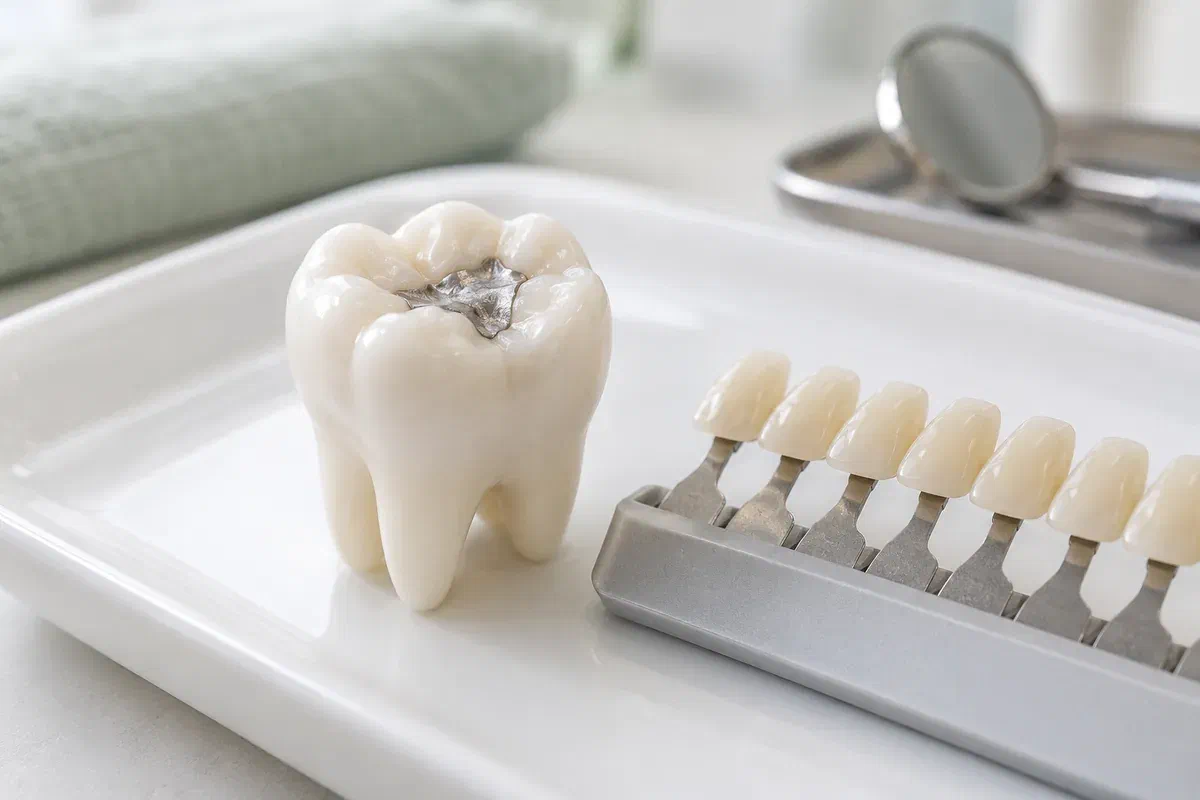
Teaching model of an intact silver filling beside a tooth shade guide
Signs that matter

Age alone is not the warning sign.

Plenty of dark fillings are still doing their job. What deserves attention is a change: in the way the tooth feels, the way it catches floss, or the way it looks to you in the mirror.

An edge your tongue keeps finding

A sharp or ledged spot can come from a chipped filling, broken enamel beside it, or a gap where the two meet. Note roughly when it appeared and whether floss frays there. That history helps the dentist judge whether a small repair would do.

Discomfort that keeps coming back

Pain on chewing or sensitivity that lingers after a cold drink needs a proper cause. The old filling might be involved, yet a crack, an irritated nerve, gum recession or a neighbouring tooth can produce similar feelings. A new surface will not fix the wrong problem.

A colour you would rather not see

Point out the teeth that show when you talk or laugh. We can describe how a tooth-coloured option might look and how much drilling it would involve, so the cosmetic gain is weighed honestly against what the tooth gives up.

A sound, decay-free metal filling does not need removal just because it is old or grey. If replacement is suggested, it is fair to ask what specific finding supports it.

Why a change might help

Keep the tooth first, then pick the material.

When there is a real reason to replace a filling, the goal is a restoration that seals the cavity, supports chewing and is easy to keep clean. The amount of healthy enamel left after the old material comes out often shapes the recommendation more than personal preference does.

Looks can still count. A white composite may suit a modest cavity in a visible tooth, while a large repair on a back molar that takes heavy biting forces may call for something stronger. A good plan explains how it balances strength, appearance, upkeep and preserving natural tooth.

Patient information: CDA — tooth-coloured filling materials

A reason you can repeat back

By the end of the discussion you should be able to say whether the plan treats decay, a fractured filling, a weak cusp or a cosmetic wish. That clarity makes it easier to compare replacement with watching the tooth or doing less.

Materials explained in plain terms

If appearance is important, ask to see a shade guide or photos of similar work. The dentist can tell you which materials suit the size and position of this cavity, and why the choice for one tooth may differ for another.

Thinking past the chair

Talk about how you clean the area, whether you clench, and how often the tooth should be reviewed. A new filling is only one piece of keeping that tooth healthy over the coming years.

From question to repair

Four steps, and you decide at the second.

Nothing is removed until you understand the plan. Let us know whether your main worry is comfort, appearance, the fee or conflicting advice you have heard elsewhere.

  1. Look closely at the filling

    The dentist examines the restoration, the surrounding enamel, your bite and any symptoms you mention. X-rays may be suggested if they would add useful information. You can ask to see the area on a screen or mirror and have the findings put in everyday words.

  2. Settle on the plan together

    This is where material, cost, alternatives and the chance of extra work are covered. Sometimes there is more breakdown under an old filling than an exam can reveal, so a small repair may need to grow once the tooth is opened.

  3. Replace the old material

    If you go ahead, the area is numbed and kept dry, the metal is removed and the tooth underneath is checked. The agreed restoration is then placed, or a temporary filling protects the tooth if more planning is needed first.

  4. Check how it all fits

    Before you leave, the shape, contacts with neighbouring teeth and your bite are adjusted. Ask about eating and cleaning. If the work is staged, make sure you know what the next visit involves and how to look after the tooth until then.

The first few days

Let the tooth settle before you judge it.

What you need to do depends on how deep the repair was and which material was used. If eating or cleaning becomes difficult, a quick call lets us advise you.

Wait for the numbness to fade

Hold off on chewing until full feeling returns, and take care with hot drinks so you do not burn a lip or cheek. A temporary filling has its own eating rules, so follow those rather than treating it like the finished repair.

Tell us if the bite feels high

Call if the new filling seems to hit first when you close, or if ordinary meals stay uncomfortable. Resist the urge to test it on hard foods. Describing exactly when it feels off helps the team decide whether an adjustment visit is needed.

Clean around it as usual

Brush twice daily with fluoride toothpaste and keep flossing or using interdental brushes. If floss starts tearing or food packs into the spot, mention it. Those clues help us check both the filling and the tooth beside it.

Matching the treatment to the tooth

Three paths, chosen by what the tooth needs.

Each option solves some things and leaves others alone. Your own priorities sit alongside the dentist's findings when the choice is made.

When nothing needs fixing

Leave a working filling in place

If the filling is intact and the tooth is healthy, keeping an eye on it can be the most conservative choice. Agree on what will be checked at future visits and which changes you should report, so no healthy enamel is lost without cause.

For a contained problem

Patch or renew the filling

A small repair or a fresh direct filling may work, depending on the defect and the tooth left around it. Ask why that size of treatment fits and whether everything can be finished in one appointment.

When a filling will not hold

Add support to a weak tooth

A tooth with thin walls may need a larger restoration, and an affected nerve may need root canal treatment. Swapping silver for white does not, on its own, solve problems of strength or infection.

Common questions in Milton

What people usually ask first.

It is reasonable to want reasons, even for a filling you have had since childhood. A good decision starts with how your own tooth is doing.

(905) 876-4488
Is it safe to leave an old amalgam filling alone?
For most people, yes, if the filling is intact and there is no decay beneath it. The FDA does not recommend removing sound amalgam fillings without a clinical reason, since removal costs healthy tooth and briefly raises mercury vapour exposure. If you have a specific health concern, bring it to your dentist or physician.
How long does a replacement appointment usually take?
It depends on the size of the filling, how many surfaces are involved and what is found underneath. A single modest filling is often completed in one visit. We can give you a better sense of timing after the exam, and let you know if the work might need to be staged.
Will I need freezing for the replacement?
Local anaesthetic is usually used because removing a filling involves drilling near sensitive tooth layers. Tell us if you have had trouble getting numb in the past, or if you feel anxious about injections, so we can plan the appointment with that in mind.
Could replacing the filling lead to a bigger treatment?
Sometimes. If decay or cracks under the old material turn out to be extensive, the tooth may need a crown, an onlay or, if the nerve is involved, root canal treatment. The dentist should explain any such finding during the visit and talk through your options before going further.
Can several metal fillings be replaced at the same visit?
It can be possible, depending on which teeth are involved and how comfortable you are with a longer appointment. Many people prefer to treat one side at a time. Ask the dentist to prioritize the teeth that have a clear clinical need over those being changed for appearance.
Does a white filling always look exactly like my tooth?
Composite comes in many shades and can blend well, but the result depends on the tooth’s natural colour, any staining left by the old metal and the size of the repair. Ask the dentist what you can realistically expect before the work begins.

Patient information: FDA — decisions about existing amalgam fillings

Close to home in Milton

Start with a look, not a commitment.

Book a visit at our Bronte Street practice to talk about a silver filling, a new sensation in a tooth or a change you would like to make. You will leave knowing what we found and which options make sense before anything is decided.

For severe pain or swelling, please phone us. The online form is best for routine, non-urgent requests.

Visit Milton Dental Clinic
Unit 1, 342 Bronte St. S, Milton, ON L9T 5B7
Get directions Clinic hours
Monday–Thursday
11am–7pm
Friday–Sunday
By appointment only

Areas we serve

  • Milton
  • Oakville
  • Mississauga
  • Georgetown
  • Halton Hills
  • Acton
  • Campbellville
  • Brampton
  • Burlington
  • Puslinch
  • Rockwood
  • Erin
  • Caledon
  • Etobicoke
  • Old Milton
  • Bronte Meadows
  • Timberlea
  • Dorset Park
  • Dempsey
  • Clarke
  • Beaty
  • Coates
  • Harrison
  • Scott
  • Willmott
  • Ford
  • Bowes
  • Cobden
  • Walker
  • Mountain View
  • Milton Heights
  • Hawthorne Village
  • Valley View
  • Fallingbrook
  • Nassagaweya
  • Trafalgar
  • Esquesing
  • Nelson
  • Brookville
  • Moffat
  • Glen Williams
  • Norval
  • Limehouse
  • Stewarttown
  • Ashgrove
  • Hornby
  • Silver Creek
  • Speyside
  • Scotch Block
  • North Oakville
  • River Oaks
  • Glen Abbey
  • West Oak Trails
  • Palermo
  • Bronte Creek
  • College Park
  • Joshua Creek
  • Uptown Core
  • Preserve
  • Iroquois Ridge
  • Lisgar
  • Meadowvale
  • Meadowvale Village
  • Churchill Meadows
  • Erin Mills
  • Central Erin Mills
  • Streetsville
  • East Credit
  • Creditview
  • Heartland
  • Sheridan
  • Mount Pleasant
  • Credit Valley
  • Huttonville
  • Churchville
  • Springbrook
  • Northwest Brampton
  • Bram West
  • Fletcher's Meadow
  • Fletcher's Creek South
  • Alton Village
  • Orchard
  • Millcroft
  • Headon Forest
  • Tansley
  • Brant Hills
  • Tyandaga
  • Kilbride
  • Lowville
  • Aberfoyle
  • Morriston
  • Arkell
  • Hillsburgh
  • Freelton
  • Carlisle
  • Waterdown
  • Flamborough
  • Mountsberg

How can we help?

Milton Dental Clinic

Have a question about your smile? Choose the option that works best for you.

For urgent dental concerns, please call.
Messages are reviewed during clinic hours.