

Illustrative consultation about an existing metal filling
Restorative Dentistry

Metal Filling Replacement in Mississauga

Floss that frays on the same tooth every night is telling you something. From Mississauga, have the old silver filling and its edges examined so you know whether a repair, a replacement or neither is needed.

Snags, shreds and trapped food

When floss keeps tearing in the same place

It usually starts small. A strand of floss frays between two back teeth, or bits of dinner lodge in a spot that used to stay clear. Often the tooth involved has an older amalgam filling, and it is natural to wonder whether the metal has begun to break down.

Sometimes it has. Edges can chip, ledges can form, and a seam can open where the filling meets enamel. Yet the cause may also be a cracked cusp, tartar, a shifting contact or gum changes. Replacing the metal makes sense only when the filling itself is the source, and that requires a look rather than an assumption.

Many people travelling from Mississauga, particularly the western neighbourhoods, fit a short exam around a workday. Mention which tooth catches, how long it has been happening and whether anything else feels different. Bring earlier X-rays if they are easy to find; otherwise we can take what is needed.

Have a catching filling checked
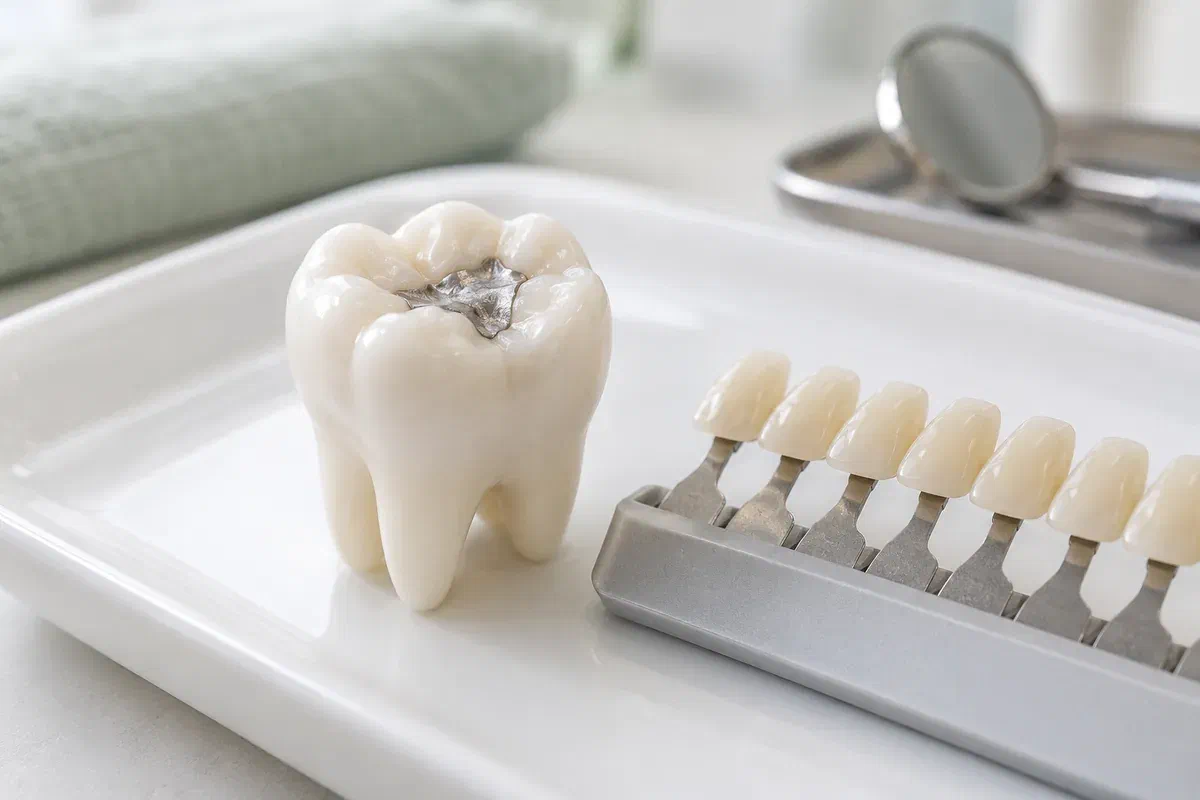
Teaching model of an intact silver filling beside a tooth shade guide
Clues worth mentioning

Three things your floss and tongue might be noticing

Small changes at the edge of a filling are easy to dismiss. Describing them helps the dentist work out whether the restoration, the tooth or the gum needs attention.

A ledge or rough margin

If floss catches on a sharp lip, a piece of the filling or the enamel beside it may have broken away. Note which side of the tooth it is on and roughly when it began. A contained defect can sometimes be smoothed or repaired without replacing the whole filling.

Tenderness after food gets stuck

Gums that ache where food packs in, or a tooth that throbs after chewing, need a proper diagnosis. A leaking filling is one possibility, but a crack, an inflamed nerve, gum pocketing or a neighbouring tooth can all play a part. Swapping the metal alone may not help.

Wanting a different look too

If the same tooth shows when you smile, you might want to discuss appearance at the same time. We can describe what a tooth-coloured restoration might look like and how much preparation it would mean, alongside any clinical need.

A grey filling that is sealed, smooth and free of decay can stay where it is. If someone suggests replacement, ask whether the reason is the edge, decay underneath, or appearance.

Why the fix should be targeted

Close the gap and keep what is healthy.

If the filling is the problem, a new restoration should restore a smooth contact with the neighbouring tooth, seal the cavity and give floss a clean path. How much enamel remains after the old material is removed often determines which options are realistic.

Composite can rebuild many moderate cavities and blend with the tooth. A larger repair on a molar that bears heavy chewing may need an onlay or crown for strength. It is worth asking how the plan balances a tight, cleanable contact with appearance, durability and preserving tooth.

Patient information: CDA — tooth-coloured filling materials

A diagnosis behind the plan

Make sure you know whether treatment targets a broken margin, decay under the filling, a weak cusp or a cosmetic preference. With that, you can weigh replacement against smoothing, patching or simply monitoring.

Contacts that floss can pass

Ask how the dentist will shape the new filling against its neighbour. A good contact keeps food from wedging in while still letting floss slip through, which matters as much as colour.

Daily care that fits

Discuss whether floss, interdental brushes or a water flosser would suit that spot, along with any grinding habit and your review schedule. Those details help the new restoration stay healthy.

Step by step

Find the cause, then fix only that.

You can pause at any step to ask what is happening and why. Tell us whether the catching, discomfort, cost or appearance concerns you most.

  1. Trace where the floss catches

    The dentist checks the filling edges, the enamel and gum around them, the contact with the neighbouring tooth and your bite. Bitewing X-rays are often helpful for spots between teeth. Ask to see what was found.

  2. Decide on the scope

    Options might range from polishing a ledge to replacing the filling. Material, fees and alternatives are discussed, along with the chance that removing the old metal reveals more decay than expected.

  3. Rebuild the edge

    If replacement goes ahead, the tooth is numbed and isolated, the amalgam is removed and the cavity is inspected. A band is often used to shape the side of the tooth so the new filling forms a proper contact. A temporary may be used if further planning is needed.

  4. Test the contact and bite

    Before you leave, the dentist checks that floss passes cleanly and your teeth meet evenly. Ask how to clean the area, and if anything is staged, confirm what comes next.

Back to your routine

Floss gently at first, then normally.

Instructions depend on the depth and size of the repair and the material used. If cleaning or chewing becomes difficult, call and we will advise.

Let feeling return first

Wait for the numbness to wear off before eating on that side, and take care with hot food so you do not burn your cheek. A temporary filling has its own guidance, which applies until the final restoration is placed.

Notice how you bite

If the tooth feels like it touches first, or stays sore during normal meals after a day or so, give us a call. Try not to bite on hard objects to check. Telling us what triggers the feeling helps us decide whether to see you.

Watch the floss

Brush with fluoride toothpaste and keep cleaning between teeth. If floss still shreds or food continues to pack in, let us know. The contact or edge may need a small adjustment.

Matching the fix to the problem

Smooth, patch, replace or reinforce

Each option addresses a different situation. Ask what it would solve and what it would leave alone, and say which outcome matters most to you.

When the edge is intact

Monitor a sealed filling

If the catching comes from tartar or gum changes rather than the filling, a cleaning and a home-care tweak may be enough. Agree on what will be checked next time so healthy tooth is not removed without reason.

For a broken margin

Repair or renew the filling

A rough ledge may be smoothed, a small defect patched, or the whole filling replaced, depending on the damage and the tooth around it. Ask why the proposed scope fits and whether it can be finished in one visit.

When more support is needed

Strengthen a weaker tooth

If a cusp is cracked or the walls are thin, an onlay or crown may be recommended, and nerve involvement may need root canal care. A new white surface alone does not address structural problems.

Questions from Mississauga

Food traps, floss and old fillings

Everyday annoyances often point to something specific. These answers help you prepare for a conversation about your own tooth.

(905) 876-4488
Why does floss shred on only one tooth?
A rough filling margin, chipped enamel, tartar or a tight contact can all fray floss. The dentist can identify which is responsible. If the filling is the cause, a small repair or replacement may help; if not, a different fix may be more suitable.
Can food trapped beside a filling lead to decay?
Food and plaque that sit along a gap can increase the risk of decay at that edge. Cleaning the area well helps, but if a gap has formed, the dentist may suggest repairing it. Mention food trapping so it can be checked.
Is the problem my filling or my gums?
Both can cause similar signs. Gum inflammation or recession may change how food collects, while a broken filling margin may trap it directly. An exam, and sometimes an X-ray, helps distinguish between them.
Will replacing a filling between teeth affect the neighbouring tooth?
The dentist takes care to protect the adjacent tooth during treatment. Sometimes decay is found on the neighbour’s surface at the same contact, in which case it would be discussed with you before anything further is done.
Should I keep flossing a tooth that catches?
Generally yes, gently. Stopping can let plaque build up. If floss shreds, an interdental brush or waxed floss may be easier until the area is checked. Let us know if flossing causes bleeding or pain that does not settle.
Do intact amalgam fillings need replacing to be safe?
No. According to the FDA, a sound amalgam with no decay beneath it is best left where it is unless there is a dental reason to treat it. Drilling it out costs healthy tooth and briefly raises the amount of mercury vapour released. Specific health worries are worth raising with your dentist or physician.

Patient information: FDA — decisions about existing amalgam fillings

From Mississauga to Bronte Street

Let's find out what floss is catching on.

Request an appointment at our Bronte Street practice to look at a catching filling, a sore spot or a cosmetic concern. You will hear what we find and which choices are reasonable before deciding on any treatment.

For severe pain or swelling, call the clinic instead of booking online. Online requests are for non-urgent concerns.

Visit Milton Dental Clinic
Unit 1, 342 Bronte St. S, Milton, ON L9T 5B7
Get directions Clinic hours
Monday–Thursday
11am–7pm
Friday–Sunday
By appointment only

Areas we serve

  • Milton
  • Oakville
  • Mississauga
  • Georgetown
  • Halton Hills
  • Acton
  • Campbellville
  • Brampton
  • Burlington
  • Puslinch
  • Rockwood
  • Erin
  • Caledon
  • Etobicoke
  • Old Milton
  • Bronte Meadows
  • Timberlea
  • Dorset Park
  • Dempsey
  • Clarke
  • Beaty
  • Coates
  • Harrison
  • Scott
  • Willmott
  • Ford
  • Bowes
  • Cobden
  • Walker
  • Mountain View
  • Milton Heights
  • Hawthorne Village
  • Valley View
  • Fallingbrook
  • Nassagaweya
  • Trafalgar
  • Esquesing
  • Nelson
  • Brookville
  • Moffat
  • Glen Williams
  • Norval
  • Limehouse
  • Stewarttown
  • Ashgrove
  • Hornby
  • Silver Creek
  • Speyside
  • Scotch Block
  • North Oakville
  • River Oaks
  • Glen Abbey
  • West Oak Trails
  • Palermo
  • Bronte Creek
  • College Park
  • Joshua Creek
  • Uptown Core
  • Preserve
  • Iroquois Ridge
  • Lisgar
  • Meadowvale
  • Meadowvale Village
  • Churchill Meadows
  • Erin Mills
  • Central Erin Mills
  • Streetsville
  • East Credit
  • Creditview
  • Heartland
  • Sheridan
  • Mount Pleasant
  • Credit Valley
  • Huttonville
  • Churchville
  • Springbrook
  • Northwest Brampton
  • Bram West
  • Fletcher's Meadow
  • Fletcher's Creek South
  • Alton Village
  • Orchard
  • Millcroft
  • Headon Forest
  • Tansley
  • Brant Hills
  • Tyandaga
  • Kilbride
  • Lowville
  • Aberfoyle
  • Morriston
  • Arkell
  • Hillsburgh
  • Freelton
  • Carlisle
  • Waterdown
  • Flamborough
  • Mountsberg

How can we help?

Milton Dental Clinic

Have a question about your smile? Choose the option that works best for you.

For urgent dental concerns, please call.
Messages are reviewed during clinic hours.