

Illustrative consultation about an existing metal filling
Restorative Dentistry

Metal Filling Replacement in Old Milton

Fillings placed long ago carry a history of their own. Near Old Milton, we review that history with you, examine the tooth as it is today, and explain whether replacing the metal makes sense.

The story behind a filling

Every old repair has a backstory worth hearing.

Many people remember roughly when a filling went in, even if they have changed dentists several times since. That memory is useful. Knowing whether a tooth was restored once or repaired repeatedly helps the dentist understand how much original structure might remain beneath the metal.

Replacing an amalgam filling means removing it, checking the tooth underneath and rebuilding the lost portion with a suitable material. It is a real procedure, not a cosmetic touch-up, so it should answer a clear need such as decay, a fracture or a worn margin, or a well-understood appearance goal.

Old Milton is a mix of households who have lived on the same streets for decades and newcomers settling into the historic downtown. Either way, any past records, X-rays or notes you can gather are helpful. If they are lost, the exam still gives us what we need to start.

Book a look at an old filling
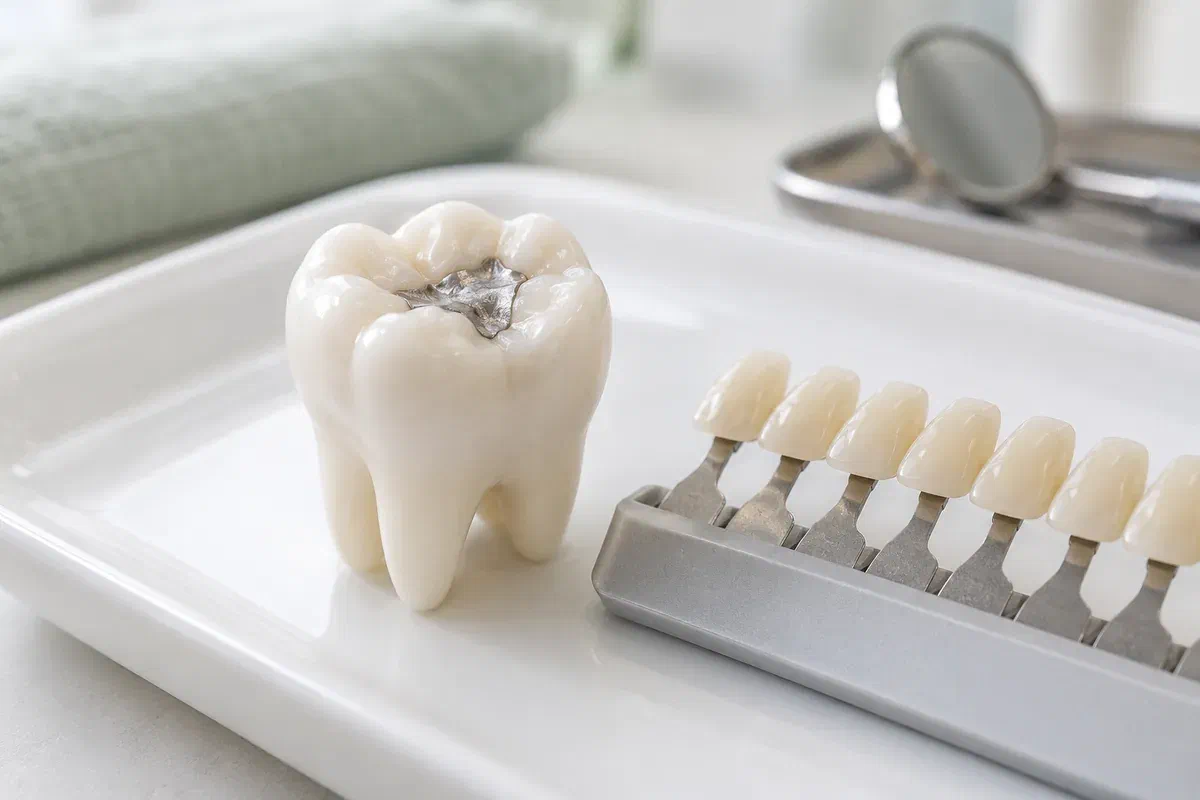
Teaching model of an intact silver filling beside a tooth shade guide
What has changed lately

Notice the difference, not the decade.

A silver filling darkening over time is normal and, on its own, harmless. A new sensation, a different feel to the edge, or a colour that now bothers you is what makes a visit worthwhile.

Something feels sharp or chipped

A fresh rough patch might be a piece of filling, a flake of enamel next to it, or a widening seam between the two. Let us know when you first felt it and whether floss catches. The location and size guide whether repairing a small section would be enough.

The tooth is reacting

A tooth that aches when you bite or tingles long after something cold needs investigating. A long-standing filling can be part of the picture, but so can a crack, the nerve, the gums or the tooth next door. Swapping the material without a diagnosis may miss the cause.

You notice it in photos

Show us which tooth catches your eye in pictures or in the mirror. We will talk about how a tooth-coloured alternative might look, how much preparation it requires, and whether the visible change is worth the work involved.

Age and colour do not, by themselves, show that a metal filling has failed. When there is no decay and the filling is intact, it is fair to ask what finding would justify removing it.

What a sensible change achieves

A sound tooth matters more than a new colour.

Where replacement is warranted, the restored tooth should be sealed, comfortable to chew on and simple to clean. The dentist will look at how thick the remaining walls are and how hard that tooth works in your bite before suggesting what comes next.

Appearance has its place in the conversation. Composite can work nicely for a moderate cavity, while a broad repair on a molar that handles a lot of force may be better served by an onlay or crown. You can ask how the plan weighs conserving tooth, strength, looks and future care.

Patient information: CDA — tooth-coloured filling materials

A stated purpose

The plan should say plainly whether it is treating decay, a broken restoration, a fragile cusp or a cosmetic preference. That makes it easier to judge the proposal against leaving the tooth alone or doing something smaller.

Choices you can picture

Ask to see a shade guide or examples when looks are part of your goal. The dentist can explain which materials suit this particular cavity and why the option used on a different tooth might not fit here.

Care after the appointment

Talk through cleaning between teeth, clenching or grinding, and when the tooth should next be checked. A replacement filling works best when the daily habits around it support it.

How a visit unfolds

Review, agree, restore, then check.

You will have time to ask questions before any drilling begins. Mention whether discomfort, appearance, cost or uncertainty about earlier advice is weighing on you most.

  1. Assess what is there now

    The dentist looks at the filling, the enamel around it, how your teeth meet and any symptoms you describe. Imaging may be suggested if it would clarify things. Ask to see the area and to hear the finding without jargon.

  2. Agree on the repair

    Material, fee, alternatives and the possibility of further treatment are all discussed. An older filling can hide more damage than the surface suggests, so a planned small repair may need to change once the metal is out.

  3. Restore the tooth

    With your agreement, the tooth is numbed and isolated, the old material is taken out and the exposed tooth is examined. The planned filling is placed, or the tooth is protected with a temporary while further planning happens.

  4. Fine-tune the result

    The new restoration's shape, contacts and bite are checked before you go. Ask about eating and cleaning, and if the work is staged, confirm what remains and how to protect the tooth until your next visit.

Settling in after treatment

Give it a day before deciding how it feels.

Aftercare depends on the depth of the work and the material placed. Call the clinic if chewing or cleaning around the tooth becomes a struggle.

Mind the freezing

Avoid chewing on the treated side until sensation comes back, and be cautious with hot food or tea. If a temporary filling is in place, follow the instructions for that stage rather than treating it as the final repair.

Speak up about the bite

If the tooth seems to touch first when you close, or stays sore during normal meals, let us know. Try not to bite on hard things to check it. Explaining what triggers the feeling helps the team decide whether you should come back in.

Keep up gentle cleaning

Brush with fluoride toothpaste and clean between teeth each day. Report floss that keeps shredding or food that gets stuck in a new spot, since those details help us check the filling and its neighbour.

Proportion in treatment

Watch it, fix it, or strengthen it.

Each route has its own result and its own limits. Your wishes count alongside the dentist's view of what the tooth can handle.

If there is no need to treat

Monitor a healthy filling

A sound filling on a healthy tooth can simply be watched. Agree on what will be reviewed at checkups and which changes to report. Keeping a working restoration avoids cutting away extra tooth for no benefit.

For a limited defect

Repair or redo the filling

A partial repair or a new direct filling may be appropriate, depending on the problem and the tooth left behind. Ask why that extent of treatment suits your tooth and how many appointments it is likely to take.

If a filling is not enough

Reinforce a fragile tooth

When the walls are thin, the tooth may be better suited to an onlay or crown, and nerve involvement may call for root canal treatment. A colour change alone does not address weakened walls or infection.

Questions about older fillings

Things worth asking about a long-standing repair.

You are entitled to hear why a change is suggested, no matter how long a filling has been in your mouth. The right choice depends on your tooth today.

(905) 876-4488
Do you need records from the dentist who placed my filling?
They are helpful but not essential. Old X-rays can show how a tooth has changed, and notes may mention past repairs. If records are unavailable, a current exam and, where needed, new imaging will give the dentist enough to assess the filling.
What does a dark line around the edge of a filling mean?
It can be staining, corrosion at the margin, or sometimes decay. Only an exam, sometimes with imaging, can tell them apart. A shadow by itself does not confirm a problem, so ask the dentist what they see and whether it needs treatment or monitoring.
Should I wait for my old filling to break before replacing it?
Not necessarily, but you also do not need to act before there is a reason. If the dentist finds decay, a crack or a failing edge, treating it early may keep the repair smaller. If the filling is sound, regular checkups are usually the sensible approach.
Is removing amalgam fillings recommended for health reasons?
The FDA advises against taking out intact amalgam fillings when there is no decay and no clinical reason, because removal sacrifices healthy tooth and can briefly increase mercury vapour exposure. If you have a particular medical concern, discuss it with your dentist or physician.
Can a cracked silver filling be repaired rather than replaced?
Sometimes a small defect can be patched, especially if the rest of the filling is sound. In other cases the whole restoration needs to be redone. The dentist will look at the size and location of the crack and explain which option fits.
Will the tooth look grey even after the metal is removed?
Some old amalgam fillings leave a grey tint in the tooth itself. The dentist can often tell you beforehand whether staining is likely and how a new filling might mask it. Ask what result is realistic so you are not surprised.

Patient information: FDA — decisions about existing amalgam fillings

Near Old Milton

Tell us its history. We'll check its present.

Our Bronte Street practice sits close to Milton's historic downtown. Bring an old filling, an unexpected twinge or a cosmetic question, and we will explain the exam and your choices before you make any decision.

Call us directly for strong pain or swelling. Please use online requests for routine questions only.

Visit Milton Dental Clinic
Unit 1, 342 Bronte St. S, Milton, ON L9T 5B7
Get directions Clinic hours
Monday–Thursday
11am–7pm
Friday–Sunday
By appointment only

Areas we serve

  • Milton
  • Oakville
  • Mississauga
  • Georgetown
  • Halton Hills
  • Acton
  • Campbellville
  • Brampton
  • Burlington
  • Puslinch
  • Rockwood
  • Erin
  • Caledon
  • Etobicoke
  • Old Milton
  • Bronte Meadows
  • Timberlea
  • Dorset Park
  • Dempsey
  • Clarke
  • Beaty
  • Coates
  • Harrison
  • Scott
  • Willmott
  • Ford
  • Bowes
  • Cobden
  • Walker
  • Mountain View
  • Milton Heights
  • Hawthorne Village
  • Valley View
  • Fallingbrook
  • Nassagaweya
  • Trafalgar
  • Esquesing
  • Nelson
  • Brookville
  • Moffat
  • Glen Williams
  • Norval
  • Limehouse
  • Stewarttown
  • Ashgrove
  • Hornby
  • Silver Creek
  • Speyside
  • Scotch Block
  • North Oakville
  • River Oaks
  • Glen Abbey
  • West Oak Trails
  • Palermo
  • Bronte Creek
  • College Park
  • Joshua Creek
  • Uptown Core
  • Preserve
  • Iroquois Ridge
  • Lisgar
  • Meadowvale
  • Meadowvale Village
  • Churchill Meadows
  • Erin Mills
  • Central Erin Mills
  • Streetsville
  • East Credit
  • Creditview
  • Heartland
  • Sheridan
  • Mount Pleasant
  • Credit Valley
  • Huttonville
  • Churchville
  • Springbrook
  • Northwest Brampton
  • Bram West
  • Fletcher's Meadow
  • Fletcher's Creek South
  • Alton Village
  • Orchard
  • Millcroft
  • Headon Forest
  • Tansley
  • Brant Hills
  • Tyandaga
  • Kilbride
  • Lowville
  • Aberfoyle
  • Morriston
  • Arkell
  • Hillsburgh
  • Freelton
  • Carlisle
  • Waterdown
  • Flamborough
  • Mountsberg

How can we help?

Milton Dental Clinic

Have a question about your smile? Choose the option that works best for you.

For urgent dental concerns, please call.
Messages are reviewed during clinic hours.