

Illustrative consultation about an existing metal filling
Restorative Dentistry

Metal Filling Replacement in Rockwood

Composite, ceramic or something else entirely? If an old metal filling needs replacing, the material matters. Visiting from Rockwood, you can compare the choices that genuinely suit your tooth.

Choosing what goes in next

The material question, answered for your tooth

Most people who ask about replacing amalgam already picture a white filling. That is often a reasonable outcome, but tooth-coloured options are not all alike. A bonded composite, a ceramic onlay and a full crown behave differently, and each suits a different amount of remaining tooth.

Before any material is chosen, though, there has to be a reason to replace the old one. Removing amalgam takes some healthy structure along with it. Decay, a fracture, a leaking edge or a clear cosmetic goal are the usual reasons. Once one of those is established, the material discussion becomes practical rather than abstract.

Travelling down from Rockwood, you can come with no preference at all. Tell us what bothers you about the current filling and what matters most in the result, such as appearance, durability or the number of visits. Any older X-rays or records are a helpful bonus.

Compare replacement materials
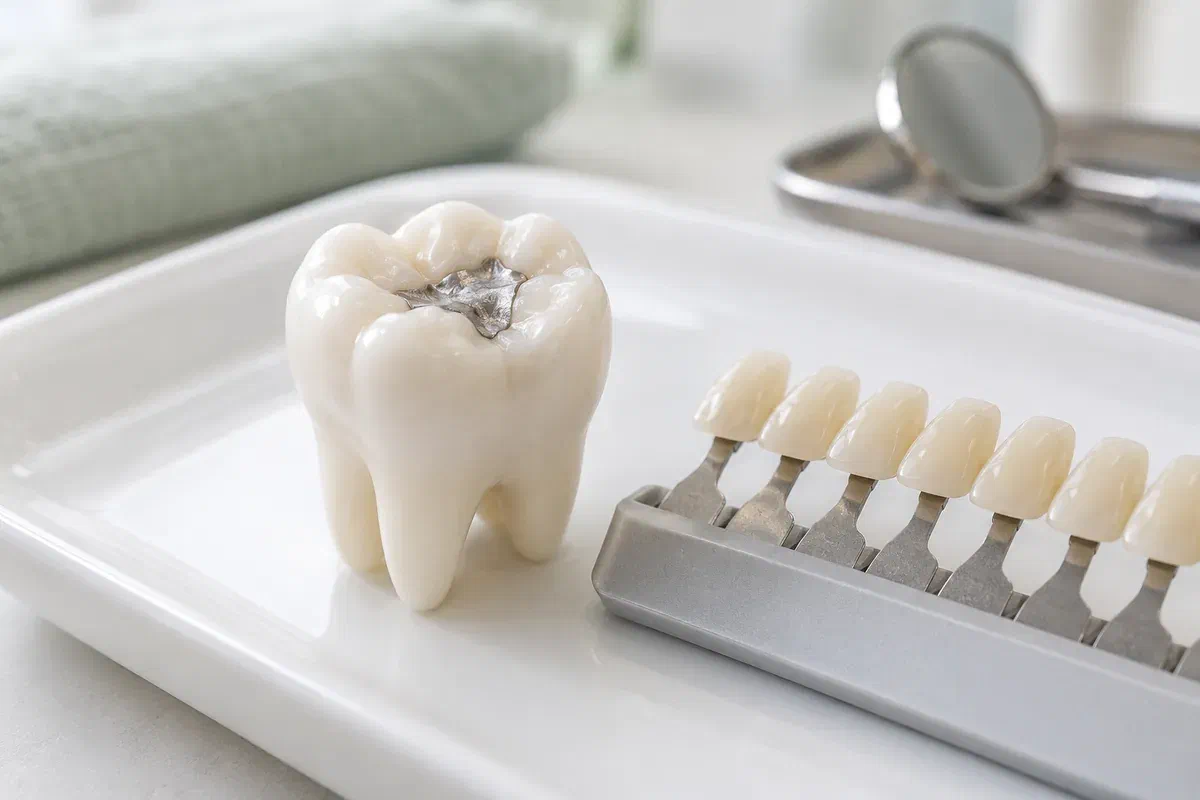
Teaching model of an intact silver filling beside a tooth shade guide
Why replacement comes up

The reason shapes the right material.

A cosmetic preference, a broken edge and a sore tooth each lead to different conversations. Naming the reason first keeps the material choice grounded.

Damage at the edge

A chip or ledge where the filling meets enamel can trap food and plaque. Tell us when you noticed it and whether floss frays. A small defect might suit a minimal composite repair, while wider breakdown points toward a full replacement.

Discomfort or sensitivity

Biting pain or a lingering reaction to cold needs to be diagnosed before materials are considered. The filling may be to blame, but cracks, an inflamed pulp, gum recession or another tooth can feel similar. The right material will not cure the wrong diagnosis.

A desire for a natural look

If appearance is the goal, show us the tooth you notice. Different tooth-coloured materials have different looks and requirements, and we will explain how much preparation each would involve before you decide. A purely cosmetic change is your choice to make, and there is no need to rush it.

A sound amalgam with no decay underneath does not require replacement because of its colour or age. If one is recommended, ask what the finding is before discussing materials.

What the right material offers

Match the material to the job it has to do.

Once replacement is warranted, the restoration should seal the tooth, handle your bite and be easy to keep clean. The amount of remaining enamel, the position of the tooth and how hard you bite all influence which material will do that well.

Direct composite is shaped and hardened in a single visit and can blend well for small and moderate cavities. Larger losses on back teeth may be better served by an onlay or crown made from ceramic or another durable material, usually over two visits. Ask how the choice balances appearance, strength, conservation and upkeep.

Patient information: CDA — tooth-coloured filling materials

A reason before a material

Confirm whether the plan treats decay, a fractured filling, a weak cusp or appearance. That purpose tells you which materials are worth discussing, and whether monitoring might be a better fit.

Side-by-side comparison

Ask to see a shade guide and examples. The dentist can explain how composite, ceramic and other options differ for this particular cavity, including how much tooth each requires and how many visits.

Care suited to the material

Some materials are more prone to staining or wear than others. Discuss cleaning, diet, grinding habits and review visits, so you know how to look after whichever material you choose.

Reaching the right choice

Diagnose, compare, place, refine.

Take time to ask about each material. Let us know if appearance, longevity, cost or visit count is the deciding factor for you.

  1. Find out what the tooth needs

    The dentist checks the filling, the surrounding enamel and gums, your bite and any symptoms, with X-rays if they would add clarity. You can ask to see the area and hear what was found in everyday terms, including how much healthy tooth appears to remain around the old filling.

  2. Compare suitable materials

    You discuss which materials suit the cavity, the expected appearance, fees and alternatives. The dentist also explains that more decay or cracking found after removal could change which material is best.

  3. Replace the amalgam

    Once frozen and kept dry, the old filling is removed and the tooth inspected. A composite is bonded and shaped, or the tooth is prepared for an onlay or crown with a temporary in place until the final piece is ready.

  4. Refine shape and shade

    Bite, contacts and polish are checked before you leave. Ask how the material should be cared for. If a second visit is planned, confirm what happens then and how to protect the temporary.

Living with the new material

A few habits help it look and work its best.

Care depends on which material was placed and how deep the repair went. Call if anything makes eating or cleaning difficult.

Wait for normal feeling

Do not chew on the treated side while numb, and be careful with hot drinks. With a temporary in place, avoid sticky or hard foods on that side and follow the instructions for that stage.

Report a bite that is off

If the tooth touches first or stays sore during meals after a day or two, call us. Avoid testing it on hard objects. Describing the feeling helps the team decide whether a small adjustment is needed.

Clean and limit staining

Brush twice daily with fluoride toothpaste and floss daily. Coffee, tea and red wine can stain composite edges over time, so regular cleanings help keep the shade consistent. Mention any catching or trapping.

Material and treatment options

Different teeth, different answers

Each option suits a different situation. Ask what it would achieve, what it would not, and how your preferences fit in.

If it is still sound

Keep the amalgam

An intact filling on a healthy tooth can be monitored. Agree on what to watch for and how often it should be reviewed. Keeping it avoids cutting away more tooth simply to change material, and the choice can be revisited later if your priorities shift.

For small to moderate cavities

Bond a composite

A direct composite can often replace a filling in one appointment. Ask how the shade will be matched, how much tooth will be prepared, and whether a repair of just the damaged section might be enough.

For a weakened tooth

Choose an onlay or crown

Ceramic or other indirect restorations can protect thin walls, and nerve involvement may require root canal treatment. Ask how many visits are involved and how the temporary should be treated. Changing material alone does not resolve structural or biological problems.

Rockwood material questions

Sorting through the material options

Material questions are among the most common we hear. These answers can help you prepare for the conversation.

(905) 876-4488
What tooth-coloured materials can replace amalgam?
Common options include composite resin placed directly, and indirect restorations such as ceramic onlays or crowns. Glass ionomer is sometimes used in specific situations. The right choice depends on the size of the cavity, its location and how much support the tooth needs.
Why might a ceramic onlay be suggested instead of composite?
When a cavity is large or the cusps are thin, an onlay can cover and protect the weaker parts of the tooth. It is made outside the mouth and bonded in place, usually over two visits. The dentist can explain whether it suits your tooth.
Do tooth-coloured fillings stain over time?
Composite can pick up stains at the surface or edges, particularly with frequent coffee, tea, red wine or tobacco. Regular cleanings and good home care help. Ceramic is generally more resistant to staining. Ask what to expect for the material you choose.
Can a new filling hide grey staining left by the old metal?
Sometimes. Old amalgam can leave a grey tint in the tooth, and a thin filling may not fully mask it. The dentist may suggest a different shade, a liner or an alternative restoration. Ask for a realistic expectation before treatment.
Why isn't a white filling right for every back tooth?
Large cavities and teeth under heavy biting forces may need more support than a direct filling can give. In those cases, an onlay or crown may be more protective. The dentist will explain why a particular material suits your situation.
Could amalgam be used again to replace an old one?
It may be an option in some cases. The FDA has recommended that certain higher-risk groups avoid new amalgam where appropriate, but it does not advise removing sound existing fillings. Discuss your situation and preferences with the dentist.

Patient information: FDA — decisions about existing amalgam fillings

Welcoming Rockwood

Come with questions about materials.

Plan a visit to our Bronte Street practice in Milton to compare options for an old metal filling, a chipped edge or a visible tooth. We will explain which materials suit your tooth and why, before you decide on anything.

If you have significant pain or swelling, please call. Online booking is meant for non-urgent requests.

Visit Milton Dental Clinic
Unit 1, 342 Bronte St. S, Milton, ON L9T 5B7
Get directions Clinic hours
Monday–Thursday
11am–7pm
Friday–Sunday
By appointment only

Areas we serve

  • Milton
  • Oakville
  • Mississauga
  • Georgetown
  • Halton Hills
  • Acton
  • Campbellville
  • Brampton
  • Burlington
  • Puslinch
  • Rockwood
  • Erin
  • Caledon
  • Etobicoke
  • Old Milton
  • Bronte Meadows
  • Timberlea
  • Dorset Park
  • Dempsey
  • Clarke
  • Beaty
  • Coates
  • Harrison
  • Scott
  • Willmott
  • Ford
  • Bowes
  • Cobden
  • Walker
  • Mountain View
  • Milton Heights
  • Hawthorne Village
  • Valley View
  • Fallingbrook
  • Nassagaweya
  • Trafalgar
  • Esquesing
  • Nelson
  • Brookville
  • Moffat
  • Glen Williams
  • Norval
  • Limehouse
  • Stewarttown
  • Ashgrove
  • Hornby
  • Silver Creek
  • Speyside
  • Scotch Block
  • North Oakville
  • River Oaks
  • Glen Abbey
  • West Oak Trails
  • Palermo
  • Bronte Creek
  • College Park
  • Joshua Creek
  • Uptown Core
  • Preserve
  • Iroquois Ridge
  • Lisgar
  • Meadowvale
  • Meadowvale Village
  • Churchill Meadows
  • Erin Mills
  • Central Erin Mills
  • Streetsville
  • East Credit
  • Creditview
  • Heartland
  • Sheridan
  • Mount Pleasant
  • Credit Valley
  • Huttonville
  • Churchville
  • Springbrook
  • Northwest Brampton
  • Bram West
  • Fletcher's Meadow
  • Fletcher's Creek South
  • Alton Village
  • Orchard
  • Millcroft
  • Headon Forest
  • Tansley
  • Brant Hills
  • Tyandaga
  • Kilbride
  • Lowville
  • Aberfoyle
  • Morriston
  • Arkell
  • Hillsburgh
  • Freelton
  • Carlisle
  • Waterdown
  • Flamborough
  • Mountsberg

How can we help?

Milton Dental Clinic

Have a question about your smile? Choose the option that works best for you.

For urgent dental concerns, please call.
Messages are reviewed during clinic hours.