

Illustrative discussion of denture retention with a patient and dentist
Restorative Dentistry

Mini Dental Implants

A smaller implant still needs a complete plan. Explore mini dental implants in Milton, including selected denture applications, suitability, and the care involved after placement.

A closer look at mini dental implants

Start with the denture. Plan the support around it.

Mini dental implants are very narrow implants used for selected restorative purposes. One application is helping retain a complete lower denture. They are not simply a smaller version of every implant treatment, and the name alone does not establish whether they suit your mouth or the teeth you want to replace.

A useful consultation begins with the result you need. You may want a lower denture to move less during conversation, or you may have heard that a narrow implant could suit a limited ridge. The dentist needs to assess the proposed denture, available bone, bite, and ability to maintain the attachments before discussing an implant design.

At Milton Dental Clinic, you can bring your current denture and the questions you have collected. We can help you understand the assessment, possible alternatives, and whether further specialist planning is appropriate. Choosing a treatment starts with a realistic plan for your everyday needs, including the care that follows.

Discuss mini implant suitability
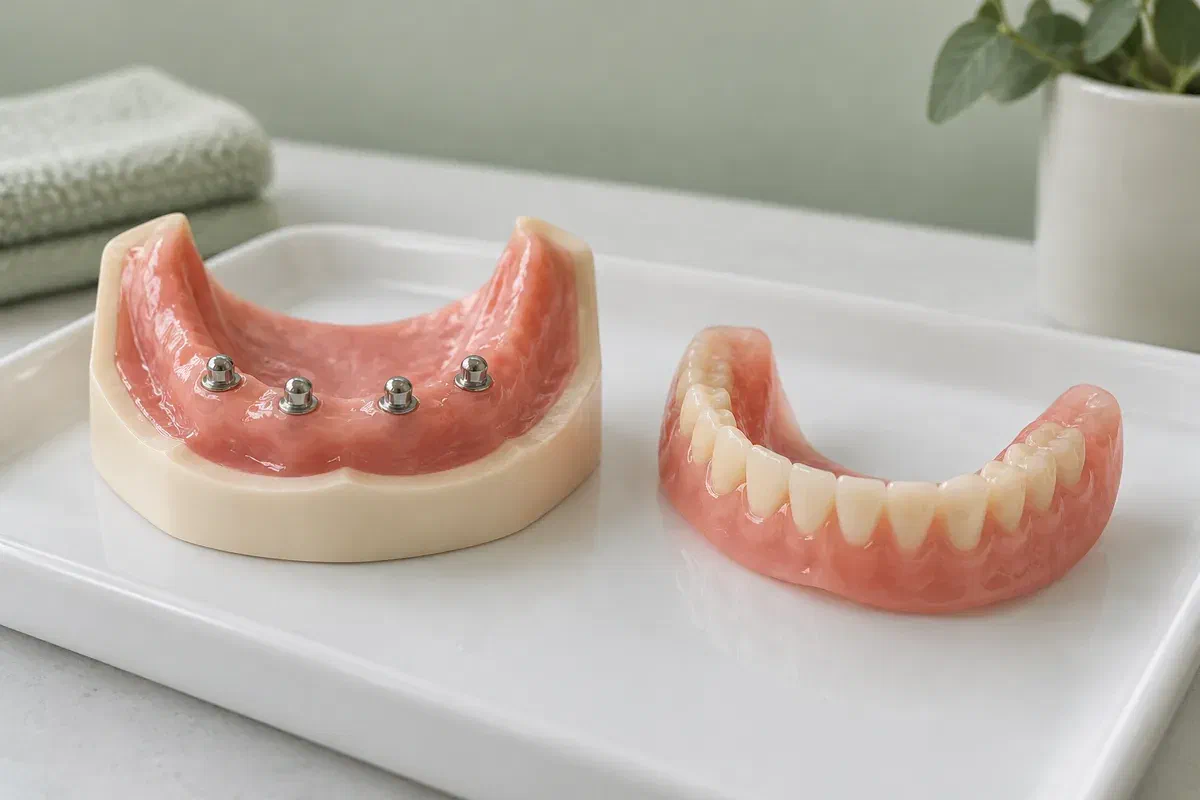
Illustrative lower-jaw model with four small attachment heads and a removable denture
What brings people to the conversation

A familiar denture problem can have more than one answer.

The cause of poor denture function matters. An attachment can add retention, but the whole appliance still needs an appropriate fit, bite, and maintenance plan.

A lower denture that shifts

Tell us when movement occurs and whether the denture has recently changed. Bring the appliance even if you have stopped wearing it. Its age, shape, and fit help the dentist distinguish a denture adjustment problem from a situation in which implant retention might be considered.

Questions about a narrow ridge

Limited bone width can make implant planning more involved. A mini implant may be an option in selected circumstances, but sufficient bone and safe positioning are still essential. A smaller diameter does not remove the need to assess the surrounding anatomy.

An unclear treatment proposal

Different advertisements may use similar names for different designs. Bring any written proposal and ask what the implants would retain, how the denture would be removed, and what future repairs might involve. The details are more useful than comparing names alone.

A mini implant is not automatically suitable for an upper denture, a back-tooth crown, or a fixed full-arch restoration. Each proposed use requires its own assessment and evidence.

Understanding the possible role

More retention is useful when the overall design is right.

For an appropriately selected lower overdenture, attachments on mini implants may help resist unwanted lifting. The removable denture may still share support with the gums. Ask the dentist to explain what the attachments would change and which aspects of denture function would still depend on its base and your mouth.

There are limits to choosing a narrower implant. Mechanical strength, loading, and the available restorative space need consideration. A proposal should explain why this design suits the planned restoration rather than presenting smaller dimensions as an advantage in every situation.

Patient information: ITI — narrow implant indications and limitations

A goal you can describe

Explain the practical change you want, such as speaking without repeatedly reseating the lower denture. That gives the consultation a useful focus and helps the dentist discuss whether the proposed retention addresses your concern.

A removable cleaning arrangement

With a removable overdenture, daily care includes taking out the appliance and cleaning the mouth and attachment areas. Ask for a demonstration of the handling involved so you can judge whether it fits your abilities and routine.

A comparison with other approaches

Discuss the complete treatment with and without mini implants. Include denture work, maintenance, and possible replacement components in that conversation. A clear comparison helps you evaluate the proposal beyond the surgical appointment.

From assessment to denture use

Plan the restoration before placing its support.

Ask which stages are proposed, who will provide them, and how the denture will be managed between appointments. Treatment timing depends on the clinical findings.

  1. Review your mouth and priorities

    The consultation considers your denture experience, medical history, oral health, and expectations. Mention smoking, grinding, medication, and any previous implant treatment. Discuss what you find difficult about meals, cleaning, or managing the current appliance.

  2. Assess the proposed implant positions

    Imaging and other records may be needed to evaluate bone and plan the restoration. The dentist explains the proposed number and design of implants, relevant risks, alternatives, and whether a referral is recommended. A narrow implant does not bypass this planning stage.

  3. Coordinate placement and healing

    If treatment proceeds, placement is a surgical procedure with individualized comfort and aftercare arrangements. Whether the denture can connect promptly or needs a healing interval depends on the plan and findings. Confirm what you may wear and eat during this period.

  4. Fit, demonstrate, and review

    The denture and attachments are assessed together. Practise inserting and removing the appliance under guidance, and ask how cleaning should be carried out. Arrange the recommended reviews and clarify who to contact if retention or comfort changes.

Living with the attachments

Include the small components in your everyday care.

Your instructions should cover both the healing phase and established denture use. Keep them accessible, especially if someone helps you with personal care.

Follow the planned wearing schedule

Use the denture only as instructed after surgery and during any adaptation period. Do not assume that an appliance that fits over the implants is ready for normal chewing. Ask for clarification if the instructions about removal or eating are unclear.

Learn the cleaning access

Have the team show you how to reach the implant heads and clean the denture without damaging its attachment housings. Mention difficulty with hand strength or vision. Choosing manageable cleaning aids is part of making the treatment workable.

Have retention changes assessed

A denture that becomes loose may need attention to attachments, fit, or other components. Avoid bending parts or attempting a home repair. Bring the appliance and any detached piece so the dentist can identify what has changed.

Patient information: Cambridge University Hospitals — implant treatment and maintenance

Comparing denture support

Consider the whole appliance and the years ahead.

The appropriate choice depends on anatomy, health, the desired restoration, and maintenance needs. Ask for an explanation of the trade-offs relevant to you.

When implant treatment is not chosen

Improve a conventional denture

Adjustment, relining, or replacement may address some denture problems without implant surgery. The examination can establish what is realistic. Ask which concern would be improved and which limitations would remain with a conventional removable appliance.

For an appropriate selected case

Use a mini implant overdenture plan

A mini implant approach may be discussed for a suitable lower denture. Confirm the intended support and retention, the condition of the denture base, and the expected maintenance. Do not choose on implant diameter without understanding the complete design.

When a different restoration is needed

Consider other implant designs

Standard-diameter implants or other restorative arrangements may be more appropriate for the proposed load and teeth. Additional procedures or specialist planning may be considered. Ask why one approach is recommended over another for your own mouth.

Mini implant questions

Get past the name and into the practical details.

A consultation can help you compare proposals that sound similar but involve different appliances, surgical plans, and long-term responsibilities.

(905) 876-4488
Are mini dental implants the same as short dental implants?
No. Mini generally describes a very narrow diameter, while short describes length. Those dimensions affect different aspects of planning. Ask which implant design is being proposed and why its dimensions suit the available bone and restoration, rather than assuming that either term means a simpler procedure.
Does a mini implant denture stay permanently fixed in my mouth?
A removable overdenture is designed to be taken out by the patient as instructed. The implants remain in the jaw while the denture connects to their attachments. Confirm the design being discussed; the word implant does not by itself tell you whether the replacement teeth are removable.
Can my existing lower denture be converted to fit mini implants?
Sometimes an existing appliance can be adapted, but its fit, condition, thickness, and available space need evaluation. A worn or unsuitable denture may need replacement. Bring it to the consultation and ask whether the estimate includes adapting it, making a new one, or providing an interim appliance.
Will mini dental implants guarantee that I can avoid a bone graft?
No. A smaller diameter can be relevant in selected narrow ridges, but bone height, quality, shape, and safe placement still matter. Ask what the imaging shows and which alternatives are appropriate. A decision about grafting should follow the assessment rather than a general promise about mini implants.
Why might tooth grinding affect a mini implant recommendation?
The forces placed on the restoration are part of the design decision, especially when considering narrow components. Tell the dentist about known grinding, previous broken dentures, or other signs of heavy loading. The discussion may change the proposed implant arrangement, protection plan, or recommended alternative.
What ongoing costs should I ask about with mini implant dentures?
Ask about examinations, professional maintenance, denture adjustments, and replacement of worn attachment parts. Clarify who supplies compatible components and what happens if the denture needs remaking later. The initial placement fee is only one part of understanding the proposed treatment over time.
Mini dental implants in Milton

Let’s look at the support your denture needs.

Visit our Bronte Street practice with your current appliance and your priorities. Start with a discussion of suitability, the complete restoration, and the questions you want answered before choosing implant treatment.

For a painful or moving existing implant, please call. Online requests are for non-urgent consultations.

Visit Milton Dental Clinic
Unit 1, 342 Bronte St. S, Milton, ON L9T 5B7
Get directions Clinic hours
Monday–Thursday
11am–7pm
Friday–Sunday
By appointment only

How can we help?

Milton Dental Clinic

Have a question about your smile? Choose the option that works best for you.

For urgent dental concerns, please call.
Messages are reviewed during clinic hours.