

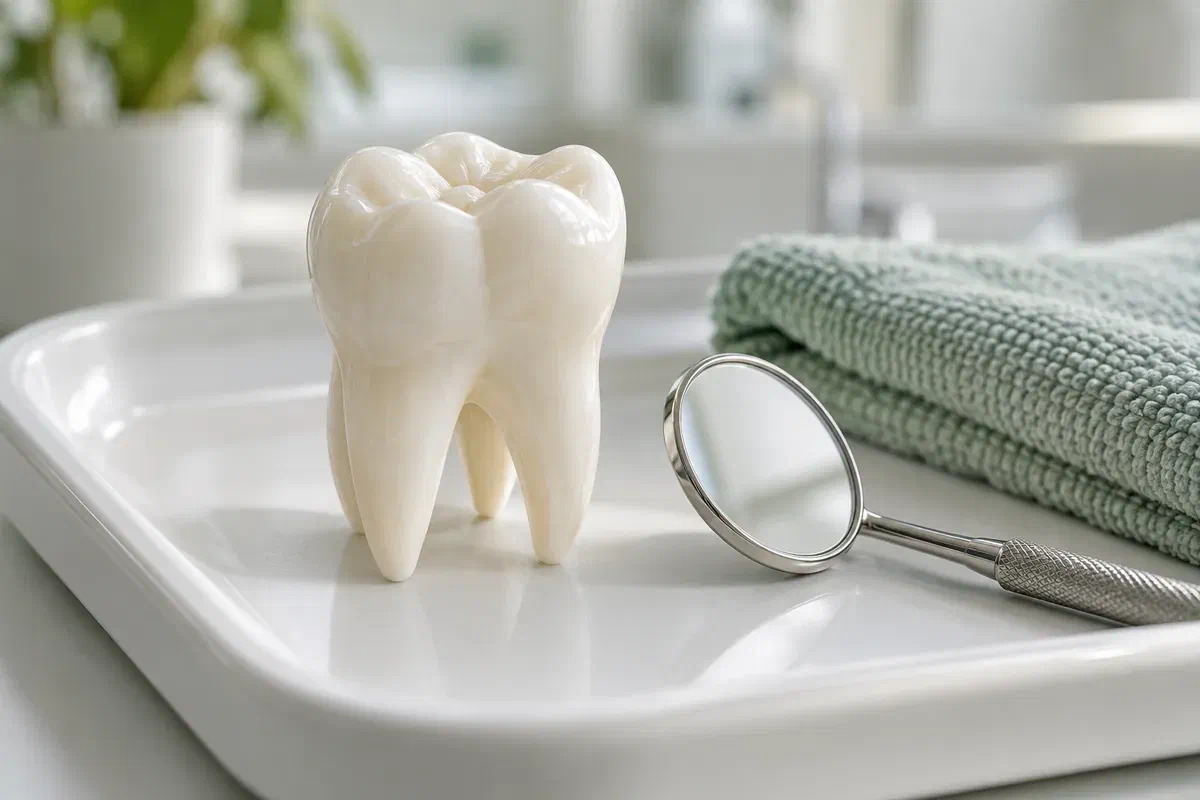
Illustrative consultation about a back tooth using a molar teaching model
Restorative Dentistry

Molar Root Canals in Brampton

Parents are often the last to book their own dental care. If a back tooth has been nagging you for weeks, households in Brampton can arrange an assessment and a root canal plan that fits family life.

Your turn in the chair

Everyone else is booked. Now it’s you.

Between school runs, shifts and everyone else’s check-ups, a sore back tooth is easy to ignore for a while. You chew on the other side, take something for the ache and keep going. Yet when the pulp, the living core of a molar, is infected or past the point of recovery, a root canal may be needed to keep the tooth.

That recommendation is never made on pain alone. The examination has to show that the pulp is genuinely the source, and that the molar has enough healthy structure and support to be rebuilt afterward. Sometimes the cause turns out to be something else entirely, such as a cracked filling or gum trouble.

Planning matters for a household in Brampton juggling several calendars. A first appointment can clarify how many visits the tooth is likely to need, whether an endodontist might handle part of it, and what final restoration will protect it, so you can arrange childcare and work around the dates.

Book an assessment for yourself
An intact molar teaching model and dental mirror on a clean tray
Signals you may have been ignoring

Pay attention to how the tooth behaves

Before the visit, think back to when it started, whether it has changed and any past fillings, crowns or knocks on that side. A rough timeline is plenty.

You avoid chewing on one side

Several things can make a molar sore to bite on. Notice whether pain comes on pressure, on release, or with hot or cold food. Try not to test it repeatedly at the dinner table; the dentist can check the bite in a controlled way.

Pain after drinks that does not stop

If a warm tea or a cold glass of juice leaves an ache for minutes rather than seconds, mention it. Tell us as well about pain that starts by itself or wakes you up. Those clues set it apart from ordinary short-lived sensitivity.

Swelling or a bump you keep noticing

Gum puffiness, a pimple-like spot that returns, or a broken area around a large filling warrants an exam even if it barely hurts. Mention a bad taste or drainage. Good days in between do not mean the problem has resolved.

Phone promptly about strong pain or facial swelling. Swelling that affects breathing or swallowing needs emergency medical care straight away.

Why it can be worth saving

One tooth, plenty of daily work

A molar you can still use contributes to comfortable, even chewing. When its inner problem can be treated and enough sound tooth remains to restore, keeping it can be a sensible choice. Cracks, gum health and the size of existing fillings all factor into that recommendation.

You deserve a clear picture of the expected benefit, not a guarantee about how long it lasts. Ask what makes the tooth a fair candidate, what might shorten its outlook, and how the restoration will support it. Finishing the canals is only part of keeping a molar.

Patient information: AAE — understanding root canal treatment

The full tooth, not just the pain

Your dentist judges whether the molar can be made useful again after internal treatment. Ask to hear what looks good and what is worrying, particularly if the tooth already carries a large filling.

A sequence you can calendar

Once you know how the canal treatment and the restoration fit together, it is easier to plan time off or arrange a sitter. Should a specialist share the work, find out which appointments happen where and how your records move between the two offices.

Comfort talked about early

Share any nerves, jaw stiffness or a past appointment that felt overwhelming. Agree on a way to ask for a pause. It helps the team plan an approach you understand and can take part in.

The road from ache to restored tooth

What each appointment is for

The number of visits depends on your tooth. Before treatment starts, ask about the diagnosis, how much work is involved, fees, alternatives and the plan for protecting the molar later.

  1. Pinpoint the problem

    Your symptoms are reviewed, then the tooth and gums are examined using suitable tests and X-rays. This is when restorability is judged, and when you can ask whether the canal layout suggests referral to an endodontist.

  2. Settle in and get numb

    Local anaesthetic numbs the tooth, and a dental dam isolates it from the rest of your mouth. The clinician opens a small access into the tooth to find the canals. Raise your hand if you feel discomfort so treatment can pause.

  3. Clean, shape and seal

    Each canal is cleared of affected tissue, shaped, disinfected and then sealed once it is ready. Until you return, a temporary may cover the access. Ask whether the internal work is complete or another canal visit is planned.

  4. Rebuild, then check healing

    A suitable final restoration is placed, often covering the cusps to guard against fracture. Confirm its timing and how to protect the tooth until then. Review appointments look at healing, not just whether it feels fine.

After you get home

Simple steps to protect the tooth

Keep the instructions for each stage of your treatment. Advice after a canal visit is not always the same as after the final restoration.

Pick softer meals for now

Wait for the numbness to pass before eating, and keep chewing on the other side until the treated molar is restored. Ask what is sensible to eat in the meantime. Kids’ leftover snacks like hard pretzels or gummies are not friendly to a temporary filling.

Protect the next date

A tooth that feels better may still be partway through treatment. If family plans change, call to talk about the remaining stage rather than letting it slide. Before you leave, check what the coming appointment is meant to finish.

Let us know if things change

Report rising pain, swelling, a bite that seems high or a temporary that has come out. Mention when you noticed it and which stage you have reached. Use medication only as directed for you and ask if you are unsure.

Possible approaches

Not every sore molar ends in a root canal

Ask how the proposed treatment fits your diagnosis, and make sure you understand the alternatives before deciding.

When the tooth can be rebuilt

Root canal and a restoration

This treats the inside of the tooth and then restores it for chewing. Consider both stages together, including any specialist care. A price for the canal work alone may not include the final restoration, so ask for the full picture.

When the pulp checks out

A different fix for a different cause

If the problem lies elsewhere, a replacement filling, bite adjustment, gum treatment or other care may be recommended. Ask which finding points there. A family member’s root canal, or your own on another tooth, is not a reason to choose one here.

When saving it is not realistic

Removal with a replacement conversation

Extraction might be suggested if the molar cannot be predictably restored, or you decide against keeping it. Talk through what the space would mean for neighbouring teeth and which replacements might fit, along with their separate stages and fees.

For Brampton households

Things parents often want to know

Molar treatment can involve a few decisions along the way. Writing down questions between errands can help you remember them.

(905) 876-4488
Can I book my root canal visits around school hours?
Often, yes. Let the front desk know which times work best when you call. Because some molar treatment involves more than one visit, it helps to plan the sequence early, including the restoration appointment.
Will I be able to eat dinner the evening after treatment?
Usually, once the numbness has gone. Choose soft foods, chew on the other side and avoid anything very hard or sticky. Ask the team about any instructions specific to your stage of treatment.
Is root canal treatment possible during pregnancy?
Tell the team if you are pregnant or might be. Timing, imaging and anaesthetic choices may be considered, and coordination with your prenatal care provider can be part of planning. Do not delay calling about swelling or severe pain.
Will my molar feel dead after the root canal?
The pulp is removed, so the tooth will no longer react to hot and cold the way it did. The surrounding tissues still sense pressure, so it should feel like part of your bite. Tell us if anything feels unusual afterward.
Should I keep brushing and flossing around a temporary filling?
Yes, gently. Brush as normal and ask whether to slide floss out sideways rather than pulling it up, which can loosen a temporary. Keeping the area clean supports the tooth until it is restored.
What does the dentist look for on a molar X-ray?
Images help show decay, the depth of fillings, the shape of roots and canals, and changes in the bone around the root tip. They are interpreted alongside your symptoms and examination. Ask the dentist to show you what they see.
Molar care for Brampton

Take care of the tooth you keep putting off

Make an appointment with our Bronte Street team and go through the complete plan for the molar, from the canals to the final restoration. Bring your symptoms, past advice, family scheduling needs and any questions about keeping the tooth.

For significant pain or swelling, please phone. Email and the online form are for non-urgent requests.

Visit Milton Dental Clinic
Unit 1, 342 Bronte St. S, Milton, ON L9T 5B7
Get directions Clinic hours
Monday–Thursday
11am–7pm
Friday–Sunday
By appointment only

Areas we serve

  • Milton
  • Oakville
  • Mississauga
  • Georgetown
  • Halton Hills
  • Acton
  • Campbellville
  • Brampton
  • Burlington
  • Puslinch
  • Rockwood
  • Erin
  • Caledon
  • Etobicoke
  • Old Milton
  • Bronte Meadows
  • Timberlea
  • Dorset Park
  • Dempsey
  • Clarke
  • Beaty
  • Coates
  • Harrison
  • Scott
  • Willmott
  • Ford
  • Bowes
  • Cobden
  • Walker
  • Mountain View
  • Milton Heights
  • Hawthorne Village
  • Valley View
  • Fallingbrook
  • Nassagaweya
  • Trafalgar
  • Esquesing
  • Nelson
  • Brookville
  • Moffat
  • Glen Williams
  • Norval
  • Limehouse
  • Stewarttown
  • Ashgrove
  • Hornby
  • Silver Creek
  • Speyside
  • Scotch Block
  • North Oakville
  • River Oaks
  • Glen Abbey
  • West Oak Trails
  • Palermo
  • Bronte Creek
  • College Park
  • Joshua Creek
  • Uptown Core
  • Preserve
  • Iroquois Ridge
  • Lisgar
  • Meadowvale
  • Meadowvale Village
  • Churchill Meadows
  • Erin Mills
  • Central Erin Mills
  • Streetsville
  • East Credit
  • Creditview
  • Heartland
  • Sheridan
  • Mount Pleasant
  • Credit Valley
  • Huttonville
  • Churchville
  • Springbrook
  • Northwest Brampton
  • Bram West
  • Fletcher's Meadow
  • Fletcher's Creek South
  • Alton Village
  • Orchard
  • Millcroft
  • Headon Forest
  • Tansley
  • Brant Hills
  • Tyandaga
  • Kilbride
  • Lowville
  • Aberfoyle
  • Morriston
  • Arkell
  • Hillsburgh
  • Freelton
  • Carlisle
  • Waterdown
  • Flamborough
  • Mountsberg

How can we help?

Milton Dental Clinic

Have a question about your smile? Choose the option that works best for you.

For urgent dental concerns, please call.
Messages are reviewed during clinic hours.