Missing teeth in more than one spot
A partial can, in some cases, fill several spaces within one arch at once. Tell us which gaps affect your eating or speech the most. Where the surrounding teeth sit will influence how the sections might join.


Deciding between a removable partial, a bridge or an implant? From Burlington, you can sit down with a dentist and compare them honestly, looking at your remaining teeth, your bite, appearance and upkeep.
Once a few teeth are missing, the real question is usually which kind of replacement makes sense for you. A partial denture is one answer. It is an appliance you lift out, with replacement teeth set into a base or framework that fits between the natural teeth remaining in the upper or lower jaw.
Its suitability rests on details an examination reveals. How many spaces there are and where they fall, whether neighbouring teeth are sound enough to lean on, and the condition of the gums all play a part. So do your bite, your cleaning habits and what you want from appearance and handling.
You don’t need to arrive with your mind made up. Come with your questions, and with any appliance you already wear, comfortable or not. Explain what has worked and what hasn’t. With that, we can lay out whether a partial, an adjustment or a fixed alternative fits your mouth and your priorities.
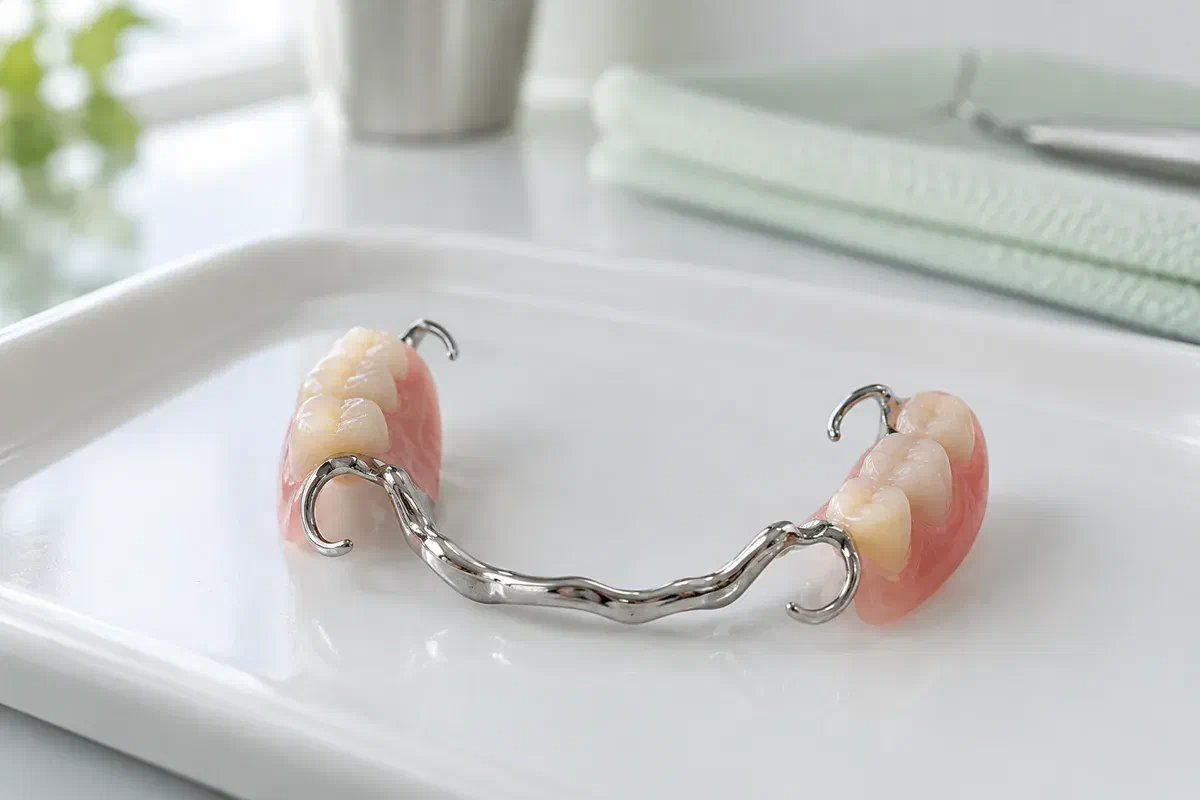
Tooth loss follows many patterns, and each one changes what an appliance must do. A thorough exam identifies the teeth that could give support and any care that should come before it.
A partial can, in some cases, fill several spaces within one arch at once. Tell us which gaps affect your eating or speech the most. Where the surrounding teeth sit will influence how the sections might join.
Movement, catching or a new sore point in an appliance you already wear is worth checking. Resist the urge to squeeze its clasps. Fit, a worn part, your bite or a change in a supporting tooth could be behind it.
If a tooth has just been removed, or is likely to be, ask how healing fits into each option’s timeline. An interim appliance or later refinements might be involved. Knowing the sequence makes the decision easier.
Whatever you choose, your own teeth come first. Their health and position, and whether they can support an appliance or a bridge, need checking before any design is agreed.
In the right mouth, a partial denture restores missing positions without asking you to give up healthy natural teeth. A good proposal names the teeth that will carry it, explains what keeps it seated and shows you what you’ll remove to clean. Seeing a demonstration model can make all of this clearer.
It also comes with an adjustment period, and it will never feel quite like your own teeth. Ask about the likely sensations, any parts that may be visible and what the appliance cannot do. Clear expectations before work begins make the comparison with fixed options fairer.
Patient information: ADA — removable partial denture designs
Replacement teeth are selected for shade, shape and position against your natural ones. Share what matters when you speak or smile, and ask when you’ll get to review the arrangement during construction.
Because it comes out, both the appliance and the teeth beneath it can be cleaned thoroughly. Ask to be shown how to handle it if small clasps are tricky. The design has to work for the person who wears it.
Compare a partial with any suitable bridge or implant plan. Look at the number of steps, the effect on remaining teeth, fees and maintenance. Then decide using your priorities and what the exam revealed.
Steps vary with the design and with any treatment needed beforehand. Ask how many appointments to expect and when you can give feedback on the appliance as it comes together.
Your spaces, remaining teeth, gums and bite are examined, and X-rays may help assess support or show other needs. Bring an existing appliance if you have one and describe trouble chewing, speaking, cleaning or with tender areas.
Go through the suggested base or framework, any components that may show and preparation that supporting teeth might need. Ask for the estimate and how alternatives compare. Impressions and bite registration guide fabrication.
Certain designs include a try-in of the framework or tooth setup. Tell us about anything that feels off. Ask which details can still be adjusted before the final appliance is made.
On delivery, seating and bite are checked and you practise placing, removing and cleaning the partial. Make sure a review is booked. That appointment addresses pressure points and how it feels in everyday use.
Ask for written guidance on the cleaner and wearing routine that suit this appliance, and check before using a product designed for a different denture material.
Place and remove it along the demonstrated path. Never press it home by biting, and don’t adjust a clasp yourself. If seating changes, call us for advice and bring the partial in.
Use the recommended brush and a cleanser compatible with its material to clear food and deposits. Hot water and harsh chemicals can cause damage. Ask how to store it while it’s out, particularly with metal components.
Brush with fluoride toothpaste and clean between teeth, including around those that support the appliance. Regular dental exams still matter. Mention repeated food trapping or a supporting tooth you find hard to reach.
Patient information: Cambridge University Hospitals — looking after dentures
Eating, talking, cleaning and removing the appliance all matter. Bring the questions that will make the decision clearer for you.
Arrange a consultation at our Bronte Street practice to discuss a partial denture or to compare it with other ways of replacing teeth. We’ll begin with your experience and explain the findings that point toward a sensible plan.
Call the clinic if a broken partial is painful or has injured your mouth. Use online requests for routine, non-urgent visits.
