A few gaps in one arch
Several spaces in the same jaw can sometimes be replaced with one appliance. Point out the gaps that matter most to you for chewing or appearance. The teeth remaining between them determine how a connecting design could work.


A partial denture is made for the mouth you have today, but it should also leave room for tomorrow. From Caledon, plan a removable design that considers future changes, upkeep, appearance and support.
It is an unusual question to ask at a first appointment, yet a useful one. Mouths change. A tooth with a questionable outlook may be lost, gums can shift, and an appliance that fits well now may need attention later. Talking about the future helps choose a design that can adapt where that’s possible.
Today’s starting point is simple enough. A partial denture is a removable appliance that holds replacement teeth on a base or framework and fits around the natural teeth remaining in one jaw. Those teeth, the gums under it and your bite are what keep it secure, and the design reflects your particular arrangement.
So we look at the teeth that are strong, the ones that are uncertain, and the appliance you may already wear. Bring it along, and tell us what has served you well. Then we can talk about adjusting it, designing a new partial with future changes in mind, or replacing the missing teeth another way.
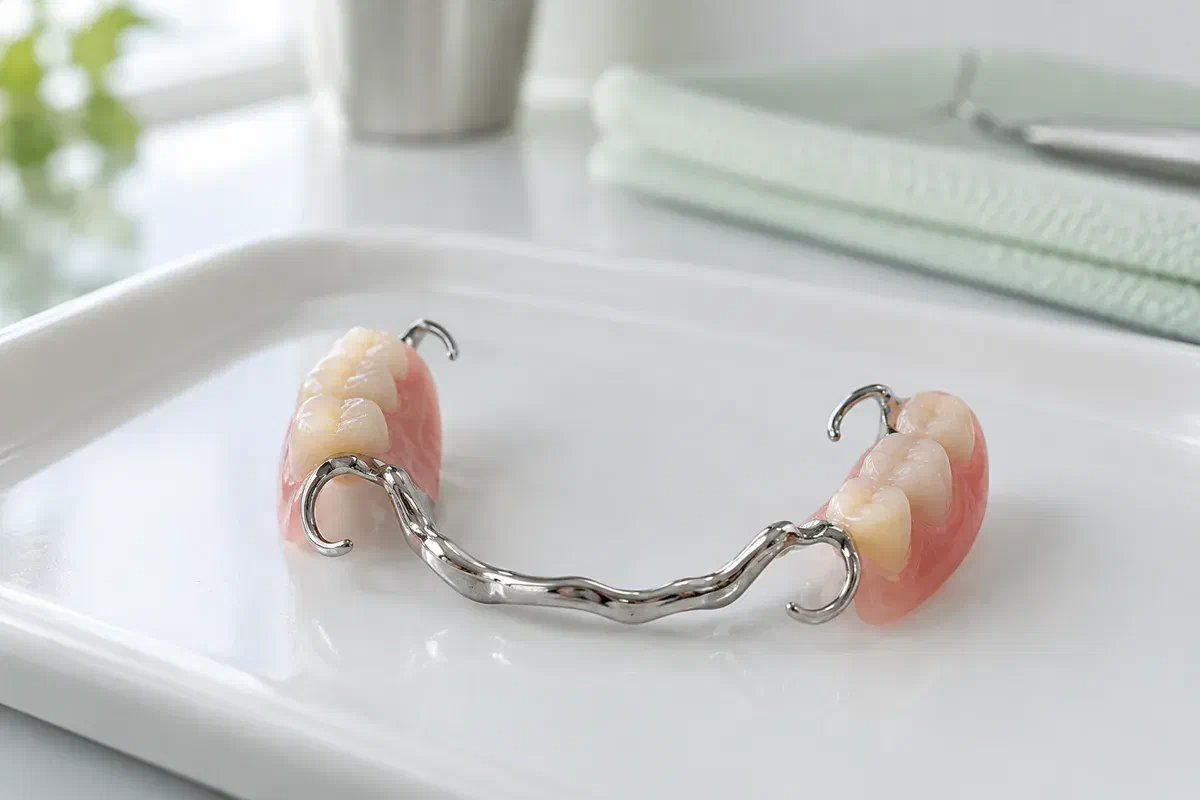
Each pattern of missing teeth sets different design goals. An exam sorts out which teeth can be relied on for support and what treatment should come first.
Several spaces in the same jaw can sometimes be replaced with one appliance. Point out the gaps that matter most to you for chewing or appearance. The teeth remaining between them determine how a connecting design could work.
If your appliance has started rocking, catching or rubbing, have it assessed. Don’t try to reshape the clasps. Over time, the fit, components, bite or a supporting tooth can change, and finding which one matters.
If a tooth may need to be removed now or later, ask how that affects the design. An interim appliance, an addition later or a different approach could be discussed. Knowing the options helps you plan with fewer surprises.
Long-term success relies on the teeth that stay. Each one’s condition, location and capacity to share the load are reviewed before the final design is settled.
Restoring the missing positions while your healthy natural teeth keep working is the core purpose of a removable partial. The plan should show which teeth support it, how it stays secure and what you remove for cleaning. Ask, too, how it might be modified if your mouth changes, and whether a sample would help you picture it.
There will be an adjustment period, and a partial never feels quite like your own teeth. Talk about how it may feel, what parts could show and what the design can and can’t accommodate later. Knowing those limits up front makes future decisions easier.
Patient information: ADA — removable partial denture designs
Replacement teeth are chosen for shade, shape and position alongside your own. Tell us what matters to you when you smile, and ask when you can review the look during construction.
Taking it out lets you clean the appliance and the teeth underneath, and lets the dentist inspect it at checkups. Ask for handling practice if clasps are tricky. The design must suit you.
Compare a partial with any suitable bridge or implant plan, including how each might change over time. Consider stages, effects on remaining teeth, fees and maintenance, then decide.
Steps depend on the design and on any treatment needed first. Ask which visits to expect, how they can be grouped for travel from Caledon, and when you’ll see the appliance developing.
The dentist checks gaps, remaining teeth, gums and bite, and may use X-rays to judge support and spot teeth with an uncertain outlook. Bring your existing appliance and mention any eating, speech or cleaning difficulties.
Agree on the base or framework, visible parts and any preparation needed. Ask whether the design could accommodate changes later. Discuss the estimate and alternatives before impressions and bite records are taken.
Depending on the design, you may try the framework or tooth arrangement before completion. Share anything that feels uncomfortable or unusual, and confirm which details can still be altered.
At delivery, we confirm how it sits and how your teeth meet, and you learn to insert, remove and clean it. Book a follow-up for pressure spots, and ask how often the appliance should be checked going forward.
Ask which cleaners and wearing schedule suit this particular partial. Check before using a product designed for another denture material.
Use the insertion and removal path you were taught. Biting it down or bending clasps can distort it over time. If it no longer seats as it should, phone for advice and bring it in.
Brush away food and deposits with the brush and cleanser we suggest. Very hot water and strong chemicals can damage materials and shorten its life. Ask how to store it when it’s out, especially with metal parts.
Your natural teeth need daily brushing with a fluoride toothpaste, and the spaces between them need flossing or small brushes, especially under clasps and rests. Routine exams help catch changes early. Mention food trapping or awkward areas.
Patient information: Cambridge University Hospitals — looking after dentures
Comfort, cleaning, eating and speaking matter now, and so does what comes next. Bring the questions on your mind.
Make an appointment at our Bronte Street practice, whether you need your first partial or want to know how long your current one can keep going. We’ll start with your experience, look closely at the teeth that hold it, and talk through a plan that can adapt as your mouth changes over the coming years.
Call the clinic if a broken partial is causing pain or injury. Online requests are for non-urgent appointments.
