Gaps along the same arch
A single appliance can sometimes replace several separate spaces in one jaw, linked by its base or framework. Tell us which spaces matter most when you eat or talk. The teeth between them affect how a connector could run.


Metal framework or acrylic base? For households in Campbellville, we explain how each partial denture design is held, how it looks, what it takes to maintain, and how visits can be grouped sensibly.
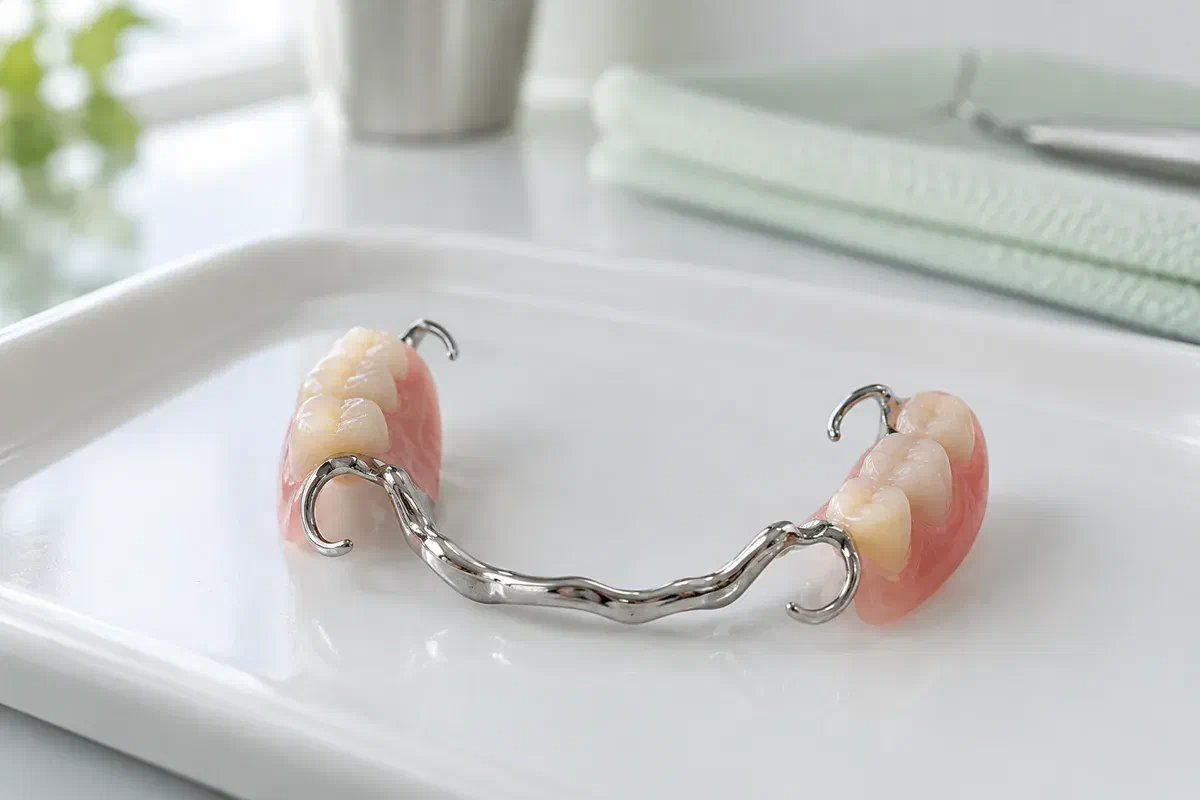
Look at the photo and you will notice thin metal arms reaching around a couple of natural teeth. People often ask about those first. They are part of a framework design: small clasps and rests that help the appliance stay put and spread the forces of chewing, positioned according to what your mouth can offer.
Not every partial uses metal. Some have an acrylic base instead. Either way, the appliance is removable and carries replacement teeth that fit between the natural ones left in one jaw. How it is held depends on those remaining teeth, the gum ridges below and the way your bite closes.
Rural schedules are often full, so it helps to have a clear plan before you start. Bring your current partial if you have one, and tell us what has and hasn’t worked. We can then discuss adjusting it, designing a new appliance or replacing the teeth another way, and map out the visits involved so you know what to expect from Campbellville before the work begins.
The way teeth have been lost decides what a partial must do. An examination identifies teeth that could anchor it and any treatment worth completing first.
A single appliance can sometimes replace several separate spaces in one jaw, linked by its base or framework. Tell us which spaces matter most when you eat or talk. The teeth between them affect how a connector could run.
Rocking, catching or a new sore point is worth checking. Don’t reshape the metal arms yourself. A bent or worn component could be behind it, but so could a change in the gums, the bite or one of the teeth it grips.
If a tooth has been taken out recently or is due to be, ask how healing affects the design. An interim acrylic appliance or later refinement is sometimes involved. Understanding the order helps you plan the time in between.
A framework is only as good as the teeth it rests on. Their health, position and ability to support part of the load are assessed before any design is chosen.
With careful planning, a partial denture restores missing positions and lets you keep healthy natural teeth. The proposal should show which teeth carry the load, how the appliance resists lifting and what comes out for cleaning. Holding an example in your hand is often the quickest way to understand it.
Every removable appliance takes adjustment, and none feels like natural teeth. Ask what the metal or acrylic will feel like against your tongue, which parts may show and what the design can’t do. A grounded conversation helps more than a promise you won’t notice it.
Patient information: ADA — removable partial denture designs
Replacement teeth are chosen for shape, shade and position to work with your own. Let us know which areas are visible when you speak, and ask when you can see the arrangement before it’s finished.
Lifting it out lets you clean the appliance and the teeth it touches. If clasps feel fiddly, practise in the chair until it’s easy. A design is only right if you can manage it every day.
Set the partial beside any bridge or implant plan that suits your mouth. How many stages does each involve, what does it ask of your remaining teeth, and what will it cost to build and keep up? Decide with your exam results and your own priorities in mind.
The sequence depends on design and on any other dental care required. Ask for the full plan up front, and whether a family member’s checkup could be booked alongside one of your visits.
Your spaces, remaining teeth, gums and bite are examined, sometimes with X-rays to assess support. Bring your old appliance and mention any trouble with chewing, speech, cleaning or tender spots.
We go over the proposed base or framework, where clasps and rests would sit and whether teeth need minor preparation first. Ask about the estimate and alternatives. Impressions and a bite record guide construction.
Framework designs often include a visit to check the metal before teeth are added, or to try the tooth arrangement. Describe how it feels. Raise any concern while changes are still straightforward.
On fitting day, we confirm that the appliance sits fully and that your teeth meet evenly, and you practise putting it in and taking it out until it feels manageable. Book your review before leaving. That visit addresses pressure spots and how it’s working through ordinary days at home and at work.
Ask which wearing schedule and cleaning products suit this appliance’s materials. Check before using a cleaner designed for another type of denture, since some products are unsuitable for metal.
Follow the direction you were shown. Biting it into place can bend a clasp, and home adjustments can change the fit. If it stops seating properly, call us and bring it in.
Brush away food and deposits with the brush and product we’ve suggested for its materials. Avoid hot water and strong chemicals. Store it in a case, as advised for metal components, whenever it’s out.
Fluoride toothpaste and daily cleaning between teeth protect the ones that hold the framework. Regular exams still matter. Mention food trapping or a supporting tooth you can’t clean well.
Patient information: Cambridge University Hospitals — looking after dentures
Comfort, eating, speaking and cleaning all depend on the design. Bring the questions that matter most to you.
Book time with Dr. Anjum at our Bronte Street practice to look at a framework or acrylic partial, or to have your current one reassessed. We’ll start with your experience, then explain the findings that point to a sensible design.
Call if a broken appliance or bent clasp is causing pain or injury. Online requests are meant for non-urgent visits.
