Spaces in several places
A single removable piece can sometimes fill separate gaps in one jaw. Let us know which spaces you notice most when eating or talking. The teeth standing between them influence how the parts might link.


Most of living with a partial happens at your own sink, morning and night. For households in Erin and Hillsburgh, we plan a removable appliance around that home routine, as well as fit, support and appearance.
Ten minutes before bed: the partial comes out, gets a brush, goes into its case, and your own teeth get their turn. That small ritual matters more than most people expect. It keeps the appliance fresh and protects the natural teeth it depends on, so it deserves a place in planning from the start.
The appliance itself is removable. Replacement teeth sit on an acrylic base or a metal framework, shaped to fit around the natural teeth left in one arch. Those teeth, the gums beneath and your bite all help it stay steady, and each design is made to suit one mouth.
Tell us how your evenings and mornings run now, and where you struggle. Bring any partial you already have, including one you’ve stopped wearing. With that picture, we can discuss an adjustment, a new appliance or a different approach that fits the routine you can realistically keep.
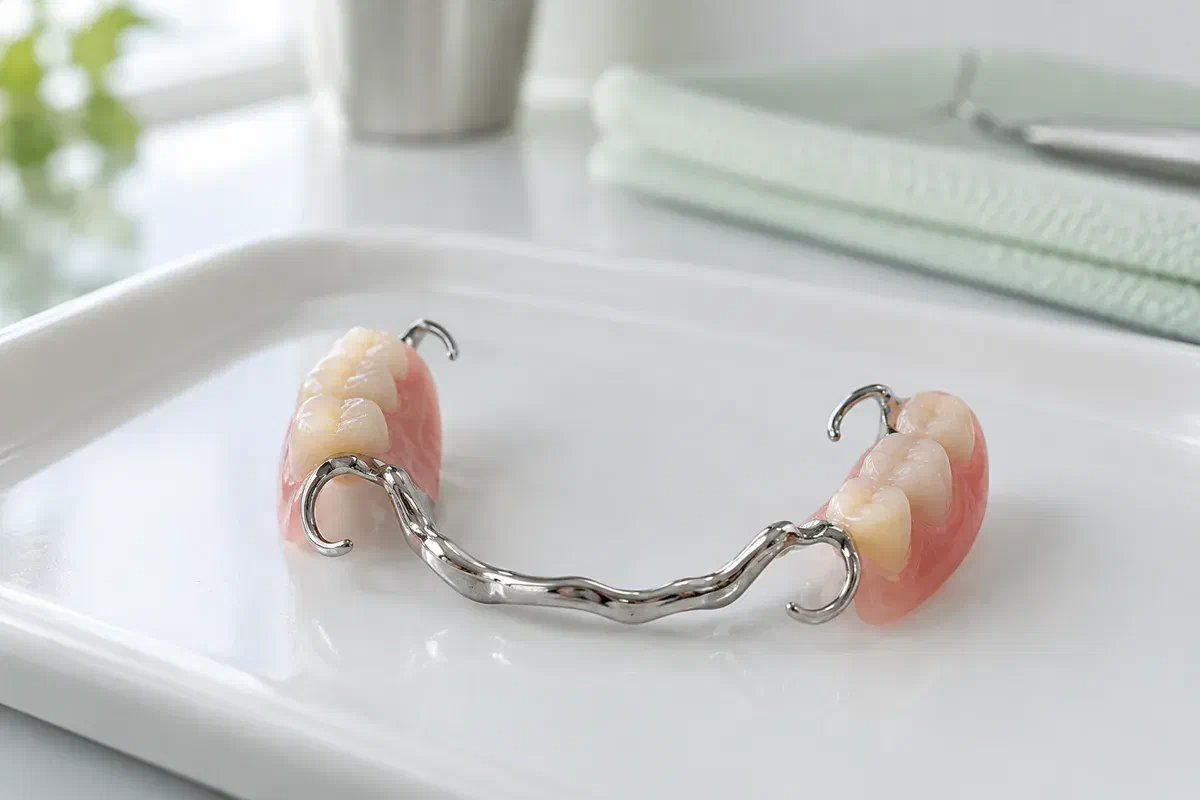
Tooth loss comes in many patterns, and each changes what an appliance needs to do. An examination reveals which teeth could support it and whether anything else needs care first.
A single removable piece can sometimes fill separate gaps in one jaw. Let us know which spaces you notice most when eating or talking. The teeth standing between them influence how the parts might link.
Rocking, catching or soreness in a familiar appliance is worth a look. Leave the clasps untouched. A change in its fit, a component, your bite or one of the teeth it rests on may explain it.
Ask how healing affects timing, and whether a temporary appliance or later adjustments will be needed. Knowing the order of steps helps rural households plan visits and the weeks in between.
Your remaining teeth come first. Before a final design is chosen, we look at how healthy each one is, where it sits and how much of the appliance it could safely carry, and we plan any care they need into the schedule.
With good planning, a removable partial fills missing positions while you keep healthy natural teeth. You should understand which teeth support it, what holds it down and what you’ll lift out each night. If it’s hard to imagine, ask to see a sample and practise with it.
Getting used to any partial takes time, and it won’t feel like your own teeth. Talk through the likely sensations, any visible parts and what the appliance can’t do. Honest expectations make the home routine easier to settle into.
Patient information: ADA — removable partial denture designs
Shade, shape and position are chosen to suit your remaining teeth. Mention what matters when you smile or speak, and ask when you’ll be able to see and comment on the arrangement.
Because it comes out, you can clean the appliance thoroughly and reach the teeth underneath. Ask for a demonstration if clasps are fiddly. The design must suit the person who looks after it.
Compare a partial with suitable bridge or implant options. Think about stages, the effect on remaining teeth, fees and upkeep, then decide using your findings and your priorities.
The sequence depends on the design and on any treatment needed first. Ask for the planned visits, so you can group trips where possible, and for the points at which you’ll see the appliance taking shape.
Dr. Anjum examines the spaces, your remaining teeth, gums and bite, and imaging may help judge support. Bring any previous partial and describe trouble with eating, speaking, cleaning or sore spots.
Go over the suggested base or framework, any visible parts and whether supporting teeth need work beforehand. Ask about the estimate and alternatives. Records of your mouth and bite guide the lab.
Some designs allow an interim try of the framework or tooth arrangement before the final stage. Take a moment to notice how it sits against your tongue and cheeks. Describe anything unfamiliar and ask which details are still open to change.
At delivery, we confirm the fit and how your teeth come together. We’ll go through insertion, removal and the night-time cleaning steps with you until they feel natural. Book a review to deal with pressure spots and daily wear.
Your instructions should name a wearing schedule and suitable cleaners for this particular appliance. Ask before using a product made for a different denture material.
Follow the insertion and removal path you were shown. Don’t bite it into place or bend clasps at home. If it no longer seats as expected, call for advice and bring it along.
Clean off food and deposits with the denture brush and cleanser we recommend, then store it as advised in a proper case. Hot water and harsh chemicals can damage the material, so check before trying a new product.
With the partial safely in its case, turn to your own teeth. A fluoride toothpaste, plus floss or small interdental brushes, keeps the teeth that support it in good shape, and those are the ones that matter most for its fit. Regular checkups still matter too. Mention any spot where food keeps collecting or a tooth that’s hard to reach.
Patient information: Cambridge University Hospitals — looking after dentures
Cleaning, storage, eating and speaking all shape how a partial fits into your life. Bring the questions that come up at home.
Arrange time at our Bronte Street practice to talk about getting a partial denture, or to have yours checked. We’ll ask how you care for it at home, examine your remaining teeth and explain what we find.
Please call if a broken appliance is painful or has caused an injury. The online form is for routine requests.
