More than one space in an arch
One removable appliance can sometimes fill several gaps in the same jaw. Let us know which spaces bother you most when you eat or talk. Where your remaining teeth sit will guide how the pieces might be joined and held.


Some teeth are gone and others are still working hard. A partial denture plan in Milton looks at both, with time to talk about how the appliance will look, feel, stay steady and get cleaned each day.
Most people first think about a partial denture during an ordinary meal, when food slips into a space or one side of the mouth does all the chewing. The appliance itself is removable. It carries replacement teeth on a base or a framework and works alongside the natural teeth you still have in that arch.
How it stays put depends on your particular mouth. The number and position of the spaces, the strength of nearby teeth, and the gums underneath all shape the design. Your bite and the way you clean each day count too, as do your own wishes about how it should look and how easy it is to handle.
When you already live in Milton, an early conversation is simple to fit in. Bring any partial you already own, even one sitting in a drawer because it never felt right. Tell us what bothered you about it. That history helps us decide whether an adjustment, a new appliance or a different kind of replacement makes more sense.
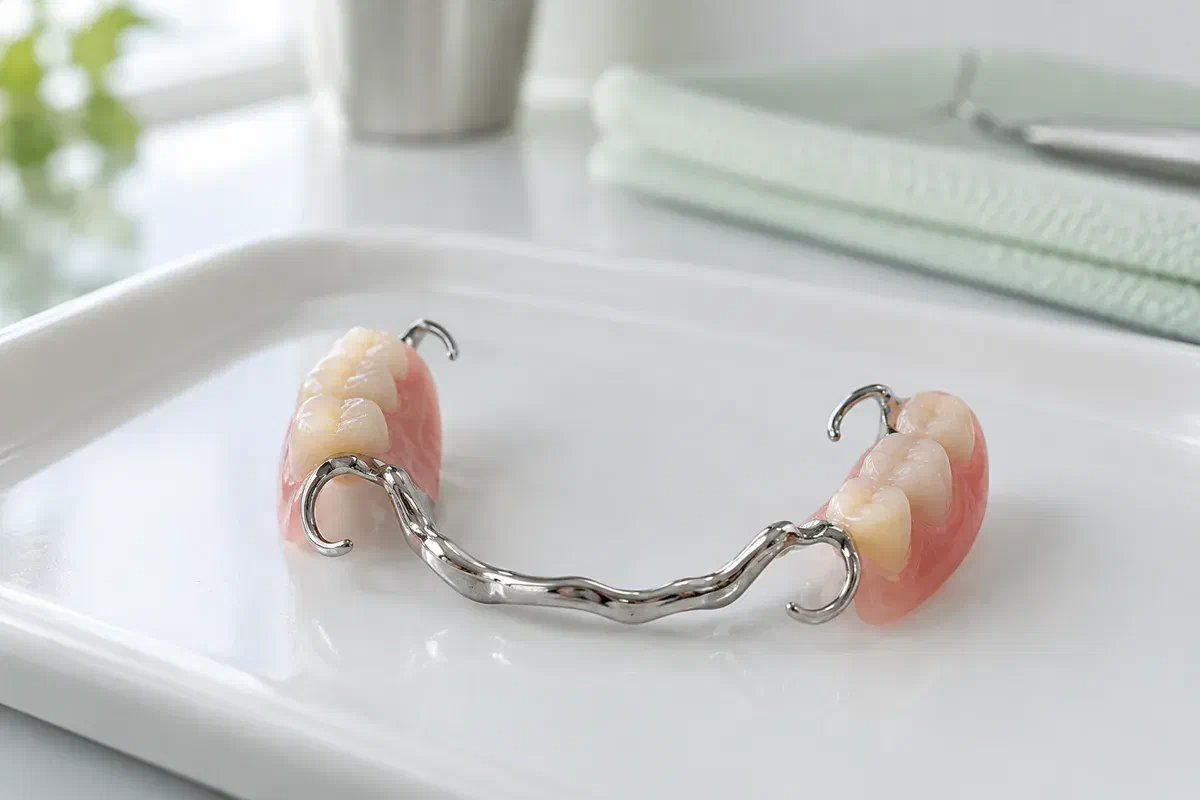
Every pattern of missing teeth asks for its own design. An examination shows which teeth could offer support and whether anything else needs attention before an appliance is made.
One removable appliance can sometimes fill several gaps in the same jaw. Let us know which spaces bother you most when you eat or talk. Where your remaining teeth sit will guide how the pieces might be joined and held.
If your current appliance now wobbles, snags or presses in a new spot, have it looked at. Please don’t bend the clasps at home. The cause could be the fit, a worn part, your bite or a change in a tooth it leans on.
After an extraction, or while one is being discussed, ask how healing will affect the timeline. A temporary arrangement or later refinements may be part of the plan. Knowing the order of steps makes the in-between weeks easier to prepare for.
Your own teeth are central to this plan. Their health and position, and whether they can safely help hold a partial, need to be checked before the final design is chosen.
For many adults, a partial denture is a sensible way to fill missing positions while holding on to healthy natural teeth. A clear plan should tell you which teeth give support, what keeps the appliance in place and which parts come out for cleaning. If the explanation is hard to picture, ask to see a sample.
Wearing one takes some getting used to, and it will never feel exactly like your own teeth. Before anything is made, talk through how it is likely to feel, which parts might show and what it cannot do. Honest expectations serve you far better than being told you will forget it is there.
Patient information: ADA — removable partial denture designs
The shape, shade and placement of the replacement teeth are matched with what surrounds them. Tell us what you care about when you talk or laugh, and ask at what stage you can review the look before it is finished.
Because it comes out, you can reach every surface of the appliance and the teeth beneath it. If small parts are hard to grip, ask us to show you how to handle it. The design has to be workable for the person wearing it.
A partial can be compared with suitable bridge or implant options. Look at the steps involved, how each affects your remaining teeth, the fees and the upkeep. Then decide based on your priorities and what the examination found.
The number of visits depends on the design and on any other treatment your mouth needs first. Ask which appointments are planned and when you can comment on the appliance as it takes shape.
Dr. Anjum checks the spaces, your remaining teeth, gums and bite. X-rays may help judge support or reveal other needs. Bring any earlier appliance and mention trouble with chewing, speech, cleaning or tender spots.
Go over the suggested base or framework, any parts that may show, and preparation the supporting teeth might need. Ask about the estimate and other choices. Impressions and bite records then guide how the appliance is built.
With some designs, an in-between visit lets us check the framework or the arrangement of teeth. Say so if anything feels odd. This is the moment to ask what can still be changed before the work is completed.
When it is ready, the seating and bite are checked and you practise putting it in, taking it out and caring for it. Confirm when your review will be. That follow-up is where pressure spots and daily wearing are discussed.
Your instructions should name the products and wearing schedule that suit this specific partial. Check with us before trying a cleaner made for a different denture material.
Use the path you were shown when putting it in and taking it out. Never bite it into place or try to reshape a clasp yourself. If it stops seating properly, call for advice and bring it in so we can check it.
Brush away food and buildup with the suggested brush and a cleanser that suits the material. Very hot water and harsh chemicals can harm it. Ask how to store it while it is out, especially if it has metal parts.
Brush your natural teeth with fluoride toothpaste and clean between them, paying attention to the ones that support the partial. Regular checkups still matter. Tell us if food keeps getting trapped or a supporting tooth is hard to reach.
Patient information: Cambridge University Hospitals — looking after dentures
Meals, conversation, cleaning and taking it out all factor into the choice. Bring whatever questions matter in your daily routine.
Book a visit at our Bronte Street practice to talk about a first partial denture or one that no longer feels right. We’ll begin with what you have noticed, then explain the findings that guide a suitable plan for replacing the missing teeth.
Phone us when a broken partial is hurting you or has cut your mouth. Online booking is meant for non-urgent appointments.
