Gaps in a few places
Several spaces in the same arch can sometimes be filled by one removable piece. Let us know which ones make talking or eating harder. The position of the teeth between them guides how it might be connected.


Talking all day for work and missing a few teeth? A partial denture plan for Mississauga adults can weigh speech, appearance, how many visits it takes and the daily care it will need.
When your job involves a lot of talking, missing teeth show up in odd ways. A word comes out slightly wrong, you start chewing only on one side at lunch, or you smile with your mouth closed in video calls. Those everyday details are a good place to begin a conversation about a removable partial.
The appliance carries artificial teeth on a base or framework and slots in among the natural teeth left in one jaw. You can take it out. Its stability comes from the teeth around the spaces, the gum beneath, and the way your teeth come together when you bite.
Time matters too, so it helps to know the plan in advance. Tell us how many appointments you can realistically manage and which days suit you. If you already have a partial, bring it and explain what frustrates you about it, so we can think about adjustment, replacement or another approach.
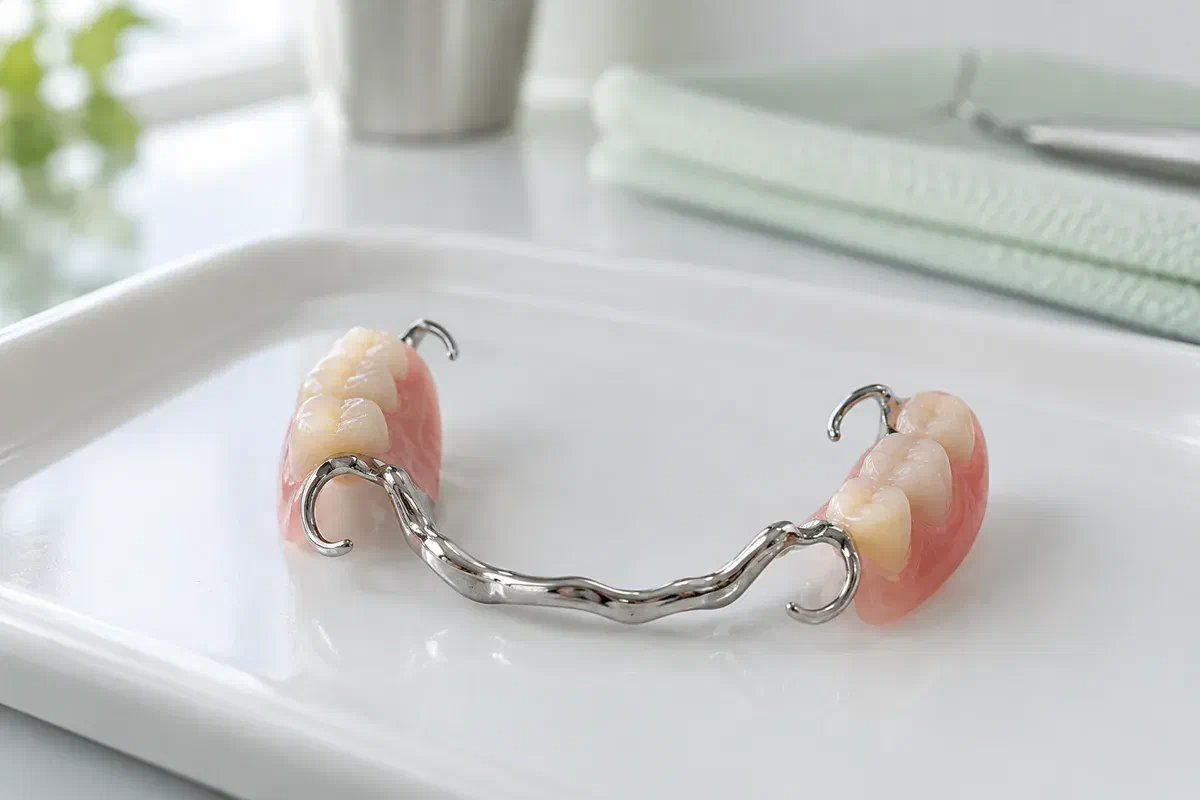
The arrangement of missing teeth decides what an appliance must do. An examination shows which teeth can lend support and whether treatment is needed first.
Several spaces in the same arch can sometimes be filled by one removable piece. Let us know which ones make talking or eating harder. The position of the teeth between them guides how it might be connected.
Lifting while you talk, catching on the tongue or pressing somewhere new are all signs to have it checked. Please leave the clasps as they are. The cause may lie in the fit, a part, your bite or a supporting tooth.
Ask how healing after an extraction changes the timeline, and whether you might need something temporary in the meantime. Later refinements are common. Knowing the order of visits helps you plan time away from work.
The teeth you still have shape the design. We assess their health and position, and whether they can help hold a partial, before the final plan is chosen.
A partial denture can bring back missing tooth positions without removing natural teeth that are doing their job. You should leave the planning visit knowing which teeth hold it, what keeps it steady during speech and which parts come out at night. If any of that is unclear, ask to see a model.
There will be a learning curve, and it won’t feel exactly like natural teeth. Talk about how it may affect certain sounds, which parts could show and the limits of what it can do. Being prepared for an adjustment period is far more useful than expecting to forget it straight away.
Patient information: ADA — removable partial denture designs
The shade, form and placement of the replacement teeth are chosen to suit your remaining teeth. Mention what matters to you when speaking in front of others, and ask when you can review the appearance.
Taking it out gives you full access to the appliance and the teeth it rests against. If the clasps are hard to grip, ask for practice in the chair. You need a design you can handle quickly and confidently.
Your partial can be compared with appropriate bridge or implant options. Consider the number of visits, the effect on your other teeth, fees and maintenance, and weigh them against your exam findings.
The number and spacing of appointments depend on the design and on any other dental work needed. Ask for the full sequence early, including the visits where you’ll see the appliance in progress.
We examine the spaces, remaining teeth, gum health and bite, sometimes with imaging to judge support. Bring any old appliance and mention difficulties with chewing, pronunciation, cleaning or sore areas.
Review the suggested base or framework, which components might be visible and whether any teeth need preparing. Ask for the estimate and the alternatives. Impressions and bite records are taken to guide the lab.
Depending on the design, you may see the framework or tooth setup before it is finished. Try speaking a few sentences and tell us what feels unusual. Ask which details can still be changed.
We confirm how it seats and how your teeth meet, then you practise putting it in, taking it out and cleaning it. Book your review before leaving. That visit covers sore spots and how it feels through a working day.
Ask which products and wearing pattern suit this particular appliance. If a cleaner was made for another kind of denture, check with us before using it.
Insert and remove it along the path you practised. Pushing it down with your teeth or bending a clasp can damage it. If it stops fitting the way it did, call and bring it in for a check.
Brush off food and buildup with the recommended brush and a suitable cleanser. Very hot water and strong chemicals can harm denture materials. Keep a proper storage case handy, and ask what suits a partial with metal parts.
Use fluoride toothpaste and clean between teeth, especially around those that support the partial. Keep your regular checkups. Tell us if food keeps collecting in one area or a supporting tooth is awkward to reach.
Patient information: Cambridge University Hospitals — looking after dentures
Speech, meals, cleaning and handling all count. Bring the questions that matter in your working week and at home.
Book a consultation at our Bronte Street practice to discuss a first partial denture or one that is letting you down. We’ll start with your experience and schedule, then explain the findings that guide a suitable replacement.
Phone us if a broken appliance is painful or has hurt your gums or cheek. Online requests are for appointments that aren’t urgent.
