

Illustrative consultation about a premolar tooth concern
Restorative Dentistry

Premolar Root Canals

A smaller back tooth still deserves careful attention. Explore premolar root canal care in Milton, with a clear diagnosis, an individualized treatment plan, and guidance for the restoration afterward.

A closer look at premolar root canals

A small chewing tooth with its own care needs.

Premolars sit between the canine teeth and the larger molars. They help with chewing and may also be visible when you smile. If the pulp inside a premolar is irreversibly inflamed or infected, root canal treatment may be one part of a plan to retain and restore that tooth.

A premolar’s modest size does not tell the whole story about its internal anatomy. The roots and canals vary, and an existing filling or crown can add another consideration. The examination needs to establish the cause of the concern and whether the tooth can support a useful restoration after treatment.

At Milton Dental Clinic, you can start by describing what has changed, even if you do not know the tooth’s name. We will discuss the findings, possible treatment stages, and the restoration needed afterward. Your questions about comfort, appearance, and scheduling are part of that conversation.

Talk about a premolar concern
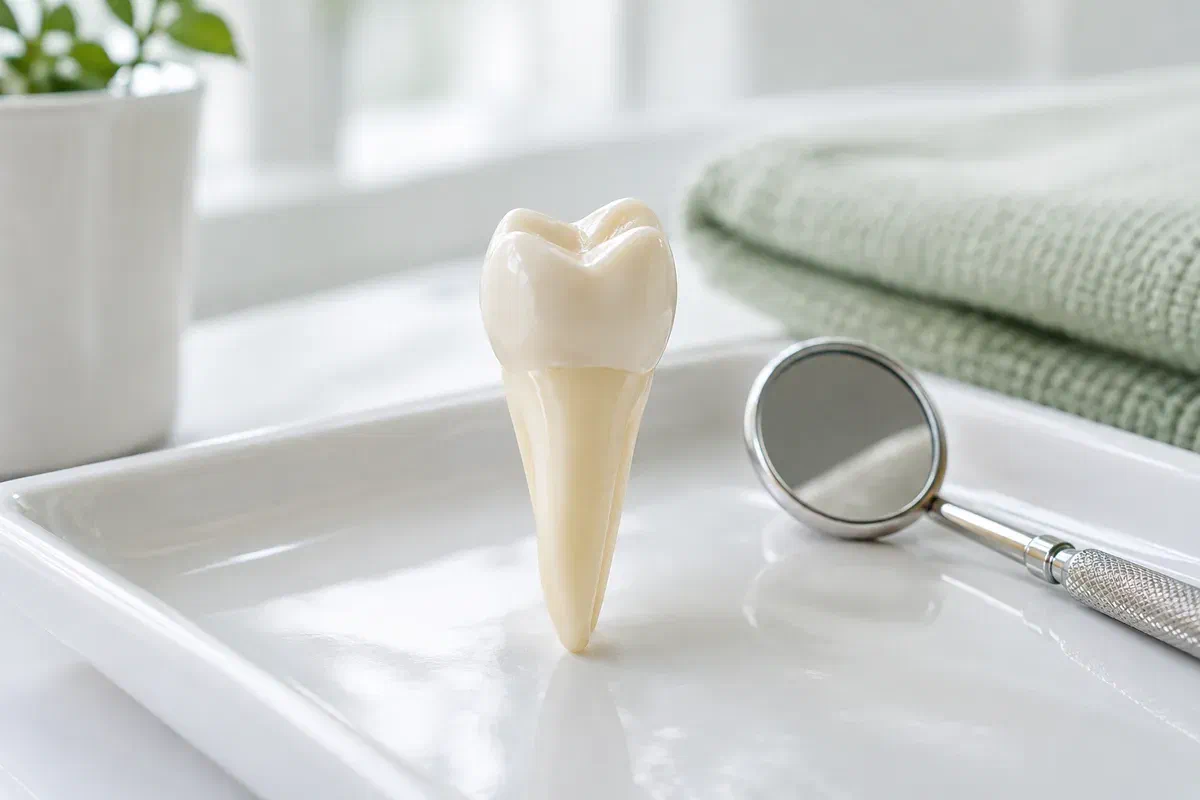
An intact premolar teaching model with a narrow root beside a dental mirror
Recognizing a change

Describe the pattern, not just the pain.

Several problems can make a premolar uncomfortable. Tell us what brings the feeling on, how long it lasts, and whether the tooth has received treatment before.

Sensitivity that has changed

A brief response to a cold drink is different from discomfort that continues afterward. Explain whether the sensation is new, becoming stronger, or occurring without a trigger. The dentist uses that history alongside examination and testing to investigate the pulp.

A cusp or filling that has broken

A premolar may lose part of its chewing surface around an existing repair. The visible break does not establish how deeply the tooth is affected. Bring any fragment you have and describe whether the damage was followed by pain or sensitivity.

An uncertain tooth in the middle of the arch

It can be difficult to identify one tooth among neighbouring teeth when discomfort spreads. Point out the area rather than guessing which tooth needs treatment. A careful diagnosis helps avoid directing care at a tooth that is not the source.

Swelling, persistent pain, or a recurring gum bump deserves an assessment even if the tooth is sometimes comfortable. Call for advice about the timing of a visit.

Considering retention

Plan for the tooth’s function and its visible place in your smile.

If the premolar is a suitable candidate, internal treatment and an appropriate restoration may allow it to remain in use. The decision depends on the diagnosis, remaining structure, supporting tissues, and your overall treatment needs. Ask what makes retaining this particular tooth reasonable.

The final restoration matters to both the chewing surface and appearance. A premolar that shows when you smile may bring different questions from a less visible tooth. Discuss these priorities before treatment so the proposed restoration is part of the plan from the start.

Patient information: CDA — root canal treatment and restoring the tooth

A diagnosis you can understand

Ask which findings point to a pulp problem and whether any uncertainty remains. You should know what the treatment is intended to address and why another approach, such as replacing a filling alone, would or would not be sufficient.

A view of the whole treatment

The root canal, temporary protection, build-up, and final restoration may involve separate stages. Seeing them together helps you understand the commitment and compare it with other reasonable choices.

A conversation about your priorities

Tell us if the tooth is visible in your smile, if you have a demanding work schedule, or if a previous appointment made you anxious. These details help the team explain practical arrangements without overlooking the clinical requirements.

Your premolar treatment, explained

From identifying the tooth to completing its repair.

Ask what each appointment will accomplish and which clinician will provide it. A premolar can still require specialist care when its anatomy or condition makes treatment more involved.

  1. Investigate the symptoms and structure

    The dentist reviews your history, examines the area, and uses relevant tests and imaging. The assessment considers both the pulp and whether the tooth can be restored. Mention earlier root treatment, orthodontic work, trauma, or repeated problems with a restoration.

  2. Prepare the tooth for treatment

    If root canal treatment is indicated and you choose to proceed, local anaesthetic is used and the tooth is isolated with a dental dam. The clinician accesses the canal system. Agree on a pause signal and speak up if you are uncomfortable.

  3. Treat the internal spaces

    The canal system is cleaned, disinfected, shaped, and filled according to the clinical plan. Anatomy and the condition of the tooth affect the work involved. A temporary filling may be used between stages, with instructions for protecting it until the next visit.

  4. Arrange the final restoration

    Once the internal treatment is ready for restoration, the tooth receives the planned build-up and protective repair as indicated. Confirm the timing, cost, and review schedule. Make sure you know whether your present restoration is temporary or the final one.

Caring for the premolar afterward

Protect the tooth through the remaining stages.

Follow the instructions for your own treatment and ask if anything is unclear. Keep the clinic informed about symptoms that worsen or interfere with normal activities.

Take care while sensation returns

Avoid chewing while your mouth is numb and be cautious with hot drinks. Once sensation returns, follow the advice about keeping pressure off the treated premolar. The right eating precautions depend on the temporary or final restoration in place.

Notice the direction of change

Tell the team about increasing discomfort, new swelling, or a tooth that seems to meet first when you bite. Explain whether the feeling is improving, unchanged, or worsening. That information is more useful than repeatedly testing the tooth with hard foods.

Finish the restorative plan

Keep the appointment for the final repair even if the premolar feels better. Continue cleaning as advised and report a temporary filling that loosens. If work or travel affects scheduling, contact the clinic so the unfinished stage can be discussed.

Choosing a path for the tooth

Match the treatment to the diagnosis and the remaining structure.

The best discussion includes what each option can achieve, what it involves, and what may happen if the problem is left untreated.

When internal treatment is appropriate

Retain and restore the premolar

Root canal care may be considered when the pulp problem requires it and the tooth is restorable. Discuss the outlook and final repair together. The decision should account for the whole tooth, not just the possibility of treating its canals.

When the findings support another approach

Consider a more limited intervention

Not every sensitive or broken premolar needs a root canal. A restoration or another treatment may be suitable depending on the diagnosis. Ask which findings support that approach and what follow-up would be needed to assess the response.

When restoration is not a reasonable option

Discuss removal and the space

If the tooth cannot be retained appropriately, extraction and possible replacement can be discussed. Ask how the space would affect your smile and bite, which replacement options are suitable, and what additional appointments or healing would be involved.

Premolar root canal questions

Small details can make the plan easier to follow.

You do not need to know the technical terms before your visit. Ask for the tooth and proposed treatment to be shown or explained in a way that makes sense to you.

(905) 876-4488
Where are the premolars in my mouth?
They are the teeth between the pointed canine teeth and the larger molars toward the back. If you are unsure which tooth is being discussed, ask the dentist to point it out on a model or image. Knowing the location helps you follow the treatment plan and describe symptoms.
Is a premolar root canal always a single-canal treatment?
No. Premolar canal systems vary, and some have more complex anatomy than their external shape suggests. The clinician assesses the particular tooth and any features that may affect treatment. Ask how those findings influence the proposed appointment sequence or need for an endodontist.
Will my treated premolar need its chewing cusps covered?
That depends on the remaining structure, existing damage, and forces on the tooth. A crown or another protective restoration may be recommended. Ask why the proposed amount of coverage is suitable and whether a more conservative repair is reasonable for the findings in your case.
Can a premolar with an existing crown still be assessed for root canal treatment?
Yes. The dentist will consider the crown’s condition, access to the tooth, and whether the restoration can be retained or needs replacement. Bring any details about when it was fitted and problems you have noticed. Do not assume the crown must always be removed or will always be reusable.
How can I plan work commitments around premolar treatment?
Ask for the expected appointment length and whether more than one treatment visit is likely. Discuss the anaesthetic or other comfort arrangements and any instructions that affect driving or work. Leave room in the plan for the final restoration, which may be a separate appointment.
Should I bring an earlier X-ray of the premolar?
Previous records can be helpful, particularly after earlier treatment or a recent assessment elsewhere. Ask how to arrange their transfer. The dentist will decide whether those records answer the present question or whether updated imaging is needed to evaluate the tooth’s current condition.
Premolar root canals in Milton

Let’s give this tooth a plan of its own.

Visit our Bronte Street practice to discuss a premolar concern or advice you have already received. Start with an assessment, then review the steps needed to treat and restore the tooth appropriately.

For significant pain or swelling, call the clinic. Online enquiries are intended for non-urgent appointment requests.

Visit Milton Dental Clinic
Unit 1, 342 Bronte St. S, Milton, ON L9T 5B7
Get directions Clinic hours
Monday–Thursday
11am–7pm
Friday–Sunday
By appointment only

How can we help?

Milton Dental Clinic

Have a question about your smile? Choose the option that works best for you.

For urgent dental concerns, please call.
Messages are reviewed during clinic hours.