

Illustrative consultation about a premolar tooth concern
Restorative Dentistry

Premolar Root Canals in Acton

The words root canal make plenty of people tense up. For anyone in Acton facing premolar treatment with some nerves, we explain each step before it happens, agree on how you can pause, and plan the repair together.

Easing the worry

Knowing what comes next makes it easier.

Much of the dread around root canals comes from not knowing what will happen in the chair. A clear explanation beforehand, a way to stop when you need to, and a dentist who checks in as the work goes on can change how the whole appointment feels.

The tooth involved here is a premolar, one of the smaller chewing teeth between your canine and your molars. Treatment is considered when its pulp is irreversibly inflamed or infected and the tooth is worth restoring. Premolar canals vary in shape and number, so the plan is built around your particular tooth.

Coming from Acton, you can arrange a first visit at our Bronte Street practice that is simply a conversation and examination. Tell us what worries you most. We will explain the findings, what each stage involves, and the restoration the tooth would need, with time for your questions.

Ask about a worrying premolar
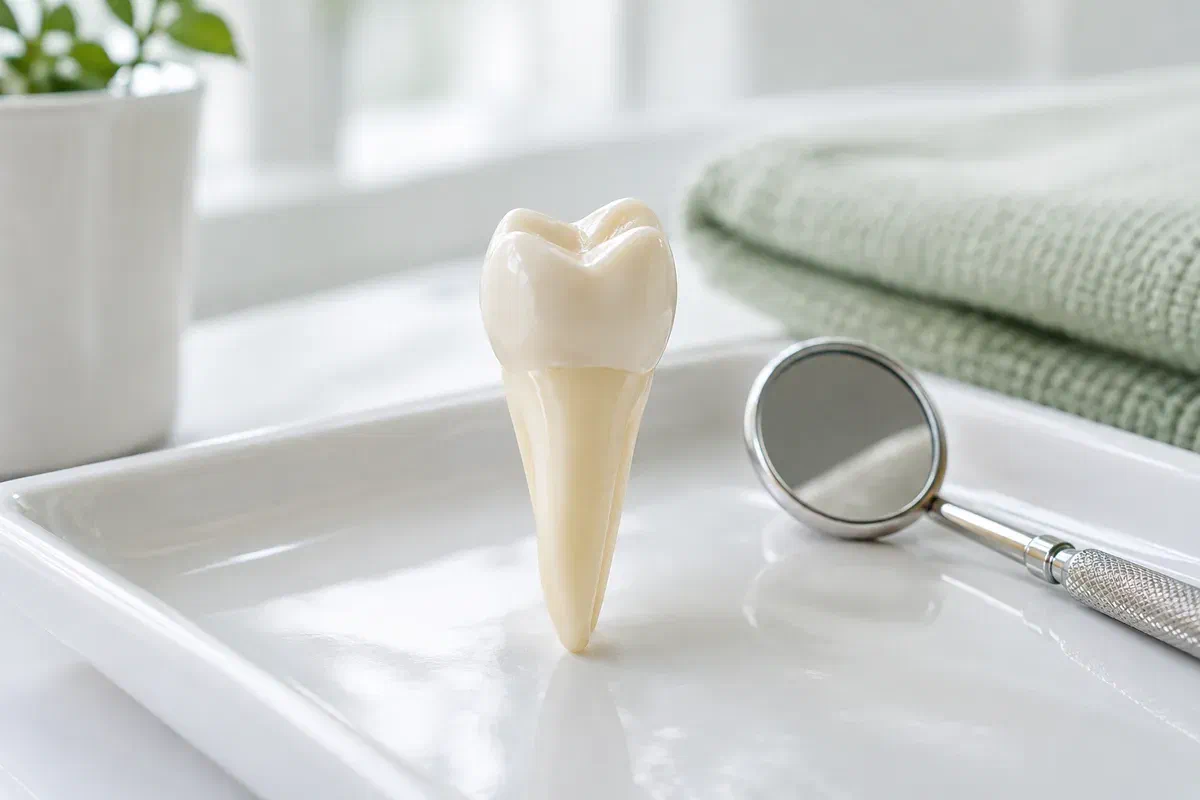
An intact premolar teaching model with a narrow root beside a dental mirror
What has been bothering you

Symptoms, in your own words

You do not need clinical language. It helps to say what triggers the discomfort, how long it stays, and whether the tooth has been treated before.

Discomfort that has changed character

Maybe cold used to sting for a second and now aches for much longer, or the tooth throbs at night with no trigger. Describe the pattern as best you can. The dentist will confirm what is happening with gentle, brief tests.

A piece of tooth or filling missing

A broken edge can be unsettling even without pain. How it looks does not tell us how deep the problem goes. Keep any fragment, and let us know whether the tooth has become sore since.

Not knowing which tooth is the problem

Pain can spread, so it is common to be unsure. Show us roughly where it is rather than worrying about naming it. Testing one tooth at a time helps make sure treatment is aimed at the right one.

Even when the tooth has good days, swelling, persistent pain, or a bump on the gum that keeps returning needs checking. Call us and we will help you decide how soon to come in.

Why treatment may be worth it

Relief from uncertainty, and possibly a tooth kept

For a suitable premolar, root canal care followed by the right restoration may keep the tooth working. That rests on the diagnosis, how much tooth remains, the condition of the gum and bone, and your overall dental needs. Understanding why it is recommended can make the decision feel less daunting.

Many premolars are visible when you smile, so the final repair matters for appearance as well as chewing. Mention any concerns about how the tooth will look, and they can be planned for along with the treatment.

Patient information: CDA — root canal treatment and restoring the tooth

Straight answers

Ask what points to a pulp problem and what is still uncertain. You should hear why a new filling by itself would or would not be enough, explained without jargon.

No surprises in the plan

Canal treatment, temporary protection, build-up and the final restoration may be separate visits. Knowing every stage in advance can take some of the edge off each appointment.

Your comfort in the conversation

Tell us about past experiences that were difficult, what helps you feel calmer, and practical constraints like work. We will talk through available arrangements, while the clinical needs of the tooth stay central.

What actually happens

Each step, explained before it begins

Ask what every appointment is for and who will be treating you. If a premolar is especially complex, referral to an endodontist may be suggested, and we will explain why.

  1. A calm first visit

    We talk through your symptoms and history, examine the tooth, and use tests and imaging to understand it. Both the pulp and whether the tooth can be restored are considered. Mention earlier root canals, braces, injuries or anything that made past visits hard.

  2. Getting numb and comfortable

    If you decide to go ahead, local anaesthetic is given and a dental dam is placed to keep the tooth isolated. Before any work begins, you agree on a signal, such as raising a hand, that means stop. Speak up if you feel discomfort.

  3. The work inside the tooth

    Working to the plan, the clinician removes the affected pulp tissue, then shapes, disinfects and seals each canal. How long this takes depends on the tooth’s anatomy and condition. A temporary filling may protect it between appointments, and you will get instructions to take home.

  4. The finishing restoration

    When the canals are complete, a build-up and protective restoration are placed as planned. Confirm when this will happen, its cost and the review schedule. Ask whether your current filling is temporary or final.

Once you are home

Simple steps for the days ahead

You will be given instructions specific to your treatment. If anything is unclear, ask before you leave or call afterward, and let us know if symptoms get worse.

Wait out the numbness

It can last a few hours. Avoid eating until it fades so you don’t bite your cheek, and take care with hot drinks. Then keep heavy chewing off the treated premolar as advised for the restoration currently in place.

Some tenderness can be expected

Report tenderness that is increasing, new swelling, or a bite that feels uneven. Describe whether it is easing, steady or getting worse. That is more useful than repeatedly testing the tooth on hard foods to see how it feels.

Come back to finish

Return for the final restoration even when the tooth feels comfortable. Keep cleaning gently as shown, and call about a loose temporary. If the appointment feels daunting or needs to change, tell us so we can talk it through.

Your choices, calmly explained

There is usually more than one path.

You should hear what each option can achieve, what it involves for you, and what is likely if the problem is left untreated.

If the pulp needs it and the tooth can be rebuilt

Root canal and restoration

Canal treatment may be advised when the pulp problem calls for it and the premolar can support a dependable repair. Discuss the outlook and final restoration together so the whole tooth is considered.

If the findings point elsewhere

A smaller treatment

Not every sore or chipped premolar needs a root canal. A filling or another limited approach may be enough, depending on the diagnosis. Ask what supports this and how the tooth would be checked afterward.

If keeping it is not realistic

Removing the tooth

When retaining the tooth is not appropriate, extraction and replacement can be discussed. Talk about how the space would affect chewing and appearance, which replacements suit you, and the visits and healing time involved.

Questions from nervous patients

Honest answers to common worries

No question is too small. If it would help, ask for each step to be explained again on the day, or shown on a model first.

(905) 876-4488
Will I feel the treatment?
Local anaesthetic is used to numb the tooth and surrounding area. You may feel pressure or vibration. If you feel sharpness or discomfort, signal straight away so the dentist can pause and check. Tell us beforehand if anaesthetic has not worked well for you in the past.
Can I stop partway through if I need a break?
Yes. Agree on a signal before starting, and use it whenever you need a pause to rest your jaw, swallow or simply breathe. The dentist will stop at a safe point and continue when you are ready.
Can I listen to music during the appointment?
Many people find headphones helpful. Ask when booking whether that is suitable for your visit. You will still need to be able to see or respond to the dentist, so keep the volume at a level where you can hear instructions.
My jaw gets tired keeping my mouth open. What helps?
Mention it at the start. The dentist may offer short breaks or a small support to rest your teeth against. Speaking up early makes it easier to plan pauses before your jaw becomes sore.
Is it normal for the tooth to feel tender afterward?
Some tenderness when biting is common for a few days as the surrounding tissues settle. Follow the advice you are given. Call if discomfort increases rather than easing, or if swelling appears.
Can I bring someone with me from Acton for support?
Ask when you book, as arrangements can vary. Having someone with you can be reassuring, and they may also be helpful if the comfort plan for your visit means you should not drive home afterward.
Acton, at your pace

Start with a conversation, not a procedure.

Book a visit at our Bronte Street practice to talk through a premolar concern or advice you received elsewhere. We begin with an examination and explanation, and nothing goes ahead until you understand the plan.

Call the clinic for severe pain or swelling. The online form is for routine appointments only.

Visit Milton Dental Clinic
Unit 1, 342 Bronte St. S, Milton, ON L9T 5B7
Get directions Clinic hours
Monday–Thursday
11am–7pm
Friday–Sunday
By appointment only

Areas we serve

  • Milton
  • Oakville
  • Mississauga
  • Georgetown
  • Halton Hills
  • Acton
  • Campbellville
  • Brampton
  • Burlington
  • Puslinch
  • Rockwood
  • Erin
  • Caledon
  • Etobicoke
  • Old Milton
  • Bronte Meadows
  • Timberlea
  • Dorset Park
  • Dempsey
  • Clarke
  • Beaty
  • Coates
  • Harrison
  • Scott
  • Willmott
  • Ford
  • Bowes
  • Cobden
  • Walker
  • Mountain View
  • Milton Heights
  • Hawthorne Village
  • Valley View
  • Fallingbrook
  • Nassagaweya
  • Trafalgar
  • Esquesing
  • Nelson
  • Brookville
  • Moffat
  • Glen Williams
  • Norval
  • Limehouse
  • Stewarttown
  • Ashgrove
  • Hornby
  • Silver Creek
  • Speyside
  • Scotch Block
  • North Oakville
  • River Oaks
  • Glen Abbey
  • West Oak Trails
  • Palermo
  • Bronte Creek
  • College Park
  • Joshua Creek
  • Uptown Core
  • Preserve
  • Iroquois Ridge
  • Lisgar
  • Meadowvale
  • Meadowvale Village
  • Churchill Meadows
  • Erin Mills
  • Central Erin Mills
  • Streetsville
  • East Credit
  • Creditview
  • Heartland
  • Sheridan
  • Mount Pleasant
  • Credit Valley
  • Huttonville
  • Churchville
  • Springbrook
  • Northwest Brampton
  • Bram West
  • Fletcher's Meadow
  • Fletcher's Creek South
  • Alton Village
  • Orchard
  • Millcroft
  • Headon Forest
  • Tansley
  • Brant Hills
  • Tyandaga
  • Kilbride
  • Lowville
  • Aberfoyle
  • Morriston
  • Arkell
  • Hillsburgh
  • Freelton
  • Carlisle
  • Waterdown
  • Flamborough
  • Mountsberg

How can we help?

Milton Dental Clinic

Have a question about your smile? Choose the option that works best for you.

For urgent dental concerns, please call.
Messages are reviewed during clinic hours.