

Illustrative consultation about a premolar tooth concern
Restorative Dentistry

Premolar Root Canals in Burlington

Cold that used to sting for a second now aches for a minute. Coming from Burlington, you can have that premolar tested to see whether the pulp is affected and what treatment, if any, it truly needs.

When sensitivity changes

Is it ordinary sensitivity, or the pulp?

Sensitive teeth are common, and most of the time the cause is exposed root surface or worn enamel rather than anything deeper. What raises concern is a shift. A premolar that once gave a quick twinge and now throbs after iced coffee is behaving differently, and that change is worth investigating.

Inside each tooth is the pulp, a bundle of nerves and blood vessels. If it becomes irreversibly inflamed or infected, it cannot recover on its own, and root canal treatment may be offered to keep the premolar. A premolar’s canals are not always simple, so the assessment looks closely at the individual tooth.

For people in Burlington, our Bronte Street practice offers a straightforward place to have that question answered. Describe what you have noticed, even if it seems vague. We will explain what the tests show, whether treatment is warranted, and how the tooth would be rebuilt afterward.

Get a sensitive premolar tested
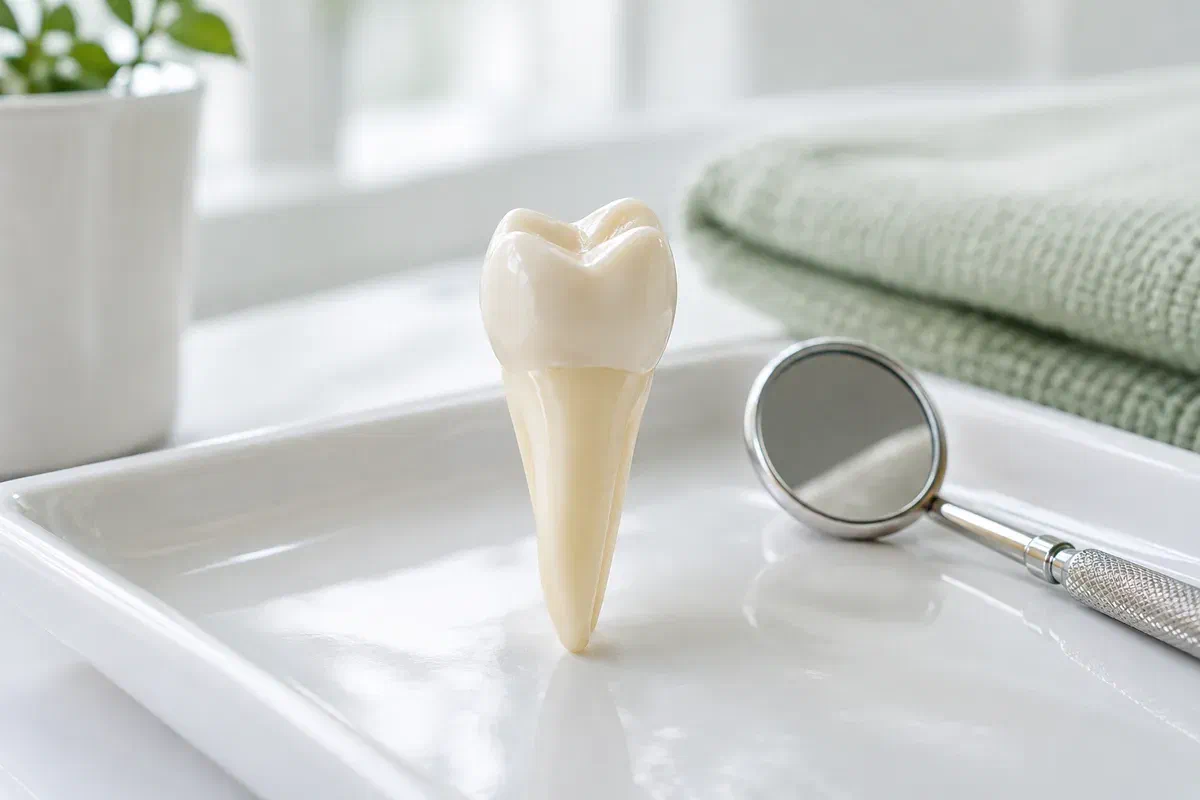
An intact premolar teaching model with a narrow root beside a dental mirror
Reading the symptoms

Duration, trigger, history

Three details help most: what sets the feeling off, how long it stays, and whether the tooth has had fillings, crowns or other work in the past.

Sensitivity that lingers

A sensation that disappears once the cold is gone is usually less concerning than one that keeps aching for a while afterward. Note also whether it is intensifying or arriving without any trigger. That history guides the tests the dentist chooses.

Damage to the biting surface

Sensitivity sometimes starts after part of a cusp or filling breaks off. A small visible break can still reach close to the pulp, or it may be superficial. Keep any fragment and say whether the sensitivity began before or after the break.

Not sure where it comes from

Cold sensitivity can be hard to pin to one tooth, particularly in the middle of the arch. Show the general area rather than guessing. Testing teeth individually helps ensure that the right premolar, and only that one, is treated.

Pain that keeps coming back, any swelling, or a recurring bump on the gum warrants an examination even if the tooth is calm some days. Call the clinic for advice on how soon to be seen.

What treatment can offer

A tooth that can keep working

If testing confirms a pulp problem and the premolar is otherwise sound enough, root canal treatment followed by the right restoration may let it continue to function. That judgement weighs the diagnosis, remaining structure, gum and bone support, and your broader dental needs.

Since many premolars appear in a smile, the final repair should suit both your bite and the way the tooth looks. Mention those priorities at the planning stage so the restoration is decided alongside the treatment, not separately later.

Patient information: CDA — root canal treatment and restoring the tooth

Test results you can follow

Ask which responses point to the pulp and whether any doubt remains. You should understand why desensitizing care or a new filling alone would or would not address this tooth.

The complete plan in one view

Canal treatment, temporary protection, a build-up and the final restoration can be separate visits. Seeing all of them helps you judge the plan against alternatives.

Your circumstances considered

Share whether the tooth is visible, how flexible your schedule is, and whether dental visits make you anxious. Those details shape how we explain and organize care, while the clinical needs of the tooth stay central.

How a premolar is treated

Testing comes before any treatment.

Before the first appointment, ask what each visit will do and who will do it. Some premolars have anatomy or conditions that make an endodontist referral the sensible choice.

  1. Test the pulp and the tooth

    Expect questions about your symptoms, an examination, and tests such as cold application or gentle tapping, plus X-rays. The dentist considers both the pulp and whether the tooth can be restored. Mention earlier root canals, orthodontic work or injuries.

  2. Numb the area and place the dam

    If treatment is needed and you agree, local anaesthetic is given and the tooth is isolated with a dental dam. A small opening gives access to the canals. Agree beforehand on how you will signal for a break.

  3. Clean and seal inside

    The canals are cleaned, disinfected, shaped and filled following your plan. Anatomy and condition determine how much work this involves. A temporary filling may be placed between visits, and you will be told how to protect it.

  4. Protect it for the long term

    When the canals are finished, the tooth receives its build-up and planned restoration as required. Confirm the timing, fees and review schedule, and check whether the current filling is temporary or final.

Recovery at home

Go easy on the tooth while it heals

Use the instructions you were given for your own treatment, and ask about anything confusing. Call if symptoms grow or start affecting your usual activities.

Wait until feeling returns

Biting or chewing while still numb can injure your cheek or tongue, and hot food can burn unnoticed. Once the numbness passes, avoid heavy pressure on the treated side as advised. Food choices depend on which restoration is currently in place.

Watch the trend, not the moment

Report soreness that increases, any new swelling, or a sense that the tooth meets first when you close. Say whether things are better, the same or worse each day. That is more useful than repeatedly testing the tooth on hard foods.

Keep the final visit

Attend the appointment for the permanent restoration even if the premolar feels comfortable. Clean around it as instructed and phone about a loose temporary. Work trips or schedule changes are best raised early so the last step can be rearranged.

Treatment choices

The findings decide the path.

Ask what each option can achieve, what it involves for you, and what is likely to happen if treatment is put off.

When the pulp cannot recover and the tooth is restorable

Root canal treatment and restoration

This route is considered when testing shows the pulp needs treatment and the tooth can support a lasting repair. Discuss the outlook and the final restoration together, keeping the whole tooth in mind.

If the nerve seems healthy

Manage sensitivity or replace a filling

Sensitivity does not always mean a root canal. Desensitizing care, a new filling or another approach may be appropriate depending on the diagnosis. Ask what supports that choice and how the tooth’s response will be checked.

When keeping the tooth is not reasonable

Extraction and planning the gap

If the premolar cannot be retained appropriately, removal and possible replacement can be considered. Ask how the space might affect your bite and appearance, what replacements suit you, and how many visits and how much healing are involved.

Sensitivity and root canal questions

Sorting a twinge from a warning sign

Questions we often hear from Burlington visitors are gathered here. Describe your symptoms in everyday words. If a term like pulpitis comes up, ask what it means for your tooth specifically.

(905) 876-4488
Does lingering cold sensitivity always mean I need a root canal?
Not always. It can indicate pulp inflammation, but other causes are possible. The dentist combines your description with tests and imaging before recommending anything. Sometimes a filling or monitoring is suggested first.
Will a sensitivity toothpaste fix the problem?
Desensitizing toothpaste can help when sensitivity comes from exposed root surfaces or worn enamel. It does not treat an inflamed or infected pulp. If sensitivity is changing or lingering, have the tooth assessed rather than relying on toothpaste alone.
What does irreversible pulpitis mean?
It describes inflammation of the pulp that is not expected to settle by itself. Typical signs include lingering pain to temperature or spontaneous aching, though diagnosis relies on more than symptoms. Treatment options include root canal care or, in some cases, extraction.
Is pulp testing uncomfortable?
Cold tests and tapping are brief and designed to provoke a short response so the dentist can compare teeth. A sensitive tooth may react sharply for a moment. Let the dentist know if you need a pause between tests.
Will the premolar still feel hot and cold after treatment?
Once the pulp is removed, the tooth itself usually no longer senses temperature in the same way, although the surrounding gum and ligament still feel pressure and touch. Mention any unexpected sensations at your follow-up.
Can my premolar’s canals be more complicated than expected?
Yes. Premolar canal systems vary, and some have extra branches or curves. The clinician looks for these on imaging and during treatment. Ask how such findings might affect the number of visits or whether a specialist is advised.
Burlington to Bronte Street

Find out what your sensitive premolar is telling you.

Visit our Bronte Street practice for testing of a premolar that has started behaving differently, or to discuss advice from another dentist. We assess first, then explain treatment and restoration options.

If pain is severe or swelling appears, call the clinic. Online forms are for non-urgent appointment requests.

Visit Milton Dental Clinic
Unit 1, 342 Bronte St. S, Milton, ON L9T 5B7
Get directions Clinic hours
Monday–Thursday
11am–7pm
Friday–Sunday
By appointment only

Areas we serve

  • Milton
  • Oakville
  • Mississauga
  • Georgetown
  • Halton Hills
  • Acton
  • Campbellville
  • Brampton
  • Burlington
  • Puslinch
  • Rockwood
  • Erin
  • Caledon
  • Etobicoke
  • Old Milton
  • Bronte Meadows
  • Timberlea
  • Dorset Park
  • Dempsey
  • Clarke
  • Beaty
  • Coates
  • Harrison
  • Scott
  • Willmott
  • Ford
  • Bowes
  • Cobden
  • Walker
  • Mountain View
  • Milton Heights
  • Hawthorne Village
  • Valley View
  • Fallingbrook
  • Nassagaweya
  • Trafalgar
  • Esquesing
  • Nelson
  • Brookville
  • Moffat
  • Glen Williams
  • Norval
  • Limehouse
  • Stewarttown
  • Ashgrove
  • Hornby
  • Silver Creek
  • Speyside
  • Scotch Block
  • North Oakville
  • River Oaks
  • Glen Abbey
  • West Oak Trails
  • Palermo
  • Bronte Creek
  • College Park
  • Joshua Creek
  • Uptown Core
  • Preserve
  • Iroquois Ridge
  • Lisgar
  • Meadowvale
  • Meadowvale Village
  • Churchill Meadows
  • Erin Mills
  • Central Erin Mills
  • Streetsville
  • East Credit
  • Creditview
  • Heartland
  • Sheridan
  • Mount Pleasant
  • Credit Valley
  • Huttonville
  • Churchville
  • Springbrook
  • Northwest Brampton
  • Bram West
  • Fletcher's Meadow
  • Fletcher's Creek South
  • Alton Village
  • Orchard
  • Millcroft
  • Headon Forest
  • Tansley
  • Brant Hills
  • Tyandaga
  • Kilbride
  • Lowville
  • Aberfoyle
  • Morriston
  • Arkell
  • Hillsburgh
  • Freelton
  • Carlisle
  • Waterdown
  • Flamborough
  • Mountsberg

How can we help?

Milton Dental Clinic

Have a question about your smile? Choose the option that works best for you.

For urgent dental concerns, please call.
Messages are reviewed during clinic hours.