

Illustrative consultation about a premolar tooth concern
Restorative Dentistry

Premolar Root Canals in Campbellville

A small bump on the gum beside a premolar, there one week and gone the next, is easy to ignore. For Campbellville households, we explain what it can mean, how the tooth is tested, and how visits can be planned sensibly.

Campbellville · quiet warning signs

The bump that keeps coming back

Not every tooth problem announces itself with pain. Sometimes the only clue is a little pimple-like spot on the gum near a premolar. It may leave a salty taste, shrink, then reappear weeks later. Because it rarely hurts much, it is easy to put off, yet it can be a sign of infection draining from the root.

Premolars are the teeth between the canines and the molars, sharing the job of chewing and often showing in a smile. When infection or irreversible inflammation affects the pulp at their core, root canal treatment may help retain the tooth. A careful examination is needed to confirm the source, since gum problems can look similar.

Living in a rural part of Milton often means combining errands and appointments into one trip. Our Bronte Street practice can work with that. Describe what you have noticed and when, and we will explain the findings, the likely stages, and how the tooth would be restored afterward.

Have a gum bump looked at
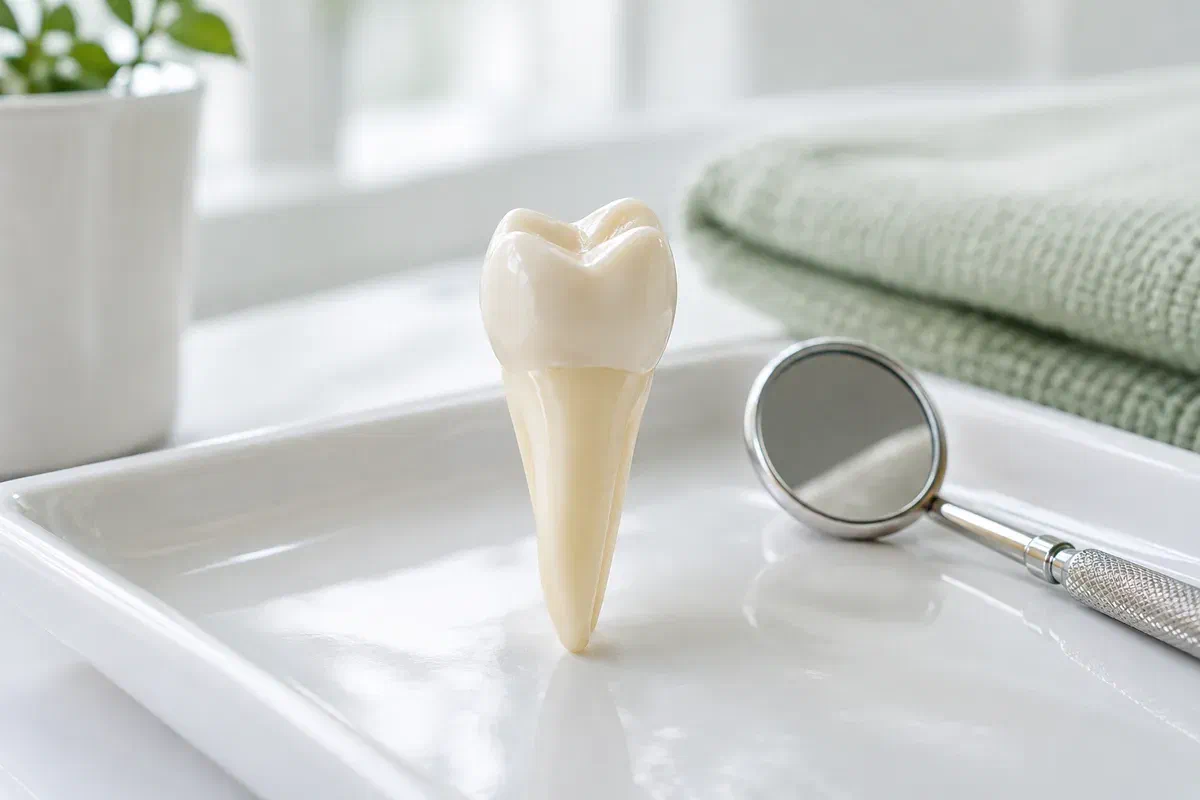
An intact premolar teaching model with a narrow root beside a dental mirror
Signs to mention

Subtle, intermittent, easy to dismiss

Some premolar problems come and go. Keep a note of what you see or feel, how long it lasts, and any past work on the tooth.

Sensitivity that has altered

Cold that now lingers, a dull ache that builds, or discomfort arriving without a trigger can each point toward the pulp. Sometimes sensitivity fades completely as the problem progresses. Tell us how things have changed over time, and testing will fill in the rest.

Damage to the chewing surface

A missing cusp or worn-out filling can let bacteria reach deeper into the tooth. What you see on the surface does not show how far that has gone. Keep any broken piece and mention when the damage happened.

A spot on the gum, unclear source

A gum bump does not always sit directly over the tooth causing it. Point out where it appears rather than guessing which tooth is to blame. Testing and imaging help trace it to the right premolar, or to a gum issue instead.

Swelling, ongoing pain, or a recurring gum bump should be assessed, even if the tooth often feels perfectly normal. Phone the clinic and we will help you judge how soon to come in.

Treating the cause

Clearing the infection, keeping the tooth

When a premolar is a suitable candidate, root canal care and a fitting restoration may address the source of the problem and let the tooth stay in use. That depends on the diagnosis, how much tooth remains, the health of the gum and bone, and your broader treatment needs.

The final restoration affects both how the tooth works and how it looks, particularly if it shows when you smile. Bring up appearance early, so the crown or other repair is part of the plan rather than something decided at the last minute.

Patient information: CDA — root canal treatment and restoring the tooth

A clear link between sign and source

Ask how the bump or symptoms were traced to this tooth and whether doubt remains. You should understand why a filling alone would or would not deal with the problem.

All the steps on one schedule

Canal treatment, temporary cover, build-up and the final restoration may be separate appointments. Seeing them together helps you plan around farm work, commuting or family.

Practicalities discussed

Let us know how often you can come in, whether other household members need appointments, and if visits make you uneasy. Arrangements can be explained around those details, while the tooth’s needs still lead the plan.

How treatment proceeds

Trace it, treat it, seal it, restore it

Ask what each appointment accomplishes and who will carry it out. Premolars with unusual anatomy or earlier treatment are sometimes better managed by an endodontist.

  1. Trace the source

    The dentist asks about your history, examines the gum and teeth, and uses tests and X-rays. Sometimes a fine, flexible point is gently placed into the gum opening and imaged to show where it leads. Mention previous root treatment, orthodontics or injuries.

  2. Numb and isolate the premolar

    If treatment is recommended and you choose to proceed, local anaesthetic is used and a dental dam separates the tooth from the rest of your mouth. Access is made to the canals. Agree on a pause signal before starting.

  3. Disinfect the canal system

    Infected tissue is removed, and the canals are shaped, disinfected and filled following the plan. The work depends on anatomy and the tooth’s condition. A temporary filling may protect it between visits, with instructions for home.

  4. Restore and review

    Once the internal work is ready, the tooth receives its build-up and planned restoration. Confirm timing, costs and when the area will be reviewed to check healing. Know whether your current filling is temporary or final.

In the weeks after

Watch the gum as well as the tooth

Your instructions are specific to your treatment. Keep them where you can find them, and contact us if symptoms increase or disrupt daily life.

Careful until feeling returns

Do not chew while numb, as cheeks and tongues are easy to bite, and take care with hot drinks. Afterward, avoid heavy pressure on the treated premolar as advised. What you can eat depends on the restoration currently in place.

Observe the bump and the bite

Call if a gum bump does not settle, if swelling develops, or if the tooth feels high when you close. Describe whether things are improving, unchanged or worse. That pattern helps more than testing the tooth on hard foods.

Complete the final repair

Attend the restoration appointment even if everything feels fine. Clean as instructed and report a loose temporary filling. If a busy season makes the next visit difficult, call so it can be rescheduled rather than missed.

What can be done

Options depend on what the tests reveal.

Expect each choice to be explained with what it can achieve, what it requires, and the likely course if the infection is left untreated.

Infected pulp, restorable tooth

Canal treatment and restoration

Root canal care may be advised when the pulp is infected or irreversibly inflamed and the premolar can support a durable repair. Ask how likely the area is to heal, and what crown or filling would protect the tooth afterward, since both shape whether keeping it is worthwhile.

Source turns out to be elsewhere

A different treatment

Sometimes the bump or sensitivity turns out to come from a gum problem or another tooth. A filling, periodontal care or other approach may then be appropriate. Ask what supports that conclusion and how the area will be followed up.

Tooth cannot reasonably be kept

Extraction and the space

If retaining the premolar is not appropriate, removal and replacement can be discussed. Talk through how the gap might change your bite and smile, which replacements suit, and the appointments and healing each would involve.

Gum bump and premolar questions

Making sense of a sign that comes and goes

Describe what you have seen in plain words. A phone photo of the gum on a day the bump is visible can be useful to show the dentist.

(905) 876-4488
What is the small bump on my gum near a premolar?
It may be a sinus tract, a channel through which infection from the root area drains. Other causes are possible, including gum problems. Only an examination and imaging can confirm what it is and which tooth, if any, is responsible.
The bump disappeared. Is the problem gone?
Not necessarily. These bumps often come and go as pressure builds and drains. A bump that vanishes can return later. Have it assessed even if it is not present on the day you book.
Should I try to squeeze or drain it myself?
No. Pressing on it can irritate the tissue and does not treat the cause. Keep the area clean with gentle brushing and call the clinic to arrange an assessment.
Will the bump go away after root canal treatment?
When the bump comes from an infected pulp and treatment is successful, it often settles as the area heals. Healing is checked at follow-up visits. Tell us if the bump persists or returns after treatment.
Can other people in my household be seen on the same trip from Campbellville?
Ask when booking. Where schedules allow, appointments for several family members can sometimes be arranged close together, which can make one journey cover more than one need.
Can a tooth with a gum bump still feel completely normal?
Yes. A premolar with an infected pulp may cause little or no pain, especially if infection is draining through the gum. Lack of pain does not rule out a problem, which is why the bump itself is worth investigating.
Campbellville to Bronte Street

Have that recurring bump checked properly.

Arrange a visit at our Bronte Street practice for a premolar or gum concern, or to discuss advice received elsewhere. We find the source first, then explain how the tooth could be treated and restored.

If you have swelling or severe pain, call the clinic. Online requests are for routine appointments.

Visit Milton Dental Clinic
Unit 1, 342 Bronte St. S, Milton, ON L9T 5B7
Get directions Clinic hours
Monday–Thursday
11am–7pm
Friday–Sunday
By appointment only

Areas we serve

  • Milton
  • Oakville
  • Mississauga
  • Georgetown
  • Halton Hills
  • Acton
  • Campbellville
  • Brampton
  • Burlington
  • Puslinch
  • Rockwood
  • Erin
  • Caledon
  • Etobicoke
  • Old Milton
  • Bronte Meadows
  • Timberlea
  • Dorset Park
  • Dempsey
  • Clarke
  • Beaty
  • Coates
  • Harrison
  • Scott
  • Willmott
  • Ford
  • Bowes
  • Cobden
  • Walker
  • Mountain View
  • Milton Heights
  • Hawthorne Village
  • Valley View
  • Fallingbrook
  • Nassagaweya
  • Trafalgar
  • Esquesing
  • Nelson
  • Brookville
  • Moffat
  • Glen Williams
  • Norval
  • Limehouse
  • Stewarttown
  • Ashgrove
  • Hornby
  • Silver Creek
  • Speyside
  • Scotch Block
  • North Oakville
  • River Oaks
  • Glen Abbey
  • West Oak Trails
  • Palermo
  • Bronte Creek
  • College Park
  • Joshua Creek
  • Uptown Core
  • Preserve
  • Iroquois Ridge
  • Lisgar
  • Meadowvale
  • Meadowvale Village
  • Churchill Meadows
  • Erin Mills
  • Central Erin Mills
  • Streetsville
  • East Credit
  • Creditview
  • Heartland
  • Sheridan
  • Mount Pleasant
  • Credit Valley
  • Huttonville
  • Churchville
  • Springbrook
  • Northwest Brampton
  • Bram West
  • Fletcher's Meadow
  • Fletcher's Creek South
  • Alton Village
  • Orchard
  • Millcroft
  • Headon Forest
  • Tansley
  • Brant Hills
  • Tyandaga
  • Kilbride
  • Lowville
  • Aberfoyle
  • Morriston
  • Arkell
  • Hillsburgh
  • Freelton
  • Carlisle
  • Waterdown
  • Flamborough
  • Mountsberg

How can we help?

Milton Dental Clinic

Have a question about your smile? Choose the option that works best for you.

For urgent dental concerns, please call.
Messages are reviewed during clinic hours.