

Illustrative consultation about a premolar tooth concern
Restorative Dentistry

Premolar Root Canals in Erin

Much of a premolar root canal’s success is shaped at home, in the days and weeks after each visit. For people in Erin and Hillsburgh, we explain the diagnosis and treatment, then show you what recovery should look like.

Erin · the recovery side of care

What happens after you leave matters too.

Most conversations about root canals focus on the chair. Yet the quiet days afterward, eating carefully, keeping the temporary intact, noticing whether tenderness fades, are just as much part of looking after the tooth. Knowing what normal recovery looks like helps you spot when something is not.

The tooth in question is a premolar, between your canine and first molar, used for chewing and frequently visible in a smile. When the pulp inside becomes infected or inflamed beyond recovery, treatment of its canals may let you keep it. The anatomy and the state of any old filling or crown shape how that is done.

With a rural drive between home and our Bronte Street practice, it is worth leaving each visit confident about what to expect next. We explain the findings, the stages planned, the restoration to come, and the signs that mean you should call rather than wait.

Learn what recovery involves
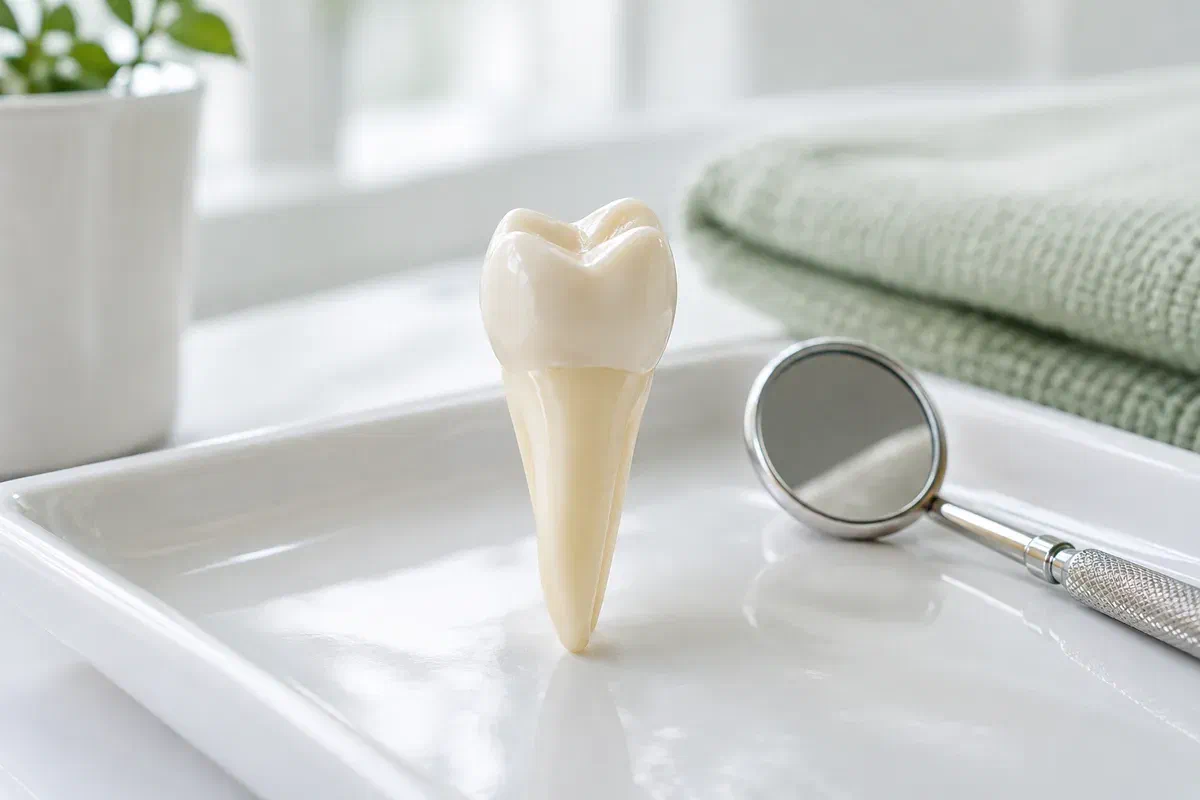
An intact premolar teaching model with a narrow root beside a dental mirror
Before treatment begins

Symptoms we will want to hear about

Good aftercare starts with a clear diagnosis. Tell us what sets off the discomfort, how long it lasts, and whether the tooth has been worked on before.

A different kind of sensitivity

Many teeth flinch briefly at cold. Sensitivity that now lingers, worsens week by week, or arrives with no trigger is a change worth describing. The dentist will use that account, along with pulp tests and X-rays, to assess what is happening.

A missing piece of tooth

Part of a premolar can break around an existing filling. The size of the gap does not show how deep the damage goes. Keep the fragment, and say whether discomfort started at the same time.

Pain that seems to wander

Discomfort can feel like it belongs to several teeth. Show us the area rather than choosing one. Testing each tooth helps make sure that the premolar receiving treatment, and later aftercare, is the right one.

Swelling, unrelenting pain, or a gum bump that keeps coming back should be assessed even when the tooth has comfortable days. Phone us before driving in, and we will advise on timing.

What treatment aims for

A settled tooth you can chew on again

For a premolar that is a good candidate, root canal treatment and a well-planned restoration may return it to everyday use. That depends on the diagnosis, how much tooth is left, the condition of the gum and bone, and your overall treatment needs.

Since premolars often show when you smile, the finished restoration should look natural as well as protect the tooth. Mention appearance early, so the crown or filling is planned alongside treatment and recovery.

Patient information: CDA — root canal treatment and restoring the tooth

A diagnosis that makes sense

Ask what points to a pulp problem and what remains uncertain. You should understand why a replacement filling alone would or would not resolve the issue.

Recovery built into the plan

Canal treatment, temporary protection, build-up and the final restoration may be spread across visits. Knowing what to expect between each one makes recovery easier to manage.

Your household routine considered

Tell us about work, childcare, travel or worries about dental visits. These details help us explain arrangements and aftercare in a way that fits, while the tooth’s needs still guide the treatment.

How the visits unfold

Four stages, with recovery in between

Ask what each appointment achieves and who will provide it. If the premolar’s anatomy or condition makes treatment more involved, an endodontist may be recommended.

  1. Diagnose carefully

    Expect a review of your history, an examination, and tests and X-rays to assess the pulp and whether the tooth can be rebuilt. Mention previous root canals, braces, injuries or a filling that has failed repeatedly.

  2. Numb and shield the tooth

    If treatment is indicated and you choose to go ahead, local anaesthetic comes first. A thin protective sheet, the dental dam, then frames the premolar so it stays dry and separate from your mouth. The canals are reached through a small opening. Agree on a pause signal before any of this starts.

  3. Treat the canals

    The canal system is cleaned, shaped, disinfected and sealed according to the plan. Anatomy and the tooth’s condition influence how long that takes. If another visit is needed, a temporary seals the tooth, and you leave with written guidance.

  4. Place the lasting restoration

    Once the canals are complete, a build-up and the planned restoration protect the tooth. Confirm the timing, cost and review schedule, and be clear about whether your current filling is temporary or final.

Recovering at home

Read the signs as the days pass

Your instructions are written for your own treatment. Keep them handy, and call if symptoms worsen or begin to affect eating, sleep or work.

The first afternoon

Wait for numbness to fade before eating so you do not bite your lip or cheek, and be careful with hot drinks. Then chew mostly on the other side, as advised. Suitable foods depend on the restoration the tooth has right now.

Improving, steady or worse?

Mild tenderness that eases over several days is common. Discomfort that builds, puffiness in the gum or face, or a tooth that seems to land before its neighbours when you close is worth a call. Describing the trend helps us advise you without an unnecessary trip, and it is more telling than testing the tooth on something hard.

The final repair

Attend the restoration appointment even once the tooth feels normal. Keep brushing and cleaning between teeth as shown, and report a temporary that loosens. If winter roads or work make a date difficult, call to reschedule.

Choosing treatment

Which approach fits this premolar?

You should hear what each choice could accomplish, the appointments and recovery it involves, and the likely result of doing nothing.

Pulp affected; tooth can be rebuilt

Root canal care and restoration

This path is considered when the pulp needs treatment and enough sound tooth remains to support a strong repair. Talk through the expected outlook and the restoration as one plan, looking at the whole tooth.

Diagnosis supports a simpler step

Something less involved

Not every sensitive or broken premolar needs canal treatment. A filling or another limited approach may be enough. Ask what supports that choice and how the tooth would be checked to confirm it is settling.

Restoration isn’t realistic

Extraction and next steps

If keeping the premolar is not appropriate, removal and replacement can be discussed. Talk about how the space could affect your bite and smile, which replacements are suitable, and the visits and healing time involved.

Recovery questions

What’s normal, and what isn’t

Everyday words are fine. If you are unsure whether something you are feeling is expected, call and describe it.

(905) 876-4488
How long might the area feel tender after premolar treatment?
Mild tenderness, especially when biting, often eases over a few days. Everyone heals differently. If it is getting worse rather than better, or lasts longer than you were told to expect, contact the clinic.
Which pain relief can I take afterward?
Follow the advice you receive at your appointment. If you take other medications or have health conditions, check with your dentist or pharmacist before using any over-the-counter product, and do not exceed the label directions.
My bite feels uneven since treatment. What should I do?
A tooth that hits first can become sore, because every bite presses on tissues that are still settling. Call to describe it. A small adjustment to the temporary or the restoration may be needed, and checking early can help the area recover more comfortably.
Can I go back to physical work or exercise the same day?
Many people can, but numbness and tenderness vary. Ask at your appointment whether any activity should be limited, especially if the comfort plan used for your visit could affect alertness.
When should I chew normally on the treated side again?
That depends on the restoration in place. A temporary filling is not built for full chewing force, and a treated premolar without its final protection can be more prone to cracking. Wait until the final repair is fitted and you are told it is safe, then ease back in with softer foods.
If I live in Erin, how do I know whether to call or drive in?
Call first. Describe the symptom and whether it is improving or worsening. We can advise whether a visit is needed, how soon, and whether care closer to home is more suitable in an emergency.
From Erin to Bronte Street

Leave each visit knowing what comes next.

Book a premolar assessment at our Bronte Street practice, or bring advice from another dentist to discuss. We diagnose first, then explain treatment, recovery and the restoration the tooth will need.

Phone the clinic about severe pain or swelling. Online requests are for non-urgent appointments.

Visit Milton Dental Clinic
Unit 1, 342 Bronte St. S, Milton, ON L9T 5B7
Get directions Clinic hours
Monday–Thursday
11am–7pm
Friday–Sunday
By appointment only

Areas we serve

  • Milton
  • Oakville
  • Mississauga
  • Georgetown
  • Halton Hills
  • Acton
  • Campbellville
  • Brampton
  • Burlington
  • Puslinch
  • Rockwood
  • Erin
  • Caledon
  • Etobicoke
  • Old Milton
  • Bronte Meadows
  • Timberlea
  • Dorset Park
  • Dempsey
  • Clarke
  • Beaty
  • Coates
  • Harrison
  • Scott
  • Willmott
  • Ford
  • Bowes
  • Cobden
  • Walker
  • Mountain View
  • Milton Heights
  • Hawthorne Village
  • Valley View
  • Fallingbrook
  • Nassagaweya
  • Trafalgar
  • Esquesing
  • Nelson
  • Brookville
  • Moffat
  • Glen Williams
  • Norval
  • Limehouse
  • Stewarttown
  • Ashgrove
  • Hornby
  • Silver Creek
  • Speyside
  • Scotch Block
  • North Oakville
  • River Oaks
  • Glen Abbey
  • West Oak Trails
  • Palermo
  • Bronte Creek
  • College Park
  • Joshua Creek
  • Uptown Core
  • Preserve
  • Iroquois Ridge
  • Lisgar
  • Meadowvale
  • Meadowvale Village
  • Churchill Meadows
  • Erin Mills
  • Central Erin Mills
  • Streetsville
  • East Credit
  • Creditview
  • Heartland
  • Sheridan
  • Mount Pleasant
  • Credit Valley
  • Huttonville
  • Churchville
  • Springbrook
  • Northwest Brampton
  • Bram West
  • Fletcher's Meadow
  • Fletcher's Creek South
  • Alton Village
  • Orchard
  • Millcroft
  • Headon Forest
  • Tansley
  • Brant Hills
  • Tyandaga
  • Kilbride
  • Lowville
  • Aberfoyle
  • Morriston
  • Arkell
  • Hillsburgh
  • Freelton
  • Carlisle
  • Waterdown
  • Flamborough
  • Mountsberg

How can we help?

Milton Dental Clinic

Have a question about your smile? Choose the option that works best for you.

For urgent dental concerns, please call.
Messages are reviewed during clinic hours.