

Illustrative consultation about a premolar tooth concern
Restorative Dentistry

Premolar Root Canals in Halton Hills

Save the premolar or let it go? It is a real decision, and it deserves facts rather than pressure. For people across Halton Hills, we explain the diagnosis, what keeping the tooth involves, and how removal would compare.

Halton Hills · a decision point

Keep it or replace it?

Sooner or later, a troubled tooth brings you to a fork in the road. One path keeps the premolar through root canal treatment and a new restoration. The other removes it and considers what, if anything, fills the space. Neither choice is automatically right.

Premolars, the teeth that sit between the canines and the molars, share chewing work and are often part of your visible smile. When the pulp is irreversibly inflamed or infected, canal treatment may make retention possible. Whether it is sensible depends on how much healthy tooth remains and how well it can be rebuilt.

From Georgetown, Acton, Glen Williams or a smaller Halton Hills hamlet, you can bring the question to our Bronte Street practice. We will explain what the examination shows, outline the stages for each path, and talk through the restoration or replacement that would follow.

Talk through your options
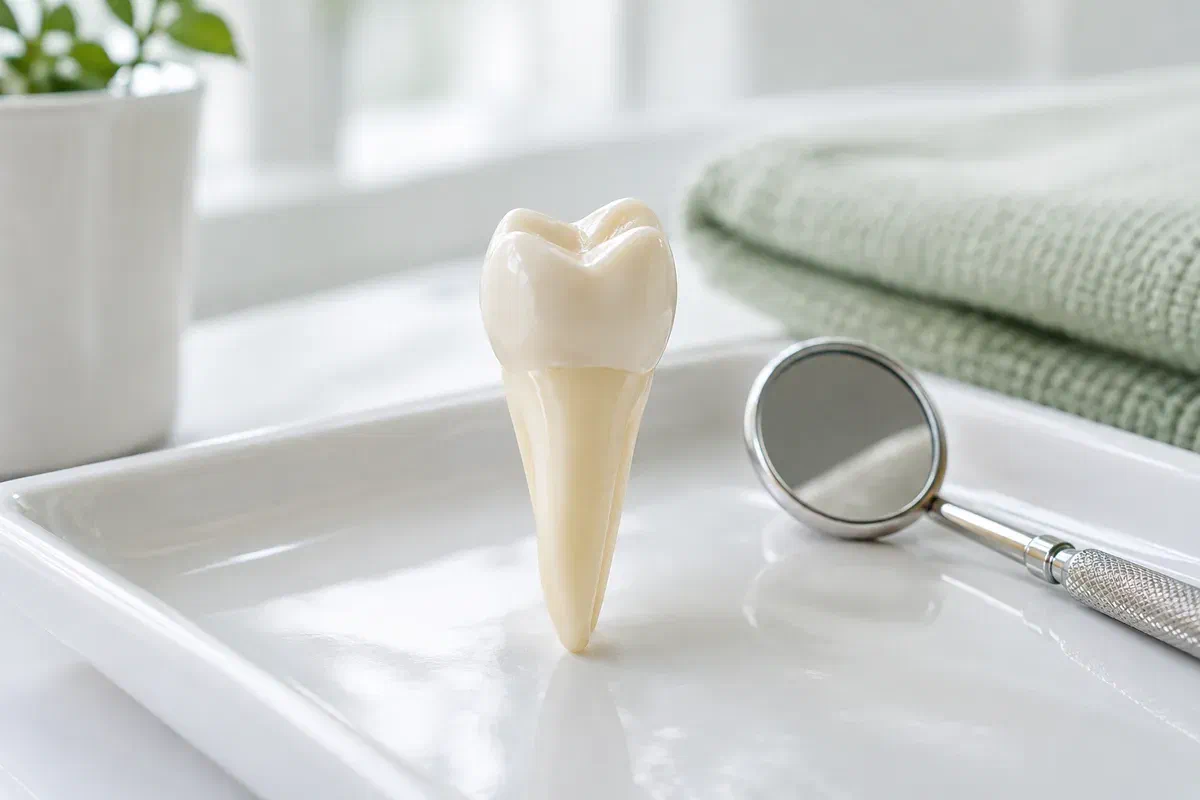
An intact premolar teaching model with a narrow root beside a dental mirror
How the question arises

Symptoms that start the conversation

Most decisions begin with a change you have noticed. Note what sets it off, how long it lasts, and the dental history of the tooth.

A reaction that has shifted

Temperature sensitivity that fades quickly is different from pain that stays, worsens or appears without cause. Explain how the sensation has changed over recent weeks. Tests in the chair help the dentist judge whether the pulp can recover.

A large break in the tooth

When a big piece of a premolar fractures, the remaining structure becomes central to the keep-or-remove question. The surface view does not show the full extent. Bring the fragment if you have it and mention any pain.

Not sure which tooth is failing

Spreading discomfort makes it hard to tell one tooth from its neighbours. Indicate the area rather than naming a tooth. Accurate diagnosis matters especially here, since it would be a poor outcome to remove or treat the wrong premolar.

Even if the decision is not made yet, swelling, unrelenting pain or a returning gum bump should be assessed. Call and we will advise on how soon you should be seen.

The case for retention

When keeping the premolar makes sense

A premolar that is a good candidate may, with root canal care and a suitable restoration, continue chewing and holding its place in the arch. That depends on the diagnosis, the structure left, the health of the gum and bone, and your other treatment needs. It is fair to ask what specifically makes this tooth worth keeping, and what would tip the balance the other way.

For a premolar that shows in your smile, the look of the final restoration is part of the comparison. Raise appearance early, alongside the replacement options that would apply if the tooth were removed, so the two paths can be weighed fairly.

Patient information: CDA — root canal treatment and restoring the tooth

Reasons, not just a recommendation

Ask what findings support keeping the tooth and what concerns remain. You should know why a simpler filling would or would not suffice and why extraction is or is not being suggested.

Both paths in full

Keeping the tooth may involve treatment, temporary cover, build-up and a final restoration. Removal may involve healing and replacement. Seeing both laid out makes comparison easier.

Your priorities on the table

Mention whether appearance, time commitment or comfort is the bigger concern for you. These points help us explain each path in a way that fits your circumstances, while clinical factors still guide the advice.

If you choose to keep it

Treatment in four parts

Ask what each appointment involves and who will provide it. An endodontist may be recommended when a premolar’s anatomy or history makes the work more involved.

  1. Weigh up the tooth

    The dentist reviews your symptoms and history, examines the premolar, and uses tests and X-rays to assess the pulp and the tooth’s capacity to be restored. Mention earlier root canals, injury, orthodontic treatment or recurring filling problems.

  2. Prepare for treatment

    If you decide to proceed, the area is numbed and a dental dam is placed to isolate the tooth. An opening is then made to reach the canals. Agree on a simple way to ask for a break.

  3. Treat the canals

    Each canal is cleaned, shaped and disinfected, then filled as planned. The tooth’s anatomy and condition influence how much work is required, and some premolars hide an extra canal or a curve. If another session is needed, an interim filling seals the access, and you will go home with clear care instructions.

  4. Rebuild and protect

    With the canals complete, the tooth receives its planned build-up and restoration. Confirm the timing, cost and follow-up schedule, and check whether what is in place now is temporary or permanent.

Recovery and follow-through

Supporting the tooth you chose to keep

Your instructions are tailored to you, so read them through and ask questions. Contact us if symptoms grow or affect normal activities.

Careful eating at first

Do not chew until the numbness has worn off, and watch the temperature of drinks. Afterward, limit pressure on the treated premolar as advised. Food choices depend on the temporary or final restoration on the tooth.

Keep track of changes

Report rising discomfort, swelling, or a bite that feels high on that side. Describe whether things are settling, unchanged or getting worse. That is more helpful than testing the tooth on firm foods.

Finish what you started

Attend the final restoration visit even if the premolar feels comfortable. Clean around it as instructed and call about a temporary that loosens. If plans change, reach out so the remaining step can be rebooked.

Side by side

Three paths, honestly compared

For each option, ask what it can achieve, what it involves, and what may happen if the problem is simply left.

Pulp affected; tooth restorable

Retain with root canal care

Canal treatment is considered when the pulp requires it and enough sound tooth remains to support a reliable repair. Talk about the outlook and the final restoration together, evaluating the tooth as a whole.

Diagnosis supports a lesser step

Treat more simply

Some painful or damaged premolars need only a filling or another limited approach. Ask what findings support this and how the tooth will be reviewed to make sure it is responding.

Retention is not reasonable

Extract and consider replacement

If the tooth cannot be kept appropriately, removal and possible replacement can be discussed. Ask how the space would affect your bite and smile, what replacements suit you, and how much healing and how many visits each involves.

Keep-or-remove questions

Thinking through a big tooth decision

Take the time you need. Ask for the X-rays to be shown and each option explained until you feel ready to choose.

(905) 876-4488
Is saving a premolar always better than removing it?
Not always. Retaining a natural tooth is often preferred when it can be restored well, but some teeth are too damaged for that to be sensible. The dentist will explain what makes your tooth a good or poor candidate.
What happens if I leave a gap where a premolar was?
Effects vary. Neighbouring or opposing teeth may shift over time, and chewing or appearance can change, though some gaps cause few practical problems. Ask how a space would affect your particular bite, and whether it would be visible, before deciding whether replacement is needed.
How long can a root-treated premolar last?
There is no fixed answer. The outcome depends on the tooth’s condition, the quality of the final restoration, your oral hygiene and regular reviews. Ask what factors in your case might affect the longer-term outlook.
Can I take time to think before choosing?
In many cases, yes, though delays can sometimes allow problems to progress. Ask whether waiting carries particular risks for your tooth and what symptoms should prompt you to call sooner. Writing down your questions after the first visit often makes the follow-up conversation more useful.
What replacement options exist if the premolar is removed?
Depending on your situation, choices may include an implant, a bridge or a removable partial denture, or leaving the space. Each has different requirements and timelines. Ask which ones suit your mouth and why.
Does it matter whether the tooth is upper or lower?
It can. Upper and lower premolars differ in root and canal anatomy, and their position affects how visible they are and how replacement might work. The dentist will explain how this applies to your tooth.
Premolar decisions for Halton Hills

Make the choice with the facts in hand.

Book time at our Bronte Street practice for a premolar assessment, or bring a recommendation you received elsewhere and we will review it with you. We diagnose first, then compare keeping the tooth with the other reasonable paths, so you can decide without feeling hurried.

Call the clinic if pain is severe or swelling develops. Online requests are for appointments that are not urgent.

Visit Milton Dental Clinic
Unit 1, 342 Bronte St. S, Milton, ON L9T 5B7
Get directions Clinic hours
Monday–Thursday
11am–7pm
Friday–Sunday
By appointment only

Areas we serve

  • Milton
  • Oakville
  • Mississauga
  • Georgetown
  • Halton Hills
  • Acton
  • Campbellville
  • Brampton
  • Burlington
  • Puslinch
  • Rockwood
  • Erin
  • Caledon
  • Etobicoke
  • Old Milton
  • Bronte Meadows
  • Timberlea
  • Dorset Park
  • Dempsey
  • Clarke
  • Beaty
  • Coates
  • Harrison
  • Scott
  • Willmott
  • Ford
  • Bowes
  • Cobden
  • Walker
  • Mountain View
  • Milton Heights
  • Hawthorne Village
  • Valley View
  • Fallingbrook
  • Nassagaweya
  • Trafalgar
  • Esquesing
  • Nelson
  • Brookville
  • Moffat
  • Glen Williams
  • Norval
  • Limehouse
  • Stewarttown
  • Ashgrove
  • Hornby
  • Silver Creek
  • Speyside
  • Scotch Block
  • North Oakville
  • River Oaks
  • Glen Abbey
  • West Oak Trails
  • Palermo
  • Bronte Creek
  • College Park
  • Joshua Creek
  • Uptown Core
  • Preserve
  • Iroquois Ridge
  • Lisgar
  • Meadowvale
  • Meadowvale Village
  • Churchill Meadows
  • Erin Mills
  • Central Erin Mills
  • Streetsville
  • East Credit
  • Creditview
  • Heartland
  • Sheridan
  • Mount Pleasant
  • Credit Valley
  • Huttonville
  • Churchville
  • Springbrook
  • Northwest Brampton
  • Bram West
  • Fletcher's Meadow
  • Fletcher's Creek South
  • Alton Village
  • Orchard
  • Millcroft
  • Headon Forest
  • Tansley
  • Brant Hills
  • Tyandaga
  • Kilbride
  • Lowville
  • Aberfoyle
  • Morriston
  • Arkell
  • Hillsburgh
  • Freelton
  • Carlisle
  • Waterdown
  • Flamborough
  • Mountsberg

How can we help?

Milton Dental Clinic

Have a question about your smile? Choose the option that works best for you.

For urgent dental concerns, please call.
Messages are reviewed during clinic hours.