

Illustrative consultation about a premolar tooth concern
Restorative Dentistry

Premolar Root Canals in Milton

When an ache sits somewhere between your front teeth and your back molars, finding the exact tooth comes first. Our Milton team pinpoints the source, explains whether root canal care fits, and plans the repair that follows.

Finding the right tooth in Milton

Pain spreads. Diagnosis has to be precise.

Many people arrive pointing at a general area rather than a single tooth. That is normal. Discomfort from one premolar can feel as if it belongs to the canine in front or the molar behind, and the upper and lower jaws can blur together too. Our first job is to narrow it down.

Premolars are the two teeth on each side, top and bottom, between the pointed canines and the broad molars. They grind food and often show when you smile. When the pulp at the centre of one is irreversibly inflamed or infected, root canal treatment can be part of keeping and rebuilding it.

Living in Milton means you can usually come in while the symptoms are still fresh in your memory. Tell us when the tooth reacts, what eases it, and any past work in that area. We then explain what the tests and images show, which stages might follow, and how the tooth would be restored.

Ask about an uncertain tooth
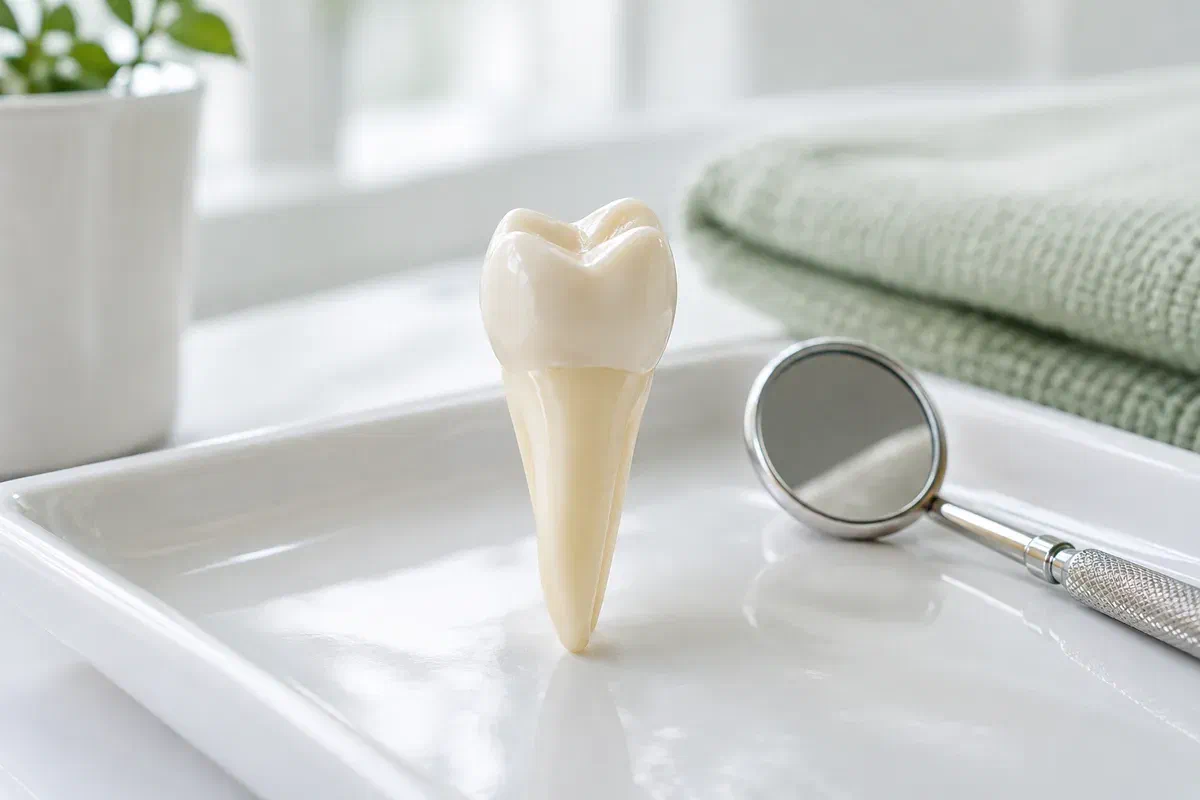
An intact premolar teaching model with a narrow root beside a dental mirror
Clues worth sharing

What does the tooth do, and when?

The pattern of a symptom is often more useful than its strength. Notice what sets it off, how long it lingers, and whether the area has needed repairs before.

Cold that hangs around

A short zing from ice water that fades within seconds is common. A sensation that keeps going after the cold is gone, grows over days, or starts on its own tells a different story. Mention which of these fits, and the dentist will test the pulp directly.

A rough edge on your tongue

Running your tongue over a premolar and finding a sharp corner can mean a cusp or part of a filling has come away. How the break looks does not show how deep it goes. Keep any piece that came off and note whether pain followed.

An ache you cannot place

When several teeth seem to hurt at once, resist the urge to name the culprit yourself. Show us the region instead. Careful testing helps confirm the true source so that treatment is directed at the right tooth and not its neighbour.

A gum bump that keeps returning, facial swelling, or pain that will not settle should be looked at even when the tooth has quiet spells. Phone the clinic so we can advise how soon to come in.

Why keep the tooth?

Function and appearance both count.

When a premolar is a good candidate, cleaning its inner canals and placing a suitable restoration may let it keep working. Whether that is sensible depends on the diagnosis, how much sound tooth remains, the health of the gum and bone around it, and the rest of your mouth.

Premolars are often visible in a broad smile, so the final repair is not only about chewing. Raise any concerns about how the tooth will look early on. That way the crown or other restoration is built into the plan rather than added as an afterthought.

Patient information: CDA — root canal treatment and restoring the tooth

Findings explained plainly

You should hear which signs point to the pulp, what remains uncertain, and why a new filling on its own would or would not be enough. If something is unclear, ask for the image or test result to be shown again.

Every stage on one page

Canal treatment, temporary protection, a core build-up and a final restoration may each be separate steps. Laying them out together makes it easier to weigh the plan against other options.

Room for your concerns

Let us know about a visible tooth, a tight schedule, or a past visit that left you uneasy. These points shape how appointments are arranged and explained, while the clinical requirements stay the same.

Step by step

How the treatment usually unfolds

Each appointment should have a clear purpose, and you should know who is treating you. Some premolars have anatomy or conditions that make referral to a root canal specialist the better route.

  1. Confirm the source

    Your history, an examination of the area, targeted tests and imaging come together here. The dentist looks at both the pulp and whether the tooth can be rebuilt. Tell us about previous root treatment, braces, an injury, or a filling that keeps failing.

  2. Numb and isolate

    If treatment is recommended and you decide to go ahead, local anaesthetic is given and a thin rubber sheet called a dental dam keeps the tooth dry and separate. An opening is made to reach the canals. Agree on a hand signal for pausing.

  3. Clean and seal the canals

    The canals are cleaned, disinfected, shaped and filled following the plan for your tooth. Its anatomy and condition affect how long this takes. A temporary filling may sit in place between visits, and you will be told how to look after it.

  4. Rebuild for chewing

    When the inside of the tooth is ready, the planned build-up and protective restoration are placed as needed. Check timing, fees and when the tooth will be reviewed. Be clear about whether what is in place now is temporary or final.

After your appointment

Keep the tooth safe until it is fully restored

Your instructions are specific to your treatment, so ask if any part is unclear. Let us know if symptoms worsen or start getting in the way of eating, sleeping or work.

Wait for the numbness to fade

Chewing while numb can lead to a bitten cheek or tongue, and hot drinks can scald without warning. Afterward, keep heavy pressure off the treated side as advised. What you can eat safely depends on whether a temporary or final restoration is in place.

Track how it changes

Report discomfort that is building, any new swelling, or a sense that the tooth touches first when you close. Describe whether things are easing, holding steady or getting worse. That trend helps more than testing the tooth on crunchy food.

Complete the repair

Attend the final restoration visit even once the tooth feels fine. Keep brushing and flossing as shown, and tell us if a temporary filling feels loose. If plans change, call so the remaining step can be rescheduled.

Your choices

Three directions a premolar plan can take

A useful conversation covers what each path can do, what it involves, and what could happen if nothing is done.

When the pulp needs it and the tooth is restorable

Treat the canals and keep the tooth

Root canal care makes sense when the pulp problem calls for it and enough tooth remains to rebuild. Talk through the expected outlook and the final restoration at the same time. The whole tooth matters, not just its canals.

When the diagnosis points elsewhere

Try something smaller first

A sensitive or chipped premolar does not automatically need a root canal. A new filling or another approach may suit the findings. Ask what supports that choice and how the tooth would be checked afterward to see how it responds.

When rebuilding the tooth is not realistic

Remove it and plan the gap

If the tooth cannot be kept appropriately, extraction and possible replacement can be considered. Ask how the space might affect your smile and bite, which replacements suit you, and how many visits and how much healing time are involved.

Common questions

Answers before you sit in the chair

Technical terms are not required. If an explanation does not land the first time, ask for the tooth to be shown on a model or image.

(905) 876-4488
How does the dentist tell which tooth is really causing the pain?
They combine your description with an examination, tests such as cold or tapping on individual teeth, and imaging. Each piece narrows the possibilities. Sometimes the answer is clear at once, and sometimes a short period of monitoring is suggested before treatment.
What is a dental dam, and why is it used?
It is a thin sheet, usually latex or a latex-free alternative, that fits around the tooth being treated. It keeps the area clean and dry and stops small instruments or rinses reaching your mouth. Mention any latex allergy beforehand.
Can the pain stop on its own without treatment?
Sometimes discomfort fades even though the underlying problem remains. A quiet tooth is not necessarily a healthy one. If you were advised to have treatment and the symptoms ease, keep the appointment or call to discuss whether reassessment is appropriate.
How many teeth called premolars do I have?
Most adults have eight, two on each side of the upper and lower jaws, although some people have fewer after orthodontic extractions. Ask the dentist to point out the one being discussed so you can follow the plan and describe symptoms accurately.
Will the premolar need a crown afterward?
Not always. The amount of healthy structure left, the size of any existing filling, and the forces on that tooth all influence the choice. Ask why a particular restoration is suggested and whether a smaller repair would be reasonable for your findings.
Is it easy to get to appointments from elsewhere in Milton?
Most visits are planned ahead, so ask for times that fit around school runs or shifts. Our hours are Monday to Thursday from 11 to 7, with Friday to Sunday by appointment. Call the clinic if a sudden symptom changes the timing you need.
Premolar care close to home

Bring us the tooth you cannot quite name.

Come to our Bronte Street practice for an assessment of a premolar concern, or to talk over advice you received elsewhere. We will confirm the source, then explain the steps to treat and restore the tooth.

Severe pain or swelling calls for a phone call to the clinic. Use online requests only for routine appointments.

Visit Milton Dental Clinic
Unit 1, 342 Bronte St. S, Milton, ON L9T 5B7
Get directions Clinic hours
Monday–Thursday
11am–7pm
Friday–Sunday
By appointment only

Areas we serve

  • Milton
  • Oakville
  • Mississauga
  • Georgetown
  • Halton Hills
  • Acton
  • Campbellville
  • Brampton
  • Burlington
  • Puslinch
  • Rockwood
  • Erin
  • Caledon
  • Etobicoke
  • Old Milton
  • Bronte Meadows
  • Timberlea
  • Dorset Park
  • Dempsey
  • Clarke
  • Beaty
  • Coates
  • Harrison
  • Scott
  • Willmott
  • Ford
  • Bowes
  • Cobden
  • Walker
  • Mountain View
  • Milton Heights
  • Hawthorne Village
  • Valley View
  • Fallingbrook
  • Nassagaweya
  • Trafalgar
  • Esquesing
  • Nelson
  • Brookville
  • Moffat
  • Glen Williams
  • Norval
  • Limehouse
  • Stewarttown
  • Ashgrove
  • Hornby
  • Silver Creek
  • Speyside
  • Scotch Block
  • North Oakville
  • River Oaks
  • Glen Abbey
  • West Oak Trails
  • Palermo
  • Bronte Creek
  • College Park
  • Joshua Creek
  • Uptown Core
  • Preserve
  • Iroquois Ridge
  • Lisgar
  • Meadowvale
  • Meadowvale Village
  • Churchill Meadows
  • Erin Mills
  • Central Erin Mills
  • Streetsville
  • East Credit
  • Creditview
  • Heartland
  • Sheridan
  • Mount Pleasant
  • Credit Valley
  • Huttonville
  • Churchville
  • Springbrook
  • Northwest Brampton
  • Bram West
  • Fletcher's Meadow
  • Fletcher's Creek South
  • Alton Village
  • Orchard
  • Millcroft
  • Headon Forest
  • Tansley
  • Brant Hills
  • Tyandaga
  • Kilbride
  • Lowville
  • Aberfoyle
  • Morriston
  • Arkell
  • Hillsburgh
  • Freelton
  • Carlisle
  • Waterdown
  • Flamborough
  • Mountsberg

How can we help?

Milton Dental Clinic

Have a question about your smile? Choose the option that works best for you.

For urgent dental concerns, please call.
Messages are reviewed during clinic hours.