

Illustrative consultation about a premolar tooth concern
Restorative Dentistry

Premolar Root Canals in Puslinch

Root canal care on a premolar often has a middle chapter, when the tooth wears a temporary filling and waits. For households in Puslinch, we explain that stage clearly, along with the diagnosis and the final repair.

The stage between visits

Treatment isn’t finished until the tooth is rebuilt.

People often think of a root canal as one appointment. In practice, a premolar may leave the chair with a temporary filling and a plan for one or more further visits. How you look after the tooth during that gap, and how soon the final restoration follows, can matter a great deal.

Premolars sit behind the canines, ahead of the molars, and do a share of the grinding when you eat. If the pulp inside one is infected or inflamed past the point of recovery, cleaning and sealing the canals may allow the tooth to stay. Their canals are not always as simple as their size suggests, and the tooth then needs a proper restoration to protect what remains.

From Puslinch, it makes sense to know the full sequence before you start, so trips can be planned around work and the seasons. At our Bronte Street practice we explain the findings, the number of stages likely, and what the finished restoration will be.

Map out premolar treatment
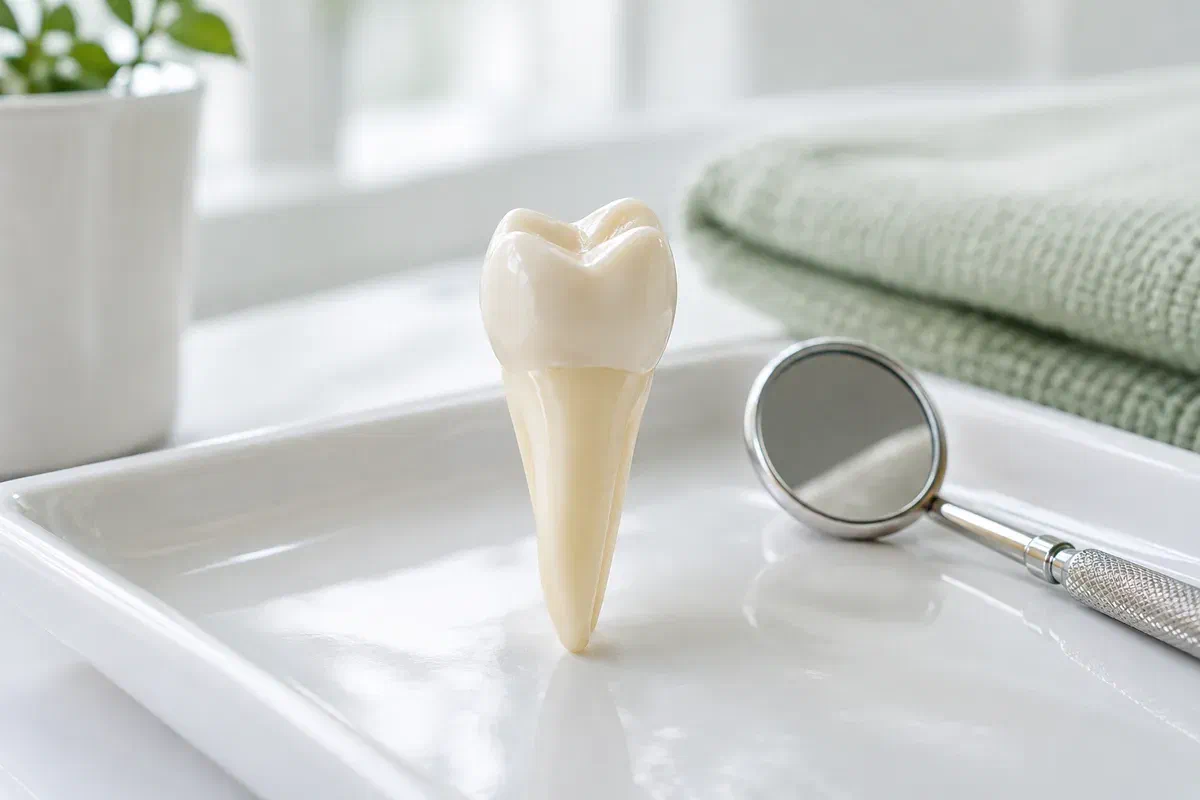
An intact premolar teaching model with a narrow root beside a dental mirror
Where it usually starts

Early signals from a premolar

Before any temporary filling is placed, the tooth has to be understood. Tell us what triggers discomfort, how long it lasts, and what work the tooth has had.

Sensations that stick around

A quick reaction to a cold drink that disappears is common. Pain that persists afterward, becomes stronger over time, or starts without any trigger is worth reporting. Your description guides which tests the dentist uses to check the pulp.

A broken corner or failing filling

Premolars sometimes crack around older repairs, especially at the narrow edges. A small visible break can hide deeper damage, or none at all. Save the fragment if you have it, and say whether the break was followed by sensitivity.

Discomfort with no clear address

Spreading pain can make it difficult to name one tooth. Gesture toward the area instead. Testing each tooth in turn helps the dentist find the true source, so treatment and any temporary filling go on the right premolar.

Swelling, persistent pain, or a gum bump that recurs should be checked even if the tooth has calm spells. Ring us before making the trip so we can advise on how urgent the visit is.

Why the plan matters

A tooth worth keeping deserves a finished repair.

When a premolar is suitable for treatment, root canal care combined with a lasting restoration may allow it to keep working for chewing. Suitability depends on the diagnosis, remaining structure, gum and bone health, and the rest of your dental needs.

Because the final restoration is what protects a treated premolar, it should be decided early, not after the temporary has worn thin. If the tooth shows when you smile, talk about appearance at the same time so the plan covers both.

Patient information: CDA — root canal treatment and restoring the tooth

A clear reason for treatment

Ask which findings suggest the pulp is involved and whether anything is still uncertain. You should know why replacing a filling on its own would or would not be enough.

Every stage with a date

Your plan might include canal treatment, a temporary filling, a core and then the permanent restoration, each on its own day. Booking them together at the start reduces the risk of the in-between stage dragging on through a busy month.

Room for real life

Tell us about seasonal workloads, travel or concerns about dental visits. These details help us explain how appointments can be arranged, while the tooth’s clinical needs still set the sequence.

Stages of care

Where the temporary filling fits in

Ask what every visit is for and who will do it. If a premolar has particularly complex anatomy, an endodontist may provide the canal treatment while we coordinate the restoration.

  1. Examine and test

    Your history, a clinical exam, pulp testing and imaging help determine what is wrong and whether the tooth is restorable. Tell us about earlier root canals, orthodontic treatment, injury or a repair that keeps failing.

  2. Begin treatment

    If you choose to proceed, the area is numbed and a dental dam is fitted around the premolar. The clinician then opens a small access point to the canals. Agree on a signal you can use to request a pause.

  3. Clean, seal and cover

    The canals are disinfected, shaped and sealed according to your plan. If treatment spans more than one visit, or the final restoration comes later, a temporary filling closes the access. You will be shown how to care for it.

  4. Replace the temporary

    When the tooth is ready, the temporary is removed and the planned build-up and permanent restoration are placed. Confirm timing, cost and review dates, and make sure you know which visit marks the end of treatment.

Living with a temporary

How to look after the tooth in the meantime

Instructions vary with the materials used, so follow the ones you were given. Call if symptoms grow, the temporary changes, or something does not feel right.

The first few hours

Hold off eating until numbness wears off so you don’t bite your cheek, and be cautious with hot drinks. After that, chew on the other side where possible. Sticky or very hard foods are best avoided while a temporary is in place.

Keeping an eye on progress

Tenderness that grows, new swelling, or a bite that feels high should be reported. Note whether things are improving, steady or worse over several days. That helps more than testing the tooth with something crunchy.

Book and keep the final visit

Temporary materials can wear, crack or loosen. Attend the final restoration appointment even if the tooth feels fine, keep cleaning carefully around it, and call promptly if the temporary feels rough, loose or partly missing.

Possible paths

What might be recommended

For any option, you should hear what it can do, the commitment it asks of you, and what may happen if nothing is done.

Pulp affected, enough tooth to rebuild

Treat and fully restore

This route makes sense when the pulp problem calls for canal treatment and the premolar can carry a lasting restoration. Ask about the expected outlook and the planned final repair, judging the tooth as a whole.

Diagnosis supports a lighter option

A simpler fix

Not every sensitive or chipped premolar needs a root canal. A new filling or similar treatment might be all that is required. Ask what supports this and how the tooth’s response will be monitored.

Tooth cannot reasonably be retained

Removal and a plan for the space

If the premolar cannot be kept appropriately, extraction and replacement can be discussed. Find out how the gap might affect your bite and appearance, which replacements suit, and the visits and healing time involved.

Temporary filling questions

Getting through the in-between stage

You don’t need to know material names. Ask what was placed, how long it should last, and what to watch for.

(905) 876-4488
How long can a temporary filling stay on a premolar?
Temporary materials are designed for a limited period, which varies with the material and the tooth. Ask when your final restoration should be placed. Leaving a temporary much longer than advised can allow leakage or breakage, which may let bacteria back into the treated canals. If your plans change, call so a new date can be set.
Can I brush and floss normally around the temporary?
Brush gently as usual. For flossing, you may be advised to slide the floss out sideways rather than pulling it up, to avoid dislodging the temporary. Follow the specific instructions you were given.
Part of my temporary seems to have worn away. Is that a problem?
Some wear is possible, but a temporary that is noticeably thinner, rough or partly missing should be checked. Call the clinic to describe it. We can advise on how soon the tooth should be seen.
Why isn’t the final restoration placed at the same visit?
Sometimes it can be, but often the tooth needs more than one canal visit, time to settle, or a restoration made to fit. The dentist will explain why your plan has the stages it does.
What is a core build-up?
It is material placed inside and on the treated tooth to replace lost structure and provide a stable base for the final restoration. Not every tooth needs the same build-up. Ask what your premolar requires.
How can I plan trips from Puslinch around these stages?
Ask for the expected number and length of visits at the outset, and book the final restoration early. Our Monday to Thursday hours run 11 to 7, with weekend times by appointment. Call before driving in if something changes suddenly.
Puslinch to Bronte Street

Start with the full map of treatment.

Come to our Bronte Street practice for a premolar assessment, or to review a plan you received elsewhere. We explain the diagnosis, the temporary stage and the final restoration before anything begins.

For severe pain or swelling, call us directly. Online requests are for appointments that are not urgent.

Visit Milton Dental Clinic
Unit 1, 342 Bronte St. S, Milton, ON L9T 5B7
Get directions Clinic hours
Monday–Thursday
11am–7pm
Friday–Sunday
By appointment only

Areas we serve

  • Milton
  • Oakville
  • Mississauga
  • Georgetown
  • Halton Hills
  • Acton
  • Campbellville
  • Brampton
  • Burlington
  • Puslinch
  • Rockwood
  • Erin
  • Caledon
  • Etobicoke
  • Old Milton
  • Bronte Meadows
  • Timberlea
  • Dorset Park
  • Dempsey
  • Clarke
  • Beaty
  • Coates
  • Harrison
  • Scott
  • Willmott
  • Ford
  • Bowes
  • Cobden
  • Walker
  • Mountain View
  • Milton Heights
  • Hawthorne Village
  • Valley View
  • Fallingbrook
  • Nassagaweya
  • Trafalgar
  • Esquesing
  • Nelson
  • Brookville
  • Moffat
  • Glen Williams
  • Norval
  • Limehouse
  • Stewarttown
  • Ashgrove
  • Hornby
  • Silver Creek
  • Speyside
  • Scotch Block
  • North Oakville
  • River Oaks
  • Glen Abbey
  • West Oak Trails
  • Palermo
  • Bronte Creek
  • College Park
  • Joshua Creek
  • Uptown Core
  • Preserve
  • Iroquois Ridge
  • Lisgar
  • Meadowvale
  • Meadowvale Village
  • Churchill Meadows
  • Erin Mills
  • Central Erin Mills
  • Streetsville
  • East Credit
  • Creditview
  • Heartland
  • Sheridan
  • Mount Pleasant
  • Credit Valley
  • Huttonville
  • Churchville
  • Springbrook
  • Northwest Brampton
  • Bram West
  • Fletcher's Meadow
  • Fletcher's Creek South
  • Alton Village
  • Orchard
  • Millcroft
  • Headon Forest
  • Tansley
  • Brant Hills
  • Tyandaga
  • Kilbride
  • Lowville
  • Aberfoyle
  • Morriston
  • Arkell
  • Hillsburgh
  • Freelton
  • Carlisle
  • Waterdown
  • Flamborough
  • Mountsberg

How can we help?

Milton Dental Clinic

Have a question about your smile? Choose the option that works best for you.

For urgent dental concerns, please call.
Messages are reviewed during clinic hours.