Sharp spots and rough margins
A rough area may be exposed filling or a chipped bit of enamel. Avoid picking at it, since that can make sensitivity worse. Tell us if it holds food, frays floss, or irritates your cheek, so we can advise you on timing.


Cold water never used to bother that tooth. If sensitivity started after a filling cracked, a visit from Georgetown lets us examine the break, check the tooth beneath, and plan a sound repair.
For some people, the first sign is not a rough edge at all. It is a sharp sting from a cold glass, a jolt from something sweet, or a tooth that feels tender when you bite down. Look closer and part of a filling may be missing. Underneath that symptom sits a question about what has broken: just the material, some enamel beside it, or something deeper that now lets sensation through.
An examination is what tells those apart. A small break in an otherwise sound filling may be patched. A restoration that has split or loosened usually needs replacing. Where the tooth itself has lost structure, or the nerve seems involved, the plan can look different again. How strong the sensitivity feels is not a measure of how much damage there is.
Calling from Georgetown, describe the sensitivity as precisely as you can: what sets it off, how long it lasts, and whether it has started to ache on its own. Tell us when the filling broke. If a fragment came out, keep it in a little container rather than trying to fit it back, and we will explain what we find before treatment.
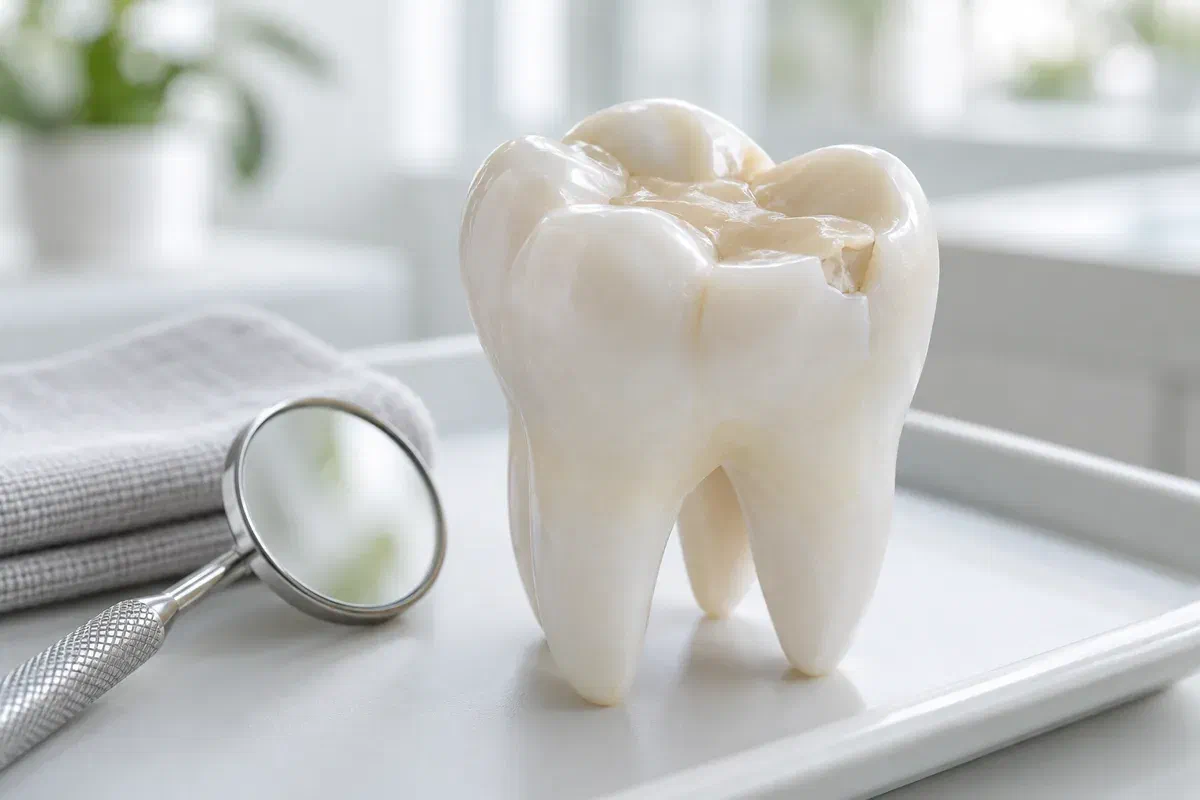
The way a tooth responds after a filling breaks tells the dentist a lot. Explain what you feel, and mention any jagged spot catching your tongue or cheek.
A rough area may be exposed filling or a chipped bit of enamel. Avoid picking at it, since that can make sensitivity worse. Tell us if it holds food, frays floss, or irritates your cheek, so we can advise you on timing.
A brief sting that fades in seconds is different from pain that keeps going after the cold drink is gone, or an ache that starts by itself. Note which you have. That pattern helps the dentist judge the condition of the nerve inside the tooth.
If the same tooth has had several repairs and now reacts again, mention the history. Replacing the filling without reviewing the tooth, its nerve, and your bite may leave the underlying cause untouched.
Sensitivity that eases does not mean the problem has solved itself. A tooth can settle down while the broken filling and surrounding enamel remain weak.
Covering the exposed area is often part of what helps a sensitive tooth settle, but a good repair does more than that. It is shaped to the remaining tooth, gives you a working chewing surface, meets neighbouring teeth snugly, and has edges you can clean. The dentist will say whether a direct filling fits or whether something more protective is worth considering.
The examination also looks for why it broke and why it reacts. A large older filling, decay, a cracked cusp, or heavy bite forces can each affect what is advised. If the nerve appears inflamed, that changes the conversation too. Knowing this lets you choose a plan with sensible expectations about comfort afterwards.
Patient information: Cleveland Clinic — dental filling care and complications
Ask how much of the filling has failed and whether the nerve seems affected. A small repair and a full replacement differ, and the reasoning for the proposed extent should make sense to you.
Describe how the tooth felt before the break and whether food has been catching. Restoring the right shape helps with chewing and cleaning, and your account helps the dentist consider more than the missing piece.
Mention grinding, clenching, chewing ice, or a change in your bite. These can relate to both breakage and sensitivity, though they do not confirm the cause. They help shape the repair and any protective advice.
Depending on the findings, the visit may end with a final repair or a temporary that lets the tooth settle. Ask which approach is planned and why.
The dentist examines the broken filling and tooth, asks about your sensitivity, and may use an X-ray or simple tests. The goal is to understand both the break and how the tooth is responding.
You will hear the options, the material, the expected fee, and any uncertainty about deeper damage or the nerve. Ask what would change if more treatment turns out to be needed once the old filling is out.
Freezing and isolation are used where appropriate. Damaged material and affected tooth structure are dealt with, and the new restoration is placed, or a temporary covers the tooth while it settles. The approach depends on what is found.
The dentist reviews how the tooth meets the others. Ask what level of sensitivity is expected in the days after and when to call. If the tooth feels high, sharp, or the sensitivity is getting worse, let us know.
Instructions depend on the material and whether the repair is temporary. If the sensitivity changes or turns into an ache while you wait, call us.
Until the tooth is treated, keep very cold or very hot food and drinks away from it, and chew on the other side. A toothbrush with soft bristles helps. Leave the break alone rather than probing it with your tongue.
Wait for numbness to pass before eating. Some short-lived sensitivity can follow a new filling; ask what to expect and how long it should last. Follow any extra advice for a temporary restoration.
Continue cleaning between your teeth as advised. Contact the clinic if sensitivity lingers longer each time, an ache starts on its own, or your bite feels uneven. Those changes are worth checking sooner.
Patient information: NHS Wales — care while awaiting restoration assessment
There is no need to figure out whether the fragment was tooth or filling. Tell us what you feel, and when it started.
Our Bronte Street practice can assess a broken filling and the sensitivity that came with it. Bring a description of what triggers it, any piece you kept, and your questions about the repair.
For intense pain, swelling, or an edge cutting your mouth, please call. Online requests are for non-urgent appointments.
