

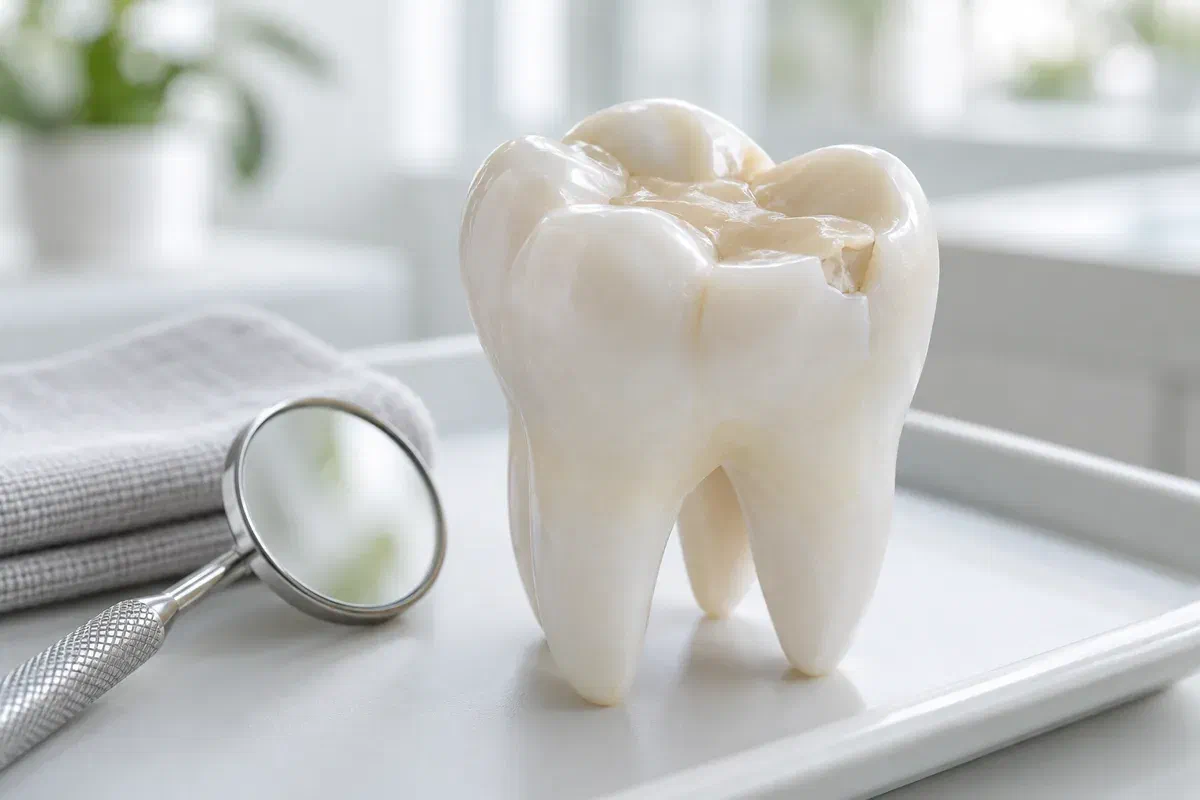
Illustrative dental consultation about a newly rough or broken filling
Restorative Dentistry

Replacement of Broken Fillings in Halton Hills

Same tooth, same filling, broken again? For people across Halton Hills, we look past the chip to the reasons a restoration keeps failing, then plan a repair built for the forces it faces.

Breaking the cycle

Second break, third repair — time to ask why

Some teeth seem to need fixing over and over. The filling chips, it is patched, and a year or two later the same corner gives way again. Each time, the useful question is not just what fell out, but what keeps happening to this tooth. Sometimes only the material is failing; sometimes the tooth wall beside it is cracking, or decay is working underneath.

An examination helps separate those possibilities. A small, isolated defect might still suit a limited repair. A restoration that is cracked or no longer sealing may need to be removed and replaced. When the tooth itself has been weakened by repeated work, a stronger kind of restoration could deserve a conversation. A tiny chip can belong to a much bigger pattern.

From Georgetown, Acton, Glen Williams, or one of the smaller hamlets in Halton Hills, bring the tooth's history with you. Tell us when you noticed this break, whether it is sore or sensitive, and roughly when earlier repairs were done. Keep any fragment in a clean container instead of putting it back, and we will go over what we find.

Arrange a review of a repeat break
Illustrative molar model showing a small defect in a tooth-coloured filling
Patterns we look for

A failing filling usually leaves clues

Repeated breaks can show up in different ways. Describe what you notice, including any spot that scratches your tongue or cheek, so the team can decide how soon to see you.

The same edge, again and again

If the rough area is in a spot that has broken before, mention it. It may be filling or enamel cracking alongside. Avoid smoothing it yourself. Let us know whether it snags floss or rubs your cheek, as that shapes how soon you should come in.

Changes in how the tooth feels

New sensitivity to cold, sugar, or biting after a repeat break is worth noting, along with how long it lasts. A quick twinge and a lingering ache suggest different things, and both inform the assessment of the tooth and its nerve.

A list of earlier repairs

Write down what you remember: when the filling was first placed, how many times it has been patched, and whether a particular surface always fails. That history helps the dentist decide whether a different approach makes more sense.

A tooth that keeps breaking without pain still deserves attention. The absence of discomfort does not show whether the remaining filling or enamel is well supported.

Repairing with the cause in mind

Aim for the last repair, not the next one

A replacement should suit the tooth as it is today, which may be weaker than when the first filling was placed. It needs a chewing surface that matches your bite, firm contact with neighbouring teeth, and edges that can be cleaned. The dentist will discuss whether another direct filling is still appropriate or whether more coverage is wise.

Repeated breaks are often where the cause matters most. A very large old filling, recurrent decay, a cracked cusp, or heavy forces from clenching or grinding can each change the advice. Knowing which of these is at work lets you set fair expectations for the next repair, instead of rebuilding the same shape and hoping it lasts.

Patient information: Cleveland Clinic — dental filling care and complications

An honest look at the options

Ask whether a limited repair is still reasonable or whether full replacement is better this time. The two involve different amounts of work, and the dentist should explain why one fits the tooth's history.

Contacts and contours that hold

Talk about where food collects and how the tooth felt before. Restoring the right shape is part of reducing strain on the repair, and your description helps the dentist look at more than the missing piece.

Protection against what wore it down

Mention night grinding, daytime clenching, ice chewing, or a bite that has shifted. These do not prove a cause on their own, but they can shape the repair and lead to advice, such as whether a night guard is worth discussing.

A repair visit for a repeat break

History first, then hands-on care

Depending on what the examination reveals and the time booked, you may leave with the final restoration or a temporary. Ask which to expect when you call.

  1. Review the history and the tooth

    The dentist looks at the broken filling and surrounding tooth, asks about earlier repairs and symptoms, and may suggest an X-ray. The aim is to understand why it keeps failing, not just where.

  2. Explain what has changed

    You will hear the options, material, expected fee, and anything uncertain until the old filling is out. Ask how this plan differs from previous repairs and what would change if a crack or decay is found.

  3. Rebuild with care

    Freezing and isolation are used as needed. Failing material and weakened tooth are removed before the new restoration goes in, or a temporary cover is used for now. The technique depends on the defect and how much sound tooth remains.

  4. Check the bite closely

    Because heavy contact can contribute to breakage, your bite is reviewed carefully. Find out when you can chew normally and whether a recheck is planned. If anything feels high or sharp after the freezing fades, tell us promptly rather than waiting.

Giving the new repair a fair chance

Habits matter as much as materials

Follow the instructions for your material and treatment stage. If something changes while you are waiting for an appointment, call for advice.

Protect the tooth while you wait

Steer hard food away from that side and pick comfortable food and drink temperatures. Try not to keep testing the break, and do not pull at pieces that still seem attached to the tooth.

Ease into normal use

Let numbness fade before eating, and follow any limits that come with a temporary. Ask when you can chew normally again and whether any habits, such as ice chewing, are worth dropping for good.

Watch for early warning signs

Keep up your normal brushing and flossing as advised. Call if your bite feels uneven, floss catches, or the tooth becomes sore. Catching a problem early is easier than waiting for the next piece to come away.

Patient information: NHS Wales — care while awaiting restoration assessment

Options for a tooth that keeps breaking

Sometimes the answer is a different kind of repair

Ask why a particular approach suits this tooth's history. Choosing the same type of filling again is not automatically right when it has failed before.

If the failure is truly local

A focused repair

A limited repair might be reasonable when the surrounding filling and tooth are still sound. The dentist assesses whether it addresses the defect well, given the history. Ask what would be kept and what renewed.

If the tooth can still hold one

A fresh filling

Removing the old restoration and placing a new direct filling may suit a tooth with adequate support. Discuss material in terms of size, moisture control, and the biting forces involved. The goal is a repair matched to the tooth now.

If strength or the pulp is affected

Coverage for a tired tooth

Teeth that have been patched many times can lose enough structure that an onlay or crown becomes the more protective choice. Nerve involvement needs its own treatment first. Ask what tipped the decision and how the steps would be ordered.

Questions about repeat breaks

Why does this keep happening?

There is no need to know whether the piece was filling or tooth when you book. Start with what happened and the tooth's history.

(905) 876-4488
Why does the same filling keep breaking?
Possible reasons include a large restoration in a weakened tooth, decay at the edges, a crack, heavy biting forces, or the shape of the bite. The examination looks for which apply. Bring what you remember about earlier repairs to help.
Would a different material be stronger?
Different materials have different properties, and the right choice depends on the size of the cavity, where the tooth is, how dry it can be kept, and the forces on it. Ask the dentist why a particular option is suggested for your tooth.
Could grinding my teeth at night be causing the breaks?
Grinding and clenching can place heavy forces on fillings and teeth, and they are worth mentioning. They are not the only possible cause. The dentist can look for signs of wear and discuss whether protective measures make sense.
Is it time to think about a crown instead of another filling?
Possibly, if the tooth has lost significant structure, but it depends on the examination. Ask what the findings show about the remaining tooth walls and what the trade-offs are between another filling and fuller coverage.
Can a broken filling be repaired more than once?
Sometimes, but each repair is a chance to reassess. If the same spot keeps failing, the dentist may recommend replacing the restoration or considering a different approach. Ask why a repeat repair is or is not appropriate.
How do I make the most of an appointment from Halton Hills?
When you call, describe the break and mention the tooth’s repair history so the team can suggest an appropriate appointment length. Ask whether the plan is likely to need one visit or more, so you can arrange the trip accordingly.
Halton Hills filling repairs

A fresh look at an old problem.

Our Bronte Street practice can assess a filling that keeps breaking and plan a repair suited to the tooth and your bite. Bring your history, any saved fragment, and your questions.

Call about strong pain, swelling, or an edge that is cutting your mouth. Online requests are for non-urgent appointments.

Visit Milton Dental Clinic
Unit 1, 342 Bronte St. S, Milton, ON L9T 5B7
Get directions Clinic hours
Monday–Thursday
11am–7pm
Friday–Sunday
By appointment only

Areas we serve

  • Milton
  • Oakville
  • Mississauga
  • Georgetown
  • Halton Hills
  • Acton
  • Campbellville
  • Brampton
  • Burlington
  • Puslinch
  • Rockwood
  • Erin
  • Caledon
  • Etobicoke
  • Old Milton
  • Bronte Meadows
  • Timberlea
  • Dorset Park
  • Dempsey
  • Clarke
  • Beaty
  • Coates
  • Harrison
  • Scott
  • Willmott
  • Ford
  • Bowes
  • Cobden
  • Walker
  • Mountain View
  • Milton Heights
  • Hawthorne Village
  • Valley View
  • Fallingbrook
  • Nassagaweya
  • Trafalgar
  • Esquesing
  • Nelson
  • Brookville
  • Moffat
  • Glen Williams
  • Norval
  • Limehouse
  • Stewarttown
  • Ashgrove
  • Hornby
  • Silver Creek
  • Speyside
  • Scotch Block
  • North Oakville
  • River Oaks
  • Glen Abbey
  • West Oak Trails
  • Palermo
  • Bronte Creek
  • College Park
  • Joshua Creek
  • Uptown Core
  • Preserve
  • Iroquois Ridge
  • Lisgar
  • Meadowvale
  • Meadowvale Village
  • Churchill Meadows
  • Erin Mills
  • Central Erin Mills
  • Streetsville
  • East Credit
  • Creditview
  • Heartland
  • Sheridan
  • Mount Pleasant
  • Credit Valley
  • Huttonville
  • Churchville
  • Springbrook
  • Northwest Brampton
  • Bram West
  • Fletcher's Meadow
  • Fletcher's Creek South
  • Alton Village
  • Orchard
  • Millcroft
  • Headon Forest
  • Tansley
  • Brant Hills
  • Tyandaga
  • Kilbride
  • Lowville
  • Aberfoyle
  • Morriston
  • Arkell
  • Hillsburgh
  • Freelton
  • Carlisle
  • Waterdown
  • Flamborough
  • Mountsberg

How can we help?

Milton Dental Clinic

Have a question about your smile? Choose the option that works best for you.

For urgent dental concerns, please call.
Messages are reviewed during clinic hours.