

Illustrative dental consultation about a newly rough or broken filling
Restorative Dentistry

Replacement of Broken Fillings in Rockwood

It does not hurt, so does it matter? A broken filling can be quiet and still leave a tooth vulnerable. From Rockwood, an assessment shows what is weak and how best to rebuild it before trouble starts.

When nothing hurts

Quiet breaks still count

A missing corner with no pain at all is easy to shrug off. You chew on the other side, stop noticing it after a week, and the visit slides down the list. The trouble is that comfort says nothing about what actually broke. It could be a sliver of filling, a chip of enamel next to it, or the first visible sign of a tooth that has been weakening underneath.

An examination is how you find out. Some small flaws can be repaired with a little new material. Some fillings are cracked right through and need full replacement. And some teeth have lost enough support that a stronger restoration ought to be considered. Dealing with it while it is still quiet usually keeps the options wider.

From Rockwood, a short phone call is enough to start. Say when you noticed the break, and mention any small signs, such as food catching, a rough feeling, or a flicker of sensitivity. If a fragment came out, put it in a clean container rather than back in the tooth. We will examine the area and talk you through the findings.

Book a check for a painless break
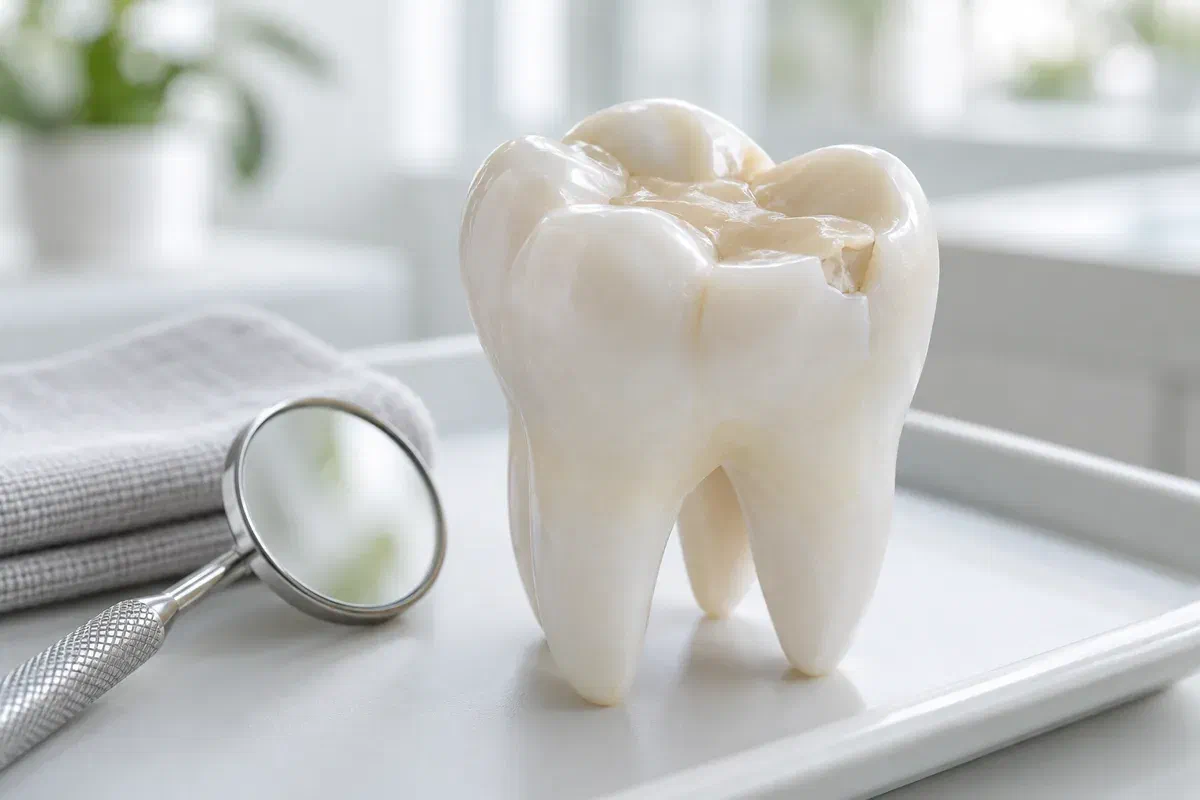
Illustrative molar model showing a small defect in a tooth-coloured filling
Subtle signs

Small clues a quiet break leaves behind

Even without pain, a broken filling usually shows itself somehow. Tell us what you have noticed, especially any rough edge that brushes your tongue or cheek.

A texture your tongue keeps finding

A step or rough patch may be the old filling edge or enamel that cracked beside it. Leave it alone rather than smoothing it. Mention if it holds food, catches floss, or rubs soft tissue, because those details help us suggest timing.

A faint or occasional reaction

Note any slight twinge with cold, sweets, or biting, even if it is rare. Say whether it passes quickly or stays. A mild response can still give the dentist useful information about the tooth beneath the broken filling.

Old repairs that keep failing quietly

If this tooth has been repaired before, tell us when. A restoration that breaks repeatedly, painful or not, suggests the bite and tooth need a wider look rather than another copy of the same filling.

Painless does not mean stable. The filling that remains, or the enamel around it, can be left without enough support even when the tooth feels perfectly normal.

Why it is worth acting early

Repair while the tooth still has choices

Addressing a quiet break gives the dentist more sound tooth to work with. The aim is a repair suited to what is left: a proper chewing surface, firm contact with neighbouring teeth, and edges that are easy to keep clean. You will learn whether a direct filling is suitable or if something more protective deserves thought.

The visit also explores why it broke. A large aging filling, decay along its edge, a cracked cusp, or forceful biting can each influence the plan. Knowing this helps you choose treatment with realistic expectations, rather than waiting until a painful problem forces a quicker decision.

Patient information: Cleveland Clinic — dental filling care and complications

A clear explanation of what is needed

Ask how much of the filling has failed and whether the rest can be kept. A small repair and a complete replacement involve different amounts of work, and the reason for the extent proposed should make sense.

A tooth you can use without thinking

Describe whether food has been catching and how the tooth felt before the break. Restoring the shape and contact helps with chewing and cleaning, and your notes help the dentist look beyond the missing piece.

A chance to look at contributing habits

Mention grinding, clenching, chewing ice, or a change in your bite. None of these confirms the cause, but each can shape the repair and any advice on protecting it.

What the visit looks like

A calm appointment for a calm tooth

A painless break may be finished in one visit or may begin with a temporary, depending on what is found and how long the booking is. Ask in advance.

  1. Find what is hidden

    The dentist inspects the filling and the tooth around it, asks about any minor symptoms, and may take an X-ray. A comfortable tooth can still hide decay or a crack, so this step looks past the visible chip.

  2. Lay out the options

    You will hear about suitable repairs, the material, the expected fee, and what may be uncertain until the old filling is removed. Ask what would change if more care is needed. Go ahead only once you are comfortable with the plan.

  3. Rebuild the area

    Local anaesthetic and isolation are used as appropriate. The damaged material and any affected tooth are cleared, then the new restoration is placed or a temporary protects the tooth. The method depends on the defect and support.

  4. Check that all is well

    The bite and the shape of the repair are reviewed. Ask about eating, cleaning, and whether a follow-up is needed. If the tooth feels high or sharp later, call us rather than assuming it will go away.

Caring for the tooth

Treat it as fragile, even if it feels fine

Instructions depend on the material and whether the repair is temporary or final. If a quiet tooth starts to hurt while you are waiting, call us.

Until the appointment

Keep hard foods off the broken tooth, even though it does not hurt. Pick comfortable temperatures, and avoid pressing on or probing the gap. Leave any loose-looking but attached piece in place.

After treatment

Wait for numbness to pass before eating, and follow any extra limits for a temporary. Ask when normal chewing can resume. The new restoration may come with different care instructions than the old one.

Later on

Continue brushing and flossing as advised. Call if your bite feels uneven, floss catches, or the tooth becomes sore. Describing a small change early is easier than waiting for another break.

Patient information: NHS Wales — care while awaiting restoration assessment

Repair possibilities

Earlier care, more flexibility

Ask why a particular option suits the damage. The material you had before is not necessarily the right choice for the tooth now.

Rest of the filling in good shape

Limited repair

When the surrounding restoration and tooth are sound, fixing just the defect may be considered. The dentist judges whether that will hold up. Ask what would be kept and what would be renewed.

Healthy tooth available for support

Replacement filling

If enough sound tooth remains, removing the old filling and placing a new one may suit. Discuss materials in terms of the cavity, keeping the area dry, and chewing forces. The goal is a repair fitted to the tooth today.

Tooth weakened or nerve involved

Stronger restoration

A tooth missing a lot of structure may be better protected by an onlay or crown. If the nerve is involved, that needs treating too, even if it has been quiet. Ask which finding shapes the plan and how the steps would run.

Painless break questions

Do I really need to come in?

Identifying the fragment yourself is not necessary. Tell us what happened and what, if anything, feels different.

(905) 876-4488
Why does my broken filling not hurt?
A break may not expose sensitive parts of the tooth, or the change may be small enough not to trigger symptoms yet. That does not mean the tooth is stable. The examination shows what has broken and whether anything needs prompt attention.
What can happen if I leave a painless broken filling?
The gap or rough edge can trap food, the tooth may weaken further, and a small break can become larger under chewing forces. Not every case is urgent, but an assessment helps you decide sensibly rather than waiting for pain.
Could there be decay under a filling that does not hurt?
It is possible. Decay is not always painful, especially early on. An examination and sometimes an X-ray can give a clearer picture, and the dentist may only know the full extent once the old filling is removed.
Is a painless break less likely to need a big repair?
Not necessarily. Pain is not a reliable guide to how much damage there is. A comfortable tooth may still have a cracked filling or weakened walls. Ask the dentist to explain how the findings shape the recommended repair.
My filling broke on something soft. Was it already weak?
Possibly. A restoration or tooth that had weakened over time can give way during an ordinary meal. The moment it broke does not identify the cause, so share any earlier symptoms, repairs, or grinding with the dentist.
How quickly should I book from Rockwood if it does not hurt?
Call to describe the break, and the team can suggest reasonable timing based on what you notice. It is best not to leave it for months. If pain, swelling, or a sharp edge develops before your visit, phone again.
For Rockwood

Deal with it now, while it is still quiet.

Our Bronte Street practice will look at a painless broken filling and recommend a repair suited to the tooth. Come with a note of when you noticed it, the fragment if you saved one, and any questions.

If the tooth turns painful, swells, or an edge begins cutting your mouth, call us. Online requests suit non-urgent visits.

Visit Milton Dental Clinic
Unit 1, 342 Bronte St. S, Milton, ON L9T 5B7
Get directions Clinic hours
Monday–Thursday
11am–7pm
Friday–Sunday
By appointment only

Areas we serve

  • Milton
  • Oakville
  • Mississauga
  • Georgetown
  • Halton Hills
  • Acton
  • Campbellville
  • Brampton
  • Burlington
  • Puslinch
  • Rockwood
  • Erin
  • Caledon
  • Etobicoke
  • Old Milton
  • Bronte Meadows
  • Timberlea
  • Dorset Park
  • Dempsey
  • Clarke
  • Beaty
  • Coates
  • Harrison
  • Scott
  • Willmott
  • Ford
  • Bowes
  • Cobden
  • Walker
  • Mountain View
  • Milton Heights
  • Hawthorne Village
  • Valley View
  • Fallingbrook
  • Nassagaweya
  • Trafalgar
  • Esquesing
  • Nelson
  • Brookville
  • Moffat
  • Glen Williams
  • Norval
  • Limehouse
  • Stewarttown
  • Ashgrove
  • Hornby
  • Silver Creek
  • Speyside
  • Scotch Block
  • North Oakville
  • River Oaks
  • Glen Abbey
  • West Oak Trails
  • Palermo
  • Bronte Creek
  • College Park
  • Joshua Creek
  • Uptown Core
  • Preserve
  • Iroquois Ridge
  • Lisgar
  • Meadowvale
  • Meadowvale Village
  • Churchill Meadows
  • Erin Mills
  • Central Erin Mills
  • Streetsville
  • East Credit
  • Creditview
  • Heartland
  • Sheridan
  • Mount Pleasant
  • Credit Valley
  • Huttonville
  • Churchville
  • Springbrook
  • Northwest Brampton
  • Bram West
  • Fletcher's Meadow
  • Fletcher's Creek South
  • Alton Village
  • Orchard
  • Millcroft
  • Headon Forest
  • Tansley
  • Brant Hills
  • Tyandaga
  • Kilbride
  • Lowville
  • Aberfoyle
  • Morriston
  • Arkell
  • Hillsburgh
  • Freelton
  • Carlisle
  • Waterdown
  • Flamborough
  • Mountsberg

How can we help?

Milton Dental Clinic

Have a question about your smile? Choose the option that works best for you.

For urgent dental concerns, please call.
Messages are reviewed during clinic hours.