

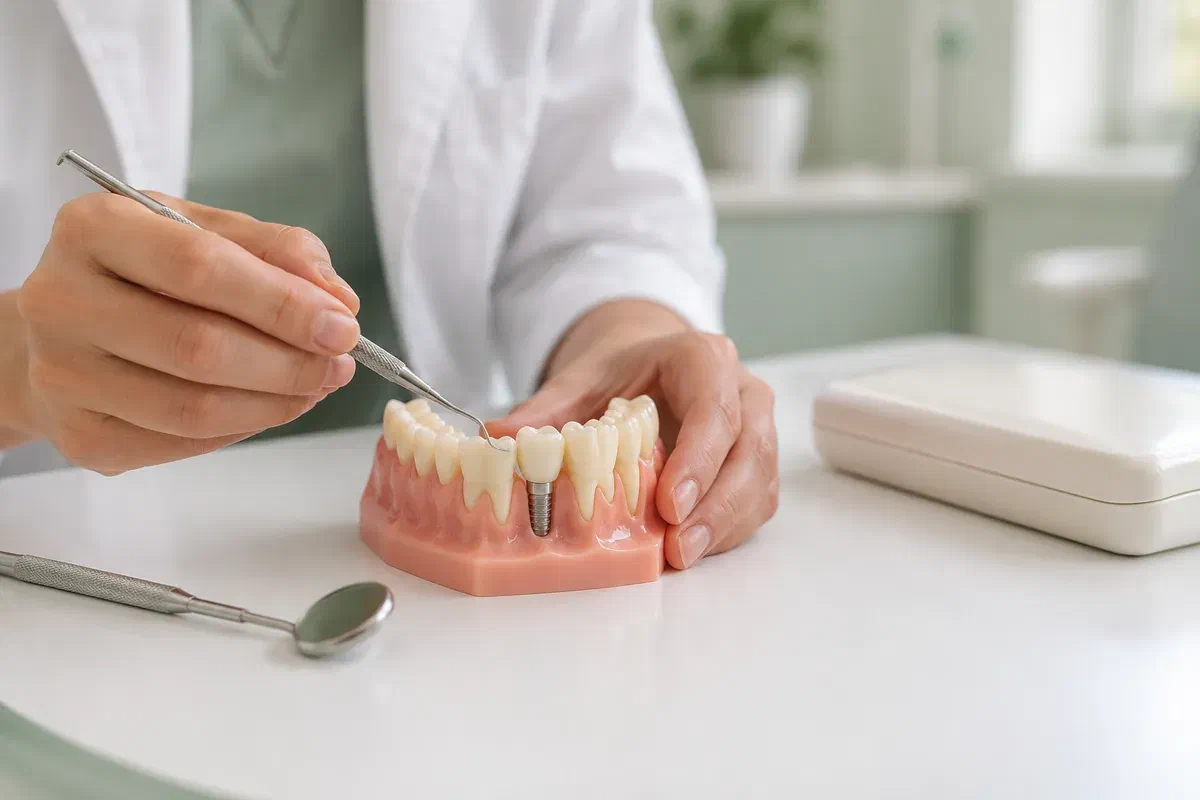
Illustrative consultation about concerns with an existing dental implant
Restorative Dentistry

Replacement of Failing Dental Implants

An implant concern needs answers before a replacement decision. Arrange a review in Milton to understand the problem, assess the surrounding support, and discuss a realistic path forward.

A closer look at failing implant replacement

Understand what has changed before planning what comes next.

Hearing that an implant may be failing can be unsettling, especially after the time and care invested in it. The first step is to identify the problem accurately. A loose crown, a damaged connecting component, inflammation around an implant, and loss of implant support are different situations with different treatment possibilities.

Replacement of the implant itself is considered when the assessment indicates that retaining it is unsuitable. Even then, removal and placement of another implant are separate decisions. The cause of the problem, remaining bone and gum tissue, proposed restoration, and your preferences all influence what is reasonable.

At Milton Dental Clinic, you can begin with a review of the concern and the available treatment records. We can discuss what further assessment is needed and whether specialist involvement is appropriate. You deserve an explanation of the findings, the alternatives, and the stages ahead before choosing another course of treatment.

Arrange an implant concern review
A dentist examining an illustrative jaw teaching model with an implant crown
Changes to have assessed

Bring the symptom without trying to diagnose the component.

Tell us when the implant was placed, when the replacement tooth was attached, and what has changed recently. Earlier records can help the assessment.

Movement in the replacement tooth

A sensation of movement can involve the crown, connection, or implant support. Avoid rocking it to work out which part is loose. Call for assessment and describe whether the change occurred suddenly, followed an impact, or has gradually become more noticeable.

Bleeding, swelling, or an unusual taste

Changes in the tissues around an implant need review, even when the restoration still feels firm. Explain what you notice during cleaning and whether there is soreness or discharge. The examination helps determine the condition of the gums and supporting bone.

A concern identified on review

Sometimes a problem is discussed after an examination or X-ray rather than because of pain. Ask to have the finding explained and compared with previous records where available. A clear account of the change helps you understand why treatment is being considered.

A problem with the visible crown does not automatically mean the implant in the jaw must be replaced. The affected structure needs to be identified first.

Planning with the cause in mind

A new implant needs more than a new appointment.

A careful review aims to establish whether the existing implant can be maintained or whether removal is more appropriate. If replacement is considered, the plan should address the factors that contributed to the original problem rather than treating a new implant as a guaranteed reset.

You may also need a practical arrangement for the space during treatment. Discuss appearance, eating, and any removable appliance before the sequence begins. Understanding the interim period, further procedures, and final restoration helps you decide whether another implant is the right route for you.

Patient information: ITI — assessing implant complications and removal

An explanation of the actual problem

Ask whether the concern is biological, mechanical, positional, or a combination. You do not need to learn the terminology, but you should understand which part requires attention and what findings support the recommendation.

A plan that includes the surrounding site

The condition of the bone and gum tissue affects replacement planning. Ask whether further treatment or healing would be needed and how those findings influence the proposed timing. The site is part of the decision, not merely the space left after removal.

A comparison you can use

Discuss the full implant replacement pathway alongside suitable alternatives. Include maintenance, interim teeth, costs, and the possibility that the plan changes after further assessment. This gives you a more complete basis for deciding.

Your assessment and planning pathway

Make each stage clear before moving to the next.

Treatment may involve more than one clinician and several reviews. Ask who is responsible for each stage and how the plan will be reassessed as information becomes available.

  1. Collect the history and assess the implant

    The review considers symptoms, the restoration, tissue health, stability, and relevant imaging. Previous implant details and X-rays can help. Tell us about medical changes, smoking, grinding, earlier treatment of the area, and any difficulty cleaning the restoration.

  2. Decide whether retention is reasonable

    Discuss whether component repair or treatment of the surrounding tissues could address the problem. When removal is recommended, ask why and what the alternatives involve. Specialist assessment may help with complex biological, surgical, or restorative questions.

  3. Plan removal and management of the site

    If removal proceeds, the clinician explains the procedure, relevant risks, aftercare, and any proposed grafting or healing stage. A replacement implant may be considered at a suitable time, but immediate replacement is not assumed. Confirm the interim tooth arrangement.

  4. Reassess before the final restoration

    Any new implant and restoration require their own assessment and follow-up. The plan may be revised according to healing or site conditions. Ask when the restoration can be used normally and how long-term maintenance will be organized.

Care during a changing treatment plan

Know which instructions apply to the stage you are in.

Advice after assessment, implant removal, grafting, and replacement can differ. Keep the written instructions and contact details for the clinician responsible for your current care.

Avoid loading a moving restoration

Until the area is assessed, avoid chewing on a loose implant restoration and do not attempt to tighten or remove parts. If a component has already detached, keep it safely outside your mouth and bring it to the appointment.

Follow site-specific healing guidance

After a procedure, follow the instructions for cleaning, eating, and any temporary appliance. Do not assume an old denture can be worn over the site without checking. Ask how to manage your daily routine if the advice is difficult to follow.

Maintain the agreed reviews

Follow-up helps assess tissues, components, and the developing restoration. Report new movement, discharge, or increasing soreness rather than waiting for a scheduled review. Discuss any cleaning difficulty so the maintenance plan remains practical.

Patient information: Cambridge University Hospitals — implant care and complications

Choosing the next step

Preservation, replacement, and alternatives deserve separate consideration.

Ask what each route is intended to achieve and which uncertainties remain. A previous implant does not obligate you to choose another one.

When the problem can be addressed

Treat a maintainable implant

Professional treatment of peri-implant disease or repair of the restoration may be appropriate in selected cases. The approach depends on the findings and response to care. Ask what would be monitored and what might change the recommendation.

When retaining the implant is unsuitable

Remove and consider replacement

Removal may be discussed for an implant that cannot reasonably remain. Whether another implant can be placed depends on the site and overall plan. Ask about possible additional procedures, healing, revised positioning, and the future restoration.

When a further implant is not chosen

Choose another replacement arrangement

A removable appliance, bridge, or another suitable arrangement may be considered depending on the missing teeth and available support. Discuss the implications for neighbouring teeth, cleaning, appearance, and daily use so the alternatives are understandable.

Patient information: EFP — treatment of peri-implant disease

Questions after an implant concern

Get the information you need for the next decision.

It is reasonable to ask for the diagnosis and proposed sequence in writing, especially when care is being coordinated between clinicians.

(905) 876-4488
Does a loose implant crown always mean the implant has failed?
No. Movement can arise from the crown or a connecting component while the implant itself remains supported. It can also indicate a more serious problem. Avoid testing the movement yourself and arrange assessment so the affected part can be identified before any repair or replacement is proposed.
Can a replacement implant be placed on the day the old one is removed?
Sometimes immediate placement may be considered, but it depends on the site, reason for removal, available bone, and surgical plan. A healing or grafting stage may be required instead. Ask what findings would allow or prevent same-day replacement and what interim arrangement is planned.
Does one failed implant mean I can never have another implant?
Not necessarily. A further implant may be possible in some circumstances, but the reason for the earlier problem and the present site need careful evaluation. Ask what would be different in the new plan and what risks remain. Another implant cannot be promised to succeed.
Which records help when reviewing an implant placed elsewhere?
Implant brand and component details, placement dates, restoration records, and earlier X-rays can be useful. Ask the original provider how to transfer them. Do not postpone seeking advice about pain, swelling, or movement while gathering every document; the team can discuss what is available.
Will replacing the implant also mean replacing its crown or bridge?
It may. The existing restoration might not suit the position, connection, or design of a new implant. Ask whether it can be reused, altered, or must be remade. The complete estimate should distinguish the implant procedure from the restoration and any temporary replacement teeth.
What should I ask before agreeing to another implant attempt?
Ask what caused concern with the original implant, whether the site is suitable now, which risks can be addressed, and what alternatives exist. Also clarify the full sequence, expected maintenance, fees, and who will provide follow-up. Those details help you judge the proposed care as a whole.
Replacement of failing dental implants in Milton

Start with an explanation you can build a decision on.

Arrange an implant review at our Bronte Street practice. Bring your treatment history and questions so we can discuss the concern, any further assessment, and the options for managing the site and replacement teeth.

For a moving implant, significant pain, or swelling, please call. Online requests are for non-urgent enquiries.

Visit Milton Dental Clinic
Unit 1, 342 Bronte St. S, Milton, ON L9T 5B7
Get directions Clinic hours
Monday–Thursday
11am–7pm
Friday–Sunday
By appointment only

How can we help?

Milton Dental Clinic

Have a question about your smile? Choose the option that works best for you.

For urgent dental concerns, please call.
Messages are reviewed during clinic hours.