A crown that seems loose
The crown, the abutment or the implant's grip on the bone could all be involved. Avoid wiggling it. When you phone, say whether it began suddenly, followed a knock, or has developed over time; that helps with booking.


How soon can a failing implant be replaced, and how many visits will it take? For households in Campbellville, we explain what your site needs first, then map a timeline that groups appointments where healing allows.
People living outside town often ask the timing question first: can this be done in one go? Sometimes a repair is quick. Other times, treatment unfolds over months. Which applies depends on what is wrong, and a loose crown, a damaged connector, gum inflammation and lost bone support each carry their own timeline.
Removing the implant is considered only if the findings show it should not be kept, and a replacement implant is a separate decision after that. Why the first one ran into trouble, how much bone and gum remain, the tooth planned for the site and your own priorities all affect both the plan and how long it takes.
From Campbellville, your first visit with us is an assessment: examination, suitable imaging and a look at any records. We explain what we find, whether a specialist should be involved, and roughly how each option would unfold over time, so you can plan around farm, work or family commitments.
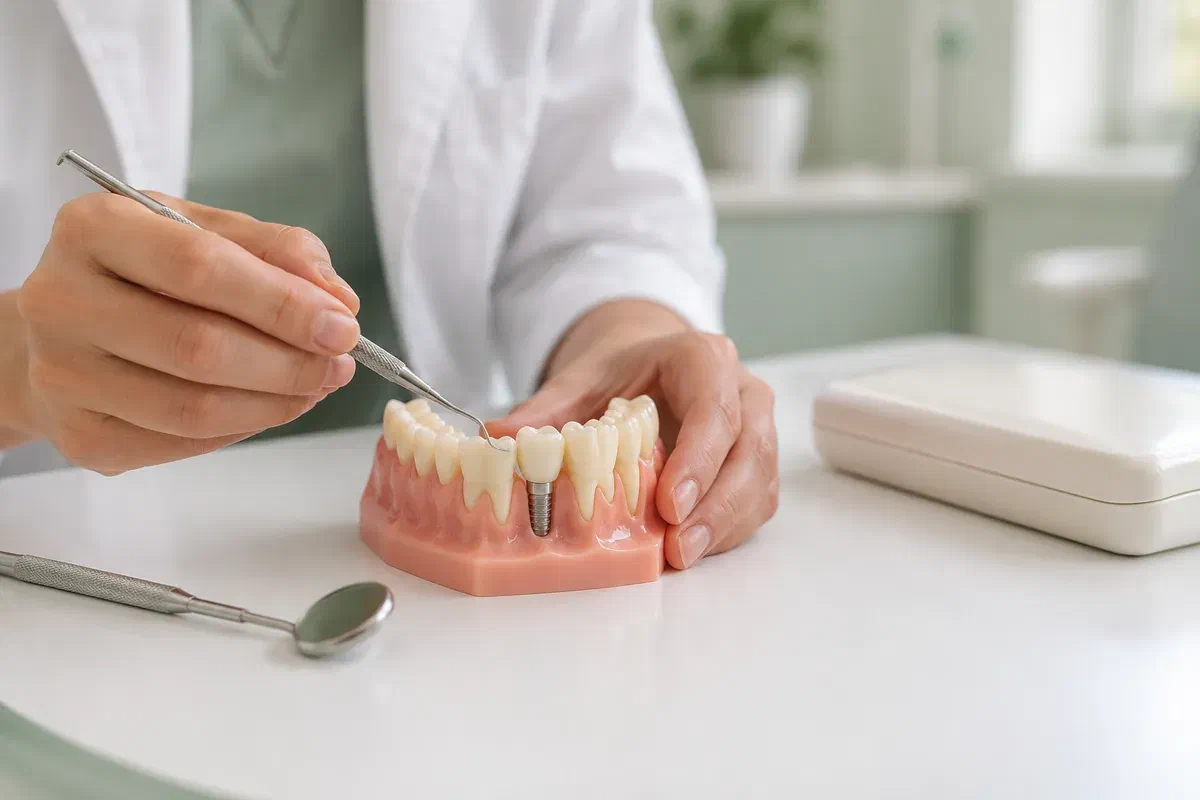
Mention when the implant went in, when the crown was fitted and what has been different. A call before you set out lets us advise how soon you should be seen.
The crown, the abutment or the implant's grip on the bone could all be involved. Avoid wiggling it. When you phone, say whether it began suddenly, followed a knock, or has developed over time; that helps with booking.
Tissue changes around an implant deserve a look, even if the tooth is solid. Describe what you notice during cleaning and whether there is swelling, discharge or a bad taste. The exam assesses both gum and bone.
Bone change on an X-ray can appear without any symptoms. Ask what was seen and how it compares with earlier images. Once you understand the change, the proposed timeline for treatment becomes easier to follow.
A loose crown is not the same as a failed implant. We identify the affected part before discussing replacement or timing.
The assessment settles whether the implant can be kept healthy or whether it should come out. If another implant is planned, the factors behind the first problem need to be handled, and some of that, such as treating inflammation or letting bone heal, simply takes time.
Plan the waiting period as well. Before treatment, talk about appearance, eating and any removable tooth you would wear. Once you know the interim stage, extra procedures and the final restoration, it is easier to weigh another implant against quicker alternatives.
Patient information: ITI — assessing implant complications and removal
Ask whether the issue is biological, mechanical, positional or mixed. Terminology is optional; understanding which part is involved, and the findings supporting that, is essential.
Bone and gum condition decide whether grafting or a healing interval is needed. Ask how long each stage is likely to take and what might extend or shorten it.
Set a new implant beside the alternatives, including temporary teeth, maintenance, costs and possible changes to the plan. For many families, the number of visits is part of that comparison.
Some steps can share a visit and others need weeks or months apart. Ask who handles each stage, whether a specialist is involved and when the plan will be revisited.
We review symptoms, the crown, gum health, stability and appropriate imaging, using earlier X-rays if available. Tell us about health changes, smoking, grinding, previous treatment of the site and how easy it is to clean.
A component repair or tissue treatment is considered first. If removal is recommended, you hear why and what alternatives exist. A specialist may be consulted for complex surgical or restorative questions.
Before removal, we explain the procedure, possible risks, home care and whether grafting or a healing pause is planned. A replacement can be considered when the site is ready, but same-day placement is not taken for granted. The temporary tooth is settled first.
A new implant is checked before its crown is completed, and both are followed up. Healing may change the timeline. Ask when normal chewing returns and how maintenance visits will be spaced.
Instructions after an assessment, removal, graft and new implant differ. Keep them in writing with the number of the clinician currently responsible.
Until it has been seen, chew on the other side and do not tighten or remove anything. A crown or part that has fallen out should be kept in a container and brought to the visit.
After a procedure, follow the guidance on cleaning, diet and temporary appliances. An older denture may not be safe over a healing site, so ask first. If your routine makes the advice hard to follow, say so.
Reviews monitor tissue, components and the new tooth. If movement, discharge or soreness appears between visits, phone rather than holding on for the next booking. Mention any cleaning trouble.
Patient information: Cambridge University Hospitals — implant care and complications
You can ask for the diagnosis and planned sequence in writing, which is helpful when care involves more than one clinician.
Book an assessment at our Bronte Street practice. Along with any records you have, come with your questions about time and visits, and we will explain the problem, any further checks and the options.
For a moving implant, severe pain or swelling, please call us. Online booking is for non-urgent enquiries only.
