

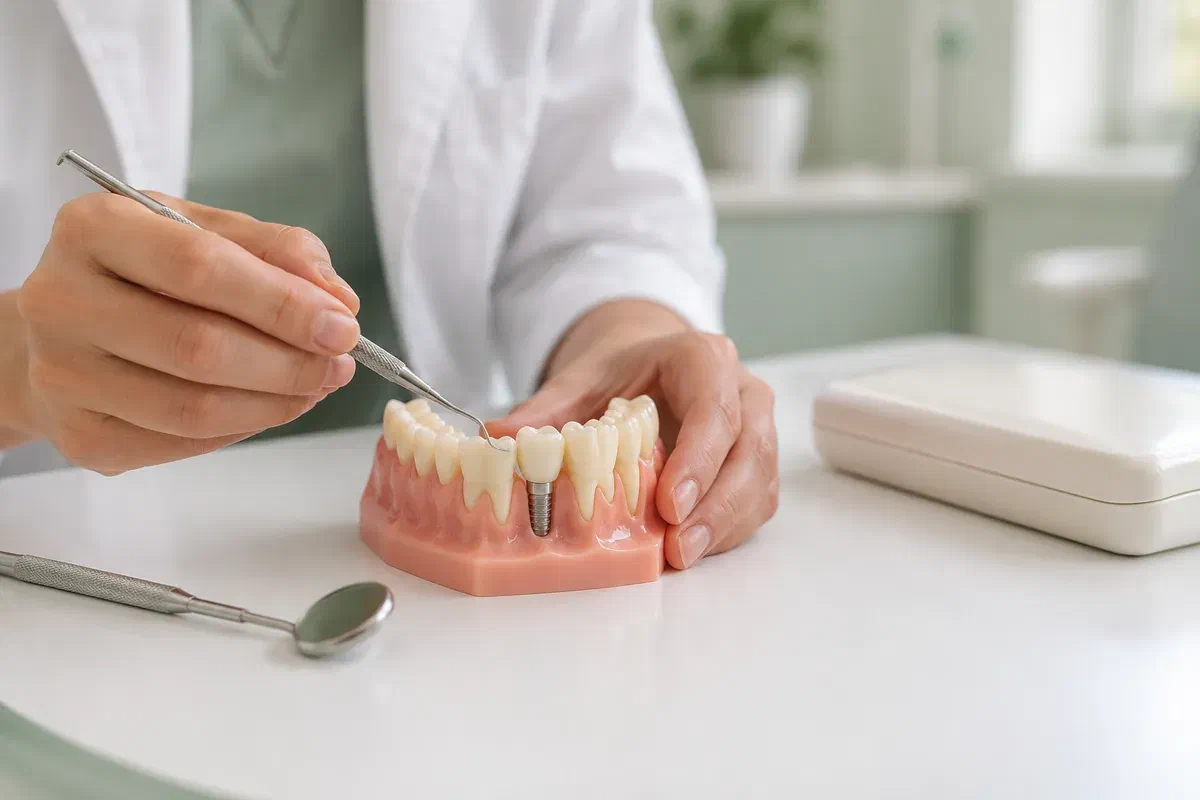
Illustrative consultation about concerns with an existing dental implant
Restorative Dentistry

Replacement of Failing Dental Implants in Georgetown

Replacing a failing implant can involve more pieces than people expect: removal, healing, possibly grafting, a temporary tooth, a new crown. From Georgetown, we help you see every part of the plan before you agree to it.

Seeing the whole plan

What would replacing an implant actually involve?

It is a reasonable thing to ask early, because the answer varies so much. A loose crown might need only a new screw. Inflamed gum might need focused treatment and closer upkeep. Bone loss around the implant could mean removal, a healing period, grafting and eventually a new implant and crown. The first job is working out which of these you are facing.

Taking out the implant and placing another are considered only when the findings show it should not be kept, and they are separate decisions. The reason it failed, the bone and gum available, the tooth that will go on top and your own priorities determine which steps the plan includes.

When you come to us from Georgetown, we begin with an examination, suitable imaging and any records from the original treatment. Then we explain what we found and outline each stage that a given option would involve, including whether a specialist might be part of it, so you are comparing complete plans rather than single procedures.

Get a full picture of your options
A dentist examining an illustrative jaw teaching model with an implant crown
What prompted the visit

Start with the symptom; the plan follows the findings.

Let us know when the implant and crown were placed and what has changed. Receipts or treatment records from the first office can clarify which parts are involved.

Movement in the implant tooth

Movement can stem from the crown, the abutment or screw, or the implant's attachment to bone. Each has very different implications for treatment. Avoid testing it, and when you call, say whether it began suddenly, after an impact, or gradually.

Bleeding or soreness around it

Gum changes near an implant should be examined, even if the tooth stays firm. Describe what happens when you clean there and whether there is discharge. The exam shows whether the problem is limited to the gum or involves bone.

A recommendation you want explained

If you have already been told the implant should come out, ask for the findings and images behind that advice. Comparing them with older records helps you understand the change and what the recommended plan is responding to.

A loose crown and a failing implant can feel alike but lead to very different plans. The affected part is confirmed first.

Why the full plan matters

Every stage on the table, not just the first one.

A careful assessment establishes whether the existing implant can be kept or whether removal is the better choice. If replacement is planned, it should include steps to deal with what caused the original problem, because a new implant is not a guaranteed fix on its own.

The interim stage deserves a line in the plan as well. Ask how the space will look and function during healing, and whether a removable tooth or other temporary option is included. Seeing that stage, any extra procedures and the final restoration together lets you weigh another implant fairly against other choices.

Patient information: ITI — assessing implant complications and removal

Which part is the problem

Ask whether the trouble is with the tissue, the components, the implant's position or several of these. You do not need the terms, but you should understand which part needs treatment and why.

What the site will need

The bone and gum affect whether grafting or extra healing time is required. Ask how those steps fit into the timeline and how they change the overall plan.

An itemised comparison

Ask for each option to be broken into its stages: removal, grafting, the implant, the crown, any temporary tooth and maintenance. Seeing those parts side by side makes comparing routes far clearer.

Stage by stage

Four steps, with room to change course.

Treatment can span several visits and sometimes a specialist. Ask who provides each stage, who you contact at each point, and when the plan will be reviewed.

  1. Examine and gather records

    We look at symptoms, the crown, gum health, stability and appropriate imaging. Implant brand and part details make it easier to see whether a repair is feasible. Mention health changes, smoking, grinding, earlier treatment and cleaning difficulty.

  2. Decide between repair and removal

    If replacing a component or treating the tissue could solve the problem, that comes first. When removal is recommended, ask why and what alternatives cost in time and stages. A specialist may be involved for complex questions.

  3. Removal, healing and the interim tooth

    If the implant is removed, you will be told about the procedure, risks, aftercare and whether grafting or a healing period is planned. A new implant is placed at a suitable time, not automatically on the same day. The temporary tooth is agreed ahead.

  4. Reassess and restore

    Any new implant is checked before its crown is made, and the crown has its own follow-up. Healing may alter the plan. Ask when normal chewing returns and what ongoing maintenance will involve.

Through each stage of care

Instructions follow the step you have reached.

Guidance changes between assessment, removal, grafting and a new implant. Keep each set in writing, with the phone number of the clinician handling your current stage.

Do not load a loose crown

Until it is examined, chew elsewhere and leave the tooth alone. Avoid tightening or removing anything. If a crown or part has come off, keep it in a container and bring it; it may help with repair.

Follow the specific healing advice

After a procedure, follow the guidance on cleaning, food and any temporary appliance. Check before wearing an existing denture over the area. If an instruction is hard to follow, tell us so we can find an alternative.

Keep follow-up appointments

Reviews check gum, components and the developing restoration. Report fresh movement, discharge or increasing soreness right away. Bring up any cleaning difficulty so the upkeep plan stays manageable.

Patient information: Cambridge University Hospitals — implant care and complications

The routes, broken down

Compare what each option includes.

Ask what each route aims to do, how many stages it has and what remains uncertain. A past implant does not oblige you to choose another.

For a manageable problem

Repair and maintain

Replacing a worn screw or crown, or professionally treating peri-implant inflammation, can be appropriate in some cases. The result depends on the findings and how the area responds. Ask what follow-up is involved and what would change the advice.

For an implant that cannot stay

Remove and re-implant

Removal may be discussed when keeping the implant is not reasonable. A new implant depends on the site and the overall plan. Ask about grafting, healing time, a different position and whether a new crown is needed.

For those choosing not to re-implant

Switch to another replacement

A bridge, removable partial denture or other option may suit, depending on the missing teeth and remaining support. Ask how each affects neighbouring teeth, cleaning, appearance and comfort, and what stages it involves.

Patient information: EFP — treatment of peri-implant disease

Georgetown questions

What is included, and what might change.

Ask for the diagnosis and planned sequence in writing, particularly when more than one clinician is involved.

(905) 876-4488
Why does my estimate list so many separate items?
Replacement can involve several distinct steps, such as removal, grafting, the implant, an abutment, the crown and a temporary tooth. Listing them separately shows what each stage involves. Ask which items are certain and which depend on what is found.
Can just the screw or abutment be replaced?
Sometimes, if the implant itself is healthy and compatible parts are available. Knowing the implant system helps. The examination shows whether a component repair is realistic before larger treatment is considered.
Will insurance cover part of the replacement?
Coverage varies widely between plans, and we cannot predict it in advance. You can ask for a written treatment plan to send to your insurer, so you know what they will consider before deciding.
Can my existing crown be reused on a new implant?
Occasionally, but often a new crown is needed because the position or connection differs. Ask whether reuse, modification or a new crown is likely, and make sure the estimate lists the crown separately from the implant.
Is a bone graft always needed after removing an implant?
No. It depends on the bone that remains and the plan for the site. Some sites heal without one, while others benefit from grafting before or during new implant placement. Ask what the imaging suggests in your case.
What happens if the plan changes partway through?
Healing and new findings can alter the next steps. A good plan explains where that might happen. Ask how changes will be discussed with you and how they could affect the timeline and the estimate.
Implant reviews for Georgetown

See the full plan before the first step.

Arrange a visit at our Bronte Street practice. We welcome records, receipts and questions, and will explain what is going on, what else might need checking, and every stage of each option.

Please telephone if an implant is moving, painful or swollen. Online requests are intended for non-urgent questions.

Visit Milton Dental Clinic
Unit 1, 342 Bronte St. S, Milton, ON L9T 5B7
Get directions Clinic hours
Monday–Thursday
11am–7pm
Friday–Sunday
By appointment only

Areas we serve

  • Milton
  • Oakville
  • Mississauga
  • Georgetown
  • Halton Hills
  • Acton
  • Campbellville
  • Brampton
  • Burlington
  • Puslinch
  • Rockwood
  • Erin
  • Caledon
  • Etobicoke
  • Old Milton
  • Bronte Meadows
  • Timberlea
  • Dorset Park
  • Dempsey
  • Clarke
  • Beaty
  • Coates
  • Harrison
  • Scott
  • Willmott
  • Ford
  • Bowes
  • Cobden
  • Walker
  • Mountain View
  • Milton Heights
  • Hawthorne Village
  • Valley View
  • Fallingbrook
  • Nassagaweya
  • Trafalgar
  • Esquesing
  • Nelson
  • Brookville
  • Moffat
  • Glen Williams
  • Norval
  • Limehouse
  • Stewarttown
  • Ashgrove
  • Hornby
  • Silver Creek
  • Speyside
  • Scotch Block
  • North Oakville
  • River Oaks
  • Glen Abbey
  • West Oak Trails
  • Palermo
  • Bronte Creek
  • College Park
  • Joshua Creek
  • Uptown Core
  • Preserve
  • Iroquois Ridge
  • Lisgar
  • Meadowvale
  • Meadowvale Village
  • Churchill Meadows
  • Erin Mills
  • Central Erin Mills
  • Streetsville
  • East Credit
  • Creditview
  • Heartland
  • Sheridan
  • Mount Pleasant
  • Credit Valley
  • Huttonville
  • Churchville
  • Springbrook
  • Northwest Brampton
  • Bram West
  • Fletcher's Meadow
  • Fletcher's Creek South
  • Alton Village
  • Orchard
  • Millcroft
  • Headon Forest
  • Tansley
  • Brant Hills
  • Tyandaga
  • Kilbride
  • Lowville
  • Aberfoyle
  • Morriston
  • Arkell
  • Hillsburgh
  • Freelton
  • Carlisle
  • Waterdown
  • Flamborough
  • Mountsberg

How can we help?

Milton Dental Clinic

Have a question about your smile? Choose the option that works best for you.

For urgent dental concerns, please call.
Messages are reviewed during clinic hours.