

Illustrative consultation comparing options for several older restorations
Restorative Dentistry

Replacement of Metal Fillings

Considering changes to several older fillings? Explore replacement of metal fillings in Milton with a tooth-by-tooth review of their condition, your priorities, and the treatment each area may need.

A closer look at replacing metal fillings

Make a decision for each tooth, not a rule for every filling.

If you have several metal fillings, it can be tempting to think of them as one project. They may look similar when you open your mouth, yet each tooth has its own history, amount of remaining structure, and demands during chewing. One restoration may need attention while another is still functioning well.

Replacement of metal fillings is therefore best discussed tooth by tooth. A plan may include monitoring some areas, repairing a specific defect, and replacing a restoration where there is a clear reason. Your interest in a more natural appearance can be included alongside those clinical considerations.

At Milton Dental Clinic, bring your priorities without feeling you need to request a complete change in advance. Tell us which fillings you notice, whether any tooth is uncomfortable, and what you would like to understand. We can help separate current treatment needs from optional changes and discuss a manageable sequence.

Review your existing metal fillings
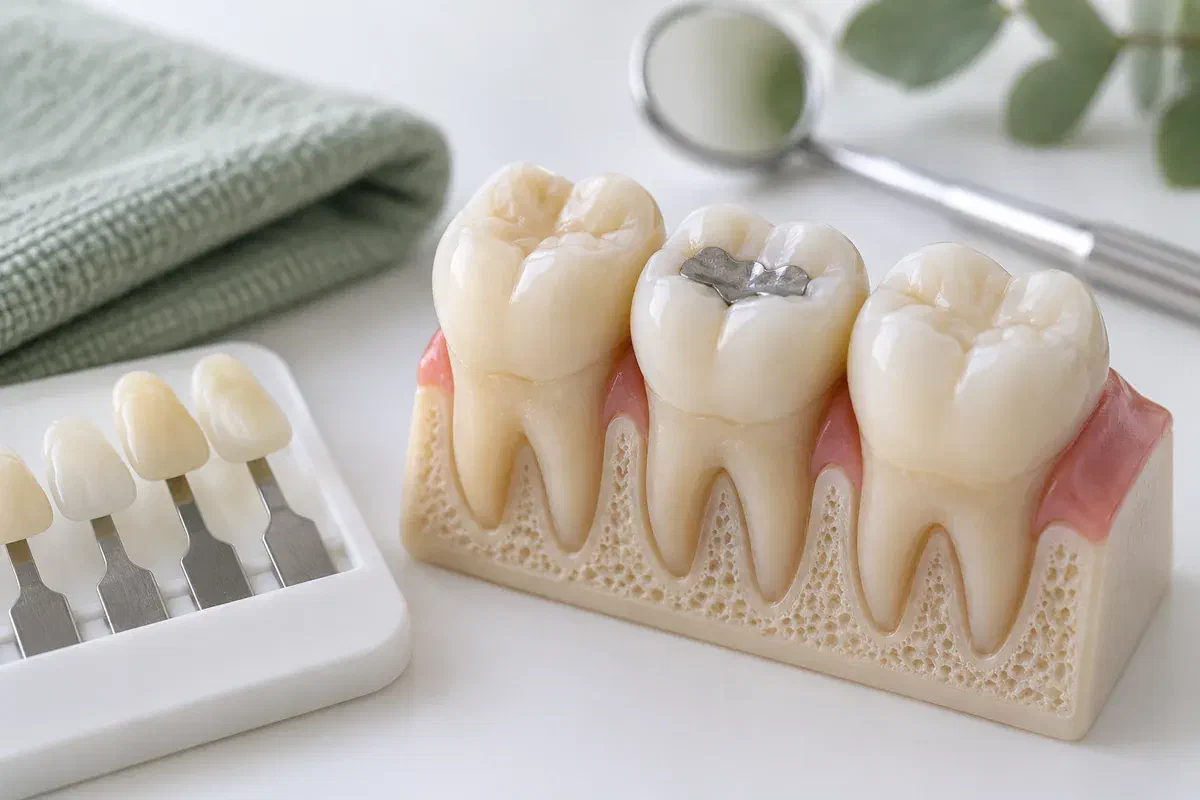
Teaching model of back teeth with a sound silver filling beside shade samples
Sorting out the reasons for change

Different concerns deserve different conversations.

A useful review records what is happening at each tooth. The visible colour alone cannot tell you whether the restoration should be removed.

Several older repairs to assess

You may not know when each filling was placed or whether they have been repaired before. The dentist can assess their present condition and discuss relevant records. There is no single anniversary that means every metal filling has reached the end of its useful life.

One area that stands out

A particular restoration may show when you laugh or speak, while others are hardly visible. Point out the area that concerns you. That makes the appearance discussion more specific and avoids assuming that every filling needs the same cosmetic attention.

Symptoms that need their own diagnosis

Tell us separately about pain, food trapping, sensitivity, or a rough edge. The explanation for a symptom may be different from the explanation for a dark-looking filling. An assessment helps connect the proposed treatment to the actual finding.

Sound amalgam fillings are not routinely removed simply to prevent a health problem. Raise a medical or material-sensitivity concern directly with your dentist and, where appropriate, your physician.

Making the plan useful

Know what changes, what stays, and why.

When several restorations are being discussed, a clear plan can make the choices easier to follow. Ask which teeth have an identified defect, which can be reviewed over time, and which changes would mainly address appearance. Each recommendation should have a reason you understand.

The material choice also belongs to the individual tooth. A direct tooth-coloured filling may suit one area, while another may require a different design because of the cavity’s size or remaining support. A consistent smile does not require every restoration to be identical in construction.

Patient information: FDA — choices of restorative materials

Priorities based on findings

Ask which concerns need attention sooner and which can be considered without urgency. That discussion can help you plan appointments and costs while keeping the clinical needs clear. It should not rely only on which restoration is most visible.

A balanced appearance discussion

Shade selection can help a suitable replacement blend with the tooth, but the surrounding enamel also affects the result. Discuss realistic expectations for each visible area before deciding how much treatment you want.

A record you can revisit

Request an understandable treatment outline and estimates for the proposed stages. You can use them to compare options, check benefits, or return with questions. A written plan should still allow for revised findings during care.

Planning more than one restoration

Give each decision enough room.

You can discuss several teeth without committing to treatment of all of them. The examination helps identify a sensible scope and sequence.

  1. Review the fillings and your concerns

    The dentist examines the restorations, surrounding teeth, and relevant symptoms. Imaging may be recommended where it adds useful information. Explain whether your main goal is comfort, appearance, understanding an earlier recommendation, or a combination of these.

  2. Agree on priorities and alternatives

    Discuss monitoring, repair, and replacement for the relevant teeth. Ask about material choices, fees, and the possibility of more extensive treatment if hidden damage is found. Clarify which recommendations are clinically necessary and which are elective.

  3. Arrange a suitable treatment sequence

    Appointment planning considers the work involved, your comfort, and how the treated areas will be used afterward. Several fillings may require more than one visit. Ask which side or area will be treated first and what temporary precautions are expected.

  4. Review the completed restorations

    Each repair is checked for its shape and bite, and you receive appropriate care instructions. If treatment is staged, confirm the next appointment and any remaining decisions. Tell us about a new problem with eating or cleaning before moving ahead.

After the planned changes

Keep track of how each treated area feels.

When more than one tooth has been treated, describing the location and trigger of a symptom helps the team understand which area needs review.

Follow the instructions for each stage

Wait for numbness to wear off before chewing and follow any material-specific guidance. If one tooth has a temporary restoration and another is complete, ask how their care differs. Keep the instructions together with the next appointment details.

Describe a change precisely

Report a tooth that contacts first, lingering discomfort, or food catching in a new place. Point out the side and the circumstances rather than assuming every treated tooth is involved. A focused description can help with arranging the appropriate review.

Maintain the restorations you kept

Continue regular cleaning and examinations for all your teeth, including metal fillings that did not require treatment. A decision to monitor an existing restoration includes checking it again as appropriate, not ignoring it because other teeth were restored.

Comparing the extent of treatment

A smaller plan may be appropriate when fewer teeth need care.

Consider what each option achieves for the identified teeth. You can ask for the trade-offs to be explained before deciding on the scope.

When removal is not indicated

Monitor sound metal fillings

An intact, functioning restoration may be left in place and reviewed. Removing a sound filling can involve additional loss of natural tooth. Ask which changes would trigger reassessment and how the present condition will be documented.

When particular teeth need attention

Treat selected restorations

A targeted plan may address a defect or an agreed appearance concern without replacing every metal filling. Discuss the material and extent for each tooth. Similar-looking restorations do not necessarily require the same procedure.

When a direct filling is not enough

Use a different restorative design

An onlay, crown, or other appropriate restoration may be considered for a tooth with more extensive damage. Ask why it is proposed and what additional preparation or visits are involved. The choice follows the tooth’s needs, not simply a preference for a colour.

Questions about changing several fillings

Keep the individual decisions clear.

A useful plan should leave you knowing which teeth are involved and why. Bring questions about scope, timing, appearance, or the reasons behind earlier advice.

(905) 876-4488
Do all my metal fillings need replacing if one has a problem?
No. Each restoration and tooth should be assessed independently. A defect in one filling does not establish that the others are failing. Ask for a tooth-by-tooth explanation so you understand which areas need treatment, which can be monitored, and which changes would be optional.
Can replacement of several metal fillings be spread over visits?
It may be possible, depending on the condition of the teeth and the proposed treatment. Discuss priorities and any symptoms that affect timing. A staged plan should identify what is being completed at each appointment and how to care for areas that are awaiting further treatment.
Will all replacement fillings be exactly the same shade?
Natural teeth can vary in colour, and different surfaces may require different shade choices. The aim is an appropriate match for the area being restored. Ask how the dentist will assess the visible teeth and what limitations may remain because of existing tooth colour or other restorations.
Should I replace healthy silver fillings because I have read about mercury?
Discuss the concern before arranging removal. The FDA advises against removing intact amalgam fillings without a clinical reason when there is no decay underneath. Removal can sacrifice healthy tooth and temporarily increase mercury vapour exposure. A specific medical concern deserves an individualized discussion.
Can I request an estimate for only the fillings I am considering?
Yes. Ask for the proposed teeth, surfaces, materials, and separate stages to be identified. Clarify whether any examination, imaging, or temporary care is additional. If you have dental benefits, confirm how the plan treats clinically necessary replacement and changes requested primarily for appearance.
What if I want time to think after the filling review?
Ask which findings require timely care and which decisions can wait. You can request an explanation or written outline to consider, and return with questions. If symptoms develop or worsen while you are deciding, contact the clinic rather than relying on the earlier assessment alone.

Patient information: FDA — existing amalgam fillings

Replacement of metal fillings in Milton

Let’s make a clear plan for the teeth you are considering.

Book a review at our Bronte Street practice to discuss existing metal restorations and your priorities. We can explain the findings for each tooth and help you understand the scope before you choose treatment.

For significant discomfort or swelling, call the clinic. Online appointment requests are intended for non-urgent discussions.

Visit Milton Dental Clinic
Unit 1, 342 Bronte St. S, Milton, ON L9T 5B7
Get directions Clinic hours
Monday–Thursday
11am–7pm
Friday–Sunday
By appointment only

How can we help?

Milton Dental Clinic

Have a question about your smile? Choose the option that works best for you.

For urgent dental concerns, please call.
Messages are reviewed during clinic hours.