How long the fillings have been there
Many people only have a rough idea. That is fine. The dentist checks each filling as it is now and considers any records on file. Metal fillings do not reach a common expiry date.


Have a checkup coming up and a few silver fillings on your mind? For Campbellville households, it often makes sense to fold the filling questions into a visit you are already making, then plan any work from there.
Out in the rural part of Milton, a trip to the dentist is often planned around other errands, work and family timetables. That makes it sensible to raise the silver filling question at a visit you have already booked, rather than letting it sit for another year.
A checkup is a good moment for it. The dentist is already looking at your teeth and, where needed, at recent X-rays. Each metal filling can be reviewed in that context: whether it is sealed, whether its edges are breaking down, and whether the tooth around it is still strong.
Let the front desk know when you book from Campbellville that you want to talk about your fillings. Mention which ones you notice, any discomfort, and whether appearance matters to you. We can then explain what needs attention, what can be left, and how any treatment might be grouped.
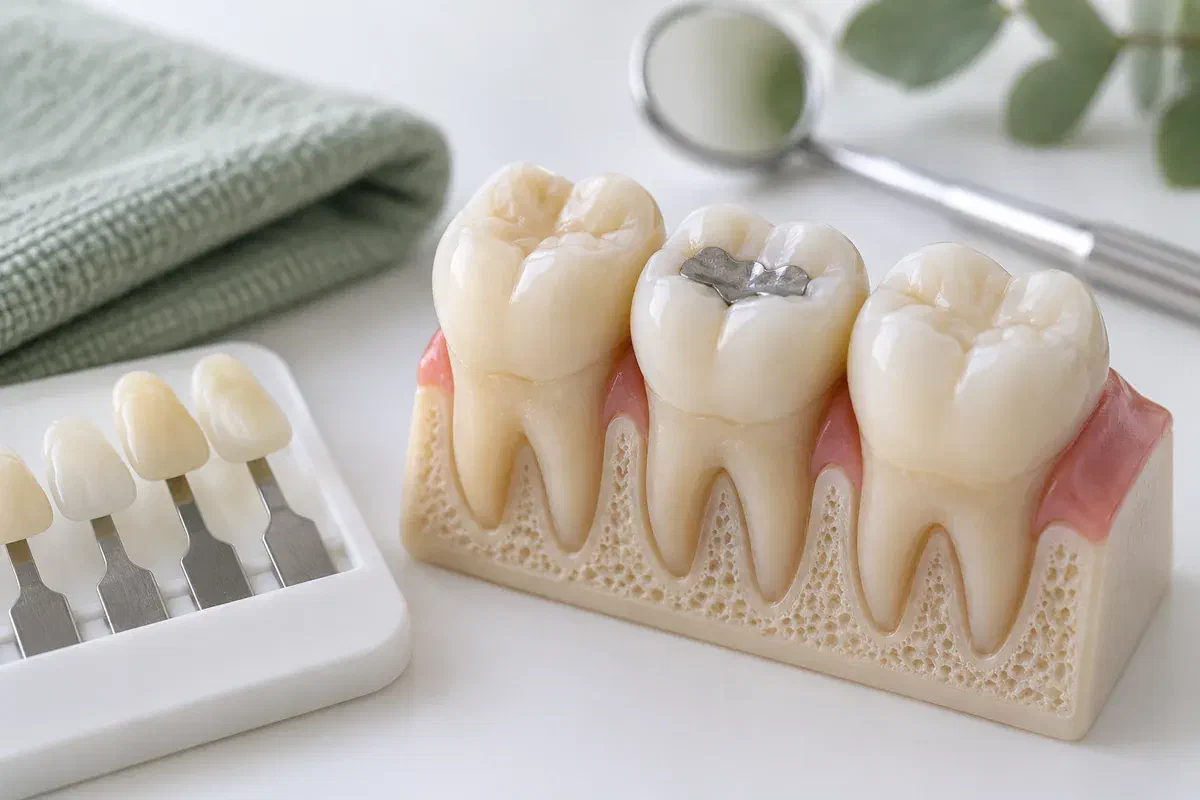
Good notes record the finding at each tooth. The colour of a filling cannot settle, by itself, whether it should be removed.
Many people only have a rough idea. That is fine. The dentist checks each filling as it is now and considers any records on file. Metal fillings do not reach a common expiry date.
If one shows when you smile or talk, say which. That keeps the cosmetic part of the conversation to the teeth you care about, instead of assuming every silver surface needs to change.
A sore spot, cold sensitivity, a ledge that shreds floss or food packing deserve their own mention. The reason for a symptom may have little to do with a filling’s appearance, so it needs to be diagnosed in its own right.
Sound amalgam fillings are not normally removed just to prevent illness. If a medical or sensitivity concern is on your mind, raise it with your dentist and, where useful, your physician.
When filling questions are folded into a checkup, you leave with a fuller picture. Ask the dentist to say, for each tooth, whether there is a defect, whether it will be watched, or whether any change would be mainly cosmetic. Then the next steps are easy to plan.
Each tooth also gets its own material choice. A direct tooth-coloured filling may suit a smaller area, while a tooth with weaker walls may need an onlay or crown. Different restorations can still look natural together.
Patient information: FDA — choices of restorative materials
Find out which items should be handled soon and which can wait for a later visit. That helps when coordinating trips and household schedules, while the findings, not the most visible filling, decide what comes first.
Choosing a good shade helps a replacement blend in, though your own enamel and other dental work affect the outcome. Discuss each visible area before deciding how much to change.
Ask for a written outline and estimates for each stage. It helps you compare choices, check benefits and plan dates. It should still allow for changes if new findings come up during treatment.
Raising several fillings at a checkup does not commit you to treating any of them. The exam helps define a sensible scope and order.
The dentist looks at each restoration, neighbouring teeth and anything you have noticed. X-rays may be suggested where they would help. Say whether your main interest is comfort, appearance or an earlier recommendation.
For each relevant tooth, monitoring, repair and replacement are compared. Ask about materials, fees and the chance of more damage under an old filling. You should know which steps are clinically needed and which are elective.
Where appropriate, teeth on the same side can be treated together to cut down on trips. The plan also considers how much is comfortable at once and how you will eat afterward. Ask which area is first and what to avoid on waiting teeth.
Each new filling is checked for contour and how your teeth meet, and you get care instructions. Confirm any next stage and decisions still open. Mention new trouble with chewing or flossing before the next visit.
After work on several teeth, noting where a sensation is and when it shows up helps the team decide which tooth to check.
Wait for the freezing to wear off before eating, and follow any advice for the material placed. Temporary and finished fillings can need different care. Keep the care sheet where you will see it.
Tell us about a tooth that hits first, tenderness that persists, or food catching in a new spot. Say which side and when it happens. A clear description can help us decide whether you need to come in.
Every tooth still needs brushing, flossing and regular exams, including metal fillings left in place. Monitoring them means looking again at future checkups.
You should leave understanding which teeth are part of the plan and why. Bring questions about timing, appearance, cost or earlier advice.
Patient information: FDA — existing amalgam fillings
Mention your fillings when you book at our Bronte Street practice. We will look at each metal filling alongside your checkup and explain the findings so you can decide on any treatment without an extra trip.
If you have significant pain or swelling, call the clinic directly. Online requests are for non-urgent appointments.
