A mouthful of older work
Maybe you have several fillings and little idea of their age or history. The dentist can look at their current state and any records you bring. Metal fillings do not all wear out at the same predictable moment.


Mostly bothered by how your silver fillings look when you smile? If you are coming from Oakville, we can review the visible ones alongside their condition, so a cosmetic wish and a clinical need are each weighed fairly.
For many people, the push to change metal fillings comes from a photo. A wide smile shows a grey lower molar or a silver patch near the front, and suddenly every filling feels conspicuous. That reaction is understandable, and appearance is a perfectly reasonable thing to discuss.
It also helps to keep two lists. One covers the teeth where a filling is cracked, leaking or worn, which is a clinical reason to act. The other covers fillings that are sound but noticeable, where replacing them would be a personal choice. Both deserve attention; they simply carry different weight.
When you visit from Oakville, show us which surfaces catch your eye and mention anything that feels off when you chew. The dentist will explain what each tooth needs, outline what could be done for looks, and help you choose a scope and pace that makes sense for you.
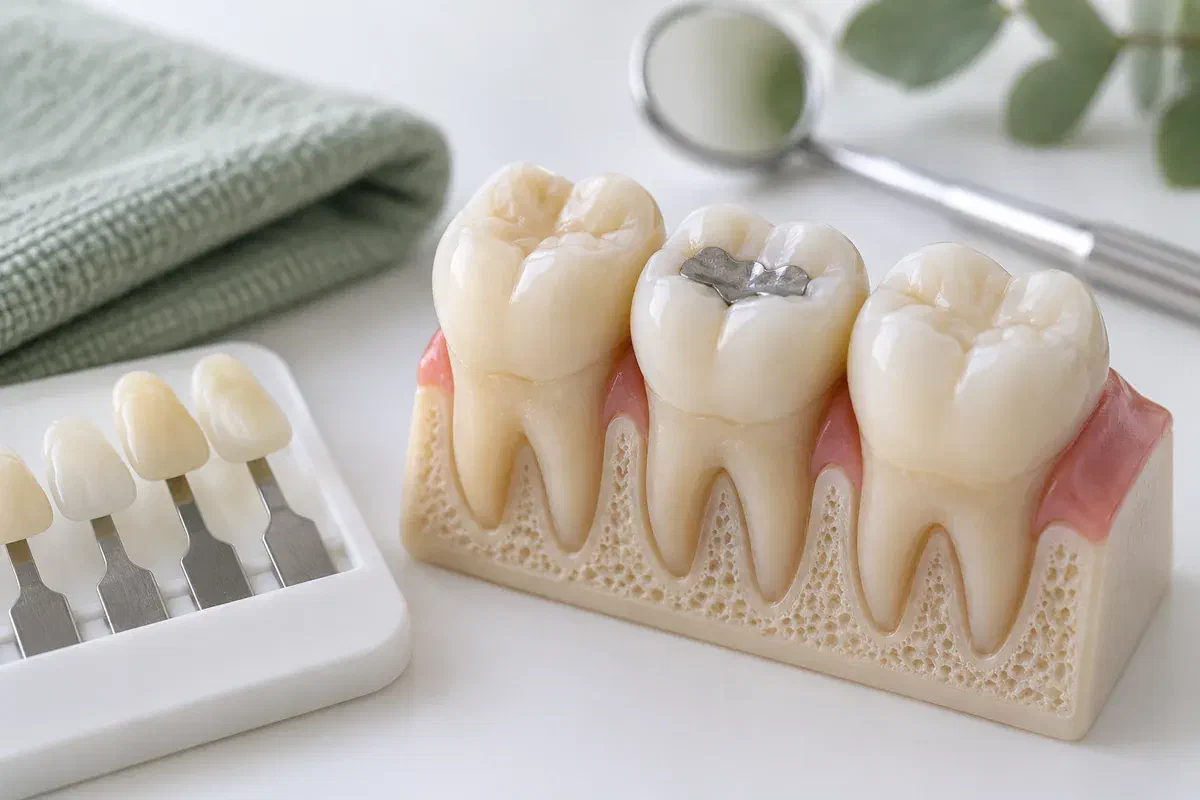
Writing down the reason for each tooth keeps the review honest. Colour on its own cannot show whether a filling needs to come out.
Maybe you have several fillings and little idea of their age or history. The dentist can look at their current state and any records you bring. Metal fillings do not all wear out at the same predictable moment.
Usually one or two restorations are visible and the others are tucked away. Identifying those keeps the cosmetic conversation specific, so a plan does not assume that every filling needs to be made tooth-coloured.
Raise any soreness, sensitivity, food packing or sharp edge on its own. A tooth can hurt for reasons that have nothing to do with how its filling looks. Finding the cause is what connects treatment to the real problem.
Removing intact amalgam is not a routine step for preventing illness. If you have a medical or sensitivity concern about the material, talk it over with your dentist and, if appropriate, your physician.
A cosmetic request is easier to plan when it sits next to an honest status report. For each tooth, ask whether there is a defect, whether it can be watched, or whether the change would mainly be about appearance. You can then decide with all three in view.
Some visible teeth suit a direct tooth-coloured filling. A molar with a large old filling or thin walls may need an onlay or crown instead, even if appearance is the main goal. A natural-looking smile does not depend on every tooth being restored the same way.
Patient information: FDA — choices of restorative materials
Find out what should be handled soon and what is optional. That helps you plan timing and costs without letting the most visible tooth automatically jump to the front of the queue.
Choosing the right shade helps a new filling blend in, but your enamel’s own colour, translucency and any stains set limits. Talk through each visible area so the result you picture is one that can be reached.
Ask for a clear written outline and estimates for each stage. You can review it at home, check coverage or return with questions. The plan should still flex if new findings appear during treatment.
Discussing several fillings does not lock you into treating them all. The exam helps define a sensible scope and sequence for the trip from Oakville.
The dentist examines each restoration, the surrounding teeth and anything you have noticed. X-rays may be recommended where they add useful detail. Say whether appearance, comfort or a second opinion on earlier advice matters most.
For each tooth, monitoring, repair and replacement are compared. Ask about material options, fees, and what happens if more damage is found once an old filling is removed. You should know which items are clinical and which are cosmetic.
The sequence takes into account the size of each repair, your comfort and how you will chew between visits. Coming a longer way may make it worth combining nearby teeth where that is appropriate. Ask which side goes first and what to avoid meanwhile.
Each restoration is checked for shape and bite, and you leave with care instructions. With staged care, confirm the next visit and any decisions still pending. Mention any fresh trouble with eating or flossing before the next stage.
With more than one tooth treated, telling us where a feeling is and what brings it on points the team to the right spot.
Let the numbness wear off before eating, and follow any instructions for the material used. A tooth waiting for its final restoration may need gentler handling than one that is complete. Keep the advice with your next booking.
Note a tooth that touches first when you close, lasting sensitivity, or food catching in a new spot. Say which side and when it happens rather than assuming every new filling is to blame. Specific detail helps us arrange the right check.
Every tooth still needs regular brushing, flossing and exams, including the metal fillings that were left in place. Choosing to monitor a filling means it is looked at again over time, not forgotten.
A good plan leaves no doubt about which teeth are involved and why. Ask about scope, visits, appearance or advice you have received elsewhere.
Patient information: FDA — existing amalgam fillings
Book a consultation at our Bronte Street practice to look at your existing metal fillings and talk through your goals for appearance and comfort. We will explain each tooth’s findings so you can choose the scope that suits you.
For marked pain or swelling, call the clinic. Use online requests for non-urgent consultations.
