

Illustrative consultation comparing options for several older restorations
Restorative Dentistry

Replacement of Metal Fillings in Old Milton

Had the same silver fillings for decades and unsure whether to leave them be? From Old Milton, a short trip to Bronte Street gets you an honest look at which have earned a longer run and which may be ready for a change.

Long-serving fillings near Old Milton

They have lasted this long. Is now the time?

Plenty of people around Milton’s historic downtown carry fillings placed in another era, sometimes by a dentist who retired long ago. Those fillings may have served well for years. The fair question is not how old they are, but how each one is holding up now.

A careful review keeps that distinction in view. Some long-standing fillings stay tight and smooth, and leaving them alone protects the tooth around them. Others develop worn margins, small fractures or decay beneath an edge, and those are the ones where repair or replacement has a real purpose.

When you come in, there is no need to arrive with a decision made. Point to anything that bothers you, whether it is a feeling, a look or advice you heard elsewhere. We will separate what calls for care now from what is optional, and suggest an order that is easy to manage.

Have your older fillings checked
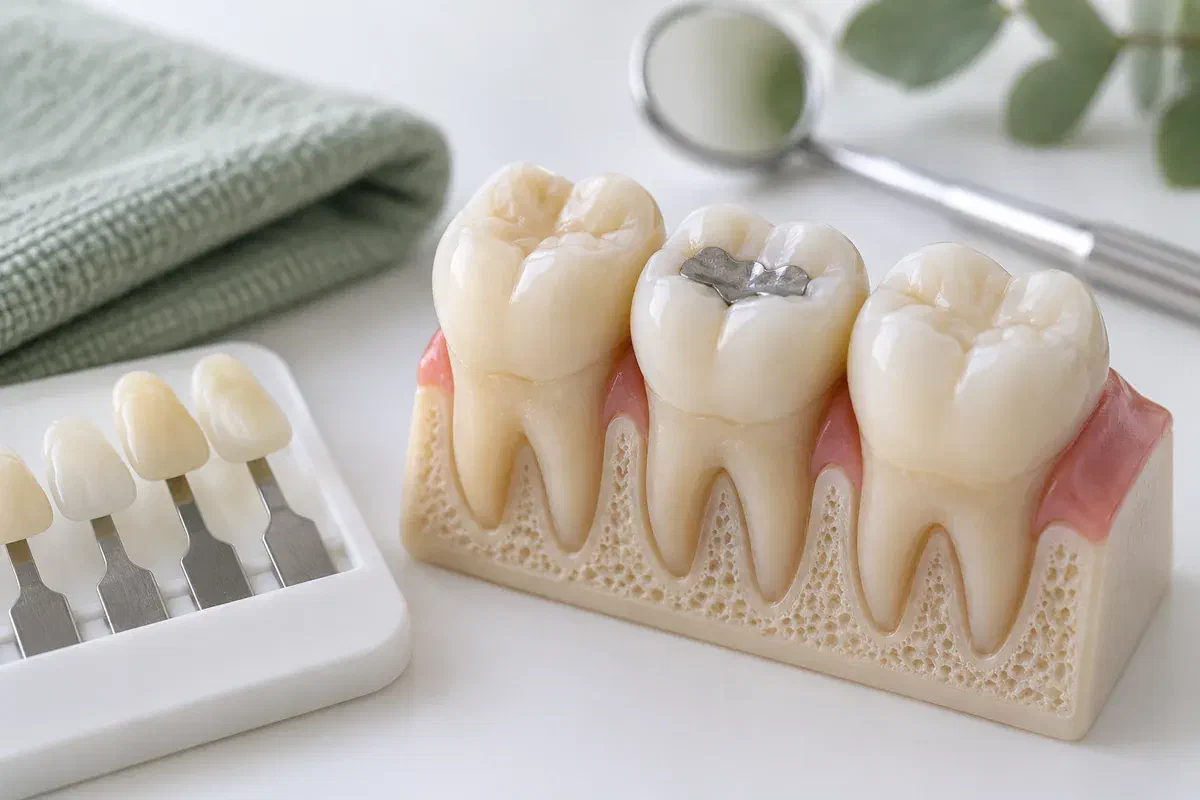
Teaching model of back teeth with a sound silver filling beside shade samples
Where the doubt usually starts

Age, looks and symptoms are three separate questions.

Each tooth gets its own note in a good review. How dark a filling appears tells you little about whether it should be taken out.

Fillings with an unknown history

Records from decades ago are not always easy to find, and that is common. The dentist assesses how each restoration looks and functions today. No birthday on the calendar marks the point where every metal filling must be replaced.

A single filling you would like to change

Sometimes one silver surface is visible when you talk and the rest stay hidden. Telling us which one keeps the cosmetic discussion precise and avoids a plan that treats every filling as though it needs a new appearance.

A tooth that aches, snags or traps food

Describe these separately from any concern about colour. A symptom may come from a crack, a gap at the edge or something unrelated to the filling itself. Diagnosis first helps make sure the treatment fits the real cause.

Sound amalgam fillings are not routinely taken out to head off a health problem. A medical or material-sensitivity question is worth raising directly with your dentist and, where relevant, your physician.

Why the detail matters

Respect what still works, fix what does not.

Older mouths often have a mix of repairs, crowns and fillings, so a plan for several teeth can get confusing quickly. Ask for each tooth to be sorted: a defect that needs attention, a filling to watch, or a change you might choose for appearance. The reason should be clear in every case.

Material decisions follow the same logic. A direct tooth-coloured filling can suit a modest repair, while a tooth with thin walls or heavy wear may need a sturdier design. A smile can look even and natural without every restoration being built the same way.

Patient information: FDA — choices of restorative materials

An order based on the findings

Learn which items should come first and which can sit for a while. That lets you plan visits and spending with the clinical needs in front of you, rather than starting with whichever filling is easiest to see.

Honest talk about appearance

Shade matching helps a new filling blend in, yet older enamel, wear and existing stains all play a part. Discuss what each visible tooth can realistically look like before choosing how much to change.

A plan you can take home

A written outline with estimates for each stage makes it easier to compare options, check benefits, or come back with questions. It should still allow for what is learned once treatment begins.

From first look to finished tooth

A steady pace for a decades-old mouth.

Discussing several fillings is not the same as agreeing to treat them. The examination helps settle what is reasonable and in what order.

  1. Examine and talk it through

    The dentist checks each filling, the surrounding teeth and any symptoms. X-rays may be advised when they would help, particularly around older work. Share whether you care most about comfort, looks, or understanding a recommendation you heard before.

  2. Compare the possibilities

    For each tooth involved, monitoring, repair and replacement are weighed. Ask about materials, costs, and what might change if hidden damage turns up. Make sure you know which steps are clinically needed and which are your choice.

  3. Plan the sequence

    The schedule reflects the amount of work, your comfort and how you will eat while teeth are being treated. Several fillings may take more than one appointment. Ask which area will be done first and what precautions apply in between.

  4. Confirm the result

    Each restoration is checked for contour and bite, and you receive care instructions to follow. If more stages remain, confirm the next date and any decisions still open. Let us know about new trouble chewing or cleaning before going on.

Settling in after the work

Notice which tooth, and when.

After treatment on more than one tooth, telling us exactly where a sensation is and what triggers it makes the right area easier to find.

Keep to each stage’s instructions

Wait until the freezing wears off before eating, and follow any advice tied to the material placed. A tooth with a temporary and a tooth that is finished can need different care. Keep those notes alongside your next appointment.

Report changes clearly

Tell us if one tooth seems to meet first when you bite, if discomfort lasts, or if food catches somewhere new. Name the side and the situation instead of assuming all the treated teeth are involved. Clear detail helps us arrange the right review.

Look after the fillings you kept

Regular cleaning and examinations matter for every tooth, including the metal fillings left in place. Monitoring a filling means checking it again at future visits rather than setting it aside because others were restored.

Choosing the scope

Leave alone, replace a few, or rebuild?

Look at what each route does for the teeth identified. Ask for the trade-offs to be explained before settling on how far to go.

When nothing points to removal

Leave sound fillings in place

A filling that is intact and doing its job can stay and be reviewed. Removing it may take healthy tooth along with it. Ask what changes would lead to another look and how its present state will be noted in your chart.

When specific teeth have a reason

Change a chosen few

A focused plan can handle a defect, or an agreed cosmetic concern, without replacing every metal filling. Discuss the material and the extent of work for each tooth. Fillings that look similar may still need different care.

When a filling will not be enough

Choose a sturdier restoration

Where a tooth has lost more structure, an onlay, crown or other restoration might be discussed. Ask why it is recommended and what extra visits or preparation it needs. The choice depends on the tooth’s condition, not just a preferred colour.

Questions from around Old Milton

What people ask about older fillings.

By the end, you should know which teeth are involved and the reason for each. Bring questions about timing, looks, cost or earlier advice.

(905) 876-4488
My fillings are over thirty years old. Are they past due?
Not necessarily. Age alone does not decide whether a filling needs replacing. The dentist looks for cracks, worn edges, decay or bite problems at each tooth. A long-lasting filling that is still sealed and comfortable may simply be monitored.
Why do my old silver fillings look darker than they used to?
Amalgam can tarnish over time, and the tooth around it may look greyer as well. A darker appearance on its own is not proof of a problem. The dentist can check whether the filling and its edges are still sound, and you can discuss appearance as a separate choice.
If I replace one, will the neighbouring fillings be affected?
The dentist works on the tooth being treated, though nearby contacts are checked so the bite and spacing feel right. Ask whether the work on one tooth changes anything for the teeth beside it, and how that will be assessed.
Should healthy amalgam come out because of mercury worries?
Discuss it before booking removal. The FDA advises against removing intact amalgam fillings without a clinical reason when there is no decay underneath. Removal can sacrifice healthy tooth and briefly raise mercury vapour exposure. A specific medical concern should be talked through individually.
Can I get a separate estimate for just a couple of fillings?
Yes. Ask for the specific teeth, surfaces, materials and stages to be listed. Check whether exams, X-rays or temporary care are separate items. If you have dental benefits, confirm how they handle replacement that is needed versus changes requested mainly for looks.
Is it all right to take some time before deciding?
Yes, though ask which findings need prompt care. You can request a written outline, think it over and come back with questions. If a tooth starts to hurt while you are deciding, call the clinic rather than relying on the earlier review.

Patient information: FDA — existing amalgam fillings

Old Milton metal filling reviews

Bring your oldest fillings and your questions.

Book time at our Bronte Street practice, a short way from Milton’s historic downtown, to review your metal fillings and what you hope to change. We will explain each finding so you can choose the scope with confidence.

If you have significant pain or swelling, call the clinic directly. Online booking is meant for non-urgent visits.

Visit Milton Dental Clinic
Unit 1, 342 Bronte St. S, Milton, ON L9T 5B7
Get directions Clinic hours
Monday–Thursday
11am–7pm
Friday–Sunday
By appointment only

Areas we serve

  • Milton
  • Oakville
  • Mississauga
  • Georgetown
  • Halton Hills
  • Acton
  • Campbellville
  • Brampton
  • Burlington
  • Puslinch
  • Rockwood
  • Erin
  • Caledon
  • Etobicoke
  • Old Milton
  • Bronte Meadows
  • Timberlea
  • Dorset Park
  • Dempsey
  • Clarke
  • Beaty
  • Coates
  • Harrison
  • Scott
  • Willmott
  • Ford
  • Bowes
  • Cobden
  • Walker
  • Mountain View
  • Milton Heights
  • Hawthorne Village
  • Valley View
  • Fallingbrook
  • Nassagaweya
  • Trafalgar
  • Esquesing
  • Nelson
  • Brookville
  • Moffat
  • Glen Williams
  • Norval
  • Limehouse
  • Stewarttown
  • Ashgrove
  • Hornby
  • Silver Creek
  • Speyside
  • Scotch Block
  • North Oakville
  • River Oaks
  • Glen Abbey
  • West Oak Trails
  • Palermo
  • Bronte Creek
  • College Park
  • Joshua Creek
  • Uptown Core
  • Preserve
  • Iroquois Ridge
  • Lisgar
  • Meadowvale
  • Meadowvale Village
  • Churchill Meadows
  • Erin Mills
  • Central Erin Mills
  • Streetsville
  • East Credit
  • Creditview
  • Heartland
  • Sheridan
  • Mount Pleasant
  • Credit Valley
  • Huttonville
  • Churchville
  • Springbrook
  • Northwest Brampton
  • Bram West
  • Fletcher's Meadow
  • Fletcher's Creek South
  • Alton Village
  • Orchard
  • Millcroft
  • Headon Forest
  • Tansley
  • Brant Hills
  • Tyandaga
  • Kilbride
  • Lowville
  • Aberfoyle
  • Morriston
  • Arkell
  • Hillsburgh
  • Freelton
  • Carlisle
  • Waterdown
  • Flamborough
  • Mountsberg

How can we help?

Milton Dental Clinic

Have a question about your smile? Choose the option that works best for you.

For urgent dental concerns, please call.
Messages are reviewed during clinic hours.