Wondering how old they are
Long-standing fillings sometimes prompt the thought that they must be due. The dentist examines each one as it is today and looks at any records. Being metal does not give a filling a set lifespan.


No pain, no broken edges, just a nagging curiosity about your silver fillings? From Rockwood, a calm review can tell you how they are doing, whether anything needs care, and whether changing them would be worthwhile.
Plenty of people with metal fillings feel no discomfort at all and still wonder about them. Maybe a friend changed theirs, or you read something online, or you simply caught sight of the grey in a mirror. It is a fair question to bring to a dentist, even without a symptom.
Comfortable does not always mean problem-free, and it does not mean something is wrong either. Decay at the edge of a filling can be quiet, and a quiet filling can also be perfectly sound. An exam, sometimes with X-rays, is what tells the two apart, tooth by tooth.
Raising it from Rockwood starts with nothing more than a conversation, with no expectation that you will book treatment. Tell us what prompted your curiosity and which fillings you notice. The dentist will explain how each one looks, which need nothing more than routine checks, and where a change might be needed or simply be your choice.
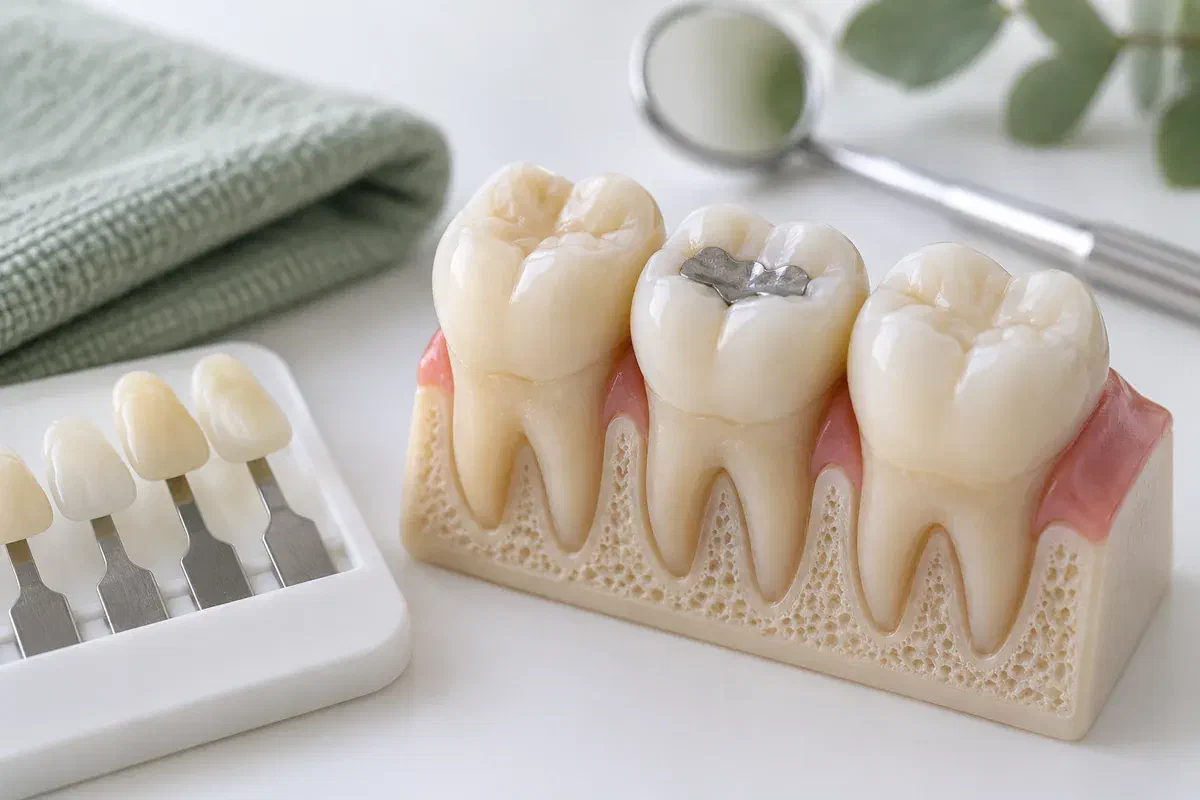
Each tooth should get its own note. The grey colour of an amalgam filling is not, by itself, evidence that it needs removing.
Long-standing fillings sometimes prompt the thought that they must be due. The dentist examines each one as it is today and looks at any records. Being metal does not give a filling a set lifespan.
A single restoration can catch the light when you smile. Say which one. That keeps any appearance discussion focused and avoids treating fillings you never see as a cosmetic problem.
Information about amalgam can be confusing. Bring your questions and any symptoms you might have overlooked, such as mild sensitivity or food catching. The dentist can explain what applies to your teeth.
Removing amalgam that is in good condition is not a routine way to protect your health. If you have a specific medical or sensitivity concern, raise it with your dentist and, when appropriate, your physician.
A review gives you a status report for each filling. Is there a defect worth treating? Is it fine to keep watching? Would a change be purely cosmetic? Most people find that knowing which category each tooth falls into settles the question, one way or another.
If any work is suggested, the material is chosen to suit that tooth. A direct tooth-coloured filling may be enough for a modest area, while a heavily filled tooth may need an onlay or crown. Different restorations can sit comfortably side by side.
Patient information: FDA — choices of restorative materials
Ask which findings, if any, should be treated soon and which can simply be watched. That lets you plan around time and cost, or decide to do nothing for now, while the facts stay clear.
If you are interested in appearance, shade selection can help a replacement blend, though your enamel and other work influence the look. Talk through each visible area first.
Request a brief written summary and estimates for anything proposed. Use it to compare options, check benefits or come back later. It may be updated as findings change.
Asking about your fillings does not commit you to changing any. The exam helps decide whether anything needs doing and in what order.
The dentist examines each filling, its edges and the neighbouring teeth. X-rays may be recommended to check for decay that cannot be seen. Mention what made you curious, whether it was appearance, an article or past advice.
For any tooth with a concern, monitoring, repair and replacement are compared. Ask about materials, fees and what might be found under an old filling. It should be clear what is necessary, what is optional and what needs nothing.
If treatment is chosen, the order reflects the work involved, your comfort and how you will eat between visits. Several teeth may need more than one appointment. Ask which comes first and how to protect teeth that are waiting.
New work is checked for contour and how your teeth meet, and you receive care instructions. Otherwise, fillings are simply reviewed again at future checkups. Mention any change in chewing or cleaning in the meantime.
With more than one tooth treated, describing the location of a sensation and what brings it on helps the team find the right area.
Wait for numbness to wear off before eating, and follow advice tied to the material placed. A tooth with a temporary may need gentler care. Keep the instructions somewhere easy to find.
Mention a tooth that contacts first, sensitivity that does not settle, or food catching in a new place. Say which side and when. That helps us decide on the right follow-up.
Brush, floss and attend regular exams for every tooth, including the metal fillings you decided to keep. Watching a filling means it is looked at again in future.
You should leave knowing whether any teeth need attention and why. Bring questions about appearance, materials, timing or things you have read.
Patient information: FDA — existing amalgam fillings
Book time at our Bronte Street practice to ask about your metal fillings, even if nothing hurts. We will explain how each tooth looks and whether anything needs doing, so you can decide calmly.
For significant pain or swelling, call the clinic. Online requests are for non-urgent appointments.
