

Illustrative routine consultation about changes to an older filling
Restorative Dentistry

Replacement of Worn Fillings

Fillings can change gradually with use. Have worn restorations reviewed in Milton and discuss whether monitoring, a limited repair, or replacement best suits the tooth and your bite.

A closer look at worn filling replacement

Gradual changes deserve a measured decision.

A filling does not always fail in one sudden moment. Its surface may become flatter, its shape may change, or an edge may feel different after years of use. Some changes can be monitored, while others affect the restoration’s function or reveal a problem that needs treatment.

Replacement of worn fillings begins with understanding the amount and significance of that change. The dentist considers the restoration, the natural tooth beside it, and how the area meets the opposing teeth. A worn appearance alone does not explain whether replacement is necessary or what kind of repair would be appropriate.

At Milton Dental Clinic, tell us what you have noticed during eating or cleaning and whether another dentist has mentioned wear. If older records are available, they may help provide context. We can discuss the present findings and whether the best next step is observation, adjustment, repair, or a new restoration.

Have an older filling reviewed
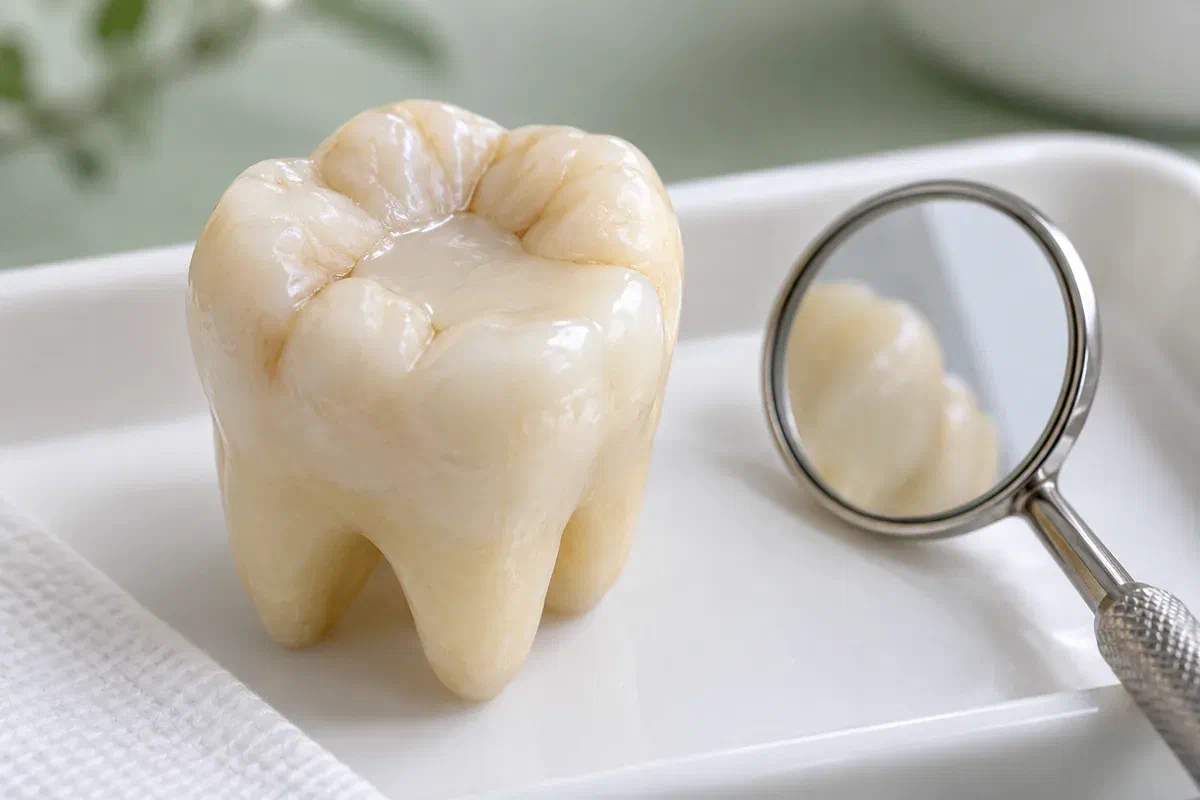
Illustrative molar teaching model with a gently worn tooth-coloured restoration
Changes worth mentioning

Notice how the restoration works, not only how old it is.

Wear can be part of a broader pattern in the mouth. An assessment helps determine whether a particular filling is the main concern or one part of a wider issue.

A surface that feels flatter

You may notice a difference when chewing or be told that the filling’s shape has changed. Explain whether the tooth still feels comfortable and useful. The dentist can assess the surface alongside the opposing teeth and the rest of your bite.

Food or floss behaving differently

Food catching beside a restoration or a new snag during cleaning can indicate a change in the contact or edge. These symptoms have several possible explanations. Describe the location and frequency so the area can be examined specifically.

Wear in more than one area

If several teeth or restorations are changing, mention any known grinding, clenching, or previous advice about tooth wear. The dentist may need to consider the overall pattern before deciding that replacing a single filling will address your concern.

There is no universal replacement date for a filling. Its current condition, the tooth around it, and the way it functions are more useful than age alone.

A proportionate repair plan

Address the change while respecting what still works.

When treatment is indicated, the aim is to restore a suitable surface and contact without overlooking the reason for the wear. That may involve a limited intervention or a new restoration. Ask which finding makes treatment preferable to continued monitoring.

The proposed material and shape should suit the demands on the tooth. If wear is widespread or related to a broader bite concern, a filling replacement may be only one part of care. Understanding that distinction helps you set realistic expectations for the repair.

Patient information: Cleveland Clinic — filling longevity and maintenance

A clear threshold for treatment

Ask what makes the wear significant in your case. You should understand whether the concern is the restoration’s surface, its edge, the underlying tooth, or another finding, rather than being asked to replace it simply because it looks older.

Preservation where appropriate

Some areas may be suitable for monitoring or a limited repair. Discuss whether sound restoration and tooth structure can remain. The choice depends on the defect and the ability to maintain a useful, cleanable result.

Attention to repeated loading

Tell the dentist about activities or habits that may place extra demands on the teeth. A conversation about protection or a wider assessment may be relevant. Replacing material alone does not automatically change the forces acting on it.

Your review and treatment visit

Understand the wear before renewing the surface.

The appointment may be an assessment, a repair visit, or part of a staged plan. Ask what the dentist expects to learn and what treatment is proposed.

  1. Examine the restoration in context

    The dentist assesses its surfaces and edges, surrounding tooth, and bite. Relevant symptoms and previous records are reviewed, with imaging when useful. Mention any discomfort, repeated repairs, or change in your ability to chew.

  2. Discuss whether intervention is needed

    Review the reasons for monitoring, repairing, or replacing the filling. Ask about material choice, fees, and any broader wear assessment. If monitoring is recommended, clarify what will be reviewed and which changes should prompt an earlier call.

  3. Carry out the agreed repair

    When treatment proceeds, the area is prepared with appropriate comfort and isolation measures. The extent of removal depends on the condition of the existing restoration and tooth. A new or repaired surface is shaped for the planned function.

  4. Check the contact and bite

    The finished repair is reviewed in relation to neighbouring and opposing teeth. Ask about cleaning and any follow-up. If the wear is part of a wider pattern, confirm which additional assessment or protective advice remains relevant.

Keeping track after treatment

Use ordinary meals and cleaning as your guide.

Follow the instructions for your particular repair. You do not need to test it with unusually hard food to find out whether it is working.

Allow normal sensation to return

Avoid chewing while numb and be cautious with hot food or drinks. Follow any further instructions for the material or temporary stage. Ask when the restored tooth can return to ordinary use if you are unsure.

Report a different bite

Contact the clinic if the repaired tooth seems to meet first or chewing remains uncomfortable. Describe what happens during a normal bite rather than repeatedly clenching. A review can assess the restoration and other possible reasons for the feeling.

Continue the wider maintenance plan

Keep cleaning and attending the advised reviews. If protection for grinding or another wear concern has been discussed, clarify how that fits your routine. Mention damage to an existing appliance or difficulty wearing it rather than leaving the issue unaddressed.

Choosing the extent of care

Observation and replacement are not the only choices.

Ask how much treatment is needed to address the actual finding. The answer may differ between restorations in the same mouth.

When wear is acceptable to monitor

Review a functioning restoration

A restoration that remains functional and maintainable may be observed. Agree on the review plan and symptoms to report. Monitoring is an active decision based on the present condition, rather than a guarantee that the filling will never need care.

When a limited intervention is suitable

Refine or repair a local area

Selected surface or edge problems may be managed without replacing the entire restoration. The dentist can explain whether that is appropriate and what limitations remain. Ask how the result will be assessed at a later review.

When the existing repair no longer serves

Replace or redesign the restoration

A new filling or a different restoration may be needed if wear or related damage has become significant. Discuss the remaining tooth and the demands on it. More extensive damage may require a plan beyond another direct filling.

Questions about gradual filling wear

Make sense of the change over time.

A review should help you understand both the current condition and the reason for the recommended next step.

(905) 876-4488
Is a worn filling the same as a leaking filling?
No. Surface wear and a problem at the restoration’s margin are different findings, although they can occur together. Ask the dentist to explain exactly what has been observed and how it affects the tooth. A general description such as worn does not establish every possible defect.
Can a filling be monitored even when its surface looks flat?
It may be, if it remains suitable in the context of the tooth and bite. The dentist assesses more than appearance, including function and surrounding structures. Ask what would be checked at review and what change would make treatment more appropriate.
Does grinding mean every worn filling needs a stronger material?
Material choice is only one consideration. The size of the restoration, remaining tooth, bite, and overall wear pattern also matter. Tell the dentist about known grinding and previous fractures so the plan can consider protection and maintenance as well as the replacement material.
Can polishing alone address a worn filling?
It may help a suitable surface irregularity, but it does not replace missing volume or resolve every defect. Ask what polishing would achieve in your case and whether the shape or contact needs rebuilding. The recommendation depends on the examination.
Why compare my worn filling with older dental records?
Earlier records may help show whether the appearance or surrounding tooth has changed. They are one source of context alongside the current examination and symptoms. If you have recently changed dentists, ask whether relevant information can be transferred to support the review.
Will replacing a worn filling stop the rest of my teeth wearing?
No. Restoring one area does not automatically address the causes of a broader wear pattern. Ask whether further assessment is recommended and what the replacement is specifically intended to improve. A complete plan may involve advice or care beyond that individual filling.
Replacement of worn fillings in Milton

Let’s decide what this older repair needs now.

Arrange a review at our Bronte Street practice to discuss a changing filling surface or advice about wear. We can assess the restoration in context and explain whether monitoring, repair, or replacement is appropriate.

Call if the tooth becomes painful or a restoration breaks. Online requests are for non-urgent appointment enquiries.

Visit Milton Dental Clinic
Unit 1, 342 Bronte St. S, Milton, ON L9T 5B7
Get directions Clinic hours
Monday–Thursday
11am–7pm
Friday–Sunday
By appointment only

How can we help?

Milton Dental Clinic

Have a question about your smile? Choose the option that works best for you.

For urgent dental concerns, please call.
Messages are reviewed during clinic hours.