

Illustrative routine consultation about changes to an older filling
Restorative Dentistry

Replacement of Worn Fillings in Etobicoke

Is a worn filling something to deal with this month, or something to raise at your next checkup? Coming from Etobicoke, a well-planned review helps you sort urgent from routine and keep the number of trips sensible.

Urgent, soon or routine?

Deciding how quickly a worn filling needs attention

When the trip to an appointment is a longer one, timing matters. A filling that has slowly flattened and still feels fine is usually a different situation from one that has cracked, become painful or started trapping food after every meal.

Gradual wear tends to develop over years. The surface softens, the shape changes, an edge may roughen. Some of that can safely be monitored at routine visits; some affects how the tooth works or reveals another problem that deserves treatment. Only an examination of the restoration, the surrounding tooth and your bite can show which category yours falls into.

For appointments from Etobicoke, we try to make each visit count. When you book, describe the tooth and what has changed, and send or bring any recent records. That lets us plan time sensibly, so assessment and straightforward treatment can sometimes be combined if appropriate.

Plan a worn filling visit
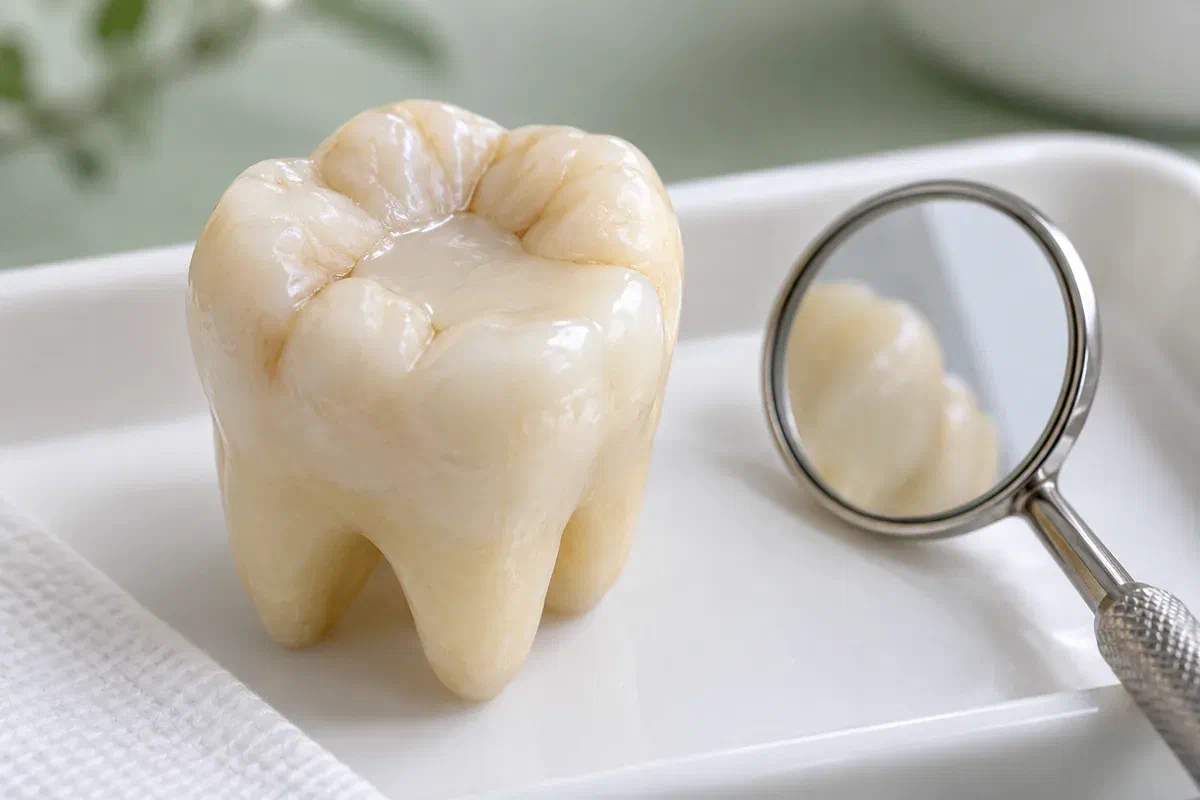
Illustrative molar teaching model with a gently worn tooth-coloured restoration
Sorting the signs

What can wait, and what should not

Most gradual wear is not an emergency, but some signs point to a need for sooner attention. Describing them clearly helps decide how to schedule care.

Smoothing that still feels comfortable

A filling that has become flatter but causes no pain is often suited to review at a planned appointment. Mention the change anyway. The dentist assesses the surface with the opposing teeth and your bite to judge its significance.

Food packing in or floss tearing

These signs can mean the edge or contact has changed, although other explanations are possible. Persistent trapping is worth raising sooner rather than later. Note the exact location and how often it happens.

Changes spread across your teeth

Wear on several restorations may reflect grinding or clenching. Mention any history and previous advice. A wider assessment may be planned in one visit, rather than dealing with each filling on a separate trip.

There is no fixed age at which fillings must be replaced. Their present condition, the surrounding tooth and how they function are what matter.

Fewer, better-organised visits

A plan that respects both the tooth and your time

When treatment is warranted, it should restore a workable surface and a cleanable contact while accounting for what caused the wear. Ask what makes treatment better than monitoring in your case, and whether it can be scheduled to minimise the number of separate trips.

Material and design should suit the load on the tooth. If wear is part of a broader pattern, replacing one filling may be only one step. Knowing the full plan early lets you organise appointments in a way that works for you.

Patient information: Cleveland Clinic — filling longevity and maintenance

A clear reason to proceed

Understand whether the concern is the surface, the margin, the tooth below or something else. A filling should not be replaced simply because it appears older; there should be a specific finding behind the recommendation.

Conserving where suitable

Some restorations can be monitored or locally repaired. Ask what sound material can stay. That depends on the defect and on keeping the result maintainable, and it may reduce the amount of treatment needed.

Looking at heavy forces

Share any habits that load your teeth. A conversation about protection or a broader review may be relevant, because new material does not change the pressure acting on it.

Making the trip worthwhile

How a review and repair can be organised

The visit may be an assessment, a repair, or part of a staged plan. Ask beforehand what is likely to happen so you can plan your day.

  1. Review the history in advance

    Information about the tooth and any records you share helps the team prepare. At the visit, the filling’s surfaces and edges, the surrounding tooth and your bite are examined, with imaging when useful.

  2. Agree on a plan and its timing

    The dentist explains whether monitoring, repair or replacement suits the finding. Ask about material, fees and whether treatment could be done at the same visit or grouped with other care. If monitoring, confirm what to watch.

  3. Complete the work as planned

    When treatment proceeds, local anaesthetic and isolation are used as appropriate. The amount of the old restoration removed depends on its condition and the tooth beneath. The new surface is shaped for the tooth’s function.

  4. Check the bite before you leave

    The repair is reviewed against neighbouring and opposing teeth. Ask about cleaning and follow-up, and whether any review could be combined with a future checkup to reduce extra journeys.

On the way home and after

Plan the first meal, then carry on as usual.

Follow the instructions given for your repair. There is no need to test it with hard food to see whether it is working.

Wait out the numbness

If you will be travelling, plan to eat after sensation returns. Avoid chewing while numb and be careful with hot drinks. Ask before leaving when normal use can resume and whether any temporary-stage instructions apply.

Report a bite that stays wrong

Call if the tooth seems to meet first or chewing remains uncomfortable. Describe a normal bite rather than repeatedly clenching. A phone conversation can help decide whether an adjustment visit is needed and how soon.

Keep up with the overall plan

Continue cleaning and attend recommended reviews. If grinding protection was discussed, ask how it fits your routine. Mention damage to an existing appliance rather than waiting for your next visit.

Deciding on the extent

Watching, mending and replacing are all on the table.

The level of treatment should reflect the finding. Two fillings in your mouth may sensibly be handled in different ways.

When the wear is acceptable

Monitor at routine visits

A restoration that functions well and can be maintained may be observed at regular checkups. Agree on what to report between visits. Monitoring is a decision based on present condition, not a promise it will never need care.

When a limited fix is suitable

Make a local repair

A defined surface or edge problem may be addressed without full replacement, sometimes within the same appointment. The dentist will explain suitability and limitations. Ask how the result will be assessed later.

When the old filling no longer works

Replace the restoration

Significant wear or damage may call for a new filling or a different restoration. Discuss the remaining tooth and what it must handle. More extensive damage may need further visits and a plan beyond a direct filling.

Planning from Etobicoke

Questions about timing and worn fillings

A review should leave you clear on the filling’s current state and how quickly, if at all, it needs treatment.

(905) 876-4488
How do I know whether a worn filling is urgent?
Pain, swelling, a broken filling or a sharp edge cutting your tongue generally need sooner attention. Gradual smoothing without symptoms is usually suited to a planned visit. If unsure, call and describe what is happening.
Can the review and replacement happen in one appointment?
Sometimes, depending on the findings, the size of the work and available time. Tell the team when booking that you are travelling, so they can discuss whether combining assessment and treatment is realistic.
What should I do if the filling breaks before my appointment?
Call the clinic for advice. Keep the area clean and avoid chewing on it. If you have swelling or severe pain and cannot get to us promptly, seek care closer to home. Breathing or swallowing problems need emergency care.
Is it safe to wait until my next checkup?
For gradual wear without symptoms, waiting is often reasonable, but the dentist is best placed to say. If anything changes, such as pain or new food trapping, call rather than holding out for the scheduled visit.
Can several worn fillings be treated at the same visit?
It may be possible, depending on their location, size and your comfort. The dentist can discuss whether grouping treatment is sensible. Some situations are better handled in stages.
Will I need a follow-up after a replacement filling?
Not always. A review may be suggested if the repair was extensive or part of a wider plan. Ask whether it can coincide with a regular checkup so you are not making an extra trip.
Visits from Etobicoke

Make one well-planned visit count.

Arrange a review at our Bronte Street practice, and tell us about the tooth when you book. We will assess the filling in context and explain whether monitoring, repair or replacement suits it, and how to schedule any care.

For pain or a broken filling, phone first. Online requests are for non-urgent bookings.

Visit Milton Dental Clinic
Unit 1, 342 Bronte St. S, Milton, ON L9T 5B7
Get directions Clinic hours
Monday–Thursday
11am–7pm
Friday–Sunday
By appointment only

Areas we serve

  • Milton
  • Oakville
  • Mississauga
  • Georgetown
  • Halton Hills
  • Acton
  • Campbellville
  • Brampton
  • Burlington
  • Puslinch
  • Rockwood
  • Erin
  • Caledon
  • Etobicoke
  • Old Milton
  • Bronte Meadows
  • Timberlea
  • Dorset Park
  • Dempsey
  • Clarke
  • Beaty
  • Coates
  • Harrison
  • Scott
  • Willmott
  • Ford
  • Bowes
  • Cobden
  • Walker
  • Mountain View
  • Milton Heights
  • Hawthorne Village
  • Valley View
  • Fallingbrook
  • Nassagaweya
  • Trafalgar
  • Esquesing
  • Nelson
  • Brookville
  • Moffat
  • Glen Williams
  • Norval
  • Limehouse
  • Stewarttown
  • Ashgrove
  • Hornby
  • Silver Creek
  • Speyside
  • Scotch Block
  • North Oakville
  • River Oaks
  • Glen Abbey
  • West Oak Trails
  • Palermo
  • Bronte Creek
  • College Park
  • Joshua Creek
  • Uptown Core
  • Preserve
  • Iroquois Ridge
  • Lisgar
  • Meadowvale
  • Meadowvale Village
  • Churchill Meadows
  • Erin Mills
  • Central Erin Mills
  • Streetsville
  • East Credit
  • Creditview
  • Heartland
  • Sheridan
  • Mount Pleasant
  • Credit Valley
  • Huttonville
  • Churchville
  • Springbrook
  • Northwest Brampton
  • Bram West
  • Fletcher's Meadow
  • Fletcher's Creek South
  • Alton Village
  • Orchard
  • Millcroft
  • Headon Forest
  • Tansley
  • Brant Hills
  • Tyandaga
  • Kilbride
  • Lowville
  • Aberfoyle
  • Morriston
  • Arkell
  • Hillsburgh
  • Freelton
  • Carlisle
  • Waterdown
  • Flamborough
  • Mountsberg

How can we help?

Milton Dental Clinic

Have a question about your smile? Choose the option that works best for you.

For urgent dental concerns, please call.
Messages are reviewed during clinic hours.