

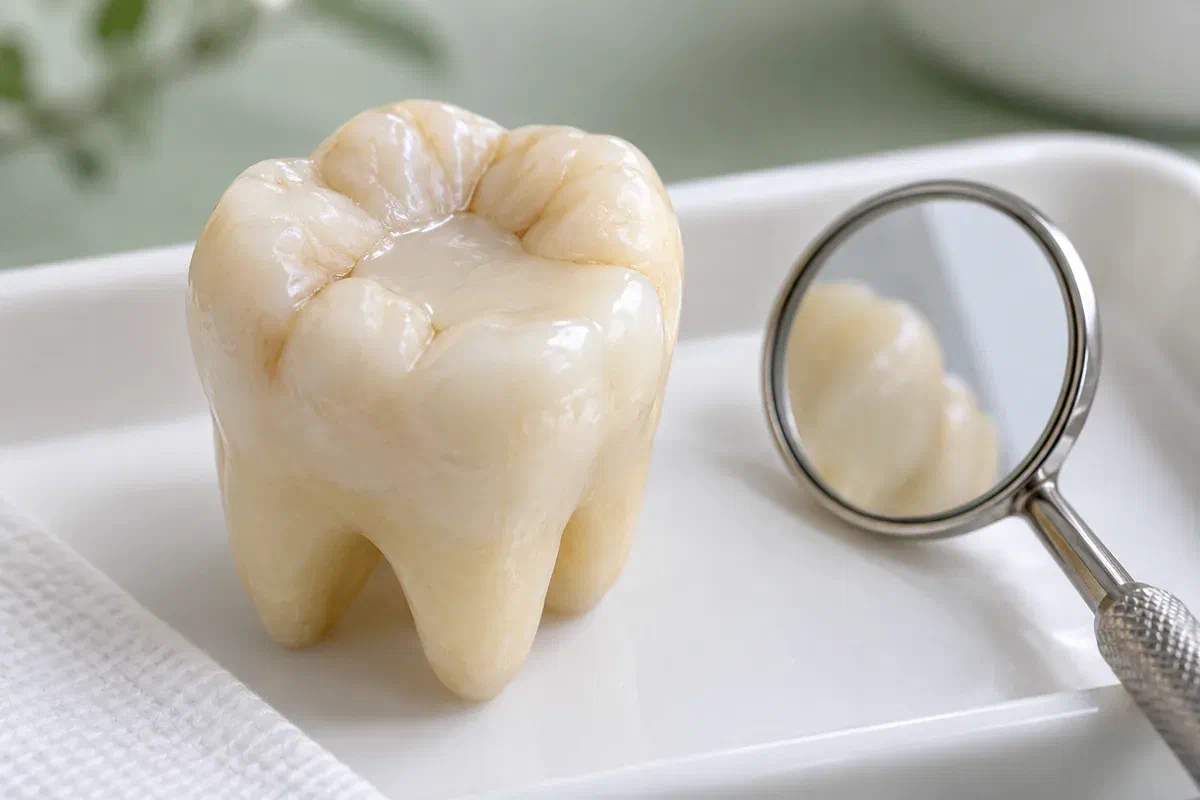
Illustrative routine consultation about changes to an older filling
Restorative Dentistry

Replacement of Worn Fillings in Oakville

Floss that frays in the same place every night is easy to ignore. For people coming from Oakville, we check whether a worn filling edge is behind it and what level of care, if any, it calls for.

The spot where floss catches

A small snag worth asking about

Your evening routine is often where a worn filling first shows itself. The floss slides easily everywhere except one gap, where it catches, shreds or squeaks. Sometimes a fibre of meat or a seed seems to settle there after every meal.

That kind of change can come from a filling edge that has roughened, a contact that has loosened, or a surface that no longer has its original shape. It can also have nothing to do with the restoration at all. The dentist needs to look at the filling, the tooth beside it and your bite together before suggesting any treatment.

From Oakville, it helps to arrive with a clear description: which tooth, how long it has been happening and whether it is getting worse. Earlier records or a past mention of wear are useful too. We can then explain what we find and whether observation, smoothing, repair or a new filling is the sensible route.

Have a snagging filling checked
Illustrative molar teaching model with a gently worn tooth-coloured restoration
Small signals

Pay attention to what has changed, not how long it has been.

One irritating spot is sometimes the visible part of wider wear. An assessment sorts out whether this filling is the main issue or one piece of a larger pattern.

A chewing surface that has lost its shape

The tooth may feel smoother or less able to break food down, or someone may have told you its contour has changed. Mention whether it is still comfortable. The surface is checked against the opposing teeth and your bite as a whole.

Floss fraying, food lodging

Repeated tearing of floss or food that keeps packing into one gap can mean the edge or contact has altered. These signs have more than one possible cause. Describe the exact location and how often it happens so the area can be examined closely.

Changes in several places

If more than one tooth or filling seems worn, mention grinding, clenching or any earlier comments about wear. The overall pattern may need attention before anyone can say that a single replacement would solve the problem you have noticed.

Fillings are not replaced on a timetable. What matters is how the restoration and the tooth around it are doing now, and how well they work together.

The goal of treatment

A cleanable, comfortable tooth, with the cause in view

When something does need to be done, the aim is a smooth surface and a contact you can clean properly, without losing sight of why the wear developed. That might be a minor adjustment or a full new restoration. Ask which finding has moved the recommendation beyond monitoring.

The material and shape need to suit the load that tooth carries. If wear is widespread or linked to the way your teeth meet, replacing one filling might be only part of the plan. Knowing that up front makes it easier to judge what the repair will realistically change.

Patient information: Cleveland Clinic — filling longevity and maintenance

Knowing why treatment is advised

Find out whether the concern is the surface, the margin, the tooth beneath or something else. You should understand the finding clearly, rather than replacing a filling only because it appears older than its neighbours.

Keeping sound material

Some fillings can be watched or repaired in one area while the rest stays in place. Ask whether healthy restoration and tooth can be kept. That depends on the type of defect and whether the result will be easy to maintain.

Looking at the load on the tooth

Share habits or activities that put extra stress on your teeth. Protection or a broader wear assessment may be worth a conversation, since new filling material does not change the forces it will meet.

Step by step

What happens when you come in

The visit may be a review, a repair, or one stage of a longer plan. Ask at the outset what the dentist is checking for and what treatment, if any, is being considered.

  1. Check the edge, surface and bite

    The filling’s margins and surfaces are examined, along with the tooth around it and how it meets the teeth opposite. Your symptoms and any records are reviewed, and imaging is added when it is helpful. Mention any pain or earlier repairs.

  2. Explain what was found

    The dentist outlines whether monitoring, repair or replacement suits the finding, and why. Ask about material, fees and any broader wear review. If the filling is to be watched, confirm what will be looked at and which changes mean calling earlier.

  3. Do the agreed work

    If treatment goes ahead, comfort and isolation measures are used while the tooth is prepared. The amount of old filling removed depends on its condition and the tooth beneath. The new or repaired surface is shaped to restore a sound contact.

  4. Test the contact and bite

    Floss and bite checks confirm how the repair sits against the neighbouring and opposing teeth. Ask how to clean the area and whether a follow-up is planned. If broader wear was seen, clarify which next step remains.

After your repair

Your next few meals will tell you plenty.

Follow the specific advice for your restoration. There is no need to chew something especially hard to find out whether the repair is sound.

Let feeling come back first

Do not chew on the treated side until the numbness has worn off, and be careful with hot food and drinks. Follow any further guidance about the material or a temporary stage. Ask when normal chewing can resume if you are unsure.

Notice whether floss behaves

Floss should pass the contact smoothly once things settle. Call the clinic if it still shreds, if food keeps packing in, or if the tooth seems to meet first when you bite. A review can check the repair and other possible causes.

Keep the wider plan going

Continue cleaning carefully and attend the reviews you were advised to book. If a guard or other protection was discussed, ask how it fits your routine. Let us know if an existing appliance is damaged or uncomfortable.

Possible responses

Matching the treatment to the actual defect

Not every worn filling calls for the same response. The right choice depends on what the examination shows, and it may differ between fillings in your own mouth.

When wear is acceptable for now

Monitor the restoration

A filling that still works and can be kept clean may be watched over time. Agree on when it will be reviewed and what you should report in between. Monitoring is based on its present state and does not promise it will never need care.

When a localised fix suits

Smooth or repair the edge

A rough margin or local surface defect can sometimes be managed without replacing the whole filling. The dentist can say whether that suits your tooth and what it will leave unchanged. Ask how the area will be judged at the next visit.

When the existing filling no longer works

Replace or redesign

A new filling, or a different style of restoration, may be needed if wear or damage has become significant. Talk about the remaining tooth and the demands on it. Extensive damage may need more than a direct filling.

Questions from Oakville

What people ask about snagging and worn fillings

A review should help you understand both what is happening around the filling now and why a particular step is being recommended.

(905) 876-4488
Why does floss keep shredding beside one particular filling?
A rough or uneven edge, a change in the contact with the next tooth, or a build-up of deposit can all cause it. Some causes are unrelated to the filling. The dentist examines the area to see which applies before suggesting treatment.
Is food trapping a sign that a filling has worn out?
It can be one sign, but not proof. Food may pack in where a contact has opened or an edge has changed, and gum or tooth position can play a part as well. An examination helps identify the reason.
Could a rough filling edge be smoothed instead of replaced?
Sometimes a localised roughness can be refined without removing the restoration. That only helps where the rest of the filling and tooth are sound. Ask what smoothing would achieve and whether it would leave any shape or contact problem unresolved.
Does a worn surface mean decay has started underneath?
Not necessarily. Surface wear and decay at the margin are different things, although both can be present. The dentist explains what has actually been seen. Imaging may be used when it adds useful information about the tooth.
Will I need an X-ray for a worn filling review?
Not always. Imaging is used when it is likely to add information that the visual examination cannot provide, such as the condition between teeth. The dentist will explain whether it is recommended for your situation and why.
How should I plan a review if I am coming from Oakville?
Mention the tooth and your symptoms when booking, and bring any records you have. That helps the dentist make good use of the visit. If the tooth becomes painful or breaks before your appointment, call rather than waiting.
Worn filling care for Oakville

Let’s find out why that gap keeps catching.

Book a review at our Bronte Street practice to have a snagging or worn filling examined. We will look at it in context and explain whether it can be watched, refined, repaired or replaced.

Phone the clinic for pain or a broken filling. Online requests are meant for non-urgent appointments.

Visit Milton Dental Clinic
Unit 1, 342 Bronte St. S, Milton, ON L9T 5B7
Get directions Clinic hours
Monday–Thursday
11am–7pm
Friday–Sunday
By appointment only

Areas we serve

  • Milton
  • Oakville
  • Mississauga
  • Georgetown
  • Halton Hills
  • Acton
  • Campbellville
  • Brampton
  • Burlington
  • Puslinch
  • Rockwood
  • Erin
  • Caledon
  • Etobicoke
  • Old Milton
  • Bronte Meadows
  • Timberlea
  • Dorset Park
  • Dempsey
  • Clarke
  • Beaty
  • Coates
  • Harrison
  • Scott
  • Willmott
  • Ford
  • Bowes
  • Cobden
  • Walker
  • Mountain View
  • Milton Heights
  • Hawthorne Village
  • Valley View
  • Fallingbrook
  • Nassagaweya
  • Trafalgar
  • Esquesing
  • Nelson
  • Brookville
  • Moffat
  • Glen Williams
  • Norval
  • Limehouse
  • Stewarttown
  • Ashgrove
  • Hornby
  • Silver Creek
  • Speyside
  • Scotch Block
  • North Oakville
  • River Oaks
  • Glen Abbey
  • West Oak Trails
  • Palermo
  • Bronte Creek
  • College Park
  • Joshua Creek
  • Uptown Core
  • Preserve
  • Iroquois Ridge
  • Lisgar
  • Meadowvale
  • Meadowvale Village
  • Churchill Meadows
  • Erin Mills
  • Central Erin Mills
  • Streetsville
  • East Credit
  • Creditview
  • Heartland
  • Sheridan
  • Mount Pleasant
  • Credit Valley
  • Huttonville
  • Churchville
  • Springbrook
  • Northwest Brampton
  • Bram West
  • Fletcher's Meadow
  • Fletcher's Creek South
  • Alton Village
  • Orchard
  • Millcroft
  • Headon Forest
  • Tansley
  • Brant Hills
  • Tyandaga
  • Kilbride
  • Lowville
  • Aberfoyle
  • Morriston
  • Arkell
  • Hillsburgh
  • Freelton
  • Carlisle
  • Waterdown
  • Flamborough
  • Mountsberg

How can we help?

Milton Dental Clinic

Have a question about your smile? Choose the option that works best for you.

For urgent dental concerns, please call.
Messages are reviewed during clinic hours.