

Illustrative consultation about the jaw ridge and a future tooth replacement
Restorative Dentistry

Ridge Augmentation in Campbellville

Every surgical step should be weighed against what it gives back. For households around Campbellville, we set out the realistic demands, limits and possible complications of ridge augmentation alongside the reasons it might help.

A frank starting point

What would you be signing up for?

Most people want the downsides spelled out before they agree to surgery, and that is a sensible instinct. Ridge augmentation builds up the band of jawbone left behind after tooth loss, so that a planned implant or other replacement has a more suitable base. It is a real procedure with real recovery.

Weighing it starts with the reason. A ridge may lack the width an implant needs in a particular position, or a hollow may undermine how a replacement looks. Neither can be judged from the gum alone, and if the reason is vague, the case for accepting the demands of surgery is weaker.

For anyone coming in from Campbellville and the surrounding countryside, our Bronte Street practice starts with the tooth you hope to end up with and the findings at the site. We then explain the extra assessment needed, any specialist involvement, and the commitments ridge treatment would bring.

Talk through the pros and cons
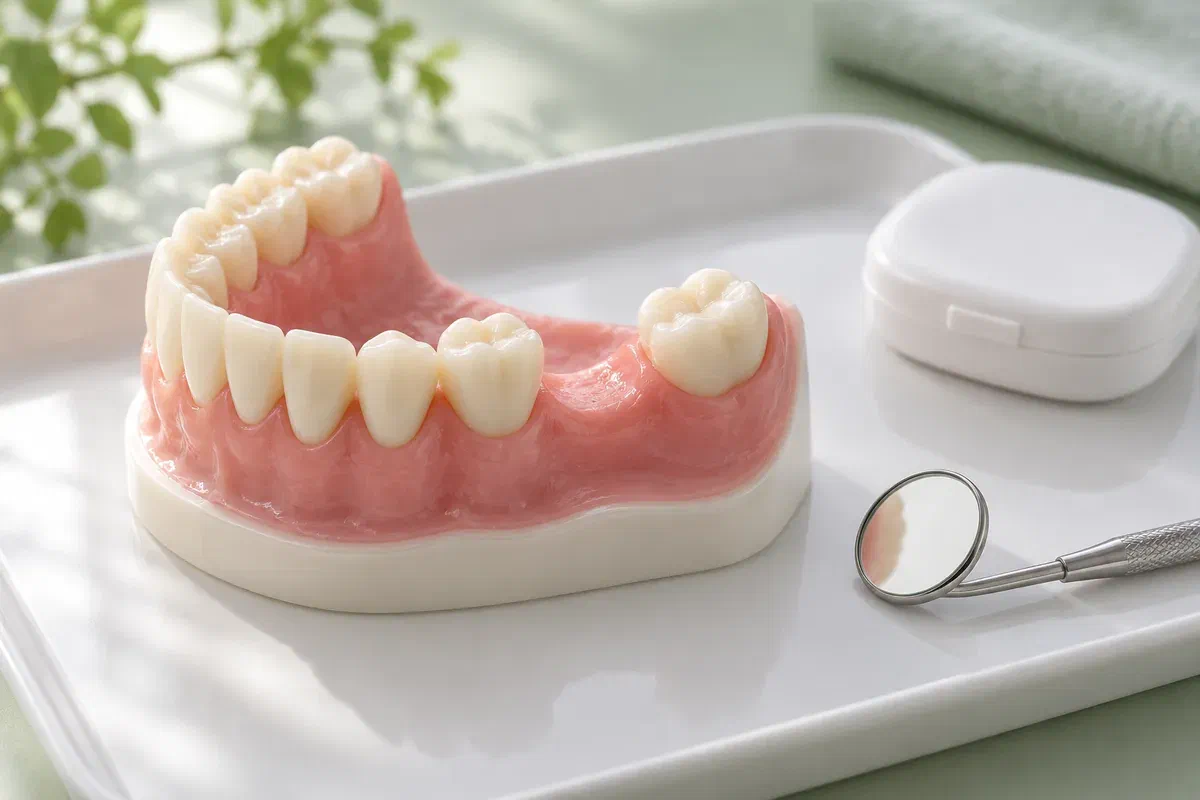
Illustrative jaw model showing a smooth gum ridge in a missing-tooth space
When grafting earns a hearing

A specific problem, clearly identified

The assessment considers the ridge, the anatomy around it and the replacement you want. Ask which finding supports augmentation, because that is what the risks are being weighed against.

An implant site that falls short

When there is too little bone for an implant in the position the crown requires, grafting is one possible response. Nerves, the sinus and nearby roots must be considered too. Imaging generally shows this more reliably than the gum.

A dip that would affect appearance

A hollow beside a bridge, partial or implant crown can make the tooth look out of place. Explain what concerns you. Bone, gum tissue and restoration design may each be involved, and not every option needs surgery.

Complications from earlier care

A previous extraction that was difficult, a graft that did not go as hoped, or an injury can all shape the current site. Share what you know. That history guides the plan but does not confirm the site is ready.

Many missing teeth and implant plans proceed without ridge augmentation. It should be tied to a specific replacement plan.

The balance sheet

Potential gains on one side, real commitments on the other

When grafting is indicated, it is intended to make the planned treatment possible or more predictable, such as placing an implant where the tooth belongs or improving a contour that would otherwise show. Ask your clinician to describe the specific gain in your situation.

Now the other side. Surgery can bring swelling, discomfort, bruising and time off usual activities. Healing can take months, review visits add up, and some grafts develop less bone than hoped or need further work. Infection or exposure of the graft can occur. No one can guarantee the bone gained or the implant outcome.

Patient information: AAP — ridge modification for implant planning

A goal you can judge

Ask to see where the final tooth would sit and why the current ridge is a problem. If the gain is clear when you look at it, the commitment is easier to weigh.

A realistic sequence

Grafting may happen with implant placement or before it, with healing in between. Ask which is proposed and why, so you know how long the commitment runs and when a temporary tooth will be needed.

Material choices and their trade-offs

Your own bone means a second surgical site, while other materials avoid that. Membranes vary too. Ask what is proposed and share any preferences before treatment.

If you decide to proceed

Clear stages, with a chance to pause at each

Procedure and timing vary with the defect and the planned tooth. Ask who performs each stage and where follow-up will happen.

  1. A full assessment

    The site is examined, imaging reviewed where appropriate, and your gums and medical history discussed. Tell us about smoking, medications, earlier grafts or problems healing. Describe the outcome you want and the risks that worry you most.

  2. Informed consent

    Technique, materials, expected recovery, possible complications, fees and alternatives are explained. Ask whether a donor site or membrane is involved and whether a removal visit might follow. You can take time to decide.

  3. Treatment

    If you go ahead, the site is treated using the method and comfort arrangements agreed. Written instructions for your procedure follow. Recovery varies, so rely on your own advice rather than general expectations.

  4. Reassessment

    Reviews check healing and determine when further assessment or treatment is suitable. A comfortable area is reassuring but not conclusive. Ask what must be confirmed before going on to the implant or restoration.

Reducing avoidable problems

Good aftercare lowers the odds of setbacks.

Keep your written instructions and contact numbers to hand. Ask about farm or yard work, exercise, cleaning, or any appliance that might press on the treated ridge.

Keep pressure off the graft

A partial or denture may need adjusting or a break from wear. Do not let it rest on the site unless advised. Plan for eating and appearance before surgery so you are not tempted to improvise.

Clean and eat as instructed

You will be shown how to care for the area and the rest of your mouth. Avoid pulling your lip back or touching the site to inspect it. Ask before changing anything you were told.

Watch for warning signs

Attend every review, even when comfortable. Contact the treating team about increasing pain, renewed bleeding, discharge, fever, or an opening in the wound. Early reporting gives them the best chance to help.

Patient information: Cambridge University Hospitals — bone grafting for implants

Comparing the alternatives

Surgery is not the only answer worth considering.

Ask what is clinically reasonable for your anatomy and goals. Weigh each route by its full demands and the restoration it leads to.

When the site must be built first

A separate grafting stage

The ridge heals before implant placement is reconsidered, which adds a surgical visit and waiting time. Ask when reassessment happens and what would follow if the bone gain is not enough.

If conditions at the site permit

Grafting during implant surgery

Selected sites allow augmentation at the same visit as the implant, which may reduce surgeries. Many defects are unsuitable. Ask what supports this and how it changes your temporary tooth and aftercare.

When you would rather not graft

Avoiding augmentation altogether

A bridge, removable partial or another implant approach may be considered, each with its own assessment, limits and maintenance. These have trade-offs too, so compare them openly.

Campbellville risk questions

Straight answers about the downsides

We can explain the site and the proposal with a model or image. Bring questions about recovery, risk and the final tooth.

(905) 876-4488
What are the most common side effects after a ridge graft?
Swelling, tenderness and some bruising are common in the first days after oral surgery. Your clinician will explain what is expected for your procedure and which signs, such as worsening pain or discharge, should prompt a call.
What does it mean if the graft becomes exposed?
Sometimes the gum opens and part of the graft or membrane becomes visible. Contact the treating team promptly rather than trying to manage it yourself. They can assess the site and advise on next steps.
Can an infection develop after ridge augmentation?
Infection is a possible complication of any surgery. Following aftercare instructions and attending reviews helps. Report increasing pain, swelling, a bad taste, discharge or fever so the area can be checked.
Is there a risk to nerves or the sinus?
Depending on the site, nearby nerves or the sinus may be relevant, which is part of why imaging and careful planning matter. Ask what structures are close to your site and how the plan accounts for them.
If I decide against grafting, could I regret it later?
Bone at a gap can continue to change, so options may shift over time. That does not mean grafting is right for you now. Ask how waiting or choosing another replacement might affect future choices.
Can I take time to think before agreeing to surgery?
Yes. Unless there is an urgent reason, you can take the information home, ask more questions or seek a second opinion. A good plan should still make sense after a few days of thought.
Ridge advice for Campbellville

Hear the whole story before you choose.

Come in to our Bronte Street practice with your list of worries as well as your hopes. We will examine the gap, set the possible benefits of grafting against its demands and risks, and lay out the alternatives so the decision stays yours.

If a site you have already had treated changes, use your treating clinician’s contact instructions or give us a call.

Visit Milton Dental Clinic
Unit 1, 342 Bronte St. S, Milton, ON L9T 5B7
Get directions Clinic hours
Monday–Thursday
11am–7pm
Friday–Sunday
By appointment only

Areas we serve

  • Milton
  • Oakville
  • Mississauga
  • Georgetown
  • Halton Hills
  • Acton
  • Campbellville
  • Brampton
  • Burlington
  • Puslinch
  • Rockwood
  • Erin
  • Caledon
  • Etobicoke
  • Old Milton
  • Bronte Meadows
  • Timberlea
  • Dorset Park
  • Dempsey
  • Clarke
  • Beaty
  • Coates
  • Harrison
  • Scott
  • Willmott
  • Ford
  • Bowes
  • Cobden
  • Walker
  • Mountain View
  • Milton Heights
  • Hawthorne Village
  • Valley View
  • Fallingbrook
  • Nassagaweya
  • Trafalgar
  • Esquesing
  • Nelson
  • Brookville
  • Moffat
  • Glen Williams
  • Norval
  • Limehouse
  • Stewarttown
  • Ashgrove
  • Hornby
  • Silver Creek
  • Speyside
  • Scotch Block
  • North Oakville
  • River Oaks
  • Glen Abbey
  • West Oak Trails
  • Palermo
  • Bronte Creek
  • College Park
  • Joshua Creek
  • Uptown Core
  • Preserve
  • Iroquois Ridge
  • Lisgar
  • Meadowvale
  • Meadowvale Village
  • Churchill Meadows
  • Erin Mills
  • Central Erin Mills
  • Streetsville
  • East Credit
  • Creditview
  • Heartland
  • Sheridan
  • Mount Pleasant
  • Credit Valley
  • Huttonville
  • Churchville
  • Springbrook
  • Northwest Brampton
  • Bram West
  • Fletcher's Meadow
  • Fletcher's Creek South
  • Alton Village
  • Orchard
  • Millcroft
  • Headon Forest
  • Tansley
  • Brant Hills
  • Tyandaga
  • Kilbride
  • Lowville
  • Aberfoyle
  • Morriston
  • Arkell
  • Hillsburgh
  • Freelton
  • Carlisle
  • Waterdown
  • Flamborough
  • Mountsberg

How can we help?

Milton Dental Clinic

Have a question about your smile? Choose the option that works best for you.

For urgent dental concerns, please call.
Messages are reviewed during clinic hours.