

Illustrative consultation about the jaw ridge and a future tooth replacement
Restorative Dentistry

Ridge Augmentation in Erin

Most of the healing after a jaw graft happens at home, at your own kitchen table and bathroom sink. For households in Erin and Hillsburgh, we explain ridge augmentation with the home routine in mind, from preparation to reviews.

Recovery starts at home

The surgery takes an appointment. The healing takes your routine.

Think about the first evening after a graft: soft food in the fridge, ice packs ready, instructions on the counter. That practical picture often helps people decide. Ridge augmentation is surgery to rebuild bone along a toothless stretch of jaw, used when that ridge has become too narrow or low for the replacement you want, or its outline would undermine how the new tooth looks.

Before planning the home side, be sure of the clinical side. The recommendation should name a purpose, such as making room for an implant in the right place or smoothing a hollow beside a bridge. A healed gap can look and feel normal while the bone beneath is lacking, so examination comes first.

Coming from Erin, you will likely want to arrive home prepared. At our Bronte Street practice we start with the replacement you hope for and the findings at the site, then explain further assessment, whether a specialist is involved, and what recovery would ask of you day to day.

Plan your recovery at home
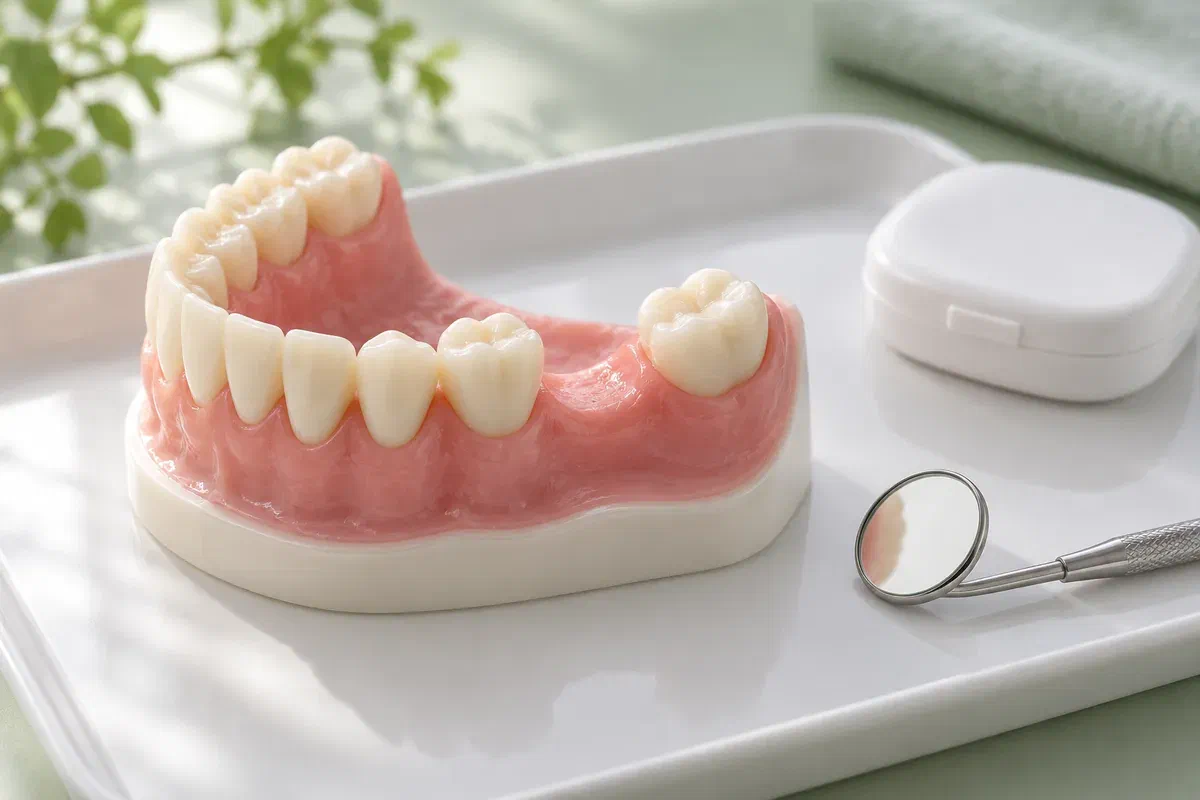
Illustrative jaw model showing a smooth gum ridge in a missing-tooth space
Why augmentation comes up

First, a reason worth recovering from

The clinician considers the ridge, the anatomy around it and the tooth you want. Ask which finding is driving any grafting advice before you start preparing for recovery.

Thin bone where an implant would go

If the ridge lacks the width or height to hold an implant in the right position, augmentation may be considered. The location of nerves, the sinus and neighbouring roots also matters. Imaging usually reveals far more than the gum surface does.

A hollow you can see or feel

A dip along the ridge may catch food under a partial or make a replacement look uneven. Describe what you notice day to day. The cause might be bone, gum, restoration design, or a mix, and each calls for a different response.

Earlier work at the site

Let us know about extractions, grafts, implants or injuries in the area, and how you recovered from them. That history helps explain the site and anticipate healing. Even a well-healed older graft still needs a fresh look before anything new is built on it.

Augmentation is not part of every implant plan or every missing tooth. Whether it suits you depends on the replacement you decide on.

The reason and the routine

Weeks of care at home, for a better foundation

In the right case, grafting prepares the ground for what follows: bone that can hold an implant beneath where the crown will sit, or a ridge outline that flatters the final tooth. Ask your clinician to explain what would become possible that is not possible now.

The commitment is real. Expect surgery, a period of soft food and careful cleaning, review appointments and possibly more treatment later. The amount of bone gained cannot be promised, and a graft does not guarantee an implant outcome. Knowing that helps you prepare sensibly rather than optimistically.

Patient information: AAP — ridge modification for implant planning

A tooth you can picture

Ask to see, on a model or image, where the replacement would sit and how the current ridge falls short. Keeping that picture in mind makes the home routine feel more worthwhile.

A calendar for the household

Grafting can happen with implant placement or before it, with healing in between. Ask which is planned and roughly how long each phase lasts, so you can plan work, meals, and who might help at home.

Materials, explained before the day

Graft and membrane choices depend on the procedure. Raise any preferences about where materials come from in advance, and ask whether a different choice would change the plan or the recovery.

From the chair to your kitchen

What happens, and how to prepare for each part

How long it takes and which technique is used depend on the size of the defect and the restoration planned. Find out who will treat you at each stage and which follow-ups need you in person.

  1. Assessment and questions

    Your clinician examines the gap, arranges any imaging that would help, and goes over your gums and general health. Mention smoking, medications, past grafts, or slow healing. This is also a good time to ask what recovery at home usually involves.

  2. A plan you can prepare for

    The proposal should cover the method, graft materials, expected recovery, fees and the alternatives. Check whether bone would be taken from elsewhere in your mouth, whether a membrane is used, and whether a removal visit is possible. Agree what will fill the gap, and get a list of what to have at home before the surgery date.

  3. The procedure day

    If you go ahead, the area is treated with the comfort plan and method already agreed. You go home with written instructions for your own procedure. Arrange transport if sedation is planned, and rest as advised.

  4. Checking healing before going further

    Review visits look at the site and decide when the next assessment or stage makes sense. Feeling comfortable at home is welcome, yet it says little about what is happening in the bone. Ask what signs the clinician wants to see before booking the next step.

A practical home routine

Soft food, gentle cleaning and a phone within reach

Put your instructions somewhere visible and save the contact numbers in your phone. Ask whether chores, exercise, cleaning or an appliance might press on the treated ridge.

Rest the temporary when told

A partial may need adjusting or a break while the site heals. Do not slip it back over the area unless you have been told it is safe. Plan meals and how you will look for errands before the procedure, not after.

Keep meals and cleaning simple

Stock soft foods you enjoy, and follow the cleaning steps for the site and the rest of your teeth. Avoid hot, hard or crunchy foods if you were advised to. Resist pulling your lip down to see how it looks.

Watch, record and report

Note how swelling and comfort change from day to day. Keep reviews even when all seems well. Call the treating team about pain that is increasing, bleeding that returns, discharge, fever, or an opening wound.

Patient information: Cambridge University Hospitals — bone grafting for implants

Choosing what suits your household

Each route brings a different recovery.

Ask which options fit your anatomy and goals. Weigh each by the final tooth and by how much home recovery it is likely to involve.

When the ridge must heal before an implant

Graft on its own first

A separate grafting surgery heals before an implant is reconsidered, which means two recovery periods. Ask when the site will be reassessed and what would happen if the gain is limited.

When the site is suitable

Graft with the implant

In selected cases both are done together, which can mean one surgical recovery rather than two. Many defects do not suit it. Ask what supports this approach and how it changes your temporary tooth.

When you prefer to avoid it

Replace the tooth without grafting

A bridge, partial denture or a different implant plan might work, each needing its own assessment and upkeep. Compare their limits fairly before deciding that a graft is the only way.

Erin recovery questions

Getting through the first week at home

We can explain the site and the plan with a model or image. Ask us anything about recovery at home and about the final tooth.

(905) 876-4488
What should I have ready at home before the graft?
Soft foods, any prescribed or recommended pain relief, gauze if advised, cold packs and your written instructions are a sensible start. Ask your clinician for a specific list for your procedure, since needs vary.
How long should I eat soft foods after ridge augmentation?
It depends on the procedure and how the site heals. Your clinician will give guidance and may extend it at review. Avoid chewing on the treated area until you are told it is safe.
Can I use ice or heat on my face after surgery?
Cold packs are often recommended in the early period to help with swelling, but follow the specific advice you receive. Ask before using heat, and when to switch if that is suggested.
When can I brush near the graft?
You will usually be told to keep brushing other teeth while taking special care near the site. Some people are given a rinse or a soft brush for a while. Follow your instructions rather than guessing.
Is it alright to sleep flat the first night?
Some clinicians suggest keeping your head raised for the first nights to help with swelling. Ask what is advised for your procedure.
When is a problem worth the drive back in?
Call first. The treating team can tell from your description whether you need to be seen, can wait for your review, or should seek nearby urgent or emergency care instead.
From Erin to our practice

Leave with a plan for home as well as for the chair.

Set aside time at our Bronte Street practice for an unhurried look at your missing-tooth site. We will go through the replacement you favour, the assessment that would come next, and, if grafting is on the table, exactly what to have ready at home.

If something changes at an area already treated, use your treating clinician’s contact instructions or ring us for guidance.

Visit Milton Dental Clinic
Unit 1, 342 Bronte St. S, Milton, ON L9T 5B7
Get directions Clinic hours
Monday–Thursday
11am–7pm
Friday–Sunday
By appointment only

Areas we serve

  • Milton
  • Oakville
  • Mississauga
  • Georgetown
  • Halton Hills
  • Acton
  • Campbellville
  • Brampton
  • Burlington
  • Puslinch
  • Rockwood
  • Erin
  • Caledon
  • Etobicoke
  • Old Milton
  • Bronte Meadows
  • Timberlea
  • Dorset Park
  • Dempsey
  • Clarke
  • Beaty
  • Coates
  • Harrison
  • Scott
  • Willmott
  • Ford
  • Bowes
  • Cobden
  • Walker
  • Mountain View
  • Milton Heights
  • Hawthorne Village
  • Valley View
  • Fallingbrook
  • Nassagaweya
  • Trafalgar
  • Esquesing
  • Nelson
  • Brookville
  • Moffat
  • Glen Williams
  • Norval
  • Limehouse
  • Stewarttown
  • Ashgrove
  • Hornby
  • Silver Creek
  • Speyside
  • Scotch Block
  • North Oakville
  • River Oaks
  • Glen Abbey
  • West Oak Trails
  • Palermo
  • Bronte Creek
  • College Park
  • Joshua Creek
  • Uptown Core
  • Preserve
  • Iroquois Ridge
  • Lisgar
  • Meadowvale
  • Meadowvale Village
  • Churchill Meadows
  • Erin Mills
  • Central Erin Mills
  • Streetsville
  • East Credit
  • Creditview
  • Heartland
  • Sheridan
  • Mount Pleasant
  • Credit Valley
  • Huttonville
  • Churchville
  • Springbrook
  • Northwest Brampton
  • Bram West
  • Fletcher's Meadow
  • Fletcher's Creek South
  • Alton Village
  • Orchard
  • Millcroft
  • Headon Forest
  • Tansley
  • Brant Hills
  • Tyandaga
  • Kilbride
  • Lowville
  • Aberfoyle
  • Morriston
  • Arkell
  • Hillsburgh
  • Freelton
  • Carlisle
  • Waterdown
  • Flamborough
  • Mountsberg

How can we help?

Milton Dental Clinic

Have a question about your smile? Choose the option that works best for you.

For urgent dental concerns, please call.
Messages are reviewed during clinic hours.