

Illustrative consultation about the jaw ridge and a future tooth replacement
Restorative Dentistry

Ridge Augmentation in Puslinch

Smoking, diabetes, blood thinners and bone medications can all shape how a jaw graft is planned. From Puslinch, bring your health history and we will explain how it fits with ridge augmentation and the other routes to a new tooth.

Your health is part of the plan

The medicine cabinet belongs in the conversation.

It can seem odd to be asked about your heart pills or bone-density medication when the topic is a missing tooth. Yet ridge augmentation, which adds to a thinned area of jawbone so a replacement has better support or shape, relies on healing, and general health has a strong say in how healing goes.

The first step is still to confirm why a graft would help. Is the ridge too narrow for an implant in the right place? Is a hollow going to show next to the new tooth? The gum surface cannot answer that, and a site that looks fine may not be. Health factors are then weighed against that purpose.

When someone from Puslinch comes to our Bronte Street practice, we start with the replacement in mind and the site itself, then go through your medical history. We can explain further assessment, whether a specialist or your physician should be involved, and how ridge treatment would fit.

Discuss your health and the graft
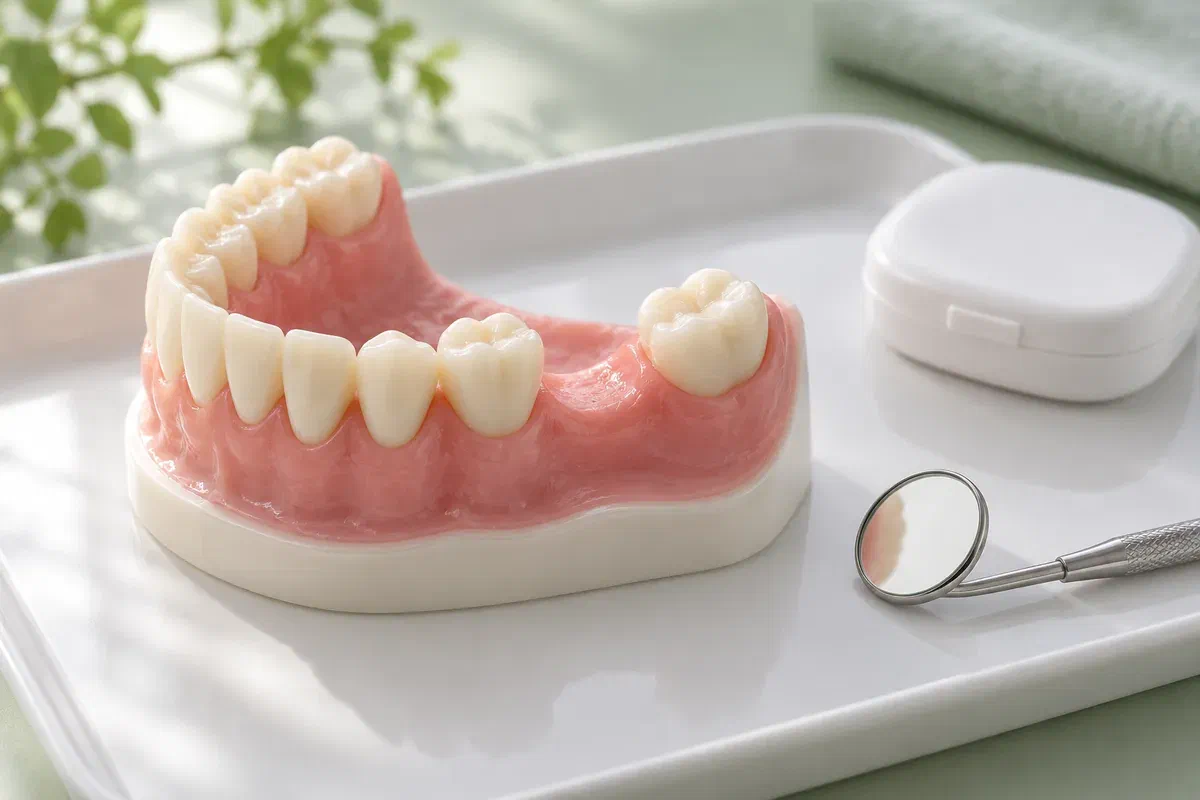
Illustrative jaw model showing a smooth gum ridge in a missing-tooth space
Two sets of findings

What the site shows, and what your history adds

Clinicians look at the ridge, nearby anatomy and the replacement you want, then consider general health. Ask which local finding makes grafting relevant before discussing the medical side.

A ridge too thin for the implant position

Without enough width or height, an implant may not fit where the crown needs it. Nerves, the sinus and nearby roots narrow the choice. Imaging generally answers this, since the gum gives little clue about the bone.

A contour concern

A dip in the ridge can affect how a bridge, partial or implant crown looks. Tell us what you notice. Bone, gum and restoration design may each be involved, and some answers carry less surgical demand than others.

Past treatment and past healing

Previous extractions, grafts or implants near the site, and how you healed afterwards, are useful clues. Mention any slow or difficult recoveries. That history shapes the plan but does not confirm readiness for the next stage.

Augmentation is not required for every missing tooth or every implant. Whether you need it depends on the replacement you choose.

Weighing benefit against risk

A graft should be worth the healing it demands.

When indicated, grafting aims to make the next treatment workable, such as an implant positioned where the crown belongs or a ridge shape that suits the final tooth. Ask your clinician to state the specific goal, then consider how your health might influence reaching it.

Surgery, healing time, review visits and sometimes further procedures are involved. Some conditions and medications can slow healing or raise particular risks, which may change the approach or timing. No one can promise a set amount of new bone or guarantee a later implant result.

Patient information: AAP — ridge modification for implant planning

The intended tooth, made visible

Ask to see where the replacement would sit and why the present ridge is a problem. Linking the graft to that final position helps you judge whether it is worth it in light of your health.

A sequence suited to your healing

Grafting may be done with implant placement or as an earlier stage. Health factors can influence which is chosen and how long intervals last. Ask why a sequence is proposed for you.

Materials and sensitivities

Graft and membrane materials vary by procedure. Mention allergies and any preferences about material sources before treatment, and ask whether an alternative would change the plan.

Planning with your health in view

Steps that build in medical checks

Technique and timing vary with the site and the final tooth. Ask who will carry out the surgery and whether your physician should be consulted first.

  1. Review the site and your health

    We examine the gap, look at imaging where useful, and go through your gum health and full medical history. Bring a current medication list. Mention smoking, vaping, diabetes, blood thinners, bone medications and any past trouble healing.

  2. Coordinate and explain

    If needed, we may suggest checking with your physician before surgery. You will hear about technique, materials, recovery, fees and alternatives. Ask about donor sites, membranes and later removal visits, and settle what fills the gap meanwhile.

  3. Proceed when it is safe to

    If you go ahead, treatment follows the agreed method and comfort plan. Never stop or change a prescribed medication without guidance from your prescriber. You will leave with instructions for your own procedure.

  4. Review healing carefully

    Follow-ups check the area and decide when further assessment or treatment fits. Healing may take longer for some people. A comfortable gum does not by itself mean the bone has developed. Ask what will be checked first.

Recovery and your general health

Look after the site, and the rest of you.

Keep your postoperative instructions and contact numbers nearby. Ask whether exercise, cleaning or an appliance might press on the ridge, and how your usual medications fit.

Give the graft room

A removable partial may need trimming or a break while healing progresses. Avoid letting it sit on the site unless advised. Plan meals and appearance ahead so the interim period is manageable.

Follow cleaning, eating and medication advice

You will be shown how to care for the area and your other teeth. Take any prescribed medicines as directed and avoid smoking if you have been advised to. Leave the site alone rather than checking it in the mirror.

Keep reviews and report concerns

Attend follow-ups even when comfortable. Contact the treating team about increasing pain, bleeding that returns, discharge, fever, or a wound that opens. People on blood thinners should ask in advance what bleeding to expect.

Patient information: Cambridge University Hospitals — bone grafting for implants

Routes that suit your circumstances

Your health may make one path more sensible.

Ask which options are reasonable given your anatomy, health and goals. Compare the full pathway, including the final restoration and its upkeep.

When the ridge must heal before an implant

Augment first

The graft heals before implant placement is reconsidered. For some people, that extra time is helpful. Ask when the site will be reassessed and what follows if the gain is less than hoped.

When the site and health allow

Augment with the implant

Some situations allow both in a single surgery, though many defects do not suit it. Ask what supports this for you and how it changes aftercare and the temporary tooth.

When surgery is less appealing

Skip the graft

A bridge, a removable partial, or a different implant strategy might be considered. Each needs assessment and has its own limitations and maintenance, so compare them alongside your health picture.

Health questions from Puslinch

Medications, conditions and healing

We can explain the site and plan using a model or image. Bring your medication list and any questions about recovery.

(905) 876-4488
Does smoking affect bone graft healing?
Smoking is widely recognised as a factor that can impair healing after oral surgery. If you smoke or vape, tell your clinician. They may advise stopping or cutting back around treatment and can explain how it affects the plan.
I take a blood thinner. Can I still have ridge augmentation?
Often surgery can be planned, but it needs coordination. Do not stop or change your medication on your own. Your clinician may consult your physician about how to manage it safely.
Do osteoporosis medications matter for jaw surgery?
Some medications used for bone conditions can be relevant to oral surgery. Tell your clinician about any you take now or have taken before, including injections. They will consider this and may consult your physician.
I have diabetes. Will that change the plan?
Diabetes, particularly when not well controlled, can affect healing. Share recent information about your management. Your clinician may discuss timing or coordinate with your physician.
Should I tell the dentist about supplements and over-the-counter products?
Yes. Some supplements and non-prescription medicines can affect bleeding or healing. A complete list helps the clinician plan safely and give you accurate aftercare advice.
If my health rules out grafting for now, what are my choices?
Depending on the site, a bridge, removable partial or another implant approach might be considered, or the decision may be revisited later. Ask for the options to be compared in light of your health.
Ridge planning for Puslinch

Bring your medication list to the first visit.

Your first appointment at our Bronte Street office covers two things: the bone at your missing-tooth site and the health history that will shape any surgery. Together they let us discuss whether a graft, a different implant plan, or another replacement is the safer fit.

If something changes at an area that has already been treated, follow your treating clinician’s contact instructions or call us for advice.

Visit Milton Dental Clinic
Unit 1, 342 Bronte St. S, Milton, ON L9T 5B7
Get directions Clinic hours
Monday–Thursday
11am–7pm
Friday–Sunday
By appointment only

Areas we serve

  • Milton
  • Oakville
  • Mississauga
  • Georgetown
  • Halton Hills
  • Acton
  • Campbellville
  • Brampton
  • Burlington
  • Puslinch
  • Rockwood
  • Erin
  • Caledon
  • Etobicoke
  • Old Milton
  • Bronte Meadows
  • Timberlea
  • Dorset Park
  • Dempsey
  • Clarke
  • Beaty
  • Coates
  • Harrison
  • Scott
  • Willmott
  • Ford
  • Bowes
  • Cobden
  • Walker
  • Mountain View
  • Milton Heights
  • Hawthorne Village
  • Valley View
  • Fallingbrook
  • Nassagaweya
  • Trafalgar
  • Esquesing
  • Nelson
  • Brookville
  • Moffat
  • Glen Williams
  • Norval
  • Limehouse
  • Stewarttown
  • Ashgrove
  • Hornby
  • Silver Creek
  • Speyside
  • Scotch Block
  • North Oakville
  • River Oaks
  • Glen Abbey
  • West Oak Trails
  • Palermo
  • Bronte Creek
  • College Park
  • Joshua Creek
  • Uptown Core
  • Preserve
  • Iroquois Ridge
  • Lisgar
  • Meadowvale
  • Meadowvale Village
  • Churchill Meadows
  • Erin Mills
  • Central Erin Mills
  • Streetsville
  • East Credit
  • Creditview
  • Heartland
  • Sheridan
  • Mount Pleasant
  • Credit Valley
  • Huttonville
  • Churchville
  • Springbrook
  • Northwest Brampton
  • Bram West
  • Fletcher's Meadow
  • Fletcher's Creek South
  • Alton Village
  • Orchard
  • Millcroft
  • Headon Forest
  • Tansley
  • Brant Hills
  • Tyandaga
  • Kilbride
  • Lowville
  • Aberfoyle
  • Morriston
  • Arkell
  • Hillsburgh
  • Freelton
  • Carlisle
  • Waterdown
  • Flamborough
  • Mountsberg

How can we help?

Milton Dental Clinic

Have a question about your smile? Choose the option that works best for you.

For urgent dental concerns, please call.
Messages are reviewed during clinic hours.