

Illustrative consultation about a crown after root canal treatment
Restorative Dentistry

Root Canal Crown Restoration

Finishing the root canal is one stage of caring for the tooth. Plan your crown restoration in Milton, with attention to the remaining structure, the final fit, and everyday function.

A closer look at root canal crown restoration

Complete the care with a restoration planned for the tooth.

Root canal treatment addresses the inside of a tooth. The restoration afterward rebuilds and protects the part used for biting, chewing, and smiling. A crown may be recommended when the remaining tooth needs that form of coverage, particularly where substantial structure has been lost.

The final design is not chosen solely because a root canal has been completed. The dentist considers the tooth’s position, existing restorations, remaining walls and cusps, cracks, and bite. Some teeth need a crown, while other appropriately selected teeth may be restored differently.

At Milton Dental Clinic, we can discuss the next restorative stage after root canal treatment, including care completed elsewhere. Bring the treating clinician’s information and explain whether the current filling is temporary. The aim is a clear plan for the foundation, final restoration, and follow-up rather than an unfinished tooth that simply feels better.

Plan the restoration after your root canal
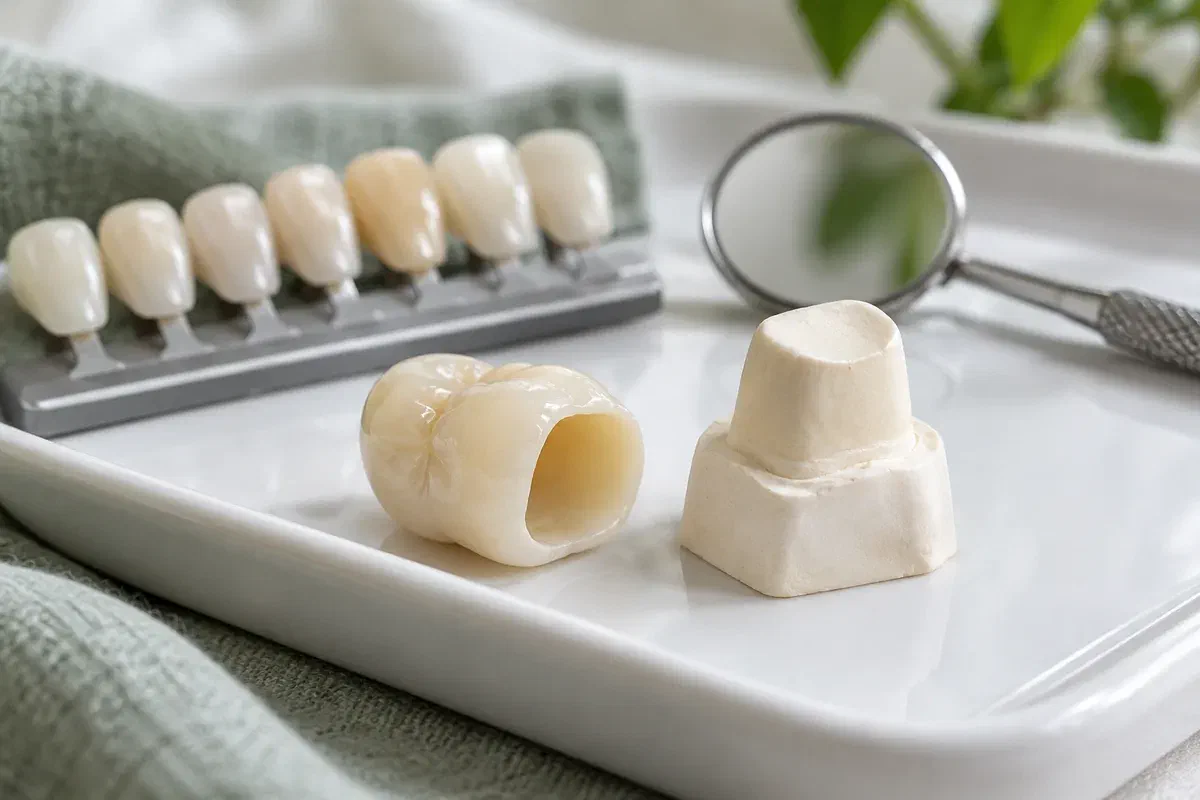
Illustrative ceramic crown and prepared-tooth model beside a shade guide
When to arrange the next stage

Comfort does not tell you whether the restoration is complete.

Ask the clinician who treated the root canals what remains to be done. The instructions for a temporarily restored tooth differ from the care of a finished crown.

A temporary filling after treatment

A temporary covering can protect the access while the final restoration is arranged. Find out how long the planned interim stage is and what eating precautions apply. Do not assume the tooth is ready for unrestricted chewing because the pain has settled.

A large amount of missing structure

Previous decay, fractures, and restorations can leave a tooth needing more protection than a small filling provides. Ask which parts remain and how the proposed crown will engage them. The foundation and coverage should be considered together.

Care shared between clinicians

If an endodontist completed the root canal, clarify when to return for the restoration and which records are being sent. Mention any review still planned with the specialist. Coordinating the stages helps avoid uncertainty about who is arranging the crown.

Contact the clinic if a temporary filling breaks, the tooth becomes painful, or swelling develops while you are waiting. Do not wait for the crown appointment to report a new concern.

The purpose of the crown

Restore the outside with the inside treatment in mind.

For an appropriate tooth, crown coverage can help protect weakened structure and restore a usable shape. The restoration also needs an appropriate fit and seal. Discuss how the proposed design addresses the particular damage rather than treating a crown as a uniform final step for every tooth.

A successful plan considers the tooth’s role in your mouth. A back tooth may need attention to chewing forces, while a visible tooth may bring questions about colour and shape. These priorities can be discussed together with the amount of natural tooth that can be preserved.

Patient information: ADA — the role of a dental crown

Protection matched to the structure

Ask which walls or cusps require coverage and why. You should understand how the proposed restoration relates to the remaining tooth and whether another design is reasonable. More coverage is not automatically the right answer for every case.

A foundation considered before the crown

A build-up may be needed to provide the shape for the crown. A post is only considered when appropriate for retaining that foundation. Ask which components are included in your plan and what each is intended to do.

A finish assessed in your bite

The crown should be checked in relation to the teeth beside and opposite it. Tell the dentist if something feels unexpectedly high or catches during chewing. Your experience helps identify what needs review after fitting.

Your crown restoration appointments

Bring the treatment stages together.

The number of visits depends on the tooth, required foundation, and restoration method. Ask for the full sequence and estimate before beginning the crown stage.

  1. Review the root-treated tooth

    The dentist assesses the tooth, existing restoration, symptoms, and relevant treatment records. Imaging may be needed. If there is uncertainty about the root canal or healing, further assessment may be recommended before the definitive crown proceeds.

  2. Prepare the foundation and tooth

    Any indicated build-up is planned and completed, and the tooth is prepared for the selected restoration. Discuss the material and appearance where relevant. Appropriate comfort measures are used even though the tooth has received root canal treatment.

  3. Record the shape and protect the interim stage

    Impressions or digital records, as appropriate, provide information for the crown. If a temporary restoration is used, you receive instructions for eating and cleaning around it. Confirm the next appointment and what to do if it becomes loose.

  4. Fit the crown and explain follow-up

    The dentist checks the fit, contacts, appearance, and bite before completing placement. Ask how to clean the margin and when to seek review. Ongoing examinations remain important for the crown, surrounding tissues, and natural tooth beneath it.

Using and maintaining the restored tooth

Keep the final repair part of your normal dental care.

Follow the instructions given for your crown and any temporary stage. A root-treated tooth still needs cleaning, monitoring, and attention when something changes.

Protect temporary restorations

Avoid foods and habits that could dislodge or fracture the temporary repair, following the specific advice provided. Call if it comes away. Do not glue it back or leave the tooth uncovered without seeking guidance.

Check how ordinary chewing feels

Once the crown is ready for use, notice whether your bite feels comfortable during normal meals. Report a high contact, persistent tenderness, or a change in the way your teeth meet. Do not repeatedly clench to test the restoration.

Clean the crown and neighbouring spaces

Brush with fluoride toothpaste and clean between teeth using a method suited to the area. Ask for help if access is difficult or floss catches. The natural tooth at the crown edge can still develop problems, so keep the recommended examination schedule.

Choosing the final repair

Coverage should follow the remaining tooth.

Ask why the proposed restoration is suitable and what alternatives would mean for the tooth’s protection, preparation, and maintenance.

When the tooth needs this protection

A full-coverage crown

A crown may be recommended for a tooth with extensive structural loss or other findings requiring coverage. Discuss the foundation, material, and preparation involved. Its suitability depends on whether the remaining tooth can support the finished restoration.

When the structure allows another approach

A more limited restoration

A direct restoration or partial-coverage design may be considered in selected teeth. Ask what makes it appropriate and how the tooth will be protected. The fact that a root canal was performed does not by itself establish a universal crown requirement.

When the outlook needs clarification

Further assessment before restoring

Persistent symptoms, a suspected crack, or uncertainty about support may need investigation before a crown is made. Ask what information is missing and how the tooth will be managed meanwhile. Completing a crown should not replace addressing an unresolved problem.

Questions about the final crown

Know where the root canal ends and restoration begins.

Your treatment plan should make the responsibilities, timing, and costs of each stage clear. Bring any instructions you received after the internal treatment.

(905) 876-4488
Does every tooth need a full crown after root canal treatment?
No. The restoration depends on the tooth’s position, remaining structure, existing damage, and bite. Many back teeth require protective coverage, but some appropriately selected teeth can be restored differently. Ask which findings justify a crown for your tooth and whether another design is reasonable.
How soon should I arrange the crown after the root canal?
Follow the timing recommended by the treating clinicians and arrange the restorative stage promptly. The appropriate sequence depends on the tooth and treatment status. If you cannot attend as planned, contact the clinic to discuss protection and scheduling rather than leaving a temporary restoration indefinitely.
Can I book the crown here if an endodontist treated the root canals?
You can arrange an assessment and explain where the treatment was completed. Ask for relevant records and recommendations to be transferred. The dentist will review the tooth and determine what foundation and restoration are appropriate before confirming the crown plan.
Why might I need anaesthetic for crown work on a root-treated tooth?
The tissues around the tooth can still feel pressure or discomfort, and the planned procedure may involve those areas. The clinician assesses suitable comfort measures for the visit. Tell the team about previous experiences and ask what to expect before preparation starts.
Does the crown replace the need to review root canal healing?
No. The restoration and any recommended endodontic review address different aspects of care. Confirm whether the clinician who treated the canals wants a follow-up and how that relates to routine dental examinations. Report a new symptom even if the crown looks intact.
How should I compare the crown estimate with my root canal bill?
Check which stages each estimate includes. Root canal treatment, a core build-up, a post if needed, temporary protection, and the final crown can be separate items. Ask for the complete restorative plan and confirm benefits or personal costs before proceeding.

Patient information: AAE — restoration principles after root canal treatment

Root canal crown restoration in Milton

Let’s complete the plan for your treated tooth.

Visit our Bronte Street practice to discuss the restoration after root canal treatment. Bring the treatment details and your questions so we can assess the tooth and explain the foundation, coverage, and follow-up it needs.

Call if your temporary restoration is lost or symptoms are worsening. Online requests are for non-urgent appointment enquiries.

Visit Milton Dental Clinic
Unit 1, 342 Bronte St. S, Milton, ON L9T 5B7
Get directions Clinic hours
Monday–Thursday
11am–7pm
Friday–Sunday
By appointment only

How can we help?

Milton Dental Clinic

Have a question about your smile? Choose the option that works best for you.

For urgent dental concerns, please call.
Messages are reviewed during clinic hours.