

Illustrative consultation about a crown after root canal treatment
Restorative Dentistry

Root Canal Crown Restoration in Acton

If a crack is what led to the root canal, the restoration afterwards has a particular job to do. Travelling from Acton, have the treated tooth assessed and plan coverage suited to how it was damaged.

When a crack started it all

Holding a cracked tooth together

Sometimes the story begins with a sharp twinge on biting, then a crack is found, and eventually the nerve needs treatment. With the root canal done, attention turns to the crack itself. The outer tooth still has a weak line running through it, and the restoration is chosen to protect it from the forces of chewing.

For many cracked back teeth, that means full coverage, since a crown can brace the cusps against flexing. Even so, the plan comes from the tooth in front of the dentist: where it is, how far the crack seems to run, which walls are sound, what fillings are present and how you bite. Other teeth may suit a different design.

Coming from Acton, one well-planned trip may suit you better than several short ones. Bring what you have from the root canal, including who did it, any images, and whether the filling is temporary. We will examine the tooth and talk through the core, the restoration and how the crack will be followed over time.

Plan protection for a cracked, treated tooth
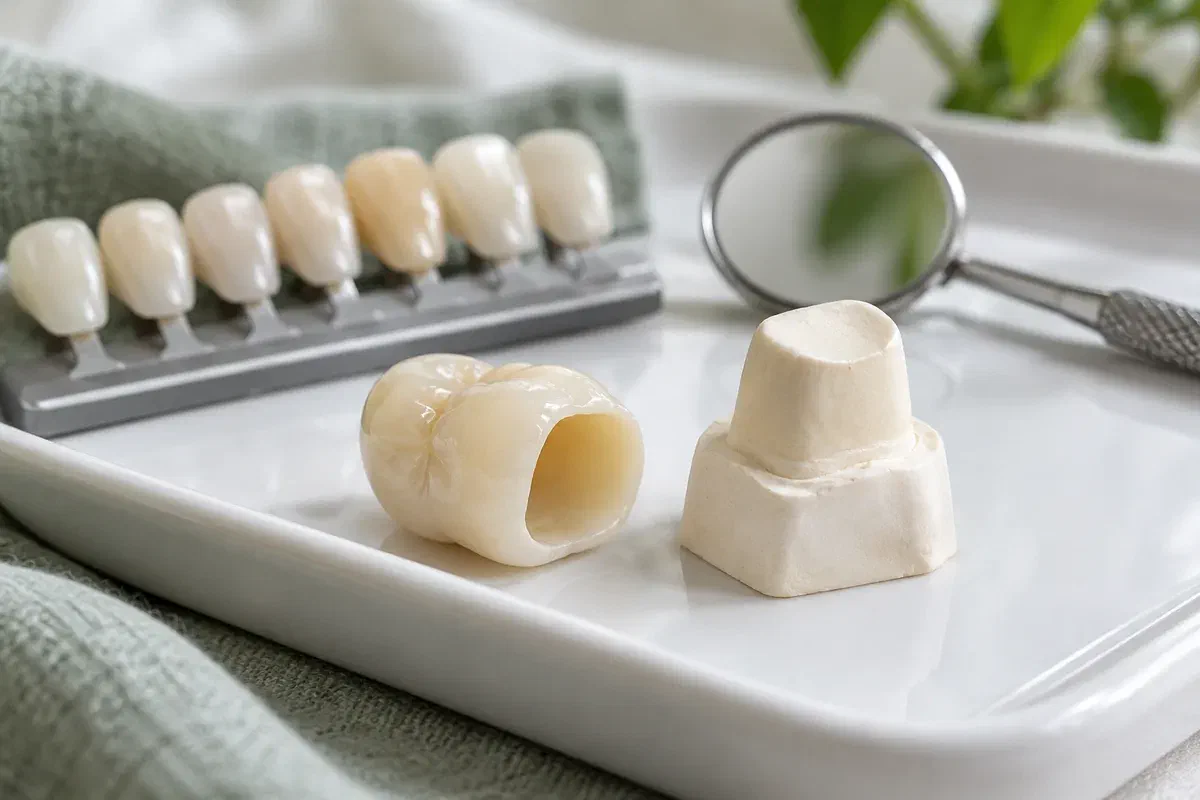
Illustrative ceramic crown and prepared-tooth model beside a shade guide
Why timing matters with a crack

A crack does not heal on its own.

Ask your root canal provider which stage comes next. Caring for a cracked tooth under a temporary is different from living with its finished restoration.

A temporary over a cracked tooth

The interim filling seals the access but does little to hold cracked cusps together. Ask how soon the permanent restoration should follow and which foods to avoid. Comfort is no proof the tooth can handle firm chewing.

Weak cusps and thin walls

Cracks, decay and older fillings together can leave little sound structure. Ask which parts look solid and how a crown would engage them. The build-up and the covering should be planned as a unit.

Findings from the specialist

If an endodontist treated the tooth, ask what they saw of the crack and when to book the restoration. Confirm that notes are being sent and mention any review. Their findings help shape the next step.

Call if the temporary breaks, biting suddenly hurts again, or swelling appears while you wait. A change in a cracked tooth is worth reporting promptly.

The role of coverage

Bracing the tooth against everyday force

On a cracked or weakened tooth, a crown can help hold the remaining structure together and give back a shape that works for chewing. Its edges need to fit closely and seal. Ask how the proposed design responds to your crack and the damage around it, since every tooth breaks in its own way.

The tooth’s place in your mouth matters as well. A molar handles heavy loads, and a tooth closer to the front brings appearance into it. These are weighed alongside how much natural tooth can be kept.

Patient information: ADA — the role of a dental crown

Cusps protected where they flex

Ask which cusps are at risk and the reason. You should understand how the crown wraps the remaining structure and whether anything less would be sensible. Covering more is not a goal in itself.

A stable core

A build-up may replace missing structure and give the crown a firm base. A post is used only when it helps keep that core in place. Ask which elements are in your plan and what each one does.

An even bite

The crown is checked against neighbouring and opposing teeth so forces are spread evenly. Mention any high spot or snag. That helps the dentist refine the contacts.

How the restoration is done

From assessment to a finished crown

Visit numbers depend on the tooth, its foundation and the method used for the crown. Ask for the full sequence and an estimate before work starts.

  1. Assess the tooth and the crack

    The dentist examines the tooth, the filling on it, your symptoms and the records from your root canal. Imaging may be needed. If the extent of the crack or the healing is uncertain, further assessment may come first.

  2. Core and preparation

    Where indicated, a build-up goes in first and the tooth is then prepared for its restoration. Materials suited to the bite are discussed. Comfort measures are still offered, as the tissues around the root can feel the work.

  3. Records and temporary cover

    A scan or impression captures the detail for the crown. If a temporary is fitted, you will be given advice on chewing and cleaning. Ask what to do should it come loose before your fitting.

  4. Fit and follow-up

    Fit, contacts, appearance and bite are checked before the crown is cemented. Ask how to clean along its margin and when to return. Regular exams help keep watch on the crown and the tooth beneath.

Protecting the restored tooth

Gentle habits for a tooth that once cracked

Follow the instructions given for the temporary and the crown. A treated tooth still needs cleaning, monitoring and a call when anything feels different.

Handle the temporary with care

Avoid hard and sticky foods while the temporary is on, along with any habits you were warned about. If it comes away, ring us. Avoid gluing it or leaving the cracked tooth exposed.

Be mindful of hard foods

Once the final crown is in use, notice how normal meals feel and be thoughtful with very hard items such as ice. Tell us about a tall spot, lingering tenderness or any shift in your bite.

Keep the margin clean

Fluoride toothpaste and a suitable between-teeth cleaner help protect the edge of the crown. Ask if floss catches or access is hard. Decay can still start at the margin, so keep up with exams.

Possible approaches

How far the damage goes guides the restoration

Ask why one restoration is suggested and how the others would compare for protection, preparation and upkeep.

Cracked or heavily weakened cusps

A full crown

Full coverage is often considered when a tooth is cracked or has lost a lot of structure. Discuss the core, material and shaping. It suits a tooth only if the remaining structure can carry the restoration.

Limited damage with sound walls

Partial coverage

An onlay or other partial design may protect selected cusps on some teeth. Ask why your tooth would suit it and how it guards against flexing. Not every root-treated tooth needs a full crown.

Crack extent unclear

More investigation

Lingering symptoms or a crack that may run deep need checking before a crown is made. Find out what is still unknown and how the tooth is protected meanwhile. A crown cannot fix a problem that has not been diagnosed.

Questions from Acton

Cracks, crowns and what to expect

Your plan should explain who does each stage, when, and at what cost. Bring notes from the root canal visit if you have them.

(905) 876-4488
My tooth was cracked before the root canal. Does that change the restoration?
It can. A crack weakens the outer tooth, so protective coverage is often considered. The dentist will assess how the tooth was damaged and what remains before recommending a crown or another design.
Can a crown stop a crack from getting worse?
A crown may help hold cracked cusps together and spread biting forces, but it cannot guarantee a crack will not progress. Regular exams help monitor the tooth. Report any new pain when biting.
What happens if the crack reaches the root?
A crack that extends deep into the root can make a tooth difficult or impossible to restore predictably. If the assessment suggests this, the dentist will explain the findings and talk through other options.
Why wasn’t the crown placed at the root canal appointment?
Root canal treatment and the final restoration are separate stages, often with different clinicians. The tooth may need assessment, a core and records before the crown is made. Ask for the sequence so you know what comes next.
Will I have to avoid certain foods for good?
Not usually, but it is sensible to be careful with very hard items such as ice or unpopped kernels on any tooth, especially one that has cracked before. The dentist can advise based on your bite.
Can I group my crown visit with a check-up to save a trip from Acton?
Often, yes. Ask when booking whether an exam or cleaning can be scheduled alongside a crown appointment. Sharing records in advance helps us use the time well.

Patient information: AAE — restoration principles after root canal treatment

Planning a visit from Acton

Give a cracked tooth the cover it needs.

Arrange a consultation at our Bronte Street practice to plan the restoration after your root canal. Bring records and questions, and the dentist will assess the cracked tooth and explain the protection and monitoring it needs.

Phone the clinic if the temporary comes out or biting becomes painful again. Please use online requests for non-urgent appointments only.

Visit Milton Dental Clinic
Unit 1, 342 Bronte St. S, Milton, ON L9T 5B7
Get directions Clinic hours
Monday–Thursday
11am–7pm
Friday–Sunday
By appointment only

Areas we serve

  • Milton
  • Oakville
  • Mississauga
  • Georgetown
  • Halton Hills
  • Acton
  • Campbellville
  • Brampton
  • Burlington
  • Puslinch
  • Rockwood
  • Erin
  • Caledon
  • Etobicoke
  • Old Milton
  • Bronte Meadows
  • Timberlea
  • Dorset Park
  • Dempsey
  • Clarke
  • Beaty
  • Coates
  • Harrison
  • Scott
  • Willmott
  • Ford
  • Bowes
  • Cobden
  • Walker
  • Mountain View
  • Milton Heights
  • Hawthorne Village
  • Valley View
  • Fallingbrook
  • Nassagaweya
  • Trafalgar
  • Esquesing
  • Nelson
  • Brookville
  • Moffat
  • Glen Williams
  • Norval
  • Limehouse
  • Stewarttown
  • Ashgrove
  • Hornby
  • Silver Creek
  • Speyside
  • Scotch Block
  • North Oakville
  • River Oaks
  • Glen Abbey
  • West Oak Trails
  • Palermo
  • Bronte Creek
  • College Park
  • Joshua Creek
  • Uptown Core
  • Preserve
  • Iroquois Ridge
  • Lisgar
  • Meadowvale
  • Meadowvale Village
  • Churchill Meadows
  • Erin Mills
  • Central Erin Mills
  • Streetsville
  • East Credit
  • Creditview
  • Heartland
  • Sheridan
  • Mount Pleasant
  • Credit Valley
  • Huttonville
  • Churchville
  • Springbrook
  • Northwest Brampton
  • Bram West
  • Fletcher's Meadow
  • Fletcher's Creek South
  • Alton Village
  • Orchard
  • Millcroft
  • Headon Forest
  • Tansley
  • Brant Hills
  • Tyandaga
  • Kilbride
  • Lowville
  • Aberfoyle
  • Morriston
  • Arkell
  • Hillsburgh
  • Freelton
  • Carlisle
  • Waterdown
  • Flamborough
  • Mountsberg

How can we help?

Milton Dental Clinic

Have a question about your smile? Choose the option that works best for you.

For urgent dental concerns, please call.
Messages are reviewed during clinic hours.