A soft seal over the access hole
This material wears down and can crumble with time. Ask how many weeks it is meant to hold and which foods to keep off that side. A pain-free tooth may still break under hard chewing.


Between the root canal and the final crown sits an in-between stage that is easy to misjudge. For households in Caledon, we explain what the temporary is doing and plan the permanent restoration that replaces it.
After the canals are treated, most teeth leave with something temporary on top: a soft filling sealing the access hole, or later a provisional crown while the permanent one is made. Both do a useful job for a short time. Neither is designed to carry the tooth through years of chewing.
So the real question is what should replace it. For a back tooth that has lost walls or cusps, that is often a crown. A tooth with plenty of sound structure might suit a filling or partial restoration instead. The dentist decides after examining position, remaining tooth, cracks, older work and bite.
Caledon covers a wide, largely rural area, from Bolton to the smaller villages, and juggling household schedules can push the next appointment back. Let us know who did your root canal, what is on the tooth now and how long it has been there. We will explain the foundation, the permanent restoration and the checks to follow.
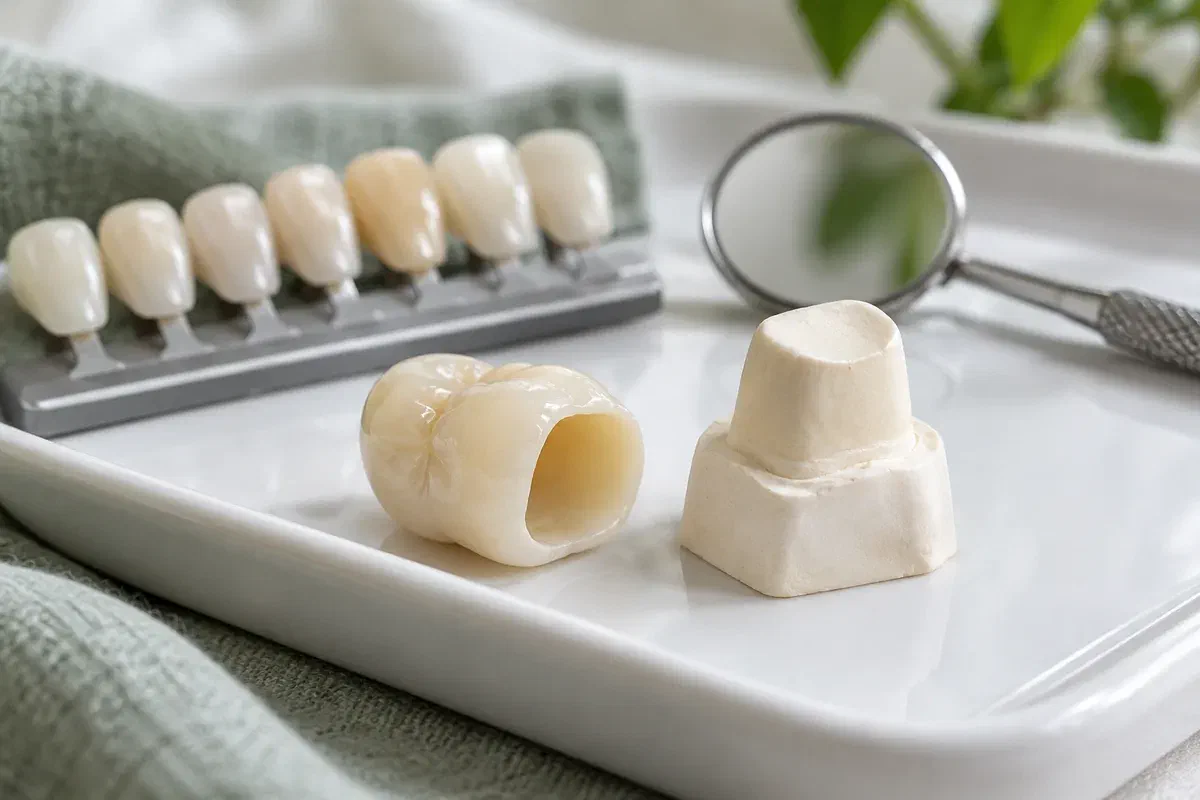
Your root canal provider can confirm how long the interim stage was meant to last. Caring for a provisional is not the same as caring for a finished crown.
This material wears down and can crumble with time. Ask how many weeks it is meant to hold and which foods to keep off that side. A pain-free tooth may still break under hard chewing.
Where decay or fracture took structure before treatment, the interim cover is protecting very little. Ask what is left to build on and how a crown would be held. The core and the final cover are planned together.
If an endodontist treated the tooth, check when the restoration is due and whether their report has been sent. Note any review appointment they gave you. It keeps both stages on track.
Call us if the temporary cracks, a piece comes away, the tooth starts to ache or swelling appears. These are reasons to be seen sooner rather than at a later booking.
A properly designed crown, on a tooth that needs one, can brace weakened structure and restore a full chewing shape. Unlike a temporary, it is made to fit closely at the edges and seal the tooth over the long term. Ask how its design suits your tooth’s particular damage.
The demands depend on the tooth. A molar must stand up to heavy chewing, and a visible tooth should blend in. Both are balanced with saving as much natural tooth as possible.
Patient information: ADA — the role of a dental crown
Ask which areas need protecting and why. You should understand how the restoration fits the remaining structure and whether a smaller design would be reasonable. The largest option is not always the right one.
A core build-up may replace missing structure so the crown has a firm base. Posts are reserved for teeth where the core needs extra hold. Ask what the plan includes and what each part is for.
Before you leave, the crown is checked against nearby and opposing teeth. Mention a high spot or snag. Your feedback tells the dentist where to refine it.
How many visits it takes depends on the tooth, its foundation and the method used to make the crown. Ask for the sequence and estimate up front.
The dentist examines the tooth, the interim material, any symptoms and your root canal records. Imaging may be needed. If something about the canals or healing is unclear, further assessment may be advised first.
Temporary material is taken out, a core is placed where indicated, and the tooth is shaped. Material and appearance are discussed as relevant. Comfort measures are still offered during preparation.
An impression or scan provides the details for the crown. A provisional may be fitted, with guidance on eating and brushing around it. Confirm your fitting date and what to do if it lifts off.
Fit, contacts, appearance and bite are confirmed before cementation. Ask about cleaning the margin and your next exam. Regular check-ups continue to look after the crown and the tooth inside it.
The provisional and the permanent crown each come with their own advice. A root-treated tooth still needs daily cleaning, exams and a call if anything changes.
Avoid chewy, sticky and hard foods on that side. If the provisional comes off, keep it and call us for advice. Do not glue it in at home or leave the tooth exposed.
Once it is in everyday use, notice how chewing feels. Report a high spot, ongoing soreness or a difference in how your teeth close. Avoid biting down hard repeatedly to see how it feels.
Brush twice daily with a fluoride toothpaste and clean between teeth with a tool suited to the gap. Ask for help if cleaning is awkward. The crown edge can still develop decay, so keep up your exams.
Your plan should make clear who handles each stage, when and for what cost. Bring any instructions from your root canal visit.
Patient information: AAE — restoration principles after root canal treatment
Visit our Bronte Street practice to plan the permanent restoration for your treated tooth. Tell us what is on it now and bring any records, and the dentist will examine it and explain the core, crown and follow-up.
Phone if the temporary is lost or pain is increasing. Online requests are for non-urgent appointments.
