How long the temporary should last
Interim fillings are a stopgap that seals the tooth for a set time. Ask when it needs replacing and which foods to skip until then. Feeling comfortable does not mean the tooth is strong enough for full chewing.


Restoring a tooth after root canal treatment usually spans more than one visit. Travelling from Etobicoke, you can plan those visits carefully and know what to do if something goes wrong between them.
Once the canals are cleaned and sealed, the tooth still needs a permanent top that can handle chewing. For a back tooth with substantial damage, that is frequently a crown, and making one tends to involve at least a preparation visit and a fitting. Knowing the sequence in advance makes a longer journey far easier to manage.
The restoration itself is decided by the tooth rather than by the travel. The dentist reviews its position, the walls and cusps still standing, old fillings, signs of cracking and your bite. Some teeth need full coverage. Others, chosen carefully, can be restored with something smaller and quicker.
Coming from Etobicoke usually means a longer journey, so we plan around that. Send the details of your root canal ahead if you can, including who did it and whether the filling is temporary. At the first visit we can set out the foundation, the restoration, the number of appointments and what follow-up looks like.
Your root canal provider can confirm what is left to do. Knowing whether you have a temporary or a permanent filling changes how you look after the tooth.
Interim fillings are a stopgap that seals the tooth for a set time. Ask when it needs replacing and which foods to skip until then. Feeling comfortable does not mean the tooth is strong enough for full chewing.
Decay, fractures and earlier fillings can leave little to work with. Ask what structure is left and how a crown would be anchored. The answer shapes the build-up, the restoration and how many visits you need.
If an endodontist did the root canal, confirm when they expect you to have the restoration and whether reports are being shared. Note any follow-up with them. That avoids extra trips to fill in gaps.
Call before setting out if the temporary breaks, pain flares or swelling appears. We can advise whether to come in or seek care nearer to home first.
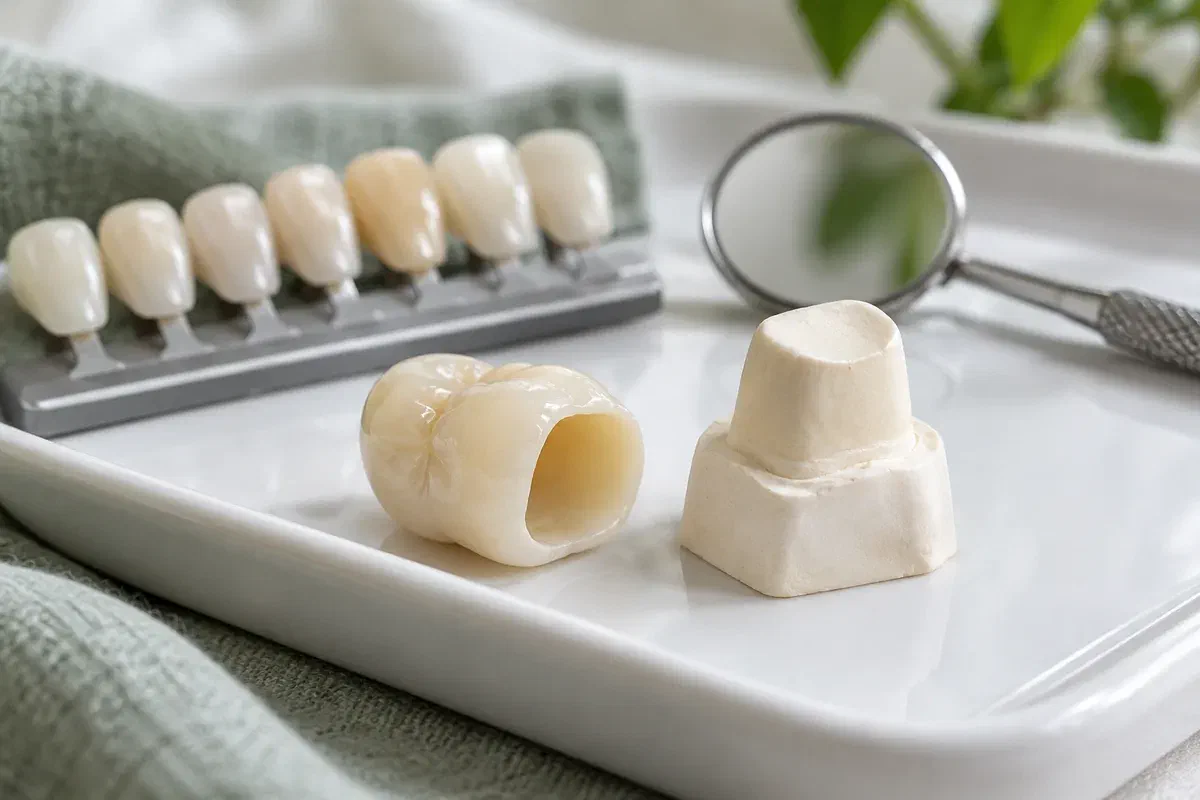
If your tooth warrants it, a crown can bind weakened structure and recreate a working shape. Precise fit and a good seal at the margins are part of what it offers. Ask how the proposed restoration responds to your tooth’s damage, rather than assuming every crown is the same.
The tooth’s location guides what matters most. A molar needs to cope with chewing load, and a visible tooth adds appearance to the list. Saving as much natural structure as is sensible sits alongside both.
Patient information: ADA — the role of a dental crown
Ask which areas of the tooth need covering and why. The plan should show how the restoration meets the remaining tooth and whether a lighter option would do. Full coverage is not automatically superior.
A core build-up may restore the shape the crown needs. A post comes into it only when it helps hold that core. Ask what your plan includes so nothing comes as a surprise at the appointment.
The new crown is checked against neighbouring and opposing teeth. Tell the dentist if something feels high or catches. Raising it before you leave can spare you a return trip.
The number of appointments depends on the tooth, its foundation and how the crown is made. Ask for the full schedule and estimate at the outset.
The dentist examines the root-treated tooth, its filling, any symptoms and the records you supply. X-rays may be taken. If something about the canal work or healing looks uncertain, further assessment may be advised before the final crown.
Where needed, a core is placed and the tooth is shaped for the restoration, sometimes in the same visit as the assessment. Material and appearance are discussed if relevant. Comfort measures are still used during preparation.
A scan or impression is taken for the crown. If you go home with a temporary, you will be told how to eat and clean around it. Ask who to call if it comes loose and how urgent that is.
Fit, contacts, appearance and bite are confirmed before cementing. Ask how to care for the edge and when a review is due. Regular examinations continue, and they can be booked to suit your travel.
Follow the instructions for the temporary and the final crown. A treated tooth still needs good cleaning, regular checks and quick action if something changes.
Avoid hard, sticky and chewy foods while it is on, and follow any specific advice given. If it falls out, call us to ask what to do. Do not glue it back in or leave the tooth exposed without guidance.
After the final crown, notice how it feels during everyday meals. A high spot, lasting tenderness or a change in your bite is worth a call. Avoid repeated hard biting to test it.
Twice-daily brushing with a fluoride paste and a suitable between-teeth cleaner keep the margin healthy. Ask for a demonstration if floss catches. The tooth under the crown can still decay, so keep exam appointments.
A solid plan states who does each step, when and at what cost. Bring any instructions you received after your root canal.
Patient information: AAE — restoration principles after root canal treatment
Arrange an appointment at our Bronte Street practice to plan your restoration after root canal treatment. Send or bring your records, and the dentist will assess the tooth and explain the foundation, coverage, timing and follow-up.
If the temporary comes out or symptoms worsen, call before you travel. Online requests are for non-urgent appointments.
