A temporary that has been there a while
Interim fillings wear and can let bacteria seep in over time. Ask what it was meant to bridge and how long it was expected to hold. Even if the tooth feels fine, it may not be up to firm chewing.


Some root canals are finished, then the crown never happens. For households across Halton Hills, we can assess a treated tooth, whether the work was recent or years ago, and plan how to restore it.
Life gets in the way. The root canal eases the pain, the next appointment drifts, and months later the tooth is still carrying a filling that was only meant to be temporary. It is a common situation, and the sensible step is simply to have the tooth looked at and a plan made for its permanent restoration.
What that restoration should be depends on the tooth today. A molar weakened by decay and old fillings frequently needs a crown to protect it from splitting under chewing. A tooth that kept most of its walls may suit a smaller repair. The dentist considers position, cusps, cracks, existing work and bite before suggesting either.
From Glen Williams, Georgetown, Acton or one of the smaller hamlets in Halton Hills, it helps to bring what you know: roughly when the root canal was done, by whom, and whether anything has changed since. We will examine the tooth, check whether it still looks healthy enough to restore, and explain the foundation, restoration and follow-up.
If you are unsure what was planned after your root canal, ask the office that did it. A long-standing temporary and a completed crown need very different care.
Interim fillings wear and can let bacteria seep in over time. Ask what it was meant to bridge and how long it was expected to hold. Even if the tooth feels fine, it may not be up to firm chewing.
A tooth that has been waiting may lose small pieces of structure. Ask what is still sound and whether a crown could be supported. The core and the covering are best planned together.
If a specialist treated the canals, ask for their report and any images to be sent before your visit. Mention whether a follow-up was booked. It makes picking up the plan much simpler.
Call if the temporary has broken or come out, the tooth aches or the gum swells. Please do not wait for a planned visit to mention a new change.
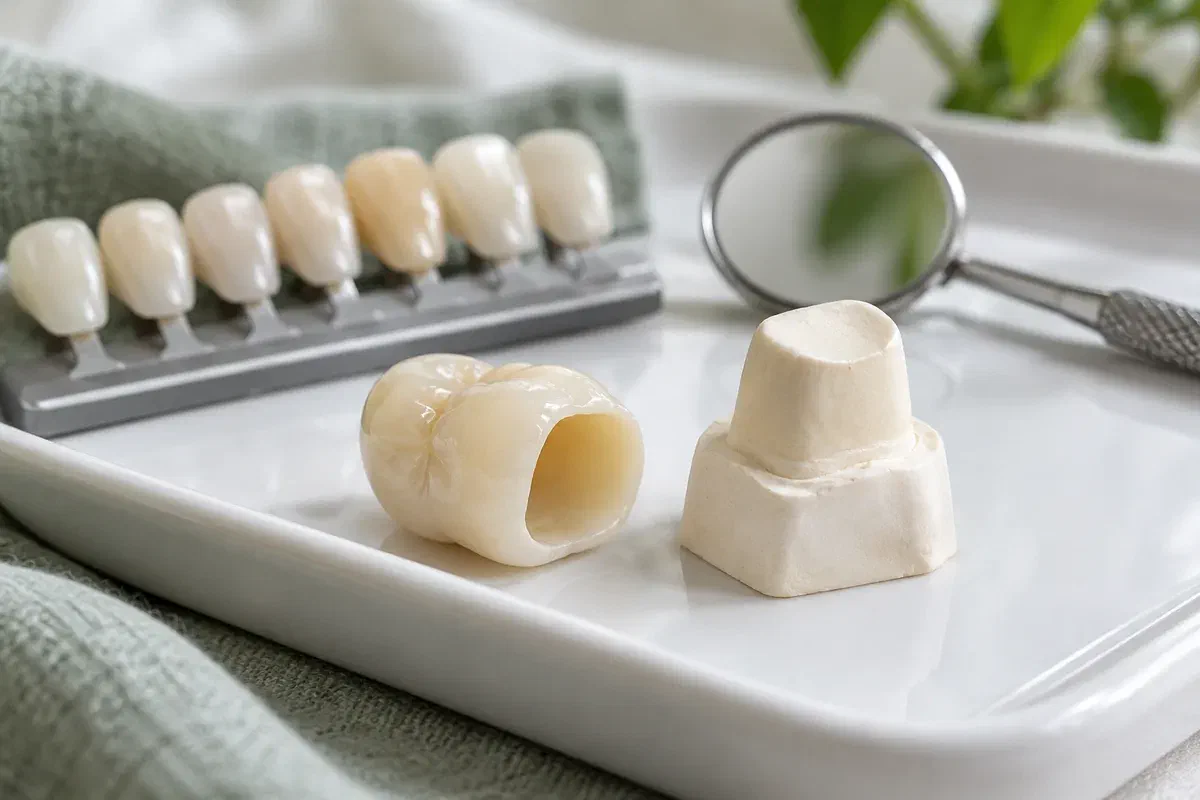
A root canal saves the inside of the tooth, and a well-chosen restoration protects the outside. On a weakened tooth, a crown can hold the remaining structure together and restore a shape you can chew on. A precise fit and seal at the edges matter too, so ask how your design addresses the tooth’s actual damage.
Different teeth have different jobs. A molar works hard at every meal, and a tooth further forward may need to blend with your smile. These needs are balanced with keeping as much original tooth as possible.
Patient information: ADA — the role of a dental crown
Ask which parts of the tooth are at risk and why. The plan should explain how the restoration rests on the remaining structure and whether a more modest option fits. Bigger is not automatically better.
A build-up can replace lost structure so a crown has a solid platform. A post is included only when it helps retain that platform. Ask what each part of your plan is for.
Once made, the crown is compared with neighbouring and opposing teeth. Speak up if it feels tall or catches. Your impressions guide any fine adjustment.
Visit numbers depend on the tooth, its foundation and the crown-making method. Ask for the whole sequence and a cost estimate before you start.
We examine the tooth, the filling that is on it now, any symptoms and whatever records are available. An X-ray is often helpful, especially after a long gap. If the root canal or healing looks doubtful, more assessment may come before a crown.
Old temporary material is removed and, where indicated, a build-up is placed before the tooth is prepared. Material and appearance are talked through as needed. You will be offered comfort measures during the work.
An impression or scan records the tooth so the crown can be made. A provisional crown may be fitted with advice on eating and cleaning. Confirm your return date and what to do should it come loose.
The crown’s fit, contacts, look and bite are checked before it is cemented. Ask how to clean the edge and when to book a recall. Regular exams keep watch over the crown and the tooth under it.
Follow the instructions you receive at each stage. A treated tooth still needs brushing, flossing, check-ups and a call when something changes.
While the provisional is on, avoid hard or sticky foods and anything else you were warned about. If it pops off, call us. Home glue is not a fix, and the tooth should not be left uncovered.
When the final crown is in daily use, notice whether meals feel normal. Let us know about a high spot, lingering tenderness or a change in how you bite together. Do not keep clenching to check it.
A fluoride toothpaste and an interdental brush or floss that suits the space help keep the margin clean. Ask for advice if cleaning there is tricky. The tooth beneath can still decay, so stay on your exam schedule.
Your plan should say who is responsible for each step, the timing and the costs. Bring any notes you still have from the root canal.
Patient information: AAE — restoration principles after root canal treatment
Book a visit at our Bronte Street practice to have your root-treated tooth assessed. Tell us what you remember about the treatment, and the dentist will examine it and explain what restoring it would involve.
Phone us if the temporary has come out or the tooth is getting more painful. Online requests are for non-urgent appointments.
