

Illustrative consultation about reassessing a previously root-treated tooth
Restorative Dentistry

Root Canal Retreatment in Mississauga

Told a root-treated tooth needs doing again and unsure what that involves? From Mississauga, you can bring the recommendation to us, have the tooth reviewed, and leave knowing the reasons, the alternatives, and what rebuilding it would take.

Making sense of a recommendation

Someone suggested retreatment. Here is how to think it through.

Hearing that a tooth needs a second root canal often raises more questions than it answers. Why did the first one not hold? Is this the only route? Retreatment means reopening a previously treated tooth, removing the old root filling, then cleaning and resealing the canals. It is offered when the findings suggest it could help you keep the tooth.

A good decision rests on knowing what is actually wrong. Symptoms around a treated tooth can come from the canals, a crack, the gum, a leaking crown, or a different tooth altogether. You deserve a clear statement of the problem being treated, the realistic chances, and how the tooth would be restored afterward.

Many people bring us a plan from another office for a second view, and that is welcome. If you are travelling from Mississauga, gather the written recommendation, any X-rays you were given, and what you know of the first treatment. We will examine the tooth, explain our reading of it, and discuss specialist input where it would help.

Request a second look at the tooth
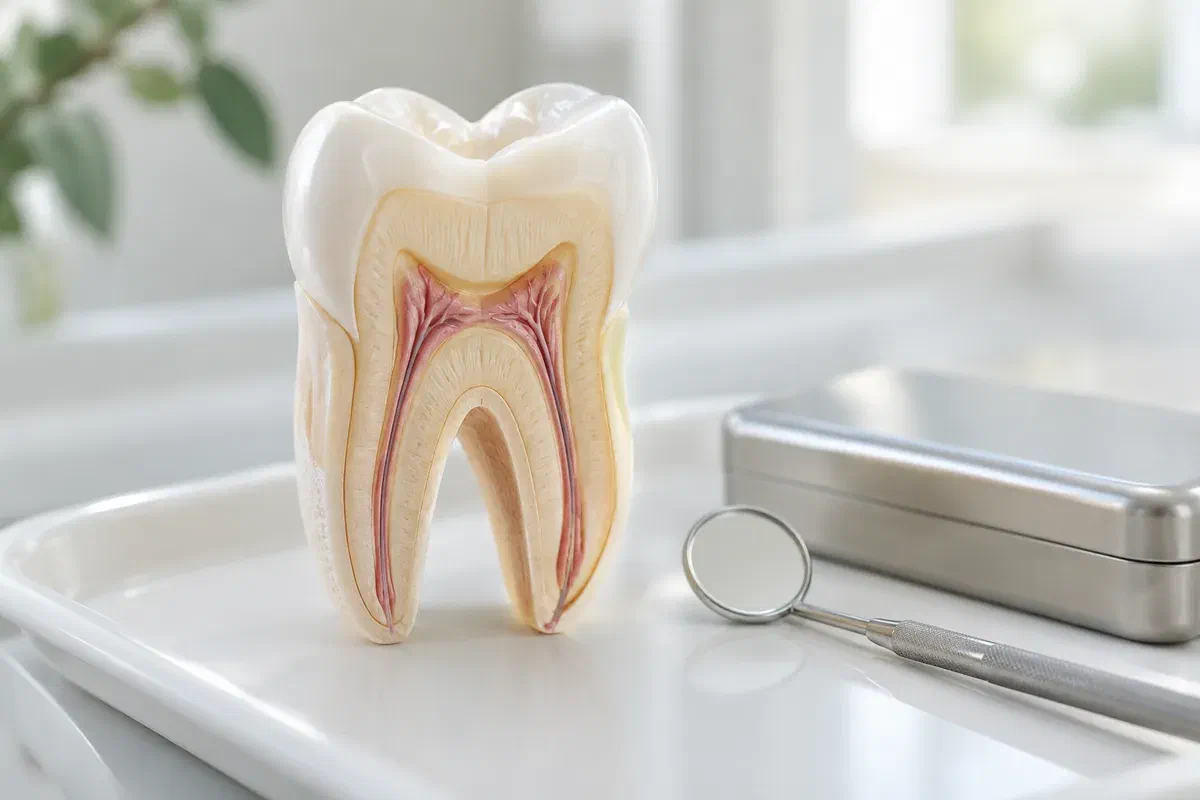
Illustrative cutaway molar teaching model used to explain the root canal space
What may have prompted the advice

Three situations that commonly lead here

Share when the issue first appeared and how it compares with how the tooth felt after the original root canal. That background guides the exam but cannot confirm the cause alone.

Pain returning after a calm stretch

Tenderness when chewing or a dull ache may have brought you back to a dentist. Note whether it lingers or comes only with pressure. The clinician considers both the treated tooth and other possible sources before agreeing that more canal work is needed.

A concern raised from imaging

Perhaps the recommendation came from an X-ray rather than symptoms. Ask what the image showed, whether earlier ones were compared, and why treatment was favoured over observation. Feeling well does not, on its own, answer the question about healing.

A failed crown or filling

New decay, a cracked filling or a dislodged crown can affect a treated tooth. Tell us when the damage happened and whether the tooth was exposed for a while. Plans that address only the canals, or only the crown, may miss half the picture.

Keep any review you have already booked even if the tooth improves. If pain increases, swelling develops, or a bump on the gum keeps returning, call so the team can reconsider how soon to see you.

What a retreatment aims for

Retention is the goal, and restoration is the condition.

For a tooth that suits it, retreatment gives the canal system a second, more targeted attempt. The clinician should explain why the findings support it and name the factors that might hold it back. Keeping a natural tooth matters, yet the plan also needs a reliable way to rebuild it once the inside is resealed.

Bring up the crown or filling, any post, how much tooth structure remains, and the history of the first treatment. Ask what would have to come out to reach the canals. Laying the whole pathway side by side with other options is the fairest way to compare a recommendation.

Patient information: AAE — understanding endodontic retreatment

A reason you can repeat back

Ask which aspect of the original treatment, or which later event, the retreatment would address. You should be able to state the aim and the remaining unknowns in your own words. A plan built only on discomfort deserves more questions.

An endodontist when complexity demands

Re-entering treated canals can be technically demanding. A specialist may be recommended to evaluate the tooth or perform the retreatment. Ask what that opinion will settle and how the report will reach the dentist planning your restoration.

The finishing stage priced and planned

Discuss the final seal and crown or filling before agreeing to the canal work. Ask about the visits and costs that stage involves. An estimate that stops at the canals leaves part of the decision unexamined.

From review to repair

How the path usually runs

The order and number of appointments vary. Ask who is responsible for each stage and how the tooth is covered while you wait for the next.

  1. Bring the paperwork, have the exam

    Share the recommendation you received, any images, and your symptom history. Examination and suitable imaging show the tooth and nearby tissues. Further tests or a specialist referral may come before we give our view.

  2. Weigh the approach and its alternatives

    You will hear whether retreatment appears suitable, what may complicate it, and what else is reasonable. Ask how the existing crown would be handled, what the estimate includes, and what would happen if findings change mid-treatment.

  3. Reopen and reseal

    If treatment goes ahead, existing root filling is removed as required and the canals are reassessed, cleaned and resealed. The tooth is isolated and comfort is managed. Some cases need more than one visit for this stage.

  4. Complete the rebuild and follow up

    Arrange the agreed restoration and review visits. Check whether a different clinician will place the crown. Reviews assess function, symptoms and healing over time instead of treating early comfort as the final word.

In between stages

Keep the temporary intact and the plan on track.

Ask for advice matched to the work completed at that visit. A temporary filling, a finished restoration, and treatment still underway each need different care.

Ease into chewing

Hold off eating until the numbness has gone, then follow guidance about loading the tooth. Don’t try it out on anything hard. If a temporary comes loose, call the treating clinic for advice rather than waiting for the scheduled appointment.

Keep notes on symptoms

Report rising discomfort, a high-feeling bite, or swelling. Say when it began and what brings it on. Follow the individual pain-management advice provided, and check before using medication that might conflict with your medical history.

Attend both follow-up tracks

Your restoration and your healing review may be with different offices. Ask when records will be exchanged and who to call with questions. A finished crown does not take the place of a recommended review.

Alternatives worth hearing

More than one door may be open.

Ask why each reasonable choice does or does not suit you. A balanced recommendation considers both the canals and whether the tooth can keep working afterward.

Treating the canals from above again

Nonsurgical retreatment

Access is made through the top of the tooth so the canals can be treated once more. Crowns and posts may complicate that access. Ask what the clinician expects to fix and how the opening will be closed and protected afterward.

Reaching the root end instead

Endodontic surgical assessment

In selected situations, a specialist may suggest treatment at the root tip through the gum. It suits different circumstances from retreatment, and occasionally both are used. Ask why surgery is being considered rather than assuming it is the next default.

When retention is not sensible

Removal and a replacement discussion

Some teeth are too damaged for a reasonable chance at retention. Discuss the reasons, what removal would mean, and replacement possibilities. Ask for the full sequence and ongoing care of each choice so they can be weighed fairly.

Second-opinion questions

What to ask before saying yes

You can have the diagnosis and treatment order explained before deciding. If you are comparing estimates, look closely at what each one covers.

(905) 876-4488
Is it reasonable to get a second opinion on a retreatment plan?
Yes. Retreatment involves time, cost and a decision about the tooth’s future, so many people want another clinician’s view. Bring any records and images you have. A second opinion may confirm the plan, suggest a specialist, or raise other options.
Why didn’t my first root canal last?
There is rarely a single answer. Complex canal anatomy, new decay, a leaking or broken restoration, and other changes can all play a role. The findings may suggest likely explanations, but a recommendation to retreat does not on its own show what caused the problem.
What if two clinicians recommend different things?
Ask each to explain the findings behind their advice and what they see as the main risks. Differences sometimes reflect how a tooth’s outlook is judged. A specialist assessment can help when opinions diverge.
Can a retreated tooth still need a crown?
Often it does, particularly back teeth, but it depends on the tooth and the existing restoration. Ask what will be placed at the end of retreatment, who will arrange the final repair, and how soon it should be done.
Is an implant a better choice than retreatment?
Neither is automatically better. The choice depends on the tooth’s outlook, the bone and gum, your health, and your preferences. Ask the clinician to compare the full sequence, timing and upkeep of each option for your situation.
How should I prepare if I’m coming from Mississauga for the review?
Bring the written plan, any X-rays or their reports, and a list of medications. Ask for an outline of possible visits so you can plan time away from work. Call ahead if symptoms change before the appointment.
Second opinions for Mississauga

Bring the plan. We will help you read it.

Arrange a review of a previously treated tooth with our team on Bronte Street. Share the recommendation and any records, and we will go through the findings, whether a specialist would add value, and the restorative work likely to follow.

Increasing pain or swelling should be phoned in to the clinic, not left waiting for a reply to an online request.

Visit Milton Dental Clinic
Unit 1, 342 Bronte St. S, Milton, ON L9T 5B7
Get directions Clinic hours
Monday–Thursday
11am–7pm
Friday–Sunday
By appointment only

Areas we serve

  • Milton
  • Oakville
  • Mississauga
  • Georgetown
  • Halton Hills
  • Acton
  • Campbellville
  • Brampton
  • Burlington
  • Puslinch
  • Rockwood
  • Erin
  • Caledon
  • Etobicoke
  • Old Milton
  • Bronte Meadows
  • Timberlea
  • Dorset Park
  • Dempsey
  • Clarke
  • Beaty
  • Coates
  • Harrison
  • Scott
  • Willmott
  • Ford
  • Bowes
  • Cobden
  • Walker
  • Mountain View
  • Milton Heights
  • Hawthorne Village
  • Valley View
  • Fallingbrook
  • Nassagaweya
  • Trafalgar
  • Esquesing
  • Nelson
  • Brookville
  • Moffat
  • Glen Williams
  • Norval
  • Limehouse
  • Stewarttown
  • Ashgrove
  • Hornby
  • Silver Creek
  • Speyside
  • Scotch Block
  • North Oakville
  • River Oaks
  • Glen Abbey
  • West Oak Trails
  • Palermo
  • Bronte Creek
  • College Park
  • Joshua Creek
  • Uptown Core
  • Preserve
  • Iroquois Ridge
  • Lisgar
  • Meadowvale
  • Meadowvale Village
  • Churchill Meadows
  • Erin Mills
  • Central Erin Mills
  • Streetsville
  • East Credit
  • Creditview
  • Heartland
  • Sheridan
  • Mount Pleasant
  • Credit Valley
  • Huttonville
  • Churchville
  • Springbrook
  • Northwest Brampton
  • Bram West
  • Fletcher's Meadow
  • Fletcher's Creek South
  • Alton Village
  • Orchard
  • Millcroft
  • Headon Forest
  • Tansley
  • Brant Hills
  • Tyandaga
  • Kilbride
  • Lowville
  • Aberfoyle
  • Morriston
  • Arkell
  • Hillsburgh
  • Freelton
  • Carlisle
  • Waterdown
  • Flamborough
  • Mountsberg

How can we help?

Milton Dental Clinic

Have a question about your smile? Choose the option that works best for you.

For urgent dental concerns, please call.
Messages are reviewed during clinic hours.