

Illustrative consultation about reassessing a previously root-treated tooth
Restorative Dentistry

Root Canal Retreatment in Rockwood

Your medications, conditions and past experiences all shape how a second root canal is planned. Travelling from Rockwood, you can have a treated tooth reassessed with your full health picture in mind, and leave with a plan that runs through to the final repair.

The person behind the tooth

Good dental planning starts with your health history.

Two people can have identical X-rays and still need different plans. Blood thinners, diabetes, heart conditions, pregnancy, allergies to anaesthetic or medication, and anxiety about dental care all affect how and when treatment is arranged. Sharing them early lets the clinician plan safely and, where needed, coordinate with your physician.

The tooth matters too, of course. A previously treated tooth may need another look because healing stalled, new decay or a failed restoration reached the canals, or a crack developed. Discomfort nearby can also arise from other teeth or the gum. Retreatment, which means removing the old filling and cleaning and resealing the canals, is considered when the canals look responsible and the tooth can be rebuilt.

If you are coming in from Rockwood, bring an up-to-date medication list along with anything you know about the original root canal. We will examine the tooth, explain what the imaging shows, review your health information, and discuss whether a specialist or your doctor should be involved.

Book a health-aware review
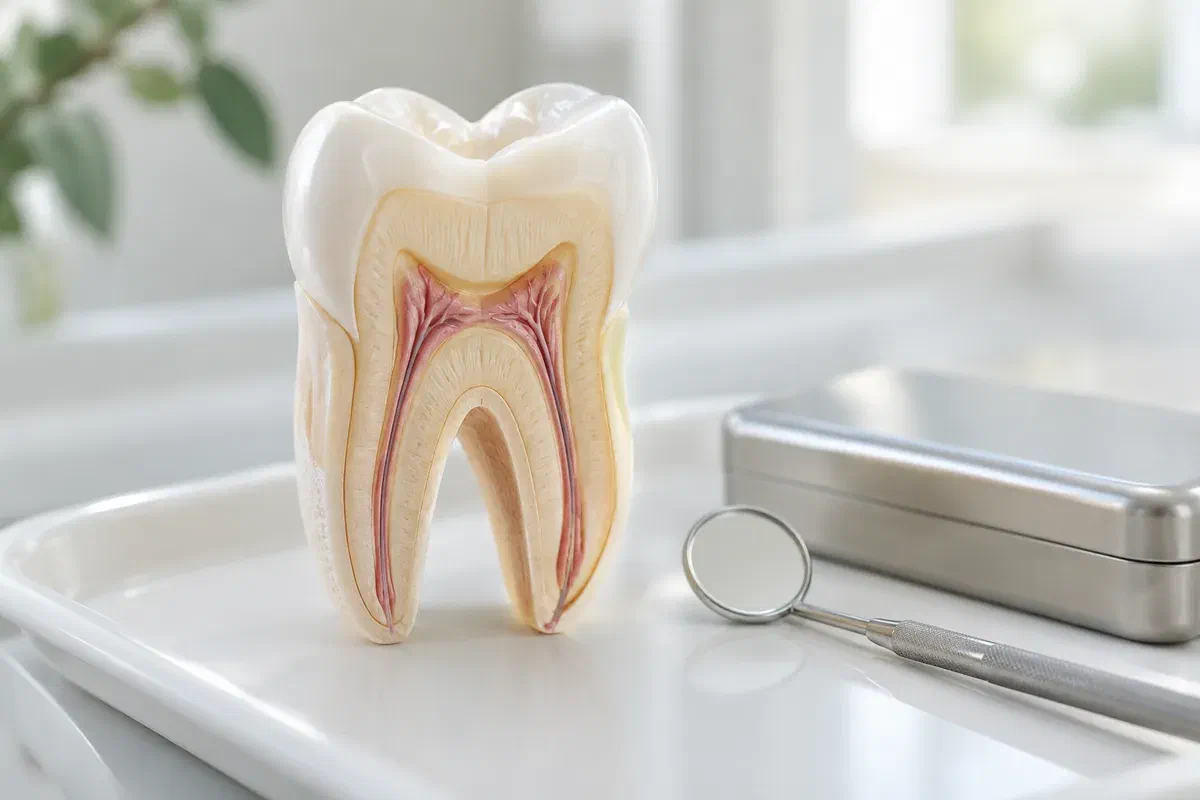
Illustrative cutaway molar teaching model used to explain the root canal space
What brings the tooth back into focus

Tell us what has changed, and what else is going on.

Describe when the concern started and how it differs from your experience after the first treatment. Mention any health changes since then too. That context frames the exam without confirming a diagnosis.

Soreness after a settled time

Tenderness on biting, or an ache that is hard to place, may have returned. Note whether it is constant or brought on by pressure. Other possible sources, including the gum and neighbouring teeth, are checked before more canal work is proposed.

A change noticed on an X-ray

Imaging may reveal a change around a root with no symptoms. Ask what it shows and how it compares with older images. Your overall health may also influence whether monitoring or treatment is favoured, so ask how it factors in.

Damage to a crown or filling

New decay, a cracked filling or a loose crown may affect a tooth that was treated before. Mention when it occurred and whether the area has been exposed. The restoration and the canals are evaluated together.

Keep any recommended review even if symptoms improve. If pain rises, swelling begins, or a gum bump keeps coming back, call so the team can reconsider the timing, especially if your health affects how infections are managed.

What retreatment aims to do

A plan that fits the tooth and the person

For a suitable tooth, retreatment gives the canal system another chance to heal. You should understand what in the findings supports it and what could limit it. Keeping a natural tooth is a reasonable aim, and for some people avoiding an extraction is also a health consideration worth discussing.

Ask about the existing crown or filling, any post, the remaining tooth, and the first treatment. Find out what would be removed for access and how long appointments might be, since longer visits can matter if you have certain conditions. Seeing the whole route helps you compare retreatment with other options.

Patient information: AAE — understanding endodontic retreatment

A reason that fits the findings

Ask what the retreatment is intended to address and which uncertainties remain. You should know why it is preferred over watching, surgery or removal in your case. Discomfort alone is not a clear reason.

Specialist and medical input

Complex teeth may be referred to an endodontist. Some health conditions call for discussion with your physician before treatment. Ask what each consultation will clarify and how the information will be shared with the dentist restoring the tooth.

Restoration planned with your needs in mind

Agree on the final seal and covering before the canal work. Ask about the number and length of visits and the costs. A plan that considers your health and schedule is easier to complete.

Planning carefully

Health review, diagnosis, treatment, restoration

The number and order of appointments depend on the tooth and your health. Ask who is responsible for each step and how the tooth is protected between visits.

  1. Review health and examine

    Share your medications, conditions and any treatment records. Examination and imaging assess the tooth and nearby bone. Further tests, specialist review or a note from your physician may be needed before a recommendation.

  2. Discuss the approach

    The clinician explains whether retreatment is suitable, the possible difficulties, and the alternatives. Ask about crown access, the estimate, any medication adjustments your doctor may advise, and how unexpected findings would be handled.

  3. Retreat the canals

    If you proceed, old filling material is removed where needed and the canals are cleaned and resealed. Local anaesthetic is chosen with your health history in mind, and the tooth is kept isolated. More than one visit may be needed.

  4. Restore and follow up

    The final crown or filling is placed and reviews are arranged. Confirm whether another clinician will do it. Follow-up checks symptoms, chewing and healing over time rather than relying solely on how the tooth feels at first.

Recovering well

Follow the advice written for you.

Ask for instructions that match the work done and your health. A temporary seal, a finished restoration, and an unfinished stage need different precautions.

Eat with care

Wait until numbness has worn off before eating, and follow guidance about how much load the tooth can take. Avoid hard foods. If a temporary loosens, contact the treating team for advice instead of waiting for the next appointment.

Use medication wisely

Report increasing discomfort, a high-feeling bite, or swelling. Follow the pain-relief advice given to you, and check with the clinician or pharmacist before taking anything that might interact with your regular medications or conditions.

Keep every scheduled review

Restorative and healing appointments may involve different clinicians. Ask how records will move between them and whom to contact with questions. A completed crown does not replace a recommended review of the root treatment.

Comparing paths

Weigh each option against your health and goals.

Have every reasonable choice explained, with the reasons it may or may not suit you. A good recommendation considers the canals, the remaining tooth and your general health.

Treating the canals again through the tooth

Nonsurgical retreatment

Access through the top lets the canals be retreated. Existing crowns or posts may add complexity. Ask what the clinician hopes to correct, how long visits may take, and how the tooth will be sealed afterward.

A different approach at the root tip

Endodontic surgical assessment

In selected situations, a specialist may consider treatment at the end of the root. It addresses different circumstances from retreatment and may be combined. Ask why surgery is being considered and how your health affects that option.

If keeping the tooth is not reasonable

Removal and a replacement discussion

A badly compromised tooth may not be retainable. Discuss why, what removal would involve given your health, and which replacements might suit. Ask for the full sequence and maintenance needs so the choices can be compared fairly.

Health and treatment questions

Questions about safety and planning

Ask for the diagnosis and treatment sequence to be explained before you decide. If you are comparing more than one estimate, check what each one covers.

(905) 876-4488
Should I stop my blood thinner before retreatment?
Do not stop or change any prescribed medication without advice from the doctor who prescribed it. Tell the dental team what you take, and they can discuss with you, and where needed with your physician, how to plan treatment safely.
Can I have root canal retreatment while pregnant?
Let the clinician know if you are pregnant or may be. Timing, imaging and medication choices may be adjusted, and some care can be safely provided while other steps may be planned for later. Ask what is recommended for your situation.
I get very anxious at the dentist. What can help?
Tell the team before the appointment. Explaining each step, agreeing on a signal to pause, and planning shorter visits can help. Ask whether other comfort options are available and what they would involve for your health.
Does diabetes affect healing after retreatment?
Health conditions, including diabetes, can influence healing and infection risk. Share your history and how well the condition is currently managed. Ask how it may affect the recommendation, timing and follow-up.
Will I need antibiotics before or after treatment?
Antibiotics are prescribed only when the clinician judges them appropriate, sometimes based on certain medical conditions. They do not replace addressing the source inside the tooth. Ask whether they apply to you and why.
How can I plan the visits from Rockwood around medical appointments?
Ask for an outline of the likely appointments early, and share any upcoming medical procedures or appointments. Coordinating timing can help, particularly if your physician needs to be consulted before treatment.
Rockwood retreatment visits

Bring your medication list as well as your questions.

Arrange an assessment with our Bronte Street team for a previously root-treated tooth. Share your health history and any dental records, and we will talk through the findings, specialist or medical input that may help, and the restorative stages to come.

If pain is increasing or swelling has started, call the clinic rather than relying on an online booking request.

Visit Milton Dental Clinic
Unit 1, 342 Bronte St. S, Milton, ON L9T 5B7
Get directions Clinic hours
Monday–Thursday
11am–7pm
Friday–Sunday
By appointment only

Areas we serve

  • Milton
  • Oakville
  • Mississauga
  • Georgetown
  • Halton Hills
  • Acton
  • Campbellville
  • Brampton
  • Burlington
  • Puslinch
  • Rockwood
  • Erin
  • Caledon
  • Etobicoke
  • Old Milton
  • Bronte Meadows
  • Timberlea
  • Dorset Park
  • Dempsey
  • Clarke
  • Beaty
  • Coates
  • Harrison
  • Scott
  • Willmott
  • Ford
  • Bowes
  • Cobden
  • Walker
  • Mountain View
  • Milton Heights
  • Hawthorne Village
  • Valley View
  • Fallingbrook
  • Nassagaweya
  • Trafalgar
  • Esquesing
  • Nelson
  • Brookville
  • Moffat
  • Glen Williams
  • Norval
  • Limehouse
  • Stewarttown
  • Ashgrove
  • Hornby
  • Silver Creek
  • Speyside
  • Scotch Block
  • North Oakville
  • River Oaks
  • Glen Abbey
  • West Oak Trails
  • Palermo
  • Bronte Creek
  • College Park
  • Joshua Creek
  • Uptown Core
  • Preserve
  • Iroquois Ridge
  • Lisgar
  • Meadowvale
  • Meadowvale Village
  • Churchill Meadows
  • Erin Mills
  • Central Erin Mills
  • Streetsville
  • East Credit
  • Creditview
  • Heartland
  • Sheridan
  • Mount Pleasant
  • Credit Valley
  • Huttonville
  • Churchville
  • Springbrook
  • Northwest Brampton
  • Bram West
  • Fletcher's Meadow
  • Fletcher's Creek South
  • Alton Village
  • Orchard
  • Millcroft
  • Headon Forest
  • Tansley
  • Brant Hills
  • Tyandaga
  • Kilbride
  • Lowville
  • Aberfoyle
  • Morriston
  • Arkell
  • Hillsburgh
  • Freelton
  • Carlisle
  • Waterdown
  • Flamborough
  • Mountsberg

How can we help?

Milton Dental Clinic

Have a question about your smile? Choose the option that works best for you.

For urgent dental concerns, please call.
Messages are reviewed during clinic hours.