

Illustrative consultation about a removable denture and repair arrangements
Restorative Dentistry

Same-Day Denture Repairs in Brampton

Helping a parent or grandparent whose denture has broken? From Brampton, you can call on their behalf, describe what happened and ask about a prompt repair assessment, so the visit is planned around their comfort and your schedule.

For family members and caregivers

When it is Mom’s denture that broke.

Often it is an adult child or grandchild who makes the first call. An older relative may be embarrassed to eat in front of others, worried about missing meals, or unsure how to explain the damage. Your job in that moment is not to diagnose anything. It is to keep the pieces safe, reassure them, and gather a few facts so the clinic can plan sensibly.

Repairs range from simple to involved. A clean crack in the acrylic might be handled promptly, while a snapped clasp, an implant attachment problem or a denture that had been slipping for months could require impressions, lab time or a new plan. The overall condition of the appliance matters too, so same-day work is something to check after an examination, not something anyone can promise over the phone.

Before you bring your family member over from Brampton, ring our Bronte Street practice. Let us know what type of denture they wear, how it broke and whether their gums are sore or bleeding. Mention mobility, hearing or memory needs as well. The team can then suggest an appointment, list what to bring and talk about how they can manage until it is repaired.

Arrange a repair visit for a family member
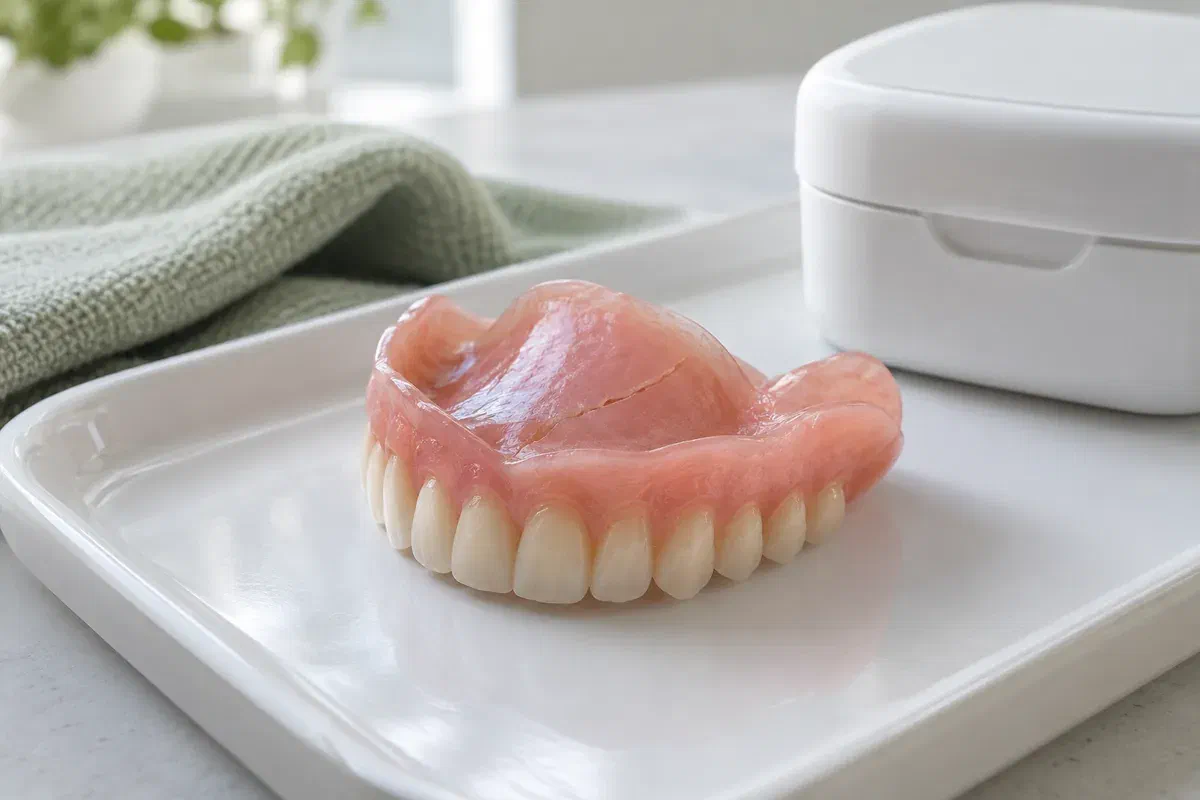
Illustrative upper denture with a fine fracture in its pink acrylic base
Notes to have ready

A quick checklist for the person making the call.

You do not need dental terms. Look at the denture with your relative, ask them how it felt recently, and share what you both noticed.

Where the plastic has broken

Check for a fine line, a full split or a chunk missing along the edge. Put every piece into a lidded container, not a napkin that might be thrown out. Discourage your relative from snapping it back in to see whether it holds.

Anything that has come off

Search for a fallen tooth, clasp or clip and keep it with the rest. Tell us about metal clasps or implants, since they change the repair. A part that is already loose can be swallowed or lost at mealtimes, so the denture is safer out of the mouth.

How it had been fitting lately

Ask whether it had been loose, rubbing, clicking or causing them to avoid certain foods, and whether it has been mended before. A repair rejoins material but does not reshape the fit. That background helps decide whether repairing it is enough.

Well-meant home fixes, like craft glue or filing a rough edge, can change the fit and weaken the acrylic. Leave the repair to the clinic so there is more to work with.

Why it is worth acting soon

Getting a familiar denture back can ease a stressful week.

For many older adults, going without teeth affects appetite, conversation and willingness to see friends. If the denture is suitable for repair, restoring it can shorten that stretch and avoid the adjustment period a brand-new appliance brings. Find out whether the clinician sees it as durable or as something to carry them through until other care is arranged.

A speedy repair is only helpful if the denture still suits their mouth. The clinician will review the break and how the appliance meets the gums, bite and any natural teeth. Repeated fractures, worn teeth or a loose fit may point toward a different approach, and both of you should know what the repair will leave unchanged.

Patient information: ADA — professional adjustment and repair of partial dentures

Explanations everyone can follow

Ask the clinician to show the damage and describe the work in plain terms, with your relative included in the conversation. A reattached tooth, a mended base and a replaced clasp involve different steps, timing and estimates.

A plan that fits two schedules

Agree on when the denture should be left, whether your relative needs to return for a try-in, and who will bring them. Share any transport, hearing or language needs. Settled arrangements are far easier than guessing on the day.

Understanding a pattern of breaks

If the denture keeps breaking, ask what might be causing it, such as fit changes or the way the teeth meet. A review or new long-term option may be offered, which can save your family from repeated urgent trips.

What the visit looks like

Step by step, with your relative at the centre.

The time needed varies with the damage and the work involved. The team will tell you what can be arranged by phone and what depends on the examination.

  1. You call and explain

    Share the denture type, how it broke, any pain or bleeding, and whether implants or past repairs are involved. Ask about available times and what support your relative may need at the appointment, instead of planning on a same-day finish.

  2. The clinician looks closely

    Bring the denture, every fragment and any records you can find. The examination covers the damage, the fit, and the gums or remaining teeth. Impressions may be needed so the repair can be planned properly.

  3. Together, you agree on next steps

    Talk through whether repair is suitable, what it involves, the estimate and any limits. Lab time or parts may affect timing. Decide how your relative will manage meals meanwhile and who the clinic should contact with updates.

  4. A final try-in

    Before it goes home, the repaired denture should be checked in your relative’s mouth for comfort and bite. Ask how they should wear and clean it again. If more care is recommended, confirm who will arrange it.

Helping at home afterwards

Watch for comfort, and call if something seems off.

Follow the clinic’s advice for this denture and repair. If your relative mentions a new sore spot or the denture moves more than before, contact the clinician instead of making changes at home.

Notice how meals go

Ask whether any foods should be avoided for a while. Watch how they manage talking and eating. If the denture does not sit properly or they wince when chewing, call for advice rather than encouraging them to bite down harder.

Make cleaning safer

Use a cleaner suited to the material and any attachments. Lay a towel in the sink or fill it partly with water so a slip does not cause another break. Ask about overnight storage and avoid hot water.

Keep the follow-up on the calendar

Mended or not, the denture and your relative’s gums still need regular review. Help them get to any adjustment appointment and pass on what they tell you about rubbing or wobbling. Write down when a reline or new denture should be discussed again.

Patient information: CDA — caring for dentures

Decisions you may help with

Mend it, refit it, or start fresh?

The clinician will explain each route in plain terms. Ask how much of the appliance is still reliable, and whether a suggestion targets the break, comfort or both.

When the rest of it is in good condition

Repair the denture they have

A repairable crack, missing tooth or similar fault can often be fixed so your relative keeps the denture they know. Limits will be explained. Same-day completion depends on the particular repair and on clinic and lab timing.

When comfort was already slipping

Repair along with an adjustment or reline

If your relative had been complaining that the denture slipped or hurt, fixing the crack will not change that. Improving the fit is its own piece of work. Ask the clinician whether it makes sense to do it in the same visit or to come back for it.

When the old denture has reached its limits

A replacement, with a short-term plan

A badly broken, often repaired or poorly fitting appliance may be better replaced. Ask about temporary options and how long a new denture usually takes. A stopgap repair can help, as long as everyone knows that is its purpose.

Questions from caregivers

Helping someone through a denture repair.

A phone description gives the clinic a starting point, but a sound recommendation usually requires seeing both the denture and your relative’s mouth.

(905) 876-4488
Can I phone to arrange a repair for my mother or father?
Yes, you can call and describe the problem. The clinic may need to speak with your relative or confirm consent for some details. Have the denture in front of you so you can describe the damage.
Should I come into the appointment with my relative?
Many people find it helpful, particularly if hearing, memory or mobility is a concern. Let the team know you will attend, and bring a list of their medications and any denture records you have.
My relative has dementia and keeps taking the broken denture out. What should we do?
Keep the pieces in a safe, labelled container out of reach, and mention the situation when you call. The team can consider timing and support for the appointment. Ask for advice about meals while the denture is out.
What foods are easiest while the denture is being repaired?
Soft, moist foods such as soups, eggs, porridge, fish and mashed vegetables usually work well. Cut food into small pieces. If your relative has special dietary needs, check with their doctor or the dental team.
Will a repair also stop the denture from slipping?
Probably not on its own. A repair restores the broken area but does not change how the denture fits the gums. Mention any slipping and when it began, and the clinician can discuss whether an adjustment or reline is also needed.
We are coming from Brampton. How can we keep the number of visits down?
Call ahead so the team can explain what to bring and whether the denture may need to stay for lab work. Ask about the expected timing so you can plan the drop-off and fitting around both your schedules.
Brampton families arranging a repair

We are happy to hear from you on their behalf.

Give our Bronte Street practice a call with your relative’s denture in hand. Describe the damage and any support they need, and we will suggest an appointment, explain what to bring and talk through likely repair options.

Please call before setting out. Whether the denture can be repaired the same day is confirmed only after an examination, and an online request does not secure a time.

Visit Milton Dental Clinic
Unit 1, 342 Bronte St. S, Milton, ON L9T 5B7
Get directions Clinic hours
Monday–Thursday
11am–7pm
Friday–Sunday
By appointment only

Areas we serve

  • Milton
  • Oakville
  • Mississauga
  • Georgetown
  • Halton Hills
  • Acton
  • Campbellville
  • Brampton
  • Burlington
  • Puslinch
  • Rockwood
  • Erin
  • Caledon
  • Etobicoke
  • Old Milton
  • Bronte Meadows
  • Timberlea
  • Dorset Park
  • Dempsey
  • Clarke
  • Beaty
  • Coates
  • Harrison
  • Scott
  • Willmott
  • Ford
  • Bowes
  • Cobden
  • Walker
  • Mountain View
  • Milton Heights
  • Hawthorne Village
  • Valley View
  • Fallingbrook
  • Nassagaweya
  • Trafalgar
  • Esquesing
  • Nelson
  • Brookville
  • Moffat
  • Glen Williams
  • Norval
  • Limehouse
  • Stewarttown
  • Ashgrove
  • Hornby
  • Silver Creek
  • Speyside
  • Scotch Block
  • North Oakville
  • River Oaks
  • Glen Abbey
  • West Oak Trails
  • Palermo
  • Bronte Creek
  • College Park
  • Joshua Creek
  • Uptown Core
  • Preserve
  • Iroquois Ridge
  • Lisgar
  • Meadowvale
  • Meadowvale Village
  • Churchill Meadows
  • Erin Mills
  • Central Erin Mills
  • Streetsville
  • East Credit
  • Creditview
  • Heartland
  • Sheridan
  • Mount Pleasant
  • Credit Valley
  • Huttonville
  • Churchville
  • Springbrook
  • Northwest Brampton
  • Bram West
  • Fletcher's Meadow
  • Fletcher's Creek South
  • Alton Village
  • Orchard
  • Millcroft
  • Headon Forest
  • Tansley
  • Brant Hills
  • Tyandaga
  • Kilbride
  • Lowville
  • Aberfoyle
  • Morriston
  • Arkell
  • Hillsburgh
  • Freelton
  • Carlisle
  • Waterdown
  • Flamborough
  • Mountsberg

How can we help?

Milton Dental Clinic

Have a question about your smile? Choose the option that works best for you.

For urgent dental concerns, please call.
Messages are reviewed during clinic hours.