

Illustrative consultation about a removable denture and repair arrangements
Restorative Dentistry

Same-Day Denture Repairs in Burlington

Dentures rarely break at a convenient hour. If yours cracked on a Friday evening in Burlington, you can still plan sensibly: keep the pieces safe, call us, and ask about repair timing and what the assessment will involve.

Bad timing, practical steps

Broken on a Friday night.

A denture that breaks just before a weekend can leave you wondering how you will eat, talk on the phone or face visitors until Monday. That worry is understandable. What helps most in the first hours is calm handling: take the appliance out, gather every piece, and avoid anything that might make the damage harder to repair later.

Our clinic sees patients Monday to Thursday from 11am to 7pm, with Friday to Sunday visits by appointment only, so a call is the best way to learn what may be possible. How quickly a repair can be done also depends on the damage itself. A simple acrylic break may be manageable promptly, whereas a broken clasp, a worn base or an existing fit problem might need impressions, lab time or another plan. Same-day completion is checked after assessment, never assumed.

From Burlington, phone our Bronte Street practice before setting off. Tell the team whether it is a full, partial or implant-retained denture, how the break happened and whether your mouth feels sore or cut. We can then talk about an assessment, what to bring and how to get through the wait as comfortably as possible.

Ask about repair timing for your denture
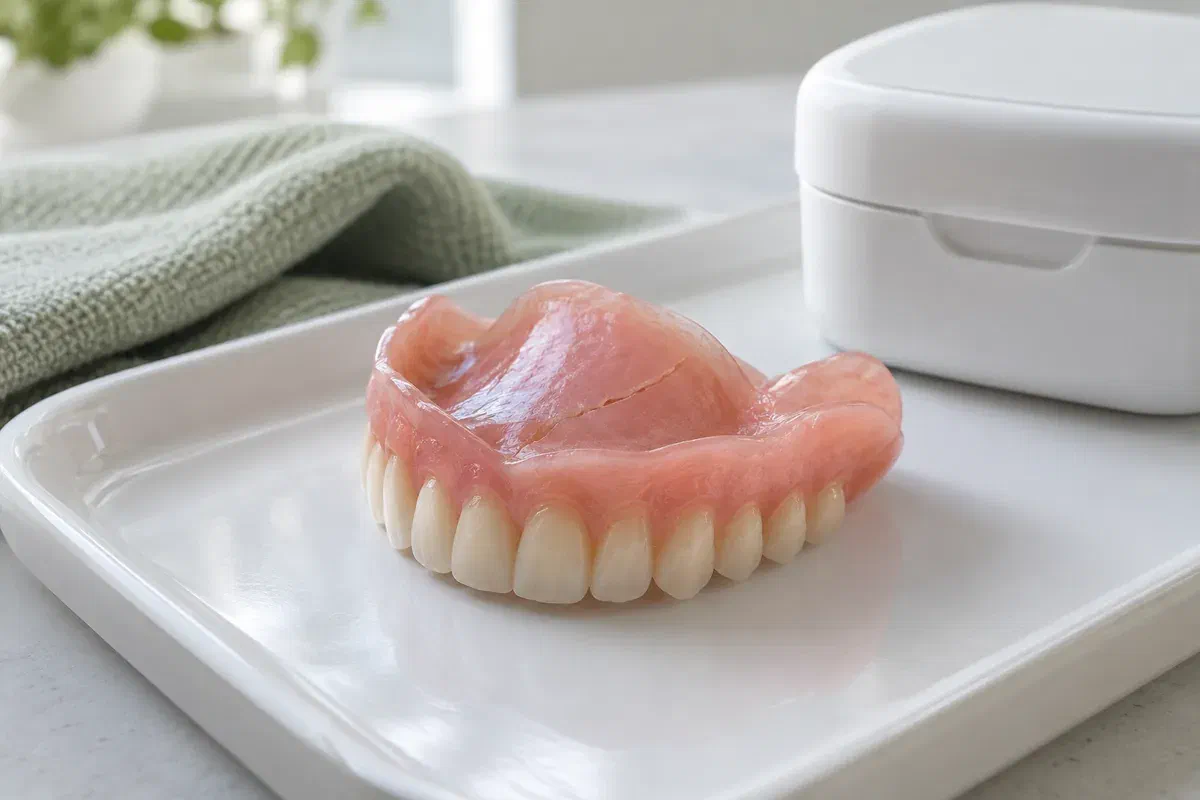
Illustrative upper denture with a fine fracture in its pink acrylic base
What helps us prepare

A few details make the call more useful.

Plain language is fine. Tell the team what you see, and how the denture had been behaving before it broke, so the visit can be planned around it.

Damage to the acrylic base

Note whether you see a thin crack, a full separation or a missing corner. Keep the parts together in a firm container rather than a tissue. Do not keep bending them or wearing the halves to see if they hold over the weekend.

A detached tooth or broken clasp

Save the tooth, clasp or attachment piece if it can be found. Say whether the denture has metal clasps or clips onto implants, since that affects the repair. A loose part might come away while eating, so leave the denture out for now.

Earlier fit troubles or past repairs

Mention if the denture rocked, slipped, rubbed or had been mended before. A repair can rejoin the material without changing how it sits on your gums. This history helps the clinician decide whether a repair by itself is a sensible plan.

Weekend fixes with glue, sandpaper or a hot tap tend to backfire. They can change the fit, damage the acrylic and make the repair that follows harder to do well.

The value of a well-planned repair

Less time without your teeth, when repair is appropriate.

If your denture is suited to repair, getting it mended can shorten the time you spend managing without it and let you return to an appliance you know. That may be preferable to beginning a replacement in a hurry. Ask whether the repair is meant to be lasting or to carry you until other treatment is ready.

A rushed repair is not automatically a good one. The clinician needs to examine both the damage and how the denture sits against your gums, bite and remaining teeth. If cracks keep returning, the teeth are worn or the fit has loosened, another approach may be wiser, and you should hear clearly what the repair can and cannot do.

Patient information: ADA — professional adjustment and repair of partial dentures

Knowing what is broken and why

Ask the clinician to show you the damage and explain the planned repair. A reattached tooth, a joined base and a replaced clasp are each different work, which is why turnaround and estimate can vary from one repair to another.

An agreed timeline

Check when to hand the denture over, whether a fitting visit follows and how it will be returned. Raise any transport or communication needs. A plan everyone agrees on is more dependable than hoping for a while-you-wait repair.

Prevention for next time

If this is a repeat break, ask what may be causing it. A bite or fit review might be suggested, or a different long-term option. That helps distinguish getting through this weekend from avoiding another broken one.

Steps from the break to the fitting

Here is how a repair usually goes.

Turnaround reflects the damage and what the repair requires. The team will explain what can be confirmed by phone and what needs an examination first.

  1. Phone to set up an assessment

    Explain the denture type, what broke and whether there is pain or a sore area. Mention implants or earlier repairs. Ask what times are available, including by-appointment days, rather than arriving with a fixed same-day deadline.

  2. Examination of the denture and gums

    Bring every piece you found and any records about the denture. The clinician looks at the damage, how well it fitted, and your gums or supporting teeth. Impressions may be taken if the repair calls for them.

  3. Settle on the work and the wait

    Discuss whether repair is right, what it involves, the estimate and what it will not change. Lab steps or parts can lengthen the timeline. Agree on how you will cope meanwhile and how you will be updated.

  4. Try it in and confirm the fit

    The repaired denture should be checked for comfort, seating and bite. Ask how to resume wearing and cleaning it. If it is a temporary fix or further care is advised, make sure the next step is arranged.

After the repair

Comfortable, steady, and not forced.

Follow the advice for your specific denture and repair. If something presses or moves in a new way, contact the clinician instead of reshaping it yourself.

Ease into normal use

Ask whether to keep to softer foods for a while. Notice how it behaves when you speak and eat. If it will not settle or begins to hurt, call for advice rather than biting down to make it seat.

Careful cleaning habits

Use a product suited to its material and any clasps or attachments. Clean it over a towel or a half-filled sink. Ask about overnight storage, and keep it away from hot water, which can change its shape.

Keep your follow-up

A mended denture still needs routine checks along with your mouth. Turn up for any adjustment appointment, and speak up if it still feels loose or tender a week or two on. Where a reline or new denture was suggested, pencil in when to talk about it again.

Patient information: CDA — caring for dentures

Options after the assessment

Three paths, depending on what is left.

Once the denture has been examined, the choice usually comes down to one of these. It helps to know whether each route treats the crack alone or the fit as well.

When it can keep serving you

Repair the existing appliance

A suitable base crack, lost tooth or similar defect can often be repaired while keeping the denture. The clinician will outline any limits. Finishing on the same day depends on the repair and on clinical and lab capacity.

When the break is part of a bigger picture

Repair together with fit care

A loose or uncomfortable denture may need an adjustment or reline in addition to repair. Each is a separate procedure. Ask whether they can be combined or are better handled at different visits.

When repair would leave too much unresolved

Replacement, with an interim plan

A heavily damaged, frequently mended or ill-fitting denture may need replacing. Ask about interim choices and a realistic timeline. A short-term repair can have a role, as long as you know it is there to cover the wait.

Weekend and timing questions

When will it be ready, and what do I do until then?

A phone description helps with planning. A dependable recommendation still depends on the denture and your mouth being examined together.

(905) 876-4488
My denture broke on Friday evening. Can anything be arranged before Monday?
Fridays through Sundays are by appointment only, so please call and explain the damage. The team can tell you what may be possible and how to keep the denture and your mouth comfortable in the meantime.
How should I store the pieces until my appointment?
Place every piece in a rigid, clean container so nothing is crushed or lost. Ask the team whether to keep them dry or moist. Avoid wrapping them loosely in tissue, which is easy to throw away by mistake.
What can I eat while my denture is out?
Soft foods that need little chewing, such as soups, eggs, yogurt or mashed vegetables, are usually easiest. If you have any natural teeth, chew gently. Ask the team if you have particular dietary needs.
Does a denture repair always need laboratory work?
Not always, but many do. It depends on the type of break, the material and whether new parts are needed. The clinician can explain after examining it whether the work can be done in the clinic or needs lab time.
My denture was already loose. Will the repair fix that too?
A repair joins broken material; it does not usually change the fit. Mention the looseness and when it began. An adjustment, reline or replacement may be suggested alongside the repair.
Should I drive over from Burlington straight away after it breaks?
Please call first. That lets the team confirm availability, explain what to bring and save you a trip that might not lead to a same-day repair. Keep the pieces together and bring them with you when the visit is arranged.
Burlington denture repair enquiries

Call us, even if it is the end of the week.

Our Bronte Street team can take your call on regular days and talk about by-appointment times later in the week. Describe the break, and we will explain how the assessment works, which pieces to bring and the repair routes that might follow.

Ring ahead rather than driving straight over. An online booking request cannot confirm a same-day result, since that is only known after the denture has been looked at.

Visit Milton Dental Clinic
Unit 1, 342 Bronte St. S, Milton, ON L9T 5B7
Get directions Clinic hours
Monday–Thursday
11am–7pm
Friday–Sunday
By appointment only

Areas we serve

  • Milton
  • Oakville
  • Mississauga
  • Georgetown
  • Halton Hills
  • Acton
  • Campbellville
  • Brampton
  • Burlington
  • Puslinch
  • Rockwood
  • Erin
  • Caledon
  • Etobicoke
  • Old Milton
  • Bronte Meadows
  • Timberlea
  • Dorset Park
  • Dempsey
  • Clarke
  • Beaty
  • Coates
  • Harrison
  • Scott
  • Willmott
  • Ford
  • Bowes
  • Cobden
  • Walker
  • Mountain View
  • Milton Heights
  • Hawthorne Village
  • Valley View
  • Fallingbrook
  • Nassagaweya
  • Trafalgar
  • Esquesing
  • Nelson
  • Brookville
  • Moffat
  • Glen Williams
  • Norval
  • Limehouse
  • Stewarttown
  • Ashgrove
  • Hornby
  • Silver Creek
  • Speyside
  • Scotch Block
  • North Oakville
  • River Oaks
  • Glen Abbey
  • West Oak Trails
  • Palermo
  • Bronte Creek
  • College Park
  • Joshua Creek
  • Uptown Core
  • Preserve
  • Iroquois Ridge
  • Lisgar
  • Meadowvale
  • Meadowvale Village
  • Churchill Meadows
  • Erin Mills
  • Central Erin Mills
  • Streetsville
  • East Credit
  • Creditview
  • Heartland
  • Sheridan
  • Mount Pleasant
  • Credit Valley
  • Huttonville
  • Churchville
  • Springbrook
  • Northwest Brampton
  • Bram West
  • Fletcher's Meadow
  • Fletcher's Creek South
  • Alton Village
  • Orchard
  • Millcroft
  • Headon Forest
  • Tansley
  • Brant Hills
  • Tyandaga
  • Kilbride
  • Lowville
  • Aberfoyle
  • Morriston
  • Arkell
  • Hillsburgh
  • Freelton
  • Carlisle
  • Waterdown
  • Flamborough
  • Mountsberg

How can we help?

Milton Dental Clinic

Have a question about your smile? Choose the option that works best for you.

For urgent dental concerns, please call.
Messages are reviewed during clinic hours.