

Illustrative consultation about a removable denture and repair arrangements
Restorative Dentistry

Same-Day Denture Repairs in Erin

A repaired denture should feel like your own again within a short while. From Erin or Hillsburgh, call us to describe the break, ask about prompt repair options and learn what the first days back in your mouth are likely to be like.

Thinking past the repair itself

Fixed is one thing. Comfortable is the goal.

People tend to picture a denture repair as a single moment: the crack is joined and life carries on. In practice, the days afterward matter just as much. A mended denture may feel slightly different on your tongue, the bite might need a small adjustment, and you want confidence that it will hold up at the dinner table and in conversation before you are back home.

How fast it can be done depends on the damage. A single clean break in the acrylic may be repaired fairly promptly. A detached tooth that needs matching, a broken clasp, an implant attachment problem or a denture that already fitted poorly can require impressions, lab time or another plan. Because the condition of the whole appliance matters, a same-day result is something we try to confirm with you after assessment.

For households in Erin, a short phone call to our Bronte Street practice helps make one trip count. Let us know what type of denture it is, how it broke and whether any area of your mouth hurts. The team can suggest an assessment time, tell you what to bring and explain what the try-in and first few days are likely to involve.

Ask about a repair and fitting visit
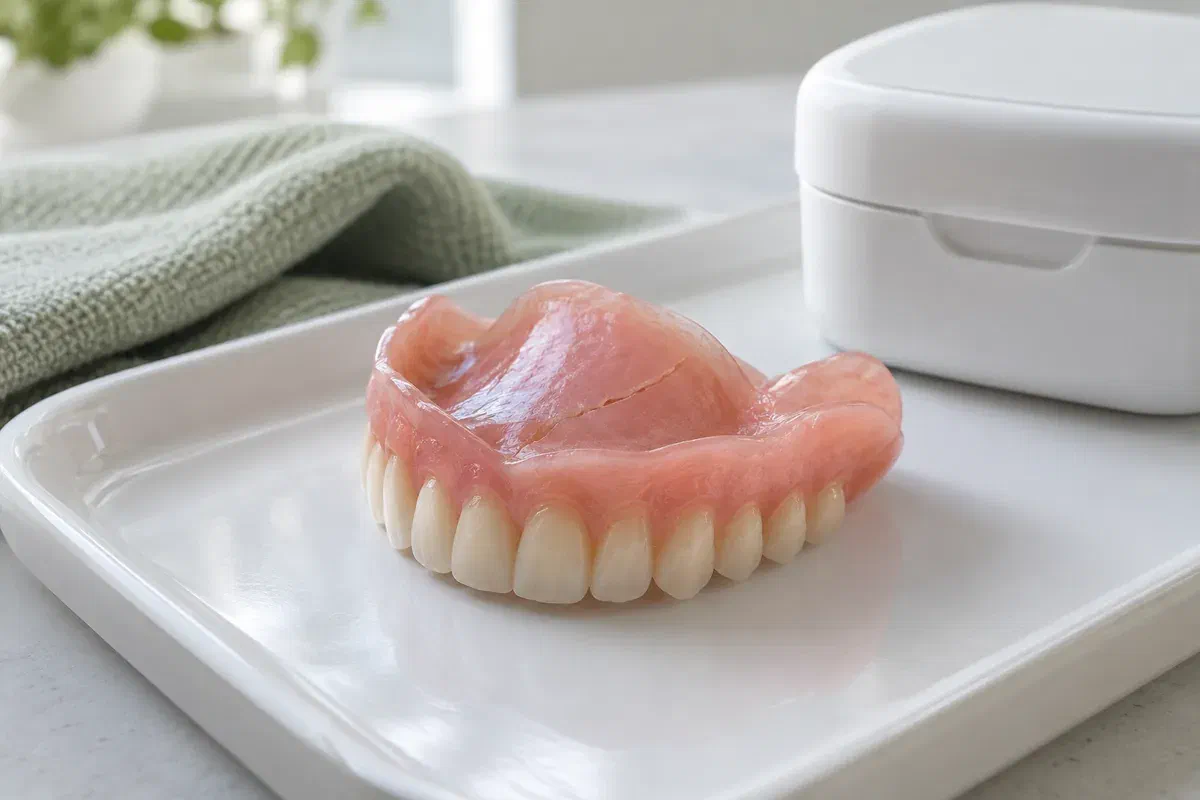
Illustrative upper denture with a fine fracture in its pink acrylic base
What we would like to know

Small details now make the fitting smoother later.

No dental vocabulary needed. Tell us what broke and how the denture felt before, so the clinician can plan both the repair and the fit check that follows.

The state of the acrylic base

Mention a faint line, a clean split or a section that has gone missing. Gather every fragment into a box that will not crush. Try not to bend the denture back together or test it in your mouth, as that can damage the edges.

Teeth, clasps or clips that came away

Keep any part you recover. Clasps and implant attachments affect what the repair involves, so mention them. A part that is already loose may come out while eating or talking, which is a good reason to leave the denture out.

Comfort before the break

Sore spots, looseness or a bite that never felt even are worth describing, along with any past repairs. Rejoining the material does not change those, and knowing about them helps the clinician decide whether repair alone is enough.

Gluing, sanding or warming the denture at home can alter its fit and weaken the material. That often makes the repair and the fitting afterward harder to get right.

Why repair can be the right move

Your own denture, working comfortably again.

A denture you are used to has already settled into your routines for eating, speaking and smiling. When repair is suitable, restoring it can save you the adjustment period that comes with a new appliance. You can ask the clinician to say plainly whether this is a long-term repair or a holding measure until another option is ready.

Comfort after the repair depends on more than the joint itself. The clinician will review the break together with how the denture rests on your gums, the way your teeth meet and any natural teeth involved. Recurring cracks, worn surfaces or a loose fit may point elsewhere, and you should leave knowing what will feel different and what will not.

Patient information: ADA — professional adjustment and repair of partial dentures

An honest description of the repair

Ask what part is damaged and what will be done. A rejoined base, a replaced tooth and a new clasp each feel different afterward and take different amounts of time, which also affects the estimate.

A realistic picture of the day

Confirm when the denture needs to be left, whether a try-in visit follows and how it will be returned. Mention driving, mobility or hearing needs. That planning is especially helpful if you are travelling in from a rural area.

A fit that supports the repair

If the denture has broken before, ask whether its fit or your bite may be part of the reason. A small adjustment or a later reline might be suggested to help the repair hold and keep the denture comfortable.

The repair, step by step

Each stage ends with you knowing what comes next.

Turnaround depends on the damage and the work involved. We can answer some questions on the phone and others only after we see the appliance.

  1. An initial call

    Describe the denture, the break and any soreness or cuts. Mention implants or previous repairs. We will discuss appointment times with you instead of building the day around a same-day deadline.

  2. Looking at the denture and your mouth

    Bring all pieces and any records. The clinician studies the damage, the original fit and your gums or remaining teeth. If impressions are needed for a well-fitting repair, they are taken at this point.

  3. Agreeing on the repair

    We talk through whether repair suits the denture, the work involved, the estimate and its limits. If lab time or parts are required, you will know roughly how long and how we will let you know it is ready.

  4. A careful try-in

    The repaired denture is placed and checked for seating, comfort and bite, and small adjustments may be made. You will receive advice on wearing and cleaning it and on what to expect in the next few days.

The first week back

What settling in should feel like.

Every repair is a little different, so follow the advice you are given. A new pressure point or rocking is worth a phone call, not a home adjustment.

Expect a short adjustment

Your tongue may notice a slightly different surface where the repair was made. Begin with softer meals if advised and see how it feels as you speak and chew. Ongoing pain, or a denture that will not seat, is a reason to call rather than bite down.

Look after the repaired area

Clean the denture with a product suited to its material and any attachments, standing over a folded cloth or some water in the sink. Ask how to store it overnight. Very hot water can warp acrylic, so use cool or lukewarm water instead.

Report anything that lingers

A repair does not replace regular checks of your mouth and denture. Come to any review you are offered, and tell us about sore spots or looseness that persist. If a reline or new denture was raised, agree when to come back to it.

Patient information: CDA — caring for dentures

Choosing a direction

Which route leads to a denture that feels right?

Ask whether each option deals with the break, the fit or both, and how much of the existing denture is still dependable.

When the rest of the denture is sound

Repairing what you have

A clean crack, a lost tooth or a similar repairable fault can often be addressed on your current denture. You will hear about any limits before work starts. Whether it is finished that day depends on the type of repair and on clinic and lab timing.

When comfort was already slipping

Repair together with fit work

Rubbing or looseness before the break may mean an adjustment or reline may be suggested on top of the repair. They are separate procedures. Ask whether doing them together or a little later would give the more comfortable result.

When repair would not bring comfort back

Starting a new denture

A heavily damaged, frequently repaired or poorly fitting denture may be better replaced. Ask about short-term arrangements and how long a new denture usually takes. A temporary repair can help you through the wait if that is its stated purpose.

Questions about life after a repair

How should a repaired denture feel?

A phone description helps us plan the visit, but a dependable recommendation requires examining both the denture and your mouth.

(905) 876-4488
Will my denture feel different after it has been repaired?
It may feel slightly different at first, particularly where the repair was made. Most small differences become less noticeable as you get used to it. If something presses, rubs or feels unstable, call so it can be checked.
How long until I can eat normally with a repaired denture?
That depends on the repair and the advice you are given. Many people start with softer foods and return to their usual diet gradually. Ask the clinician what applies to your denture.
What if the repaired denture gives me a sore spot?
Remove it for a while if it is uncomfortable and call the clinic. A small adjustment may help. Avoid filing or reshaping the denture yourself, since that can affect the fit and the repair.
Can the bite change after a denture repair?
A repair can slightly change how the teeth meet, which is why the fit and bite are checked at the try-in. If chewing feels uneven afterward, let the team know.
Does joining the crack fix a denture that was always loose?
Usually not. A repair restores the broken area but does not change how the denture rests on your gums. If looseness came first, the clinician can discuss an adjustment or reline.
If I live in Erin, can follow-up adjustments be planned with the repair?
Ask when you call. The team can suggest timing for the try-in and any likely review, so you can plan your trips and bring everything you need in one go.
Denture repair calls from Erin

A repair you can live with comfortably.

Call our Bronte Street practice to describe what broke. We can book an assessment, explain what to bring and talk through both the repair options and the fitting that follows.

Please phone before travelling. A same-day repair depends on what the assessment shows, and an online request does not confirm a repair or fitting time.

Visit Milton Dental Clinic
Unit 1, 342 Bronte St. S, Milton, ON L9T 5B7
Get directions Clinic hours
Monday–Thursday
11am–7pm
Friday–Sunday
By appointment only

Areas we serve

  • Milton
  • Oakville
  • Mississauga
  • Georgetown
  • Halton Hills
  • Acton
  • Campbellville
  • Brampton
  • Burlington
  • Puslinch
  • Rockwood
  • Erin
  • Caledon
  • Etobicoke
  • Old Milton
  • Bronte Meadows
  • Timberlea
  • Dorset Park
  • Dempsey
  • Clarke
  • Beaty
  • Coates
  • Harrison
  • Scott
  • Willmott
  • Ford
  • Bowes
  • Cobden
  • Walker
  • Mountain View
  • Milton Heights
  • Hawthorne Village
  • Valley View
  • Fallingbrook
  • Nassagaweya
  • Trafalgar
  • Esquesing
  • Nelson
  • Brookville
  • Moffat
  • Glen Williams
  • Norval
  • Limehouse
  • Stewarttown
  • Ashgrove
  • Hornby
  • Silver Creek
  • Speyside
  • Scotch Block
  • North Oakville
  • River Oaks
  • Glen Abbey
  • West Oak Trails
  • Palermo
  • Bronte Creek
  • College Park
  • Joshua Creek
  • Uptown Core
  • Preserve
  • Iroquois Ridge
  • Lisgar
  • Meadowvale
  • Meadowvale Village
  • Churchill Meadows
  • Erin Mills
  • Central Erin Mills
  • Streetsville
  • East Credit
  • Creditview
  • Heartland
  • Sheridan
  • Mount Pleasant
  • Credit Valley
  • Huttonville
  • Churchville
  • Springbrook
  • Northwest Brampton
  • Bram West
  • Fletcher's Meadow
  • Fletcher's Creek South
  • Alton Village
  • Orchard
  • Millcroft
  • Headon Forest
  • Tansley
  • Brant Hills
  • Tyandaga
  • Kilbride
  • Lowville
  • Aberfoyle
  • Morriston
  • Arkell
  • Hillsburgh
  • Freelton
  • Carlisle
  • Waterdown
  • Flamborough
  • Mountsberg

How can we help?

Milton Dental Clinic

Have a question about your smile? Choose the option that works best for you.

For urgent dental concerns, please call.
Messages are reviewed during clinic hours.