

Illustrative consultation about a removable denture and repair arrangements
Restorative Dentistry

Same-Day Denture Repairs in Georgetown

An implant-supported denture that no longer clicks in, or a conventional one that has cracked, both deserve a careful look. From Georgetown, call to explain what changed and ask how soon a repair assessment could be arranged.

Dentures that clip onto implants, and those that do not

It used to snap in. Now it doesn’t.

People who wear a denture held by implants often notice trouble as a change in feel: the reassuring click is gone, one side lifts when they chew, or a small part is rattling in the case. Others with a conventional denture spot a crack after a drop. Either way, eating and talking can suddenly feel uncertain, and the natural reaction is to want it fixed straight away.

Implant-retained appliances add components that a regular denture does not have. A worn insert, a loosened housing or a cracked base around an attachment may each be handled differently, and some need specific parts, lab time or a check of the implants themselves. Conventional dentures have their own range, from simple acrylic repairs to cases where the fit needs attention too. Whether any of this can be finished in a day is decided after the examination.

From Georgetown, please phone our Bronte Street practice first. Let us know whether your denture rests on your gums, clips onto implants or hooks around natural teeth. Describe what broke or changed, and mention any soreness around an implant. If you have the name of your implant system or a record from the dentist who placed it, have that ready too.

Ask about an implant or denture repair
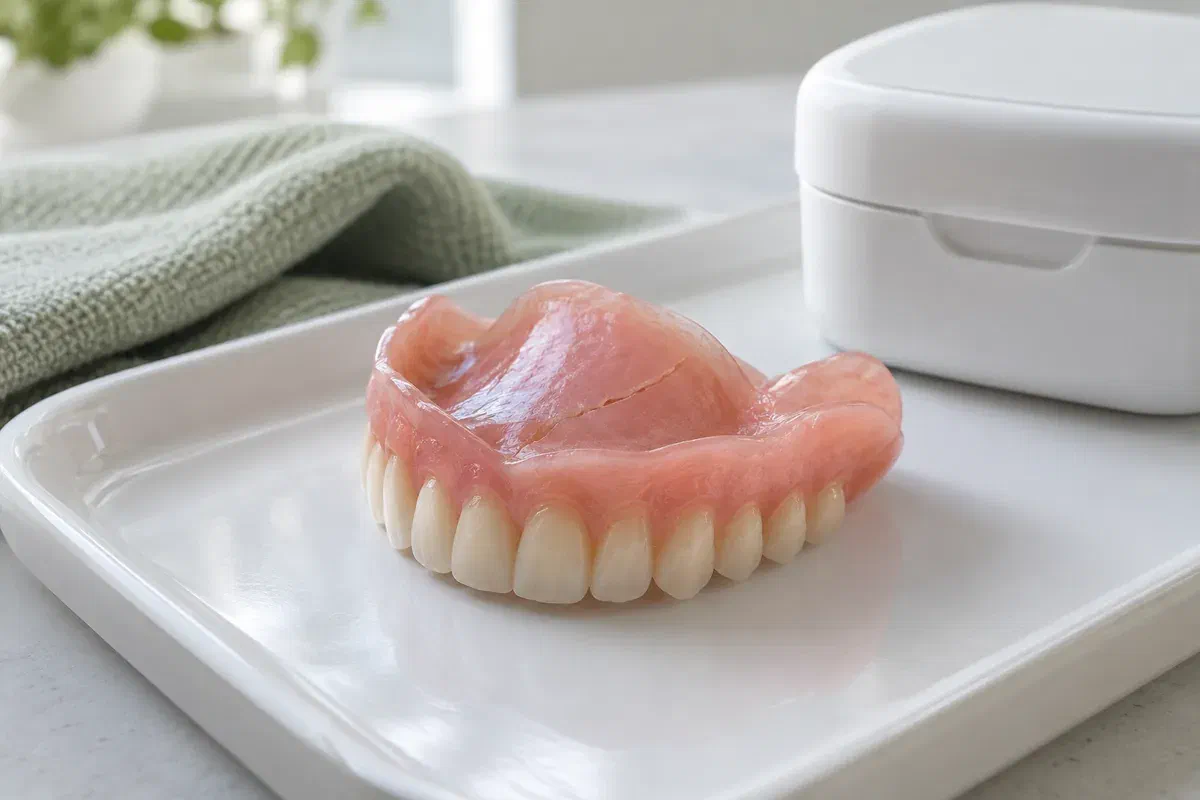
Illustrative upper denture with a fine fracture in its pink acrylic base
What to describe on the phone

Is it the denture, the attachment, or the implant?

You do not need to know the answer yourself. Telling us what you see and feel helps the team prepare the right kind of appointment.

A crack in the base, especially near an attachment

Acrylic around an implant housing can be thinner, so cracks there are worth mentioning specifically. Note whether the base is in one piece or several. Store everything in a sturdy case and avoid snapping it on and off to test it.

A missing insert, clip or denture tooth

Inserts and clips can wear or come away, and teeth can detach from the base. Keep any part you find. Tell us the implant system if you know it. A loose part may come free during meals, so it is safer to leave the denture out.

Soreness around an implant or a changing fit

Tenderness, bleeding or swelling near an implant should be mentioned right away. So should rocking, gaps or earlier repairs. Fixing the denture may not address a problem at the implant itself, and that history helps the clinician plan.

Please do not glue an insert back in, tighten anything with household tools or bend the base. These can damage the attachment and the denture and make a proper repair harder.

Why it is worth sorting out promptly

Restoring that secure feeling, where the repair suits.

For implant-retained dentures, the security of the attachments is a large part of why people chose them. When the denture can be repaired or the worn component renewed, prompt care can bring back that stability without starting over. Ask whether the work is routine maintenance, a lasting repair or a temporary measure.

Getting it done quickly should not mean skipping the bigger picture. The clinician will consider the damage, the condition of each attachment, the health of the gums around the implants and how your bite meets the denture. Repeated breaks or ongoing looseness may suggest another approach, and you should know what the repair will leave unchanged.

Patient information: ADA — professional adjustment and repair of partial dentures

A clear picture of which part failed

Ask whether the problem lies in the acrylic, a denture tooth, an insert, a housing or the implant. Each needs different work, and that affects timing and estimates. A plain explanation helps you decide with confidence.

Arrangements that respect your time

Find out whether parts need to be ordered, whether the denture must be left and how many visits are likely. Mention transport or work commitments. Agreed arrangements help more than hoping it will be quick.

Attention to the implants underneath

If attachments wear out unusually fast or the base keeps cracking in one place, ask what might be causing it. The implants, the bite or the fit may need review. That conversation separates a quick fix from steps that protect the whole system.

How an implant or denture repair is handled

Identify the part, check the implants, plan, then fit.

Timing depends on the damage and whether specific components are needed. We will say what can be arranged in advance and what depends on the examination.

  1. A call with the details

    Tell the team what type of denture you wear, what has broken or changed, and whether there is pain around an implant. Share your implant system if you know it. Ask about availability rather than assuming a same-day finish.

  2. Examination of denture and attachments

    Bring the denture, any loose parts and records from your implant treatment. The clinician examines the base, teeth and attachments, as well as the gums and implants. Further records or impressions may be needed.

  3. Deciding on the repair

    Discuss what is wrong, whether repair suits the situation, the estimate and any limits. Parts or lab work can affect timing. Agree on how you will cope without the denture and how you will hear about any delay.

  4. Seating and checking

    Once repaired, the denture is placed to confirm it engages the attachments properly, feels comfortable and meets your bite. You will be told how to wear and look after it again, and any follow-up for the implants is confirmed.

Living with the repair

Secure, comfortable and easy to remove.

Follow the guidance for your denture and attachments. If it suddenly feels too tight, too loose or sore, contact the clinician rather than adjusting it.

Notice how it engages

Ask whether to avoid certain foods for a while. Pay attention to how it clicks in, how it holds during meals and how easily it comes out. If it will not seat or is painful, call rather than pressing harder.

Clean the denture and the implants

Use a cleaner suitable for the denture and its inserts, and keep the gums and implant posts clean as advised. Handle the denture over a towel or water-filled basin. Avoid hot water, which can distort acrylic.

Keep implant and denture reviews

Implants and attachments need regular checks even when all seems well. Attend any review you are offered and mention soreness, bleeding around an implant or reduced grip. If replacing parts or the denture was discussed, agree on timing.

Patient information: CDA — caring for dentures

Routes the clinician may suggest

Same goal, different kinds of fix.

Some problems are in the denture, some in the attachments, and some below the gum. Ask which one each option deals with and how much remains dependable.

When the denture is otherwise sound

Repairing the base or a tooth

Acrylic that has cracked away from the attachments, or a tooth that has lifted off, can often be mended on the existing appliance. You will hear about any limits first. Whether it is ready that day rests on the type of repair and how the clinic and lab are booked.

When grip or comfort has changed

Renewing attachments or adjusting the fit

Worn inserts may be replaceable, and a denture that rocks may need an adjustment or reline. These differ from base repairs and have their own indications. Ask whether they can be done together or need separate visits.

When repair would not restore stability

A new denture or a revised plan

A badly damaged or repeatedly repaired appliance, or one that no longer suits the implants, may need replacing. Ask about interim options and realistic timing. A short-term repair may help while new work is completed.

Implant denture and repair questions

The things people ask about attachments and breaks.

A phone call helps the team prepare, but a dependable recommendation usually requires examining the denture, the attachments and your mouth.

(905) 876-4488
My implant denture no longer clicks in firmly. Is something broken?
Not necessarily. Inserts can wear with use and may need replacing. A cracked base or a problem at the implant can also cause looseness. Call to describe it, and the clinician can find the cause during the assessment.
Can you work on implant parts from another dental office?
That depends on the system and the parts involved, so it helps to know which implants you have. Bring any records or cards you were given. If certain parts are needed, the team can explain whether they may need to be ordered.
One of the small inserts fell out. Can I put it back in myself?
Pressing or gluing it back yourself is best avoided. Keep it in a safe container and bring it to the appointment. Inserts need to be seated correctly to work safely.
Is it all right to wear the denture without the attachments holding?
Ask the team when you call. A denture that is not engaging properly may move, rub or put extra pressure on the gums. Leaving it out and eating soft foods may be advised until it is assessed.
Should I worry about pain around one of my implants?
Mention it as soon as you call. Tenderness, bleeding or swelling around an implant should be assessed. The clinician will check the gum and implant as well as the denture.
How should I plan a repair visit from Georgetown?
Call ahead so the team can confirm whether parts may be needed and whether the denture might need to stay. Bring your records and all loose parts in one container to make the most of the trip.
Repair help for Georgetown denture wearers

Call and tell us what changed.

Our Bronte Street team can hear what is happening with your denture or attachments, suggest a time to come in and let you know what records to bring. We will talk about repair options once we have seen it.

Please phone before travelling. Same-day completion is only confirmed after examination, and an online request does not reserve a repair or any parts.

Visit Milton Dental Clinic
Unit 1, 342 Bronte St. S, Milton, ON L9T 5B7
Get directions Clinic hours
Monday–Thursday
11am–7pm
Friday–Sunday
By appointment only

Areas we serve

  • Milton
  • Oakville
  • Mississauga
  • Georgetown
  • Halton Hills
  • Acton
  • Campbellville
  • Brampton
  • Burlington
  • Puslinch
  • Rockwood
  • Erin
  • Caledon
  • Etobicoke
  • Old Milton
  • Bronte Meadows
  • Timberlea
  • Dorset Park
  • Dempsey
  • Clarke
  • Beaty
  • Coates
  • Harrison
  • Scott
  • Willmott
  • Ford
  • Bowes
  • Cobden
  • Walker
  • Mountain View
  • Milton Heights
  • Hawthorne Village
  • Valley View
  • Fallingbrook
  • Nassagaweya
  • Trafalgar
  • Esquesing
  • Nelson
  • Brookville
  • Moffat
  • Glen Williams
  • Norval
  • Limehouse
  • Stewarttown
  • Ashgrove
  • Hornby
  • Silver Creek
  • Speyside
  • Scotch Block
  • North Oakville
  • River Oaks
  • Glen Abbey
  • West Oak Trails
  • Palermo
  • Bronte Creek
  • College Park
  • Joshua Creek
  • Uptown Core
  • Preserve
  • Iroquois Ridge
  • Lisgar
  • Meadowvale
  • Meadowvale Village
  • Churchill Meadows
  • Erin Mills
  • Central Erin Mills
  • Streetsville
  • East Credit
  • Creditview
  • Heartland
  • Sheridan
  • Mount Pleasant
  • Credit Valley
  • Huttonville
  • Churchville
  • Springbrook
  • Northwest Brampton
  • Bram West
  • Fletcher's Meadow
  • Fletcher's Creek South
  • Alton Village
  • Orchard
  • Millcroft
  • Headon Forest
  • Tansley
  • Brant Hills
  • Tyandaga
  • Kilbride
  • Lowville
  • Aberfoyle
  • Morriston
  • Arkell
  • Hillsburgh
  • Freelton
  • Carlisle
  • Waterdown
  • Flamborough
  • Mountsberg

How can we help?

Milton Dental Clinic

Have a question about your smile? Choose the option that works best for you.

For urgent dental concerns, please call.
Messages are reviewed during clinic hours.