

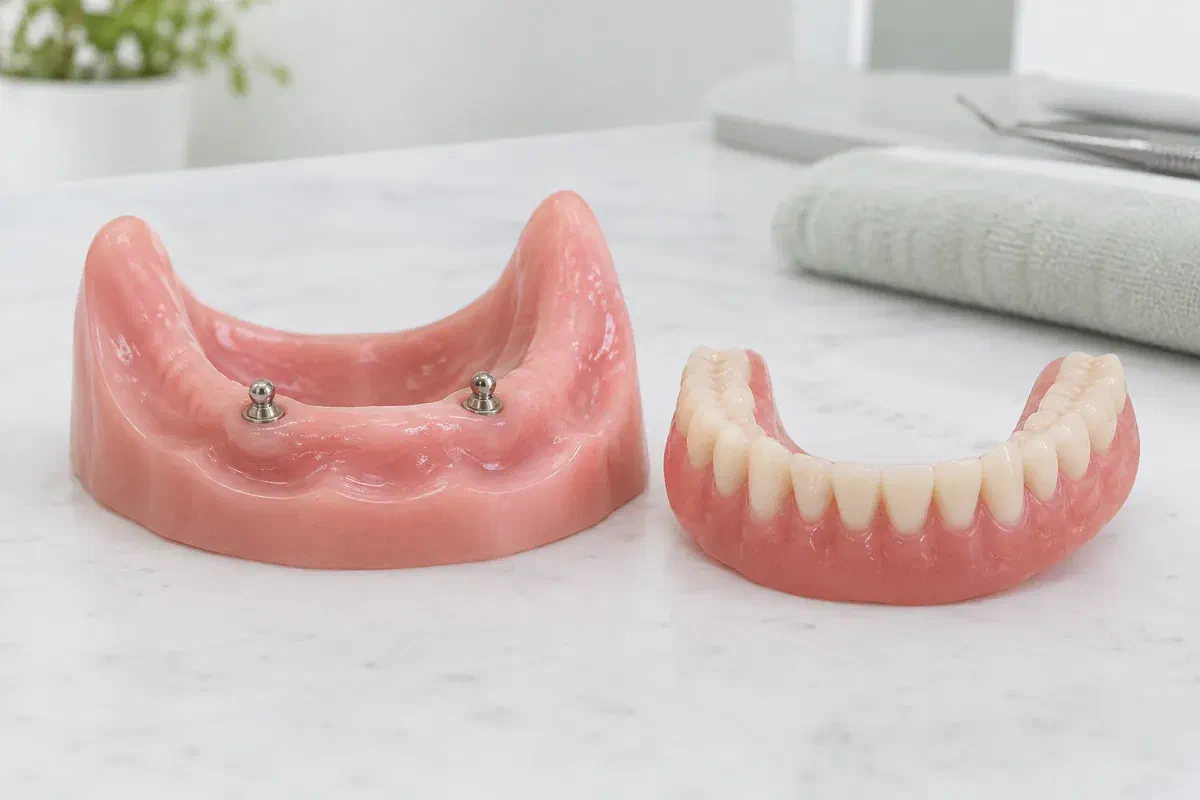
Illustrative discussion of a removable implant-retained denture
Restorative Dentistry

Snap-In Dentures in Erin

Cutting food into tiny pieces, skipping the corn, chewing only on one side? For people in Erin and Hillsburgh, we explain how removable snap-in dentures connect to implant attachments, what may change at mealtimes, and the care that keeps them working.

At the kitchen table

Supper shouldn’t feel like a negotiation.

For many denture wearers, the real test comes three times a day. Food slips underneath, the plate lifts on a firm bite, and favourite meals quietly drop off the menu. Snap-in dentures are designed to address some of that. The removable appliance clips onto small attachments joined to dental implants for added hold.

You still take it out to clean it and, as advised, overnight. That is the key difference from a fixed implant bridge, which stays put and is cleaned in place. It also differs from a standard denture, which has no implants and relies on the gums. Comfort, upkeep, cost and the number of stages vary among them.

Families around Erin often like to plan visits carefully, so we use the first appointment well. Tell us what you avoid eating and why. After examining your mouth, the dentist explains whether further implant assessment makes sense and whether an attachment-retained design is a good match. Do bring your current denture.

Talk about eating with confidence
Illustrative lower-jaw model with attachment heads beside a removable overdenture
Mealtime clues

What happens when you bite into an apple?

A denture can lose stability for many reasons. Describing the foods and moments that cause trouble helps the team assess the appliance, your gums and whether attachments might help.

Lifting, sliding or trapping food

Tell us which foods cause problems and how the denture reacts: does it tip forward, rise at the back or collect seeds underneath? Mention relines and how long they helped. A better conventional fit may be worth trying before implants.

Wanting a steadier bite, still removable

Perhaps you like rinsing your teeth after a meal or soaking them overnight. Or perhaps you would prefer teeth that never come out. Tell us early, since removability determines the design from the first plan.

Keeping the routine realistic

Busy farm or family days, stiff hands and changing eyesight can all affect daily care. Let us know about them and about anyone who helps. Clipping in, releasing and cleaning the denture needs to fit your life.

Not every mealtime problem is solved by implants. Where implants already sit beneath a denture that has started to move, both the attachment parts and the implants need to be examined.

What may change at meals

A firmer bite, with care to match.

In suitable mouths, implant attachments can reduce the lifting and sliding that make chewing tiring. Ask how that might apply to the foods you miss. It is still a removable denture, so find out what movement remains normal and which foods to approach with care.

Attachments also add tasks to your week. Inserts wear, the denture teeth and base need regular checks, and the gums around each implant must be cleaned every day and reviewed by the team. A complete plan includes those visits rather than stopping at the fitting.

Patient information: Leeds Teaching Hospitals — removable implant overdentures

Support matched to your jaw

How many implants are used, and where, comes from assessing your bone, anatomy and the restoration. Upper and lower jaws may follow different plans. Ask why the proposed arrangement is right for you.

After-meal cleaning made possible

Lifting the denture out lets you rinse away food and reach the attachments in your mouth. Ask to be shown the brushes and motions involved. That access only helps if you keep up the routine.

A connection you have tried

Ask to clip a denture onto a model and release it again. Find out which components wear and get replaced. A hands-on feel for the mechanism makes it easier to compare options.

The route to fitting

Each stage, laid out in order.

Expect a series of appointments, possibly with more than one clinician. Before deciding, get the sequence, the rough gaps between stages and the interim denture plan.

  1. Look closely at the present

    The dentist examines your gums, ridges, current denture, medical history and goals. Imaging may be booked if implants are being considered. Mention smoking, any implant treatment you have had and anything that makes your denture hard to manage.

  2. Agree on the restoration

    You discuss implant suitability, attachment type, the look of the teeth and long-term upkeep. The dentist says whether the denture you have could be modified or a new one is preferable, and sets out costs for each stage and the reviews after.

  3. Implants and healing

    New implants, if needed, are placed and left to heal before the attachments take their full role. Existing implants are assessed. You will be told what to eat and wear during the interim and when connection can happen.

  4. Fit, bite and practice

    The finished denture is checked for comfort, hold, how your teeth meet and how it looks. You practise putting it in and taking it out, then review cleaning, overnight instructions and early adjustment visits.

After meals and at bedtime

Rinse, brush, store, review.

Your routine depends on the attachment system and materials. Take home written instructions and practise them in the chair first.

Put it in by hand

Seat the denture with your fingers as demonstrated, and never chew or bite it into place. If it suddenly resists connecting, feels loose or is hard to remove, call the clinic before continuing to wear it.

Clear food from both sides

After meals, rinse the denture and your mouth where you can. Each day, brush the denture teeth, underside and attachment areas with suitable products, then clean gently around each implant. Ask before using a new soak.

Report changes in your bite

A worn insert may reduce hold, but tissue or denture changes can also be responsible. Mention movement, sore spots, bleeding or damage, and leave part replacement to the team. Keep your scheduled reviews.

Other ways to replace a full arch

Compare how each handles a real meal.

Find out how every suitable choice is cleaned, looked after and repaired, and what eating with it is like. Appearance is only one factor.

No implant surgery

Conventional denture

A new or refitted denture may improve things without surgery. Ask what fit and chewing limits are realistic for your mouth. It still needs care, though the treatment path is simpler than for an implant-retained appliance.

Attachments, still removable

Snap-in overdenture

Implants add retention while the denture still comes out after meals and at night. Systems differ in their demands. Compare hold, handling, cleaning and upkeep for the actual design proposed, not just the name.

Teeth that stay in

Fixed implant bridge

A fixed bridge is not removed at home and food must be cleaned from beneath it with special aids. Implant and space requirements differ. Ask whether it suits you and how its overall commitment compares.

Patient information: ITI — fixed and removable implant replacement considerations

Questions we hear from Erin

Eating, cleaning and everything between.

A model can show how the attachments help the denture resist a bite. Ask the clinician to demonstrate before you decide.

(905) 876-4488
Which foods might be easier with a snap-in denture?
Many people find firmer or chewier foods more manageable with attachments, but experiences vary and it is still a removable denture. Ask the clinician which foods to reintroduce gradually and which to approach carefully.
Will I be able to bite with my front teeth?
Biting with front teeth can dislodge any denture, and attachments may help depending on their position. Ask how your proposed design handles front biting, and whether cutting food first is still advisable.
Is a soft diet needed after implant surgery?
Your clinician may recommend softer foods for a period after placement. Follow the specific instructions you are given and ask how long they apply, as this can vary from person to person.
Do snap-in dentures affect taste?
Coverage of the palate can influence how some people perceive food. Depending on the design, an upper snap-in denture may cover less or a similar area. Ask what coverage is planned for your case.
Can I sleep with my snap-in denture in if I'm tired?
Follow the wearing instructions for your appliance, which usually include removing it overnight to clean it and rest the tissues. If you have fallen asleep wearing it, clean it and your mouth carefully the next morning.
How can we keep visits manageable from Erin?
Ask for the full sequence of appointments early so you can plan around work, weather and family. Where clinically appropriate, the team can try to coordinate visits, and calling first helps when something changes.
Booking from Erin

Bring a list of the foods you miss.

Plan an appointment at our Bronte Street practice to explore whether a removable implant denture may suit you. Bring your current denture and any questions about chewing, cleaning, handling and the stages ahead.

If an implant denture you already wear has loosened suddenly or become painful, describe what has changed when you call.

Visit Milton Dental Clinic
Unit 1, 342 Bronte St. S, Milton, ON L9T 5B7
Get directions Clinic hours
Monday–Thursday
11am–7pm
Friday–Sunday
By appointment only

Areas we serve

  • Milton
  • Oakville
  • Mississauga
  • Georgetown
  • Halton Hills
  • Acton
  • Campbellville
  • Brampton
  • Burlington
  • Puslinch
  • Rockwood
  • Erin
  • Caledon
  • Etobicoke
  • Old Milton
  • Bronte Meadows
  • Timberlea
  • Dorset Park
  • Dempsey
  • Clarke
  • Beaty
  • Coates
  • Harrison
  • Scott
  • Willmott
  • Ford
  • Bowes
  • Cobden
  • Walker
  • Mountain View
  • Milton Heights
  • Hawthorne Village
  • Valley View
  • Fallingbrook
  • Nassagaweya
  • Trafalgar
  • Esquesing
  • Nelson
  • Brookville
  • Moffat
  • Glen Williams
  • Norval
  • Limehouse
  • Stewarttown
  • Ashgrove
  • Hornby
  • Silver Creek
  • Speyside
  • Scotch Block
  • North Oakville
  • River Oaks
  • Glen Abbey
  • West Oak Trails
  • Palermo
  • Bronte Creek
  • College Park
  • Joshua Creek
  • Uptown Core
  • Preserve
  • Iroquois Ridge
  • Lisgar
  • Meadowvale
  • Meadowvale Village
  • Churchill Meadows
  • Erin Mills
  • Central Erin Mills
  • Streetsville
  • East Credit
  • Creditview
  • Heartland
  • Sheridan
  • Mount Pleasant
  • Credit Valley
  • Huttonville
  • Churchville
  • Springbrook
  • Northwest Brampton
  • Bram West
  • Fletcher's Meadow
  • Fletcher's Creek South
  • Alton Village
  • Orchard
  • Millcroft
  • Headon Forest
  • Tansley
  • Brant Hills
  • Tyandaga
  • Kilbride
  • Lowville
  • Aberfoyle
  • Morriston
  • Arkell
  • Hillsburgh
  • Freelton
  • Carlisle
  • Waterdown
  • Flamborough
  • Mountsberg

How can we help?

Milton Dental Clinic

Have a question about your smile? Choose the option that works best for you.

For urgent dental concerns, please call.
Messages are reviewed during clinic hours.